How to Identify Dryopteridaceae
Dryopteridaceae is a plant family in the Plantae kingdom, order Polypodiales, class Polypodiopsida. The family contains 110 accepted species worldwide. Some species in this family are toxic — exercise caution when handling unknown specimens.
Representative Dryopteridaceae Species
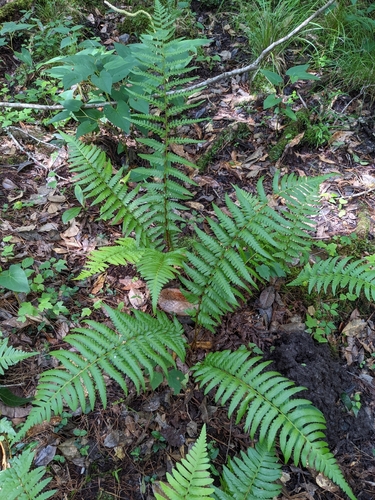
Dryopteris ludoviciana (Kunze) Small
Dryopteris ludoviciana (Kunze) Small
Dryopteris ludoviciana, the southern woodfern, is a native US evergreen fern har…
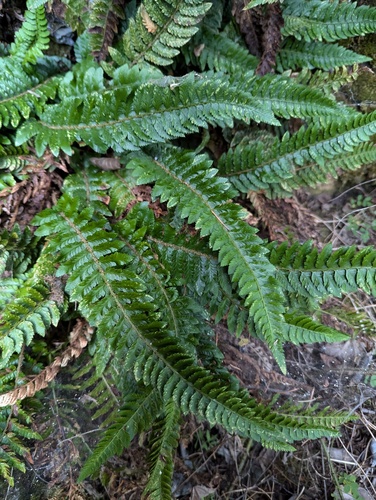
Polystichum californicum (D.C.Eaton) Diels
Polystichum californicum (D.C.Eaton) Diels
Polystichum californicum, the California sword fern, is a hybrid North American …
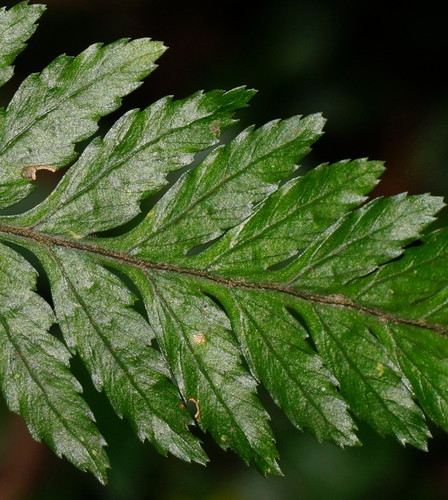
Parapolystichum acuminatum (Houlston) Labiak, Sundue & R.C.Moran
Parapolystichum acuminatum (Houlston) Labiak, Sundue & R.C.Moran
Parapolystichum acuminatum is a small widespread fern of eastern Australia, grow…
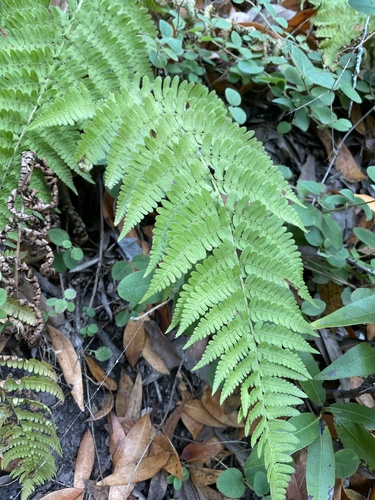
Dryopteris arguta (Kaulf.) Watt
Dryopteris arguta (Kaulf.) Watt
Dryopteris arguta is a variable fern with ruffled-lacy toothed leaflets and clos…
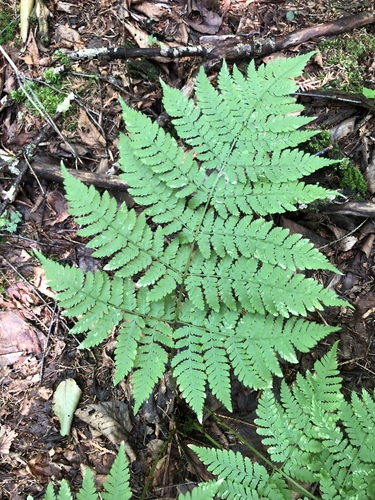
Dryopteris expansa (C.Presl) Fraser-Jenk. & Jermy
Dryopteris expansa (C.Presl) Fraser-Jenk. & Jermy
Dryopteris expansa is a toxic fern species whose root has been used in herbal me…
⚠️ Poisonous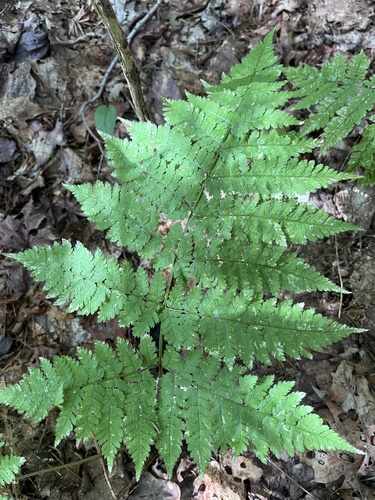
Dryopteris campyloptera (Kunze) Clarkson
Dryopteris campyloptera (Kunze) Clarkson
Dryopteris campyloptera, the mountain wood fern, is a large hybrid American fern…
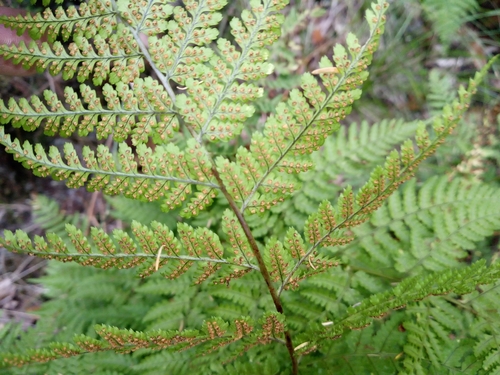
Dryopteris aemula (Aiton) Kuntze
Dryopteris aemula (Aiton) Kuntze
Dryopteris aemula is a semi-evergreen hay-scented fern found in oceanic Atlantic…
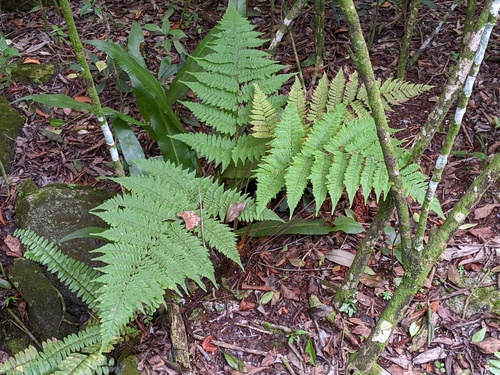
Ctenitis sloanei (Poepp. ex Spreng.) C.V.Morton
Ctenitis sloanei (Poepp. ex Spreng.) C.V.Morton
Ctenitis sloanei is an evergreen perennial fern that grows in moist tropical ham…
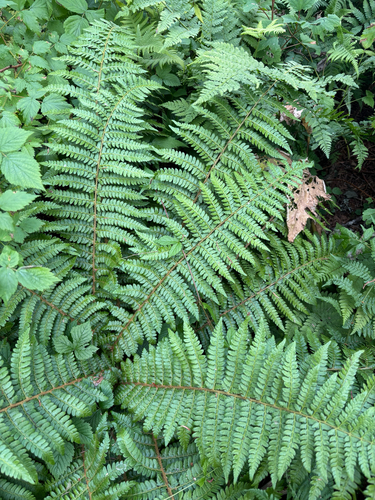
Polystichum braunii (Spenn.) Fée
Polystichum braunii (Spenn.) Fée
Braun's hollyfern (Polystichum braunii) is a plant species native to Eurasia and…
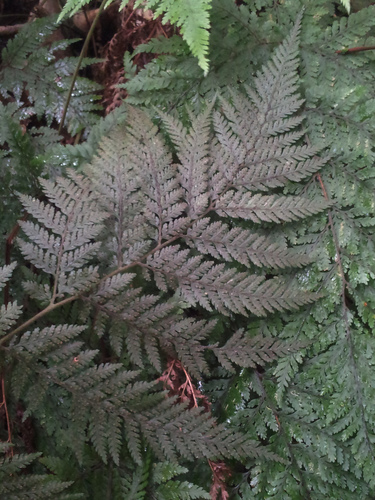
Parapolystichum microsorum (Endl.) Labiak, Sundue & R.C.Moran
Parapolystichum microsorum (Endl.) Labiak, Sundue & R.C.Moran
Parapolystichum microsorum, the creeping shield fern, is a common small fern fou…
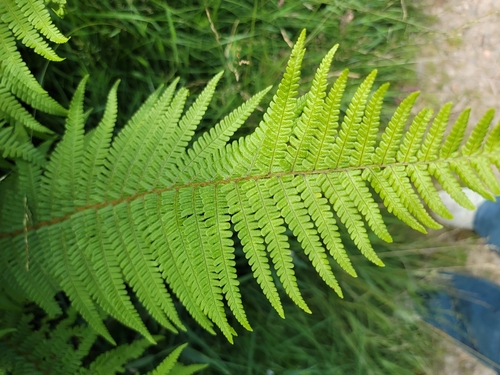
Dryopteris affinis (Lowe) Fraser-Jenk.
Dryopteris affinis (Lowe) Fraser-Jenk.
Dryopteris affinis is a large, mostly evergreen European fern, widely cultivated…
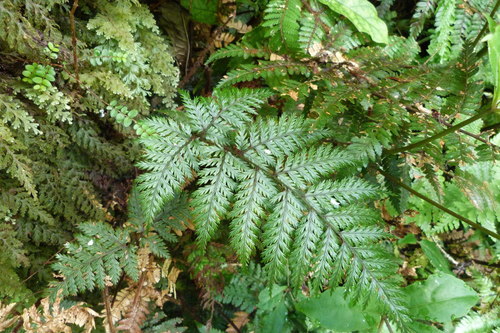
Lastreopsis hispida (Sw.) Tindale
Lastreopsis hispida (Sw.) Tindale
Lastreopsis hispida, the bristly shield fern, is a fern native primarily to New …
Frequently Asked Questions
How do you identify Dryopteridaceae?
Dryopteridaceae plants belong to the Polypodiales order in the Plantae kingdom. Browse the 110 species gallery above for visual identification references. For instant identification, use the iNature app — AI-powered and works offline.
What are the key characteristics of Dryopteridaceae?
Dryopteridaceae is classified in the order Polypodiales, class Polypodiopsida, phylum Tracheophyta. The family contains 110 accepted species worldwide.
⚠️ Are any Dryopteridaceae species poisonous?
Yes, some Dryopteridaceae species are toxic or poisonous. Always exercise caution with unknown specimens. View poisonous Dryopteridaceae species or browse the full poisonous species guide.
Sources: GBIF, iNaturalist, Wikipedia · Disclaimer
Start Exploring Nature Today
Download iNature for free. 10 identifications on us. No account needed. No credit card required.
Download Free on App Store
