Key Identification Features
- This protruding growth is a reliable identifying feature for the species when observed in the field.
For instant identification in the field, use the iNature app — AI-powered, works offline.
Cystopteridaceae is a plant family in the Plantae kingdom, order Polypodiales, class Polypodiopsida. The family contains 16 accepted species worldwide.
For instant identification in the field, use the iNature app — AI-powered, works offline.
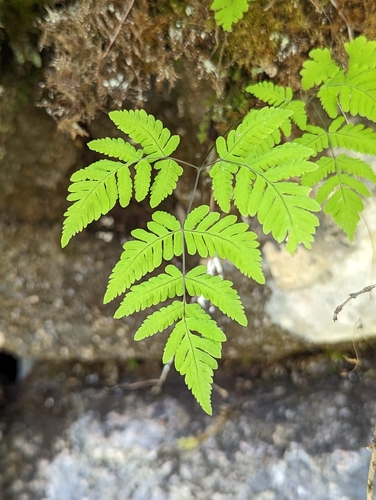
Gymnocarpium dryopteris (L.) Newman
Gymnocarpium dryopteris, commonly called oak fern, is a sensitive fern that acts…
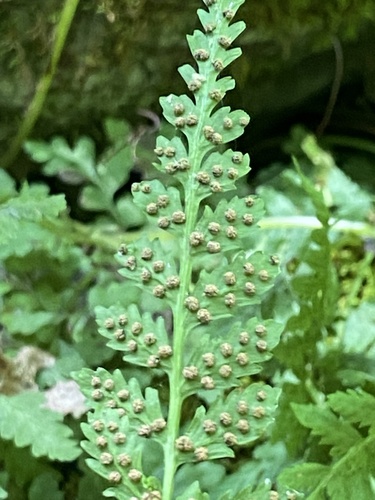
Cystopteris tennesseensis Shaver
Cystopteris tennesseensis is a lithophytic hybrid fern native to calcareous rock…
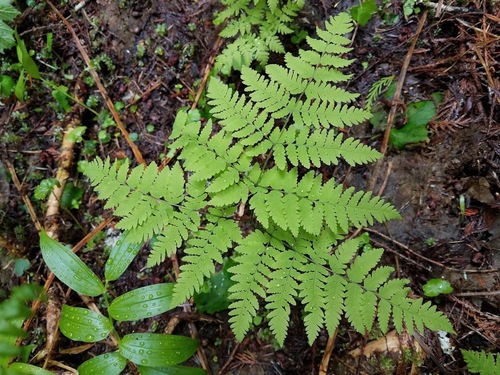
Gymnocarpium disjunctum (Rupr.) Ching
Gymnocarpium disjunctum is a delicate-leaved fern native to northeast Asia and n…
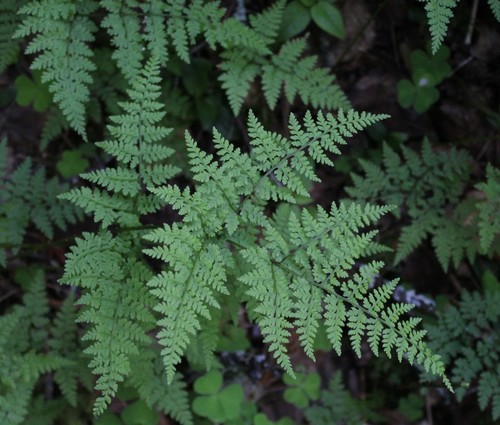
Cystopteris montana (Lam.) Bernh.
Cystopteris montana, or mountain bladderfern, is a Northern Hemisphere fern that…
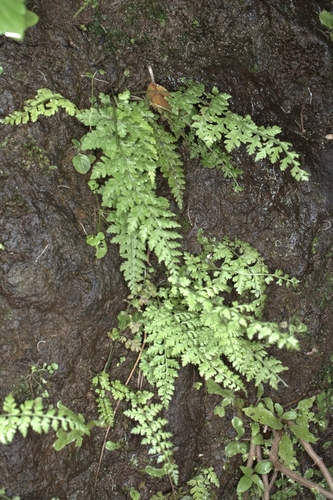
Cystopteris diaphana (Bory) Blasdell
Cystopteris diaphana is a fern in the Cystopteridaceae family found locally on E…
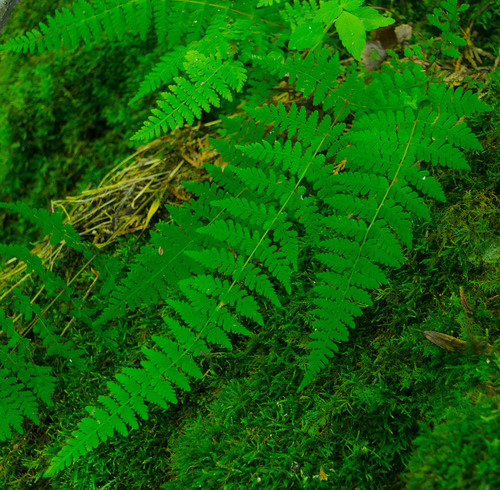
Cystopteris bulbifera (L.) Bernh.
Cystopteris bulbifera is a bulblet-bearing low-growing rock fern native to North…
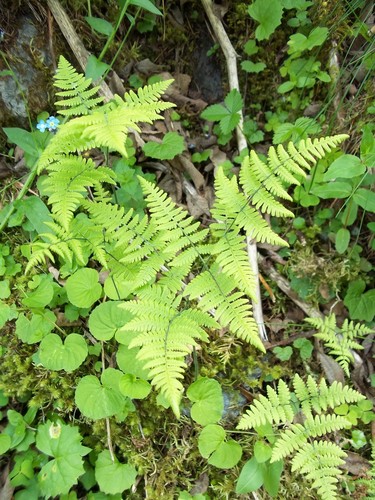
Gymnocarpium robertianum (Hoffm.) Newman
Gymnocarpium robertianum is a small circumboreal calcicolous fern that forms doc…
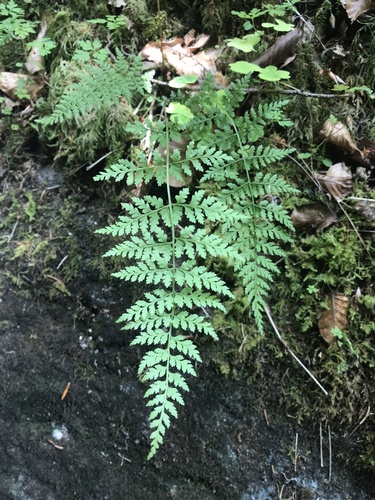
Cystopteris fragilis (L.) Bernh.
Cystopteris fragilis is a fern with bitter-almond scented young fronds, growing …
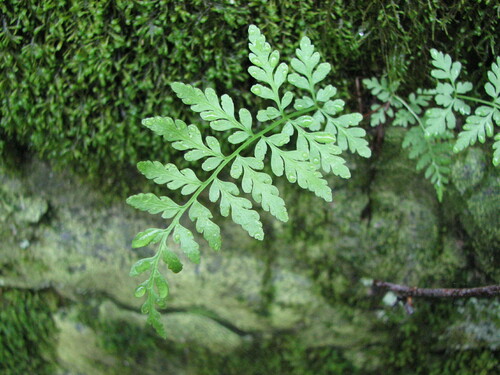
Cystopteris tenuis (Michx.) Desv.
Cystopteris tenuis, or Mackay's bladder fern, is a hybrid fern species native to…
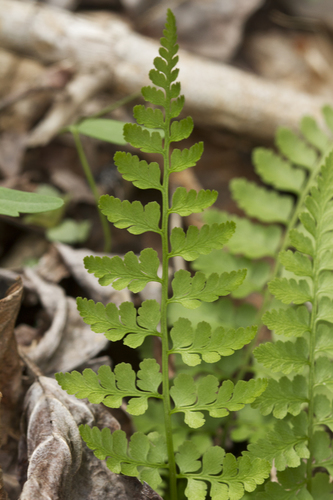
Cystopteris protrusa (Weath.) Blasdell
Cystopteris protrusa is a terrestrial, mostly spring-ephemeral fern identifiable…
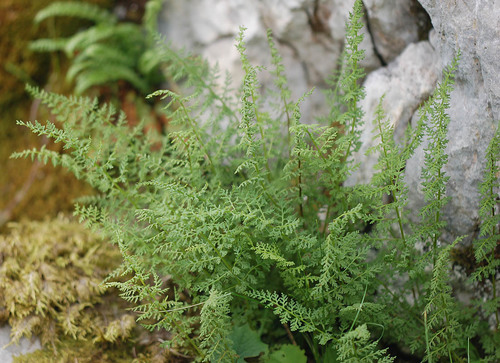
Cystopteris alpina (Lam.) Desv.
Cystopteris alpina is a montane limestone fern in the Cystopteridaceae family, w…
Cystopteridaceae plants belong to the Polypodiales order in the Plantae kingdom. This protruding growth is a reliable identifying feature for the species when observed in the field. For instant identification, use the iNature app — AI-powered and works offline.
Cystopteridaceae is classified in the order Polypodiales, class Polypodiopsida, phylum Tracheophyta. The family contains 16 accepted species worldwide.
Sources: GBIF, iNaturalist, Wikipedia · Disclaimer
Download iNature for free. 10 identifications on us. No account needed. No credit card required.
Download Free on App Store
