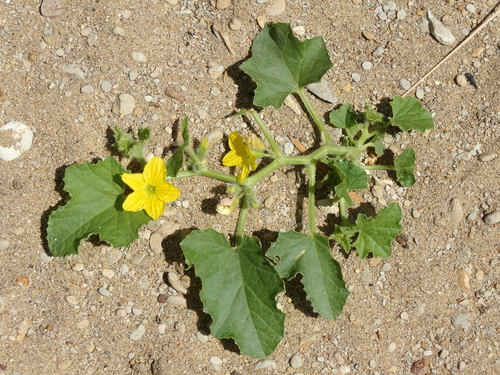
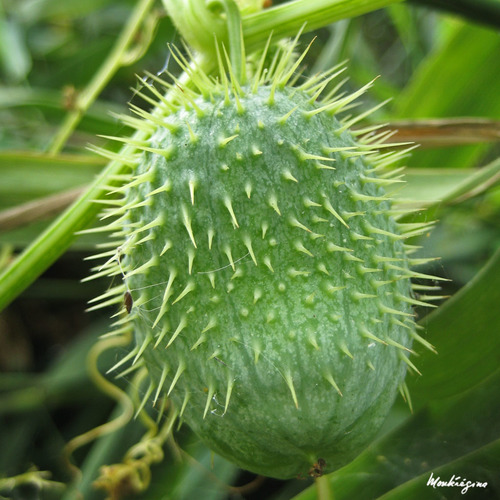
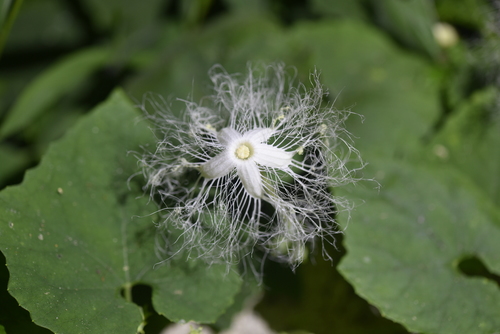
How to Identify Cucurbitaceae

Cucurbitaceae is a plant family in the Plantae kingdom, order Cucurbitales, class Magnoliopsida. The family contains 117 accepted species worldwide. Some species in this family are toxic — exercise caution when handling unknown specimens.

Key Identification Features

For instant identification in the field, use the iNature app — AI-powered, works offline.
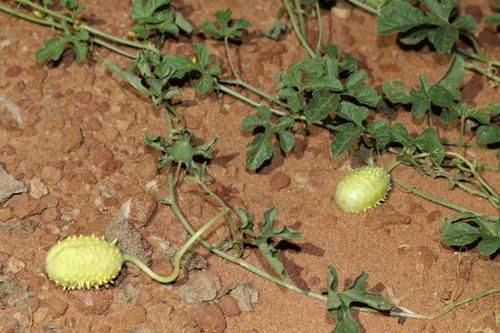
Representative Cucurbitaceae Species

How to identify Cucumis anguria L.

Cucumis anguria L.

Cucumis anguria L.

Cucumis anguria is an African herbaceous vine grown for its edible, cucumber-lik…

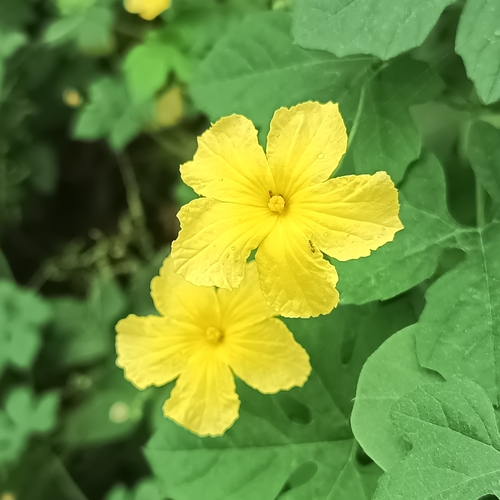
How to identify Momordica charantia L.

Momordica charantia L.

Momordica charantia L.

Momordica charantia L., or bitter melon, is a vine grown for its distinctive bit…

⚠️ Poisonous
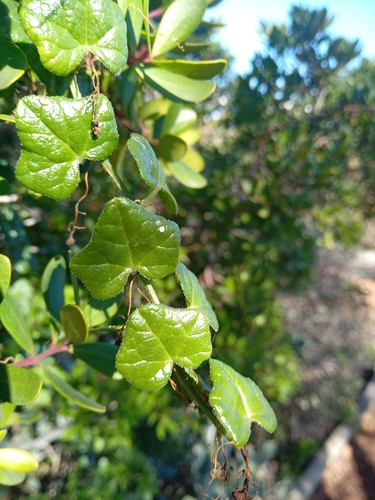
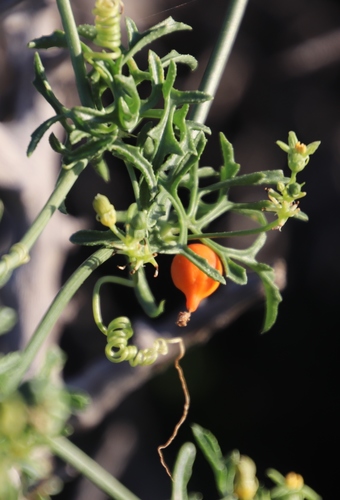
How to identify Kedrostis nana (Lam.) Cogn.

Kedrostis nana (Lam.) Cogn.

Kedrostis nana (Lam.) Cogn.

Kedrostis nana is a dioecious flowering plant that differs from close relatives …

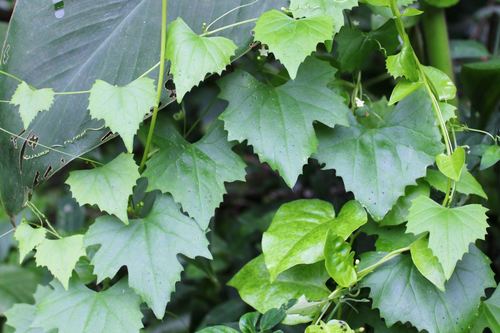
How to identify Zehneria scabra (L.fil.) Sond.

Zehneria scabra (L.fil.) Sond.

Zehneria scabra (L.fil.) Sond.

Zehneria scabra is a climbing herb used in traditional African medicine to treat…

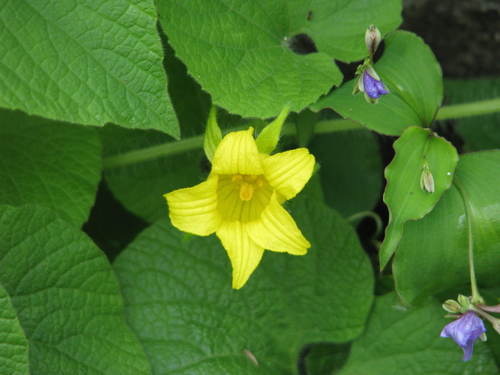
How to identify Thladiantha dubia Bunge

Thladiantha dubia Bunge

Thladiantha dubia Bunge

Thladiantha dubia is a dioecious herbaceous perennial climbing gourd vine native…

How to identify Kedrostis africana (L.) Cogn.

Kedrostis africana (L.) Cogn.

Kedrostis africana (L.) Cogn.

Kedrostis africana, baboon's cucumber, is a southern African succulent used orna…

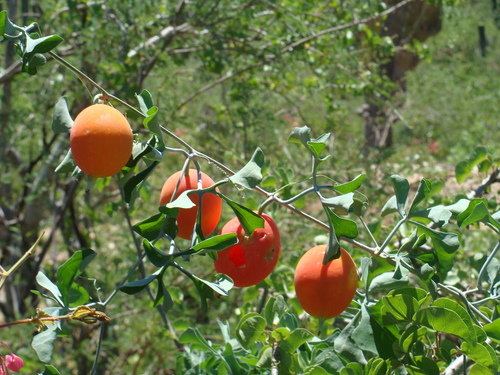
How to identify Ibervillea sonorae (S.Watson) Greene

Ibervillea sonorae (S.Watson) Greene

Ibervillea sonorae (S.Watson) Greene

Ibervillea sonorae is a bitter-fruited perennial tuberous vine native to arid re…

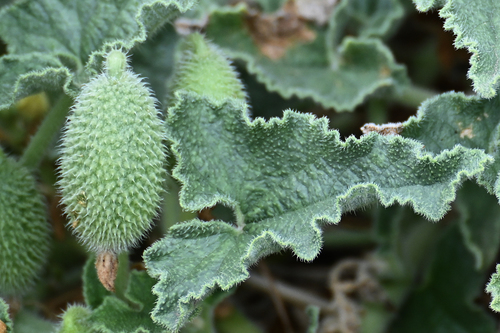
How to identify Ecballium elaterium (L.) A.Rich.

Ecballium elaterium (L.) A.Rich.

Ecballium elaterium (L.) A.Rich.

Ecballium elaterium, the squirting cucumber, is a poisonous plant historically u…

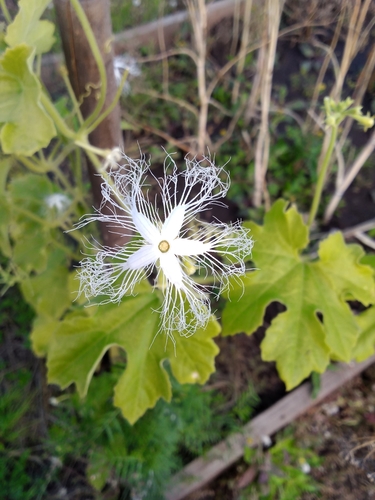
How to identify Trichosanthes kirilowii Maxim.

Trichosanthes kirilowii Maxim.

Trichosanthes kirilowii Maxim.

Trichosanthes kirilowii is a Chinese cucurbit, a fundamental traditional Chinese…

How to identify Cucumis melo L.

Cucumis melo L.

Cucumis melo L.

Cucumis melo L., or melon, is a widely cultivated Cucumis species with varied ri…

How to identify Echinocystis lobata (Michx.) Torr. & A.Gray

Echinocystis lobata (Michx.) Torr. & A.Gray

Echinocystis lobata (Michx.) Torr. & A.Gray

Echinocystis lobata is an annual inedible North American vine with documented tr…

How to identify Trichosanthes cucumeroides (Ser.) Maxim. ex Franch. & Sav.

Trichosanthes cucumeroides (Ser.) Maxim. ex Franch. & Sav.

Trichosanthes cucumeroides (Ser.) Maxim. ex Franch. & Sav.

Trichosanthes cucumeroides, or Japanese snake gourd, is an edible-fruited tropic…

Browse all 117 Cucurbitaceae species →

Frequently Asked Questions

How do you identify Cucurbitaceae?

Cucurbitaceae plants belong to the Cucurbitales order in the Plantae kingdom. has a distinct warty outer surface and an oblong shape. For instant identification, use the iNature app — AI-powered and works offline.

What are the key characteristics of Cucurbitaceae?

Cucurbitaceae is classified in the order Cucurbitales, class Magnoliopsida, phylum Tracheophyta. The concentrated fruit juice extract, called elaterium, was first identified by Stirling in 1835.

⚠️ Are any Cucurbitaceae species poisonous?

Yes, some Cucurbitaceae species are toxic or poisonous. Always exercise caution with unknown specimens. View poisonous Cucurbitaceae species or browse the full poisonous species guide.

Sources: GBIF, iNaturalist, Wikipedia · Disclaimer

Start Exploring Nature Today

Download iNature for free. 10 identifications on us. No account needed. No credit card required.

Download Free on App Store