Key Identification Features
- The species gets its common name from the distinctive shape and mud-based construction of its nests.
For instant identification in the field, use the iNature app — AI-powered, works offline.
Crabronidae is a animal family in the Animalia kingdom, order Hymenoptera, class Insecta. The family contains 89 accepted species worldwide.
For instant identification in the field, use the iNature app — AI-powered, works offline.
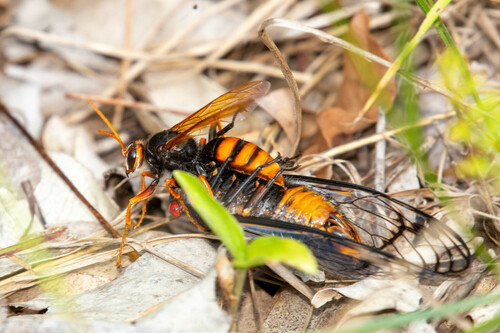
Exeirus lateritius Shuckard, 1838
Exeirus lateritius, the Australian cicada killer wasp, is the only species in it…
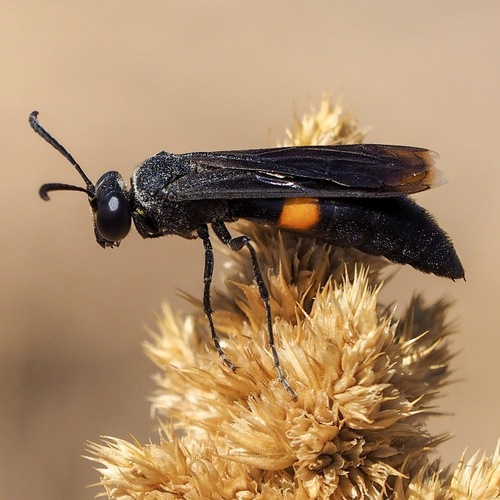
Stizoides renicinctus (Say, 1823)
Stizoides renicinctus is a sand wasp species in the Bembicidae family found in N…
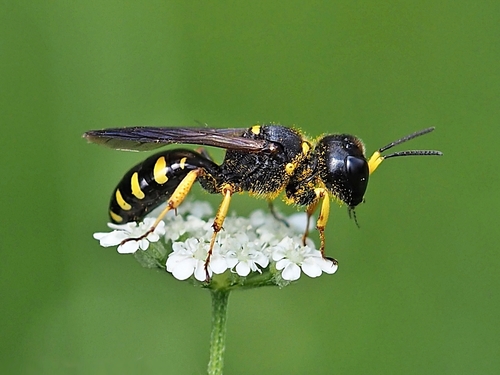
Ectemnius maculosus (Gmelin, 1790)
Ectemnius maculosus is a square-headed wasp native to eastern North America, wit…
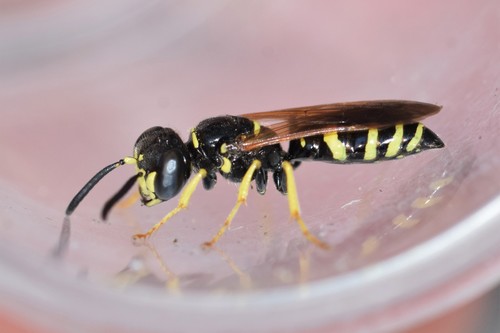
Philanthus lepidus Cresson, 1865
Philanthus lepidus is a North American philanthid wasp that makes false nest bur…
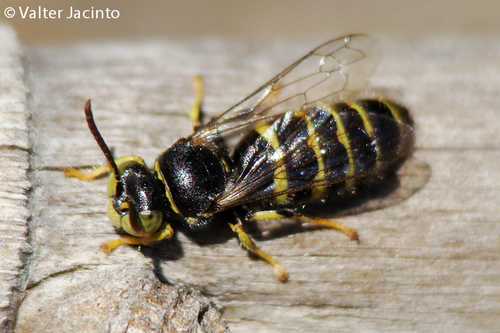
Bembecinus tridens (Fabricius, 1781)
Bembecinus tridens is a black-and-yellow species found across Eurasia and North …
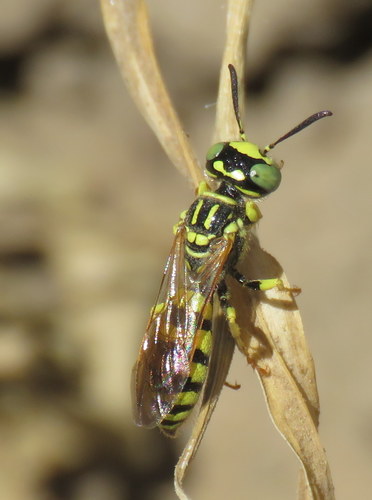
Philanthus multimaculatus Cameron, 1891
Philanthus multimaculatus is a species of beewolf found across western North Ame…
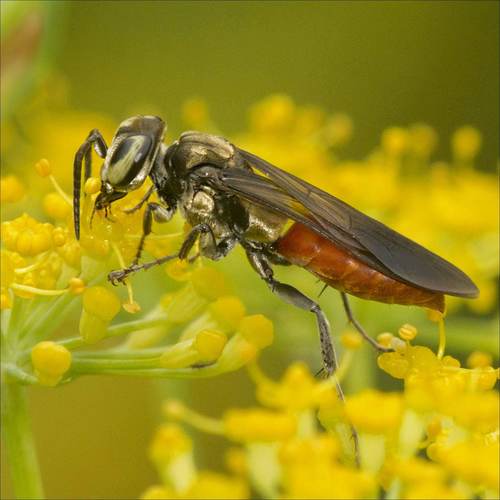
Larra bicolor Fabricius, 1804
Larra bicolor is a solitary wasp used for successful biological control of invas…
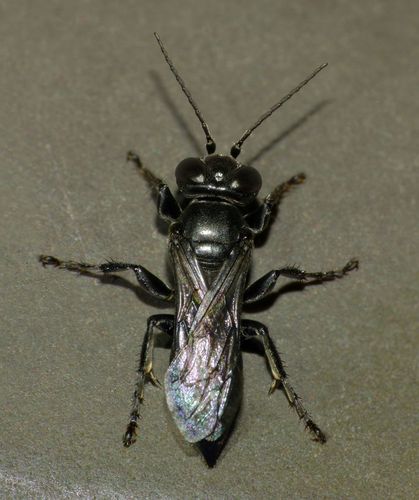
Tachysphex nigerrimus (F.Smith, 1856)
Tachysphex nigerrimus, the black cockroach hunter, is an endemic New Zealand was…
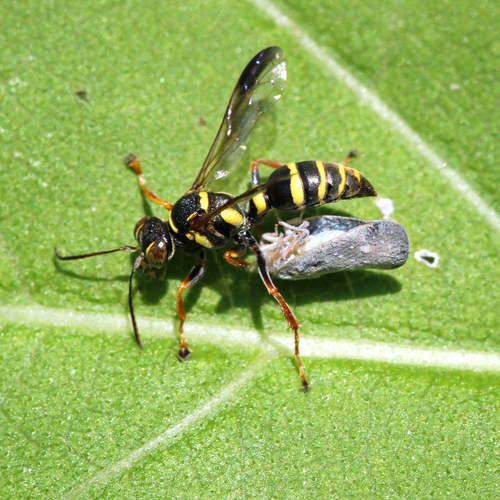
Psammaletes mexicanus (Cameron, 1890)
Psammaletes mexicanus is a sand wasp species in the Bembicidae family found in C…
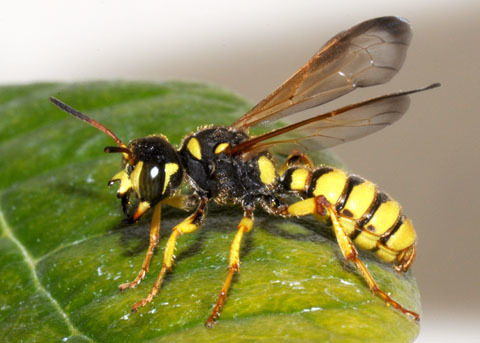
Cerceris sextoides Banks, 1947
Cerceris sextoides is a Philanthidae wasp species found in Central America and N…
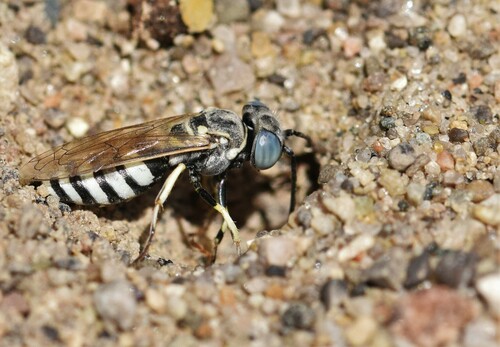
Microbembex monodonta (Say, 1824)
Microbembex monodonta is a sand wasp species in Bembicidae found across the Amer…

Trypoxylon politum Say, 1837
The organ pipe mud dauber (Trypoxylon politum) is a docile predatory wasp native…
Crabronidae animals belong to the Hymenoptera order in the Animalia kingdom. The species gets its common name from the distinctive shape and mud-based construction of its nests. For instant identification, use the iNature app — AI-powered and works offline.
Crabronidae is classified in the order Hymenoptera, class Insecta, phylum Arthropoda. The family contains 89 accepted species worldwide.
Sources: GBIF, iNaturalist, Wikipedia · Disclaimer
Download iNature for free. 10 identifications on us. No account needed. No credit card required.
Download Free on App Store
