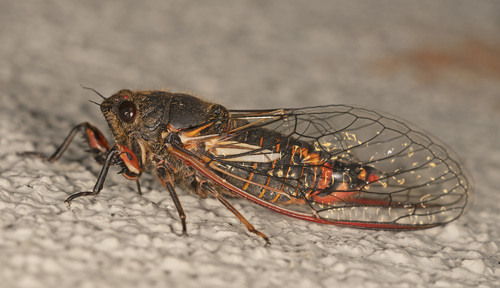
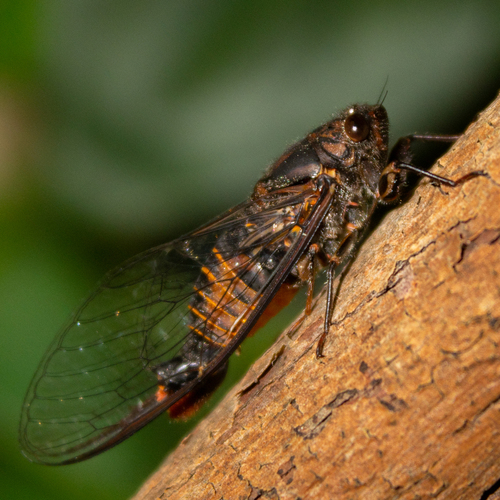
How to Identify Cicadidae

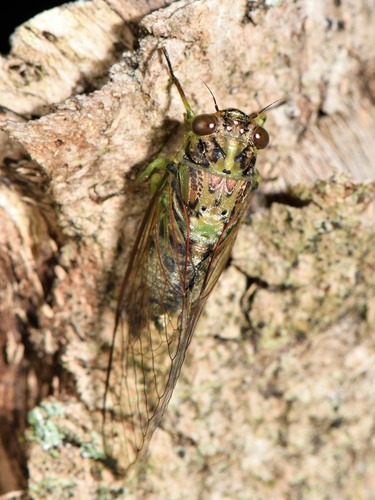
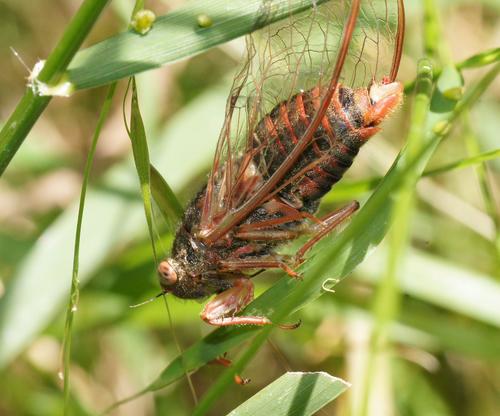
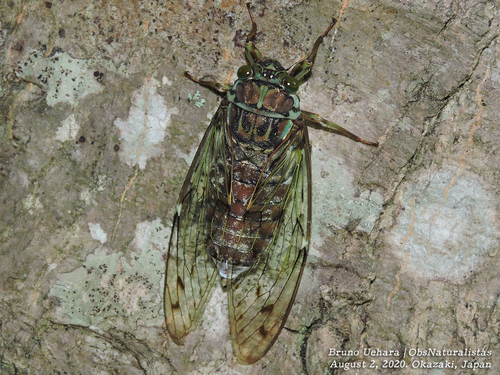
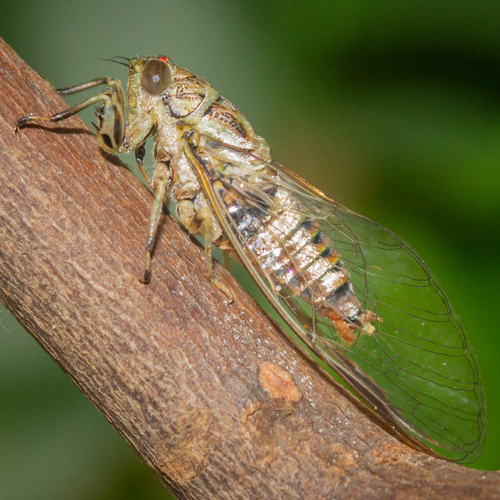
Cicadidae is a animal family in the Animalia kingdom, order Hemiptera, class Insecta. The family contains 207 accepted species worldwide.

Key Identification Features

For instant identification in the field, use the iNature app — AI-powered, works offline.
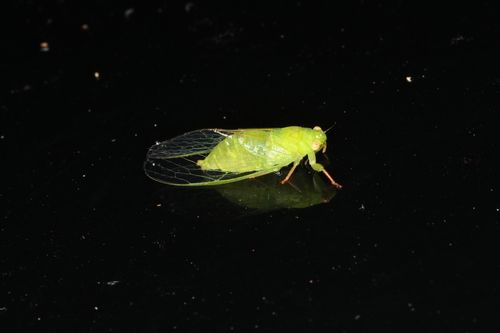
Representative Cicadidae Species

How to identify Guineapsaltria flava (Goding & Froggatt, 1904)

Guineapsaltria flava (Goding & Froggatt, 1904)

Guineapsaltria flava (Goding & Froggatt, 1904)

Guineapsaltria is a 1993-described genus of Chlorocystini cicadas native to Aust…

How to identify Neotibicen tibicen (Linnaeus, 1758)

Neotibicen tibicen (Linnaeus, 1758)

Neotibicen tibicen (Linnaeus, 1758)

Neotibicen tibicen, the morning cicada, is a common North American cicada active…

How to identify Dyticopycna semiclara (Germar, 1834)

Dyticopycna semiclara (Germar, 1834)

Dyticopycna semiclara (Germar, 1834)

Dyticopycna semiclara, the whining forest cicada, is a large endemic South Afric…

How to identify Aleeta curvicosta (Germar, 1834)

Aleeta curvicosta (Germar, 1834)

Aleeta curvicosta (Germar, 1834)

Aleeta curvicosta (the floury baker) is a medium-sized Australian cicada known f…

How to identify Beameria venosa (Uhler, 1888)

Beameria venosa (Uhler, 1888)

Beameria venosa (Uhler, 1888)

Beameria venosa is a species of cicada in the Cicadidae family found in Central …

How to identify Amphipsalta zelandica (Boisduval, 1835)

Amphipsalta zelandica (Boisduval, 1835)

Amphipsalta zelandica (Boisduval, 1835)

Amphipsalta zelandica, the chorus cicada, is New Zealand's largest endemic cicad…

How to identify Kikihia scutellaris (Walker, 1850)

Kikihia scutellaris (Walker, 1850)

Kikihia scutellaris (Walker, 1850)

Kikihia scutellaris, the lesser bronze cicada, is a New Zealand-endemic cicada s…

How to identify Popplepsalta rubristrigata (Goding & Froggatt, 1904)

Popplepsalta rubristrigata (Goding & Froggatt, 1904)

Popplepsalta rubristrigata (Goding & Froggatt, 1904)

Popplepsalta rubristrigata is an insect species with 26–28 mm forewings found in…

How to identify Tanna japonensis (Distant, 1892)

Tanna japonensis (Distant, 1892)

Tanna japonensis (Distant, 1892)

Tanna japonensis is a sexually dimorphic cicada found across a wide range of Jap…

How to identify Telmapsalta hackeri (Distant, 1915)

Telmapsalta hackeri (Distant, 1915)

Telmapsalta hackeri (Distant, 1915)

Telmapsalta is an Australian endemic cicada genus described in 2012 by Maxwell S…

How to identify Yoyetta abdominalis (Distant, 1892)

Yoyetta abdominalis (Distant, 1892)

Yoyetta abdominalis (Distant, 1892)

Yoyetta abdominalis is an Australian cicera species found across south-eastern A…

How to identify Yoyetta humphreyae Moulds & Popple, 2018

Yoyetta humphreyae Moulds & Popple, 2018

Yoyetta humphreyae Moulds & Popple, 2018

Yoyetta humphreyae is a cicada species found in New South Wales, Australia, that…

Browse all 207 Cicadidae species →

Frequently Asked Questions

How do you identify Cicadidae?

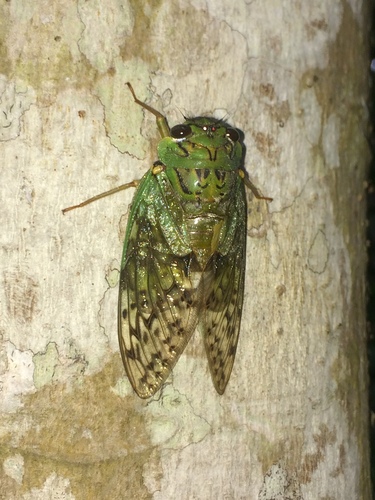
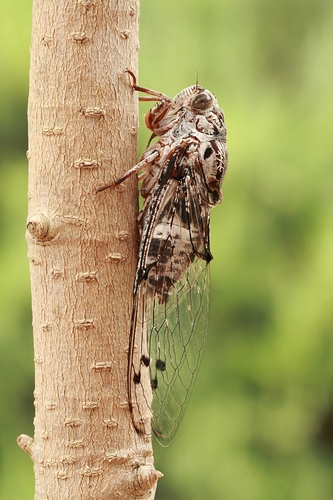
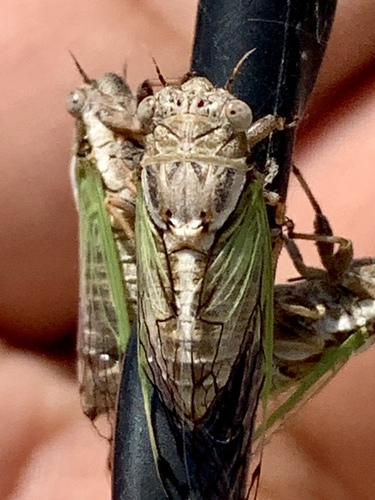
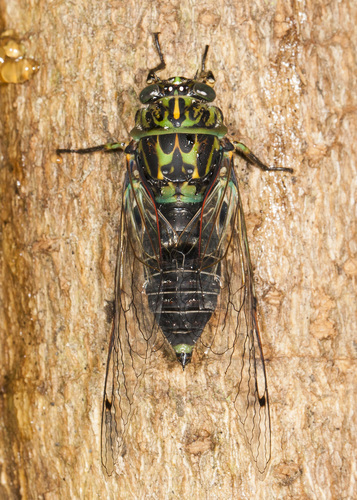
Cicadidae animals belong to the Hemiptera order in the Animalia kingdom. Its wings have distinct green, brown, and translucent patches, and are covered in silvery hairs. For instant identification, use the iNature app — AI-powered and works offline.

What are the key characteristics of Cicadidae?

Cicadidae is classified in the order Hemiptera, class Insecta, phylum Arthropoda. Their legs are brown, sometimes yellowish, with no distinct markings.

Sources: GBIF, iNaturalist, Wikipedia · Disclaimer

Start Exploring Nature Today

Download iNature for free. 10 identifications on us. No account needed. No credit card required.

Download Free on App Store