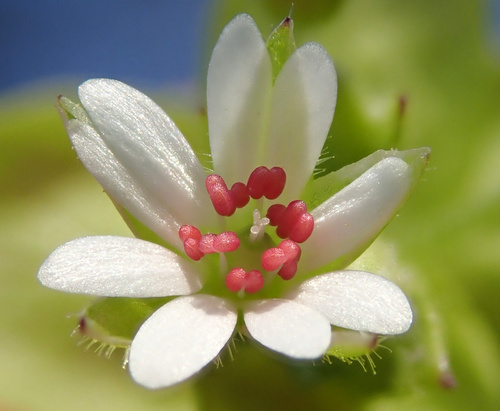
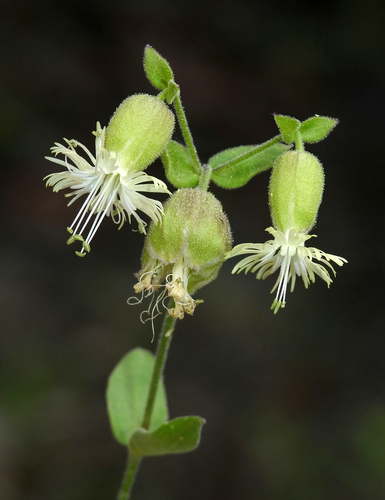
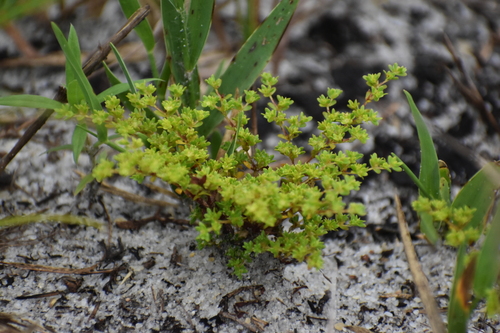
How to Identify Caryophyllaceae

Caryophyllaceae is a plant family in the Plantae kingdom, order Caryophyllales, class Magnoliopsida. The family contains 413 accepted species worldwide. Some species in this family are toxic — exercise caution when handling unknown specimens.

Key Identification Features

For instant identification in the field, use the iNature app — AI-powered, works offline.
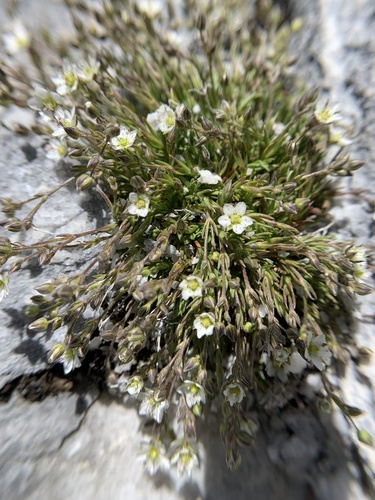
Representative Caryophyllaceae Species

How to identify Sabulina rubella (Wahlenb.) Dillenb. & Kadereit

Sabulina rubella (Wahlenb.) Dillenb. & Kadereit

Sabulina rubella (Wahlenb.) Dillenb. & Kadereit

Sabulina rubella is a small mat-forming perennial herb with a circumboreal distr…

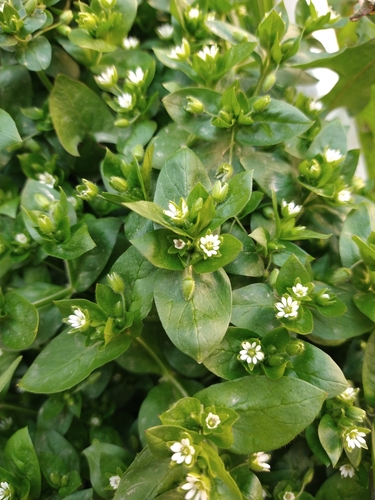
How to identify Stellaria media (L.) Vill.

Stellaria media (L.) Vill.

Stellaria media (L.) Vill.

Stellaria media (common chickweed) is a widespread edible annual with recorded f…

⚠️ Poisonous
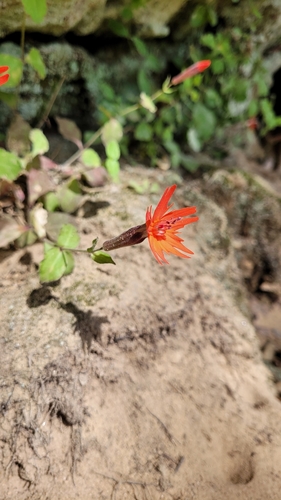
How to identify Silene lemmonii S.Watson

Silene lemmonii S.Watson

Silene lemmonii S.Watson

Silene lemmonii is a moth-pollinated perennial herb with nodding flowers and dee…

How to identify Arenaria grandiflora L.

Arenaria grandiflora L.

Arenaria grandiflora L.

Arenaria grandiflora L. is a Caryophyllaceae plant native to parts of Europe and…

How to identify Silene rotundifolia Nutt.

Silene rotundifolia Nutt.

Silene rotundifolia Nutt.

Roundleaf catchfly (Silene rotundifolia Nutt.) is a related-to-Silene-laciniata …

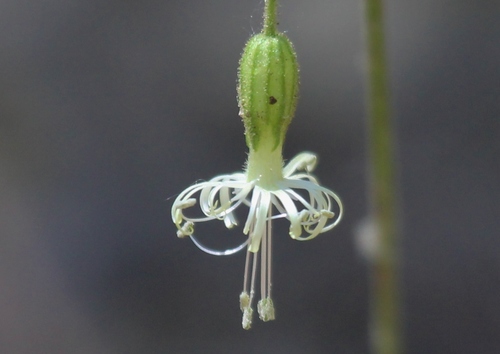
How to identify Silene stellata (L.) Coyte

Silene stellata (L.) Coyte

Silene stellata (L.) Coyte

Silene stellata is a flowering plant native to central and eastern US that bloom…

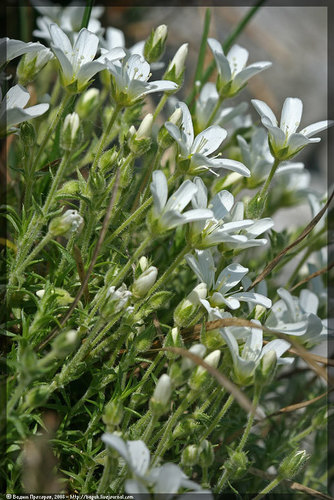
How to identify Arenaria ciliata subsp. multicaulis (L.) Arcang.

Arenaria ciliata subsp. multicaulis (L.) Arcang.

Arenaria ciliata subsp. multicaulis (L.) Arcang.

Fringed sandwort (Arenaria ciliata) is a perennial calcicolous herb found across…

How to identify Sagina decumbens (Elliott) Torr. & A.Gray

Sagina decumbens (Elliott) Torr. & A.Gray

Sagina decumbens (Elliott) Torr. & A.Gray

Sagina decumbens, or trailing/western pearlwort, is a small annual flowering pla…

How to identify Silene sargentii S.Watson

Silene sargentii S.Watson

Silene sargentii S.Watson

Silene sargentii, Sargent's catchfly, is a small alpine perennial flowering plan…

How to identify Stellaria neglecta (Lej.) Weihe

Stellaria neglecta (Lej.) Weihe

Stellaria neglecta (Lej.) Weihe

Stellaria neglecta, greater chickweed, is a sprawling flowering plant found acro…

How to identify Silene greenei (S.Watson ex B.L.Rob.) Howell

Silene greenei (S.Watson ex B.L.Rob.) Howell

Silene greenei (S.Watson ex B.L.Rob.) Howell

Silene greenei is a flowering plant with two recognized subspecies native to wes…

How to identify Paronychia herniarioides (Michx.) Nutt.

Paronychia herniarioides (Michx.) Nutt.

Paronychia herniarioides (Michx.) Nutt.

Paronychia herniarioides is a rare plant of sandy fire-dependent southeast US ha…

Browse all 413 Caryophyllaceae species →

Frequently Asked Questions

How do you identify Caryophyllaceae?

Caryophyllaceae plants belong to the Caryophyllales order in the Plantae kingdom. Three chickweed species share the trait of having a single line of hairs running down the stem, and several features can be used to tell them apart. For instant identification, use the iNature app — AI-powered and works offline.

What are the key characteristics of Caryophyllaceae?

Caryophyllaceae is classified in the order Caryophyllales, class Magnoliopsida, phylum Tracheophyta. The family contains 413 accepted species worldwide.

⚠️ Are any Caryophyllaceae species poisonous?

Yes, some Caryophyllaceae species are toxic or poisonous. Always exercise caution with unknown specimens. View poisonous Caryophyllaceae species or browse the full poisonous species guide.

Sources: GBIF, iNaturalist, Wikipedia · Disclaimer

Start Exploring Nature Today

Download iNature for free. 10 identifications on us. No account needed. No credit card required.

Download Free on App Store