How to Identify Cactaceae — Cactus Family

Cactaceae (Cactus Family) is a plant family in the Plantae kingdom, order Caryophyllales, class Magnoliopsida. The family contains 637 accepted species worldwide. Some species in this family are toxic — exercise caution when handling unknown specimens.

Key Identification Features

For instant identification in the field, use the iNature app — AI-powered, works offline.
Representative Cactaceae Species

How to identify Harrisia divaricata (Lam.) Backeb.

Harrisia divaricata (Lam.) Backeb.

Harrisia divaricata (Lam.) Backeb.

Harrisia divaricata is a shrubby cactus widespread in Hispaniolan scrub habitats…

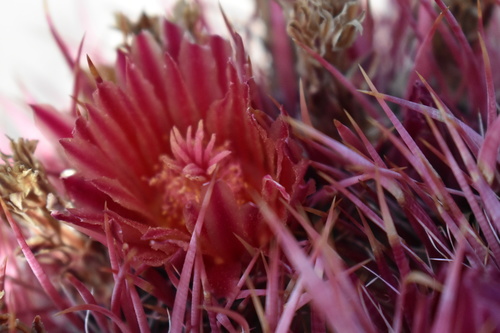
How to identify Ferocactus gracilis H.E.Gates

Ferocactus gracilis H.E.Gates

Ferocactus gracilis H.E.Gates

Ferocactus gracilis is a large solitary barrel cactus native to low-elevation de…

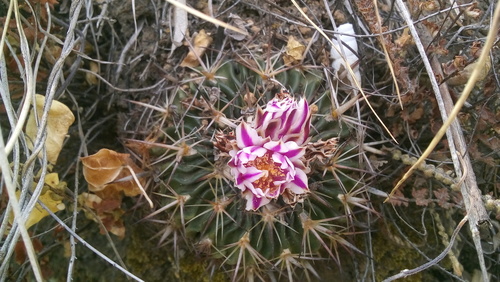
How to identify Stenocactus obvallatus (DC.) A.Berger

Stenocactus obvallatus (DC.) A.Berger

Stenocactus obvallatus (DC.) A.Berger

Stenocactus obvallatus is a small spherical ribbed cactus native to multiple Mex…

How to identify Pediocactus sileri (Daul) L.D.Benson

Pediocactus sileri (Daul) L.D.Benson

Pediocactus sileri (Daul) L.D.Benson

Pediocactus sileri is a small gypsophilic cactus of the southwestern US, with on…

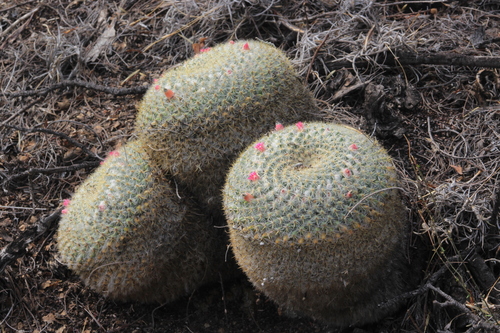
How to identify Mammillaria muehlenpfordtii C.F.Först.

Mammillaria muehlenpfordtii C.F.Först.

Mammillaria muehlenpfordtii C.F.Först.

Mammillaria muehlenpfordtii is a clustering succulent native to central Mexican …

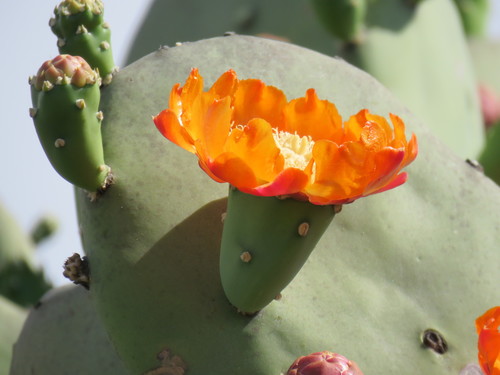
How to identify Opuntia quimilo K.Schum.

Opuntia quimilo K.Schum.

Opuntia quimilo K.Schum.

Opuntia quimilo is a large tree-like cactus pollinated by bees and hummingbirds,…

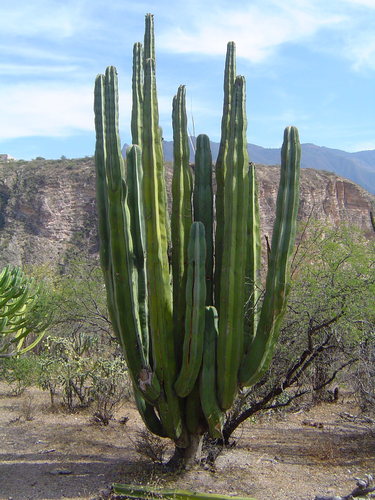
How to identify Stenocereus dumortieri (Scheidw.) Buxb.

Stenocereus dumortieri (Scheidw.) Buxb.

Stenocereus dumortieri (Scheidw.) Buxb.

Stenocereus dumortieri is a large candelabra-shaped tree cactus native to centra…

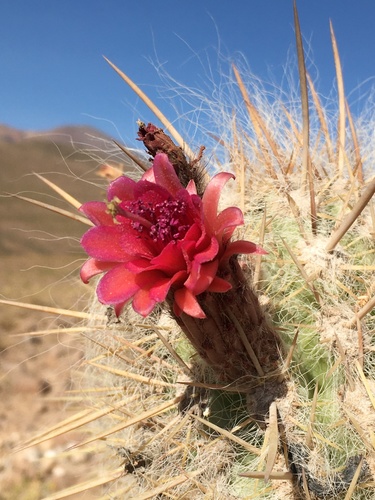
How to identify Oreocereus leucotrichus (Phil.) Wagenkn.

Oreocereus leucotrichus (Phil.) Wagenkn.

Oreocereus leucotrichus (Phil.) Wagenkn.

Oreocereus leucotrichus is a shrubby columnar cactus with crimson flowers, found…

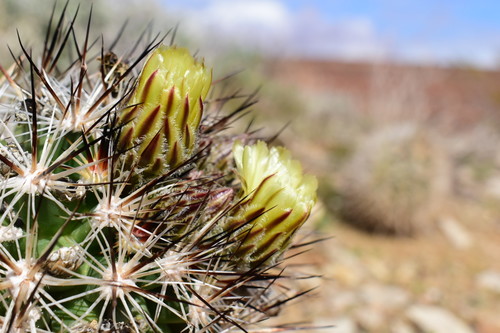
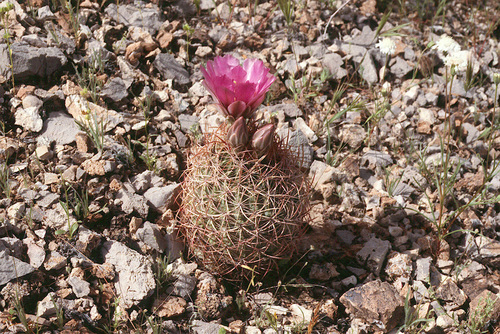
How to identify Sclerocactus johnsonii subsp. johnsonii

Sclerocactus johnsonii subsp. johnsonii

Sclerocactus johnsonii subsp. johnsonii

Sclerocactus johnsonii is a small cactus native to desert areas of the southwest…

How to identify Leuenbergeria guamacho (F.A.C.Weber) Lodé

Leuenbergeria guamacho (F.A.C.Weber) Lodé

Leuenbergeria guamacho (F.A.C.Weber) Lodé

Leuenbergeria guamacho is a slow-growing tree with edible fruit native to the Am…

How to identify Copiapoa gigantea Backeb.

Copiapoa gigantea Backeb.

Copiapoa gigantea Backeb.

Copiapoa gigantea Backeb. is a large clustering ribbed cactus with yellow flower…

How to identify Echinocereus bonkerae Thornber & Bonker

Echinocereus bonkerae Thornber & Bonker

Echinocereus bonkerae Thornber & Bonker

Echinocereus bonkerae is a spiny cactus native to Arizona (US) and Sonora (Mexic…

Browse all 637 Cactaceae species →

Frequently Asked Questions

How do you identify Cactaceae?

Cactaceae plants belong to the Caryophyllales order in the Plantae kingdom. Berger is a spherical cactus that features numerous wavy blue-green ribs; it typically has 30 to 40 ribs, and usually fewer than 50 total. For instant identification, use the iNature app — AI-powered and works offline.

What are the key characteristics of Cactaceae?

Cactaceae is classified in the order Caryophyllales, class Magnoliopsida, phylum Tracheophyta. is a multi-branched tree with a distinct main stem, growing to a maximum height of 10 meters.

⚠️ Are any Cactaceae species poisonous?

Yes, some Cactaceae species are toxic or poisonous. Always exercise caution with unknown specimens. View poisonous Cactaceae species or browse the full poisonous species guide.

Sources: GBIF, iNaturalist, Wikipedia · Disclaimer

Start Exploring Nature Today

Download iNature for free. 10 identifications on us. No account needed. No credit card required.

Download Free on App Store