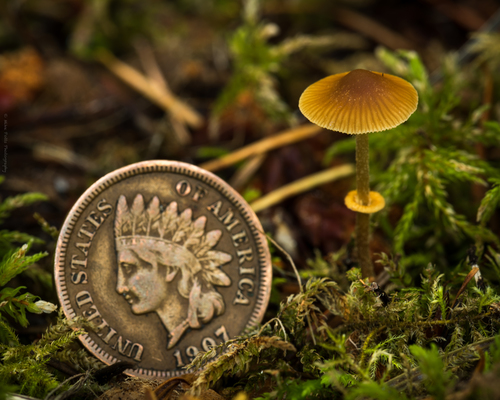
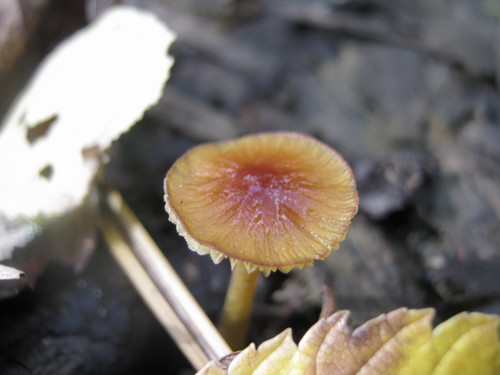
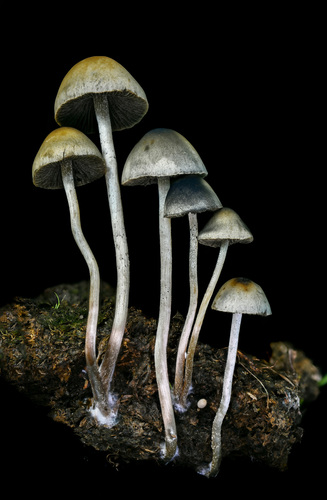
How to Identify Bolbitiaceae

Bolbitiaceae is a fungus family in the Fungi kingdom, order Agaricales, class Agaricomycetes. The family contains 22 accepted species worldwide.

Key Identification Features

For instant identification in the field, use the iNature app — AI-powered, works offline.

Representative Bolbitiaceae Species

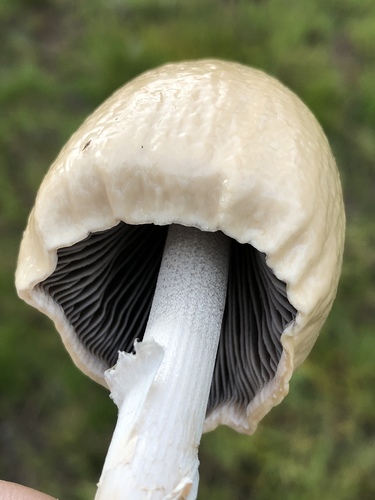
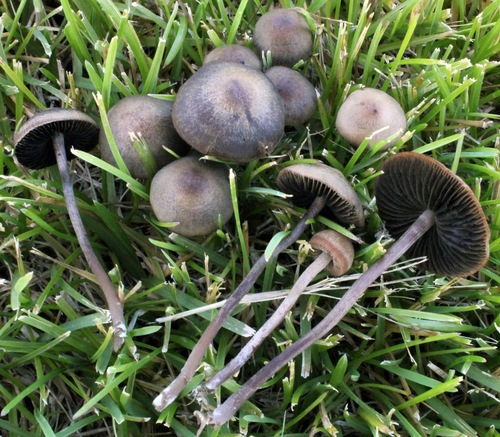
How to identify Panaeolina foenisecii (Pers.) Maire

Panaeolina foenisecii (Pers.) Maire

Panaeolina foenisecii (Pers.) Maire

Panaeolina foenisecii is a common North American lawn mushroom with distinct hyg…

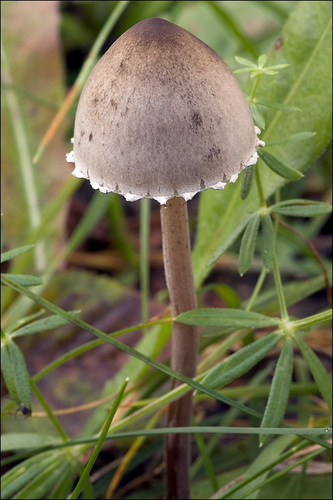
How to identify Panaeolus semiovatus (Sowerby) S.Lundell & Nannf.

Panaeolus semiovatus (Sowerby) S.Lundell & Nannf.

Panaeolus semiovatus (Sowerby) S.Lundell & Nannf.

Panaeolus semiovatus is a dung-growing mushroom found in many temperate zones, w…

How to identify Panaeolus papilionaceus (Bull.) Quél.

Panaeolus papilionaceus (Bull.) Quél.

Panaeolus papilionaceus (Bull.) Quél.

Panaeolus papilionaceus is a dung-inhabiting mushroom with a black spore print, …

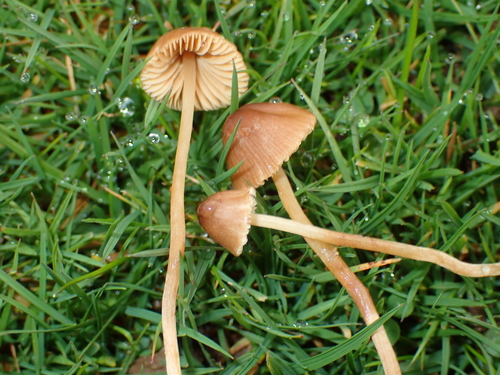
How to identify Conocybe tenera (Schaeff.) Kühner

Conocybe tenera (Schaeff.) Kühner

Conocybe tenera (Schaeff.) Kühner

Conocybe tenera is a small saprotrophic mushroom widely distributed worldwide, c…

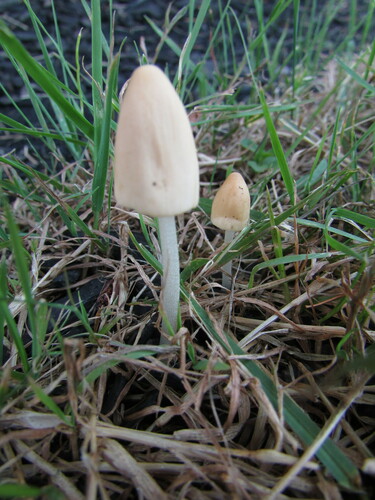
How to identify Conocybe apala (Fr.) Arnolds

Conocybe apala (Fr.) Arnolds

Conocybe apala (Fr.) Arnolds

Conocybe apala is a small, fragile saprobic mushroom found across Europe and Nor…

How to identify Panaeolus fimicola (Pers.) Gillet

Panaeolus fimicola (Pers.) Gillet

Panaeolus fimicola (Pers.) Gillet

Panaeolus fimicola is a widespread mushroom that grows in grassy areas, dung, an…

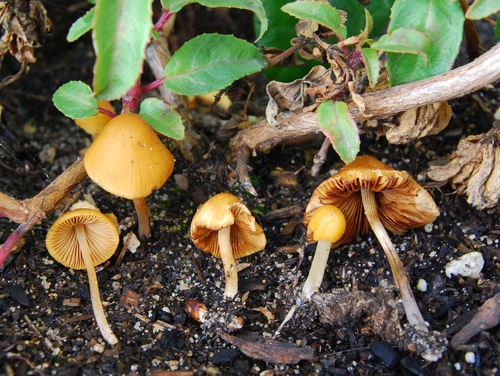
How to identify Conocybe aurea (Jul.Schäff.) Hongo

Conocybe aurea (Jul.Schäff.) Hongo

Conocybe aurea (Jul.Schäff.) Hongo

Conocybe aurea is a rare widespread saprobic mushroom with unknown toxicity, fou…

How to identify Conocybe filaris (Fr.) Kühner

Conocybe filaris (Fr.) Kühner

Conocybe filaris (Fr.) Kühner

Conocybe filaris is a deadly poisonous small brown mushroom found across Europe,…

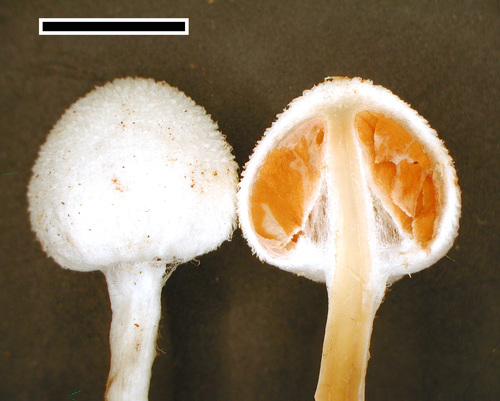
How to identify Tympanella galanthina (Cooke & Massee) E.Horak

Tympanella galanthina (Cooke & Massee) E.Horak

Tympanella galanthina (Cooke & Massee) E.Horak

Tympanella galanthina is a secotioid fungus found in wet forests across New Zeal…

How to identify Conocybe rugosa (Peck) Watling

Conocybe rugosa (Peck) Watling

Conocybe rugosa (Peck) Watling

Conocybe rugosa is a deadly poisonous small brown mushroom with a movable ring, …

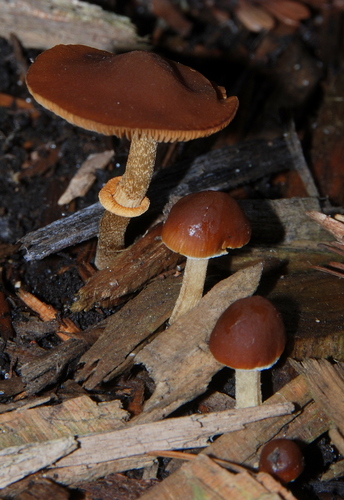
How to identify Bolbitius callistus (Peck) Watling

Bolbitius callistus (Peck) Watling

Bolbitius callistus (Peck) Watling

Bolbitius callistus is a fungus species in Bolbitiaceae, first described by Peck…

How to identify Panaeolus cyanescens Sacc.

Panaeolus cyanescens Sacc.

Panaeolus cyanescens Sacc.

Panaeolus cyanescens Sacc. is a dung-inhabiting mushroom with blue-staining dama…

Browse all 22 Bolbitiaceae species →

Frequently Asked Questions

How do you identify Bolbitiaceae?

Bolbitiaceae funguss belong to the Agaricales order in the Fungi kingdom. The flesh has no distinct taste or smell, and is extremely fragile to the touch. For instant identification, use the iNature app — AI-powered and works offline.

What are the key characteristics of Bolbitiaceae?

Bolbitiaceae is classified in the order Agaricales, class Agaricomycetes, phylum Basidiomycota. The species has no distinctive taste and no distinctive odor.

Sources: GBIF, iNaturalist, Wikipedia · Disclaimer

Start Exploring Nature Today

Download iNature for free. 10 identifications on us. No account needed. No credit card required.

Download Free on App Store