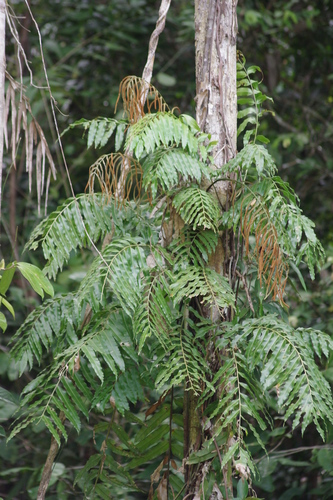
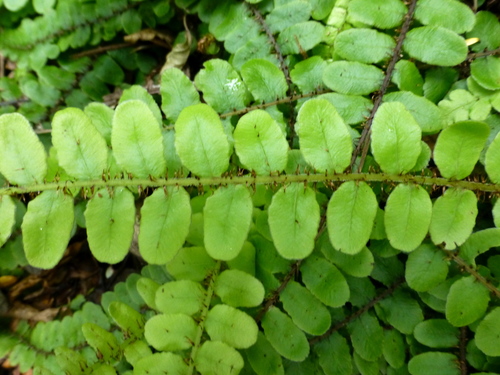
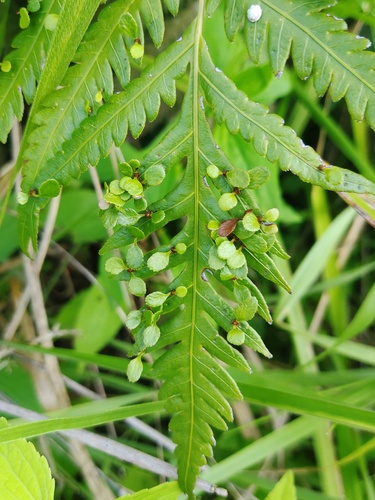
How to Identify Blechnaceae

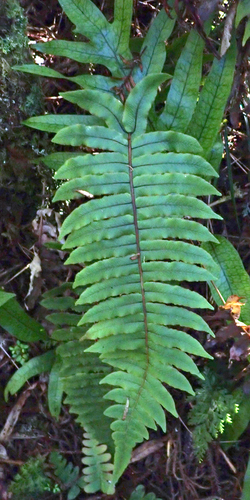
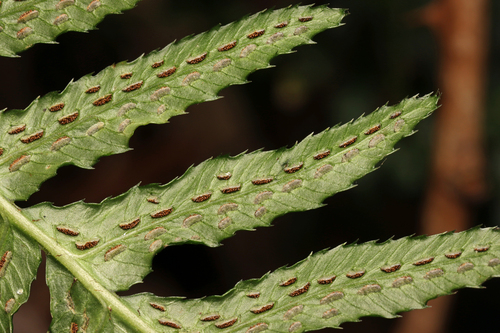
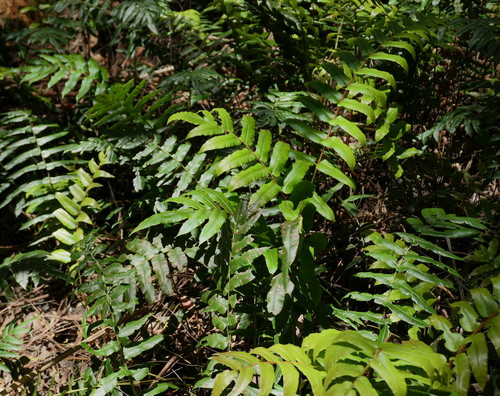
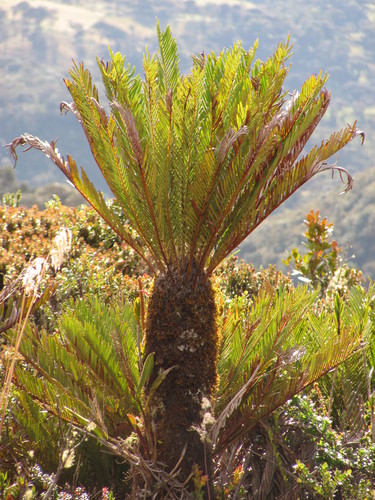
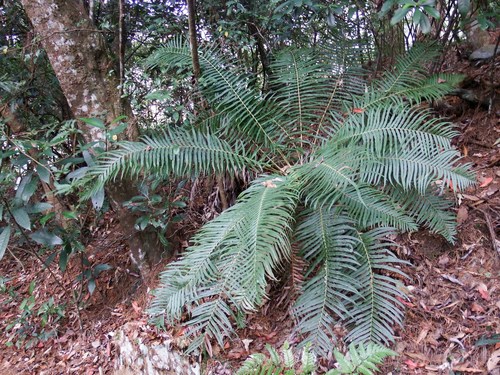
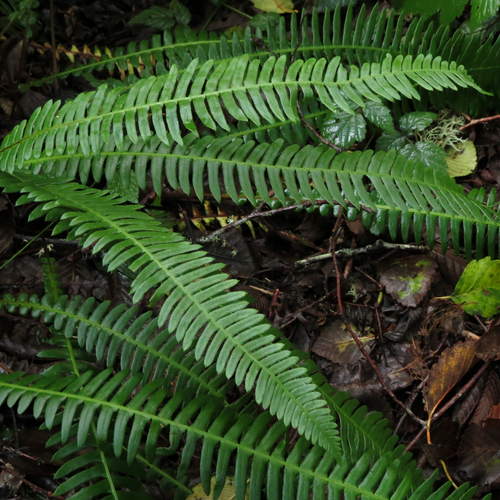
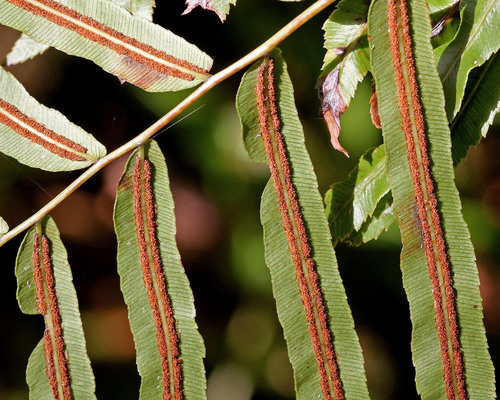
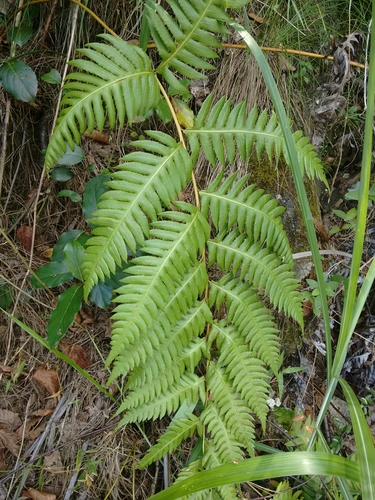
Blechnaceae is a plant family in the Plantae kingdom, order Polypodiales, class Polypodiopsida. The family contains 58 accepted species worldwide.

Key Identification Features

For instant identification in the field, use the iNature app — AI-powered, works offline.
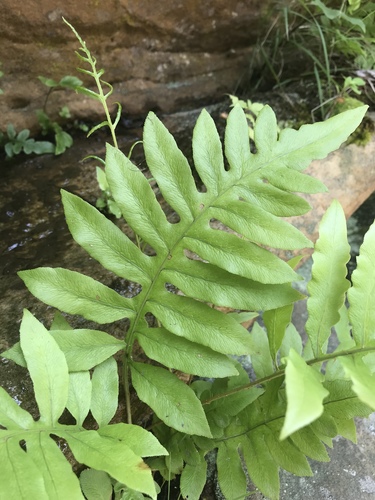
Representative Blechnaceae Species

How to identify Lorinseria areolata (L.) C.Presl

Lorinseria areolata (L.) C.Presl

Lorinseria areolata (L.) C.Presl

Lorinseria areolata, the netted chain fern, is the only species in the fern genu…

How to identify Cranfillia deltoides (Colenso) de Lange & Parris

Cranfillia deltoides (Colenso) de Lange & Parris

Cranfillia deltoides (Colenso) de Lange & Parris

Cranfillia deltoides is a medium New Zealand and southeast Australian green fern…

How to identify Doodia caudata (Cav.) R.Br.

Doodia caudata (Cav.) R.Br.

Doodia caudata (Cav.) R.Br.

Doodia caudata is a dimorphic evergreen fern native to Australia and New Zealand…

How to identify Parablechnum wattsii (Tindale) Gasper & Salino

Parablechnum wattsii (Tindale) Gasper & Salino

Parablechnum wattsii (Tindale) Gasper & Salino

Parablechnum wattsii is a common terrestrial fern native to southeastern Austral…

How to identify Lomariocycas aurata (Fée) Gasper & A.R.Sm.

Lomariocycas aurata (Fée) Gasper & A.R.Sm.

Lomariocycas aurata (Fée) Gasper & A.R.Sm.

Lomariocycas aurata is a tree fern from the Blechnaceae family native to forests…

How to identify Brainea insignis (Hook.) J.Sm.

Brainea insignis (Hook.) J.Sm.

Brainea insignis (Hook.) J.Sm.

Brainea is a monotypic fern genus in Blechnaceae, accepted in PPG I, though some…

How to identify Struthiopteris spicant (L.) Weiss

Struthiopteris spicant (L.) Weiss

Struthiopteris spicant (L.) Weiss

Struthiopteris spicant is a two-leaf-type fern native to multiple regions, used …

How to identify Telmatoblechnum serrulatum (Rich.) Perrie, D.J.Ohlsen & Brownsey

Telmatoblechnum serrulatum (Rich.) Perrie, D.J.Ohlsen & Brownsey

Telmatoblechnum serrulatum (Rich.) Perrie, D.J.Ohlsen & Brownsey

Telmatoblechnum serrulatum is a monomorphic fern found across the Americas, Mala…

How to identify Woodwardia unigemmata (Makino) Nakai

Woodwardia unigemmata (Makino) Nakai

Woodwardia unigemmata (Makino) Nakai

Woodwardia unigemmata, the jewelled chain fern, is an evergreen ornamental fern …

How to identify Stenochlaena palustris (Burm.fil.) Bedd.

Stenochlaena palustris (Burm.fil.) Bedd.

Stenochlaena palustris (Burm.fil.) Bedd.

Stenochlaena palustris is an edible medicinal long-climbing fern with documented…

How to identify Cranfillia fluviatilis (R.Br.) Gasper & V.A.O.Dittrich

Cranfillia fluviatilis (R.Br.) Gasper & V.A.O.Dittrich

Cranfillia fluviatilis (R.Br.) Gasper & V.A.O.Dittrich

Cranfillia fluviatilis is a small rosette-forming ground fern native to New Zeal…

How to identify Woodwardia prolifera Hook. & Arn.

Woodwardia prolifera Hook. & Arn.

Woodwardia prolifera Hook. & Arn.

Woodwardia prolifera Hook. & Arn. is an evergreen diploid fern popular in hortic…

Browse all 58 Blechnaceae species →

Frequently Asked Questions

How do you identify Blechnaceae?

Blechnaceae plants belong to the Polypodiales order in the Plantae kingdom. This species produces two distinct types of fronds: sterile fronds measure 40–60 cm long, while fertile fronds measure 50–70 cm long. For instant identification, use the iNature app — AI-powered and works offline.

What are the key characteristics of Blechnaceae?

Blechnaceae is classified in the order Polypodiales, class Polypodiopsida, phylum Tracheophyta. Parablechnum wattsii follows the typical fern life cycle, with distinct sporophyte and gametophyte stages.

Sources: GBIF, iNaturalist, Wikipedia · Disclaimer

Start Exploring Nature Today

Download iNature for free. 10 identifications on us. No account needed. No credit card required.

Download Free on App Store