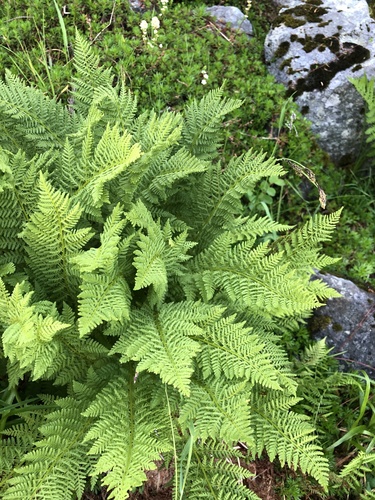
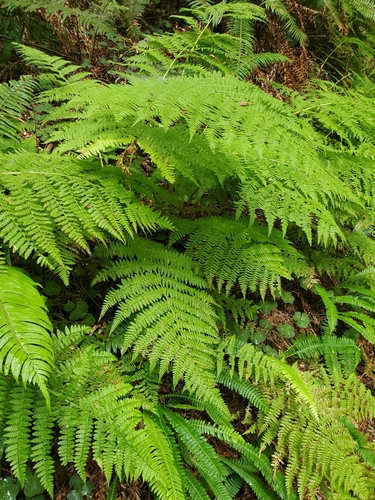
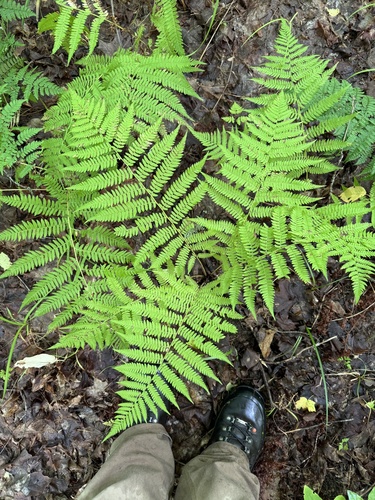
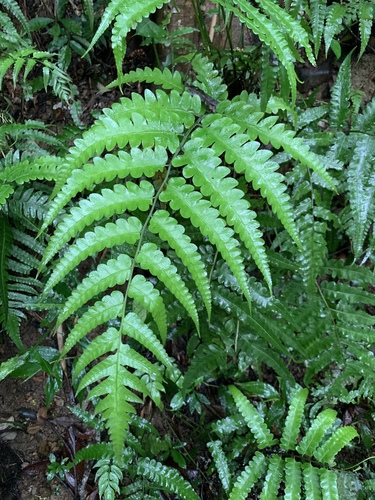
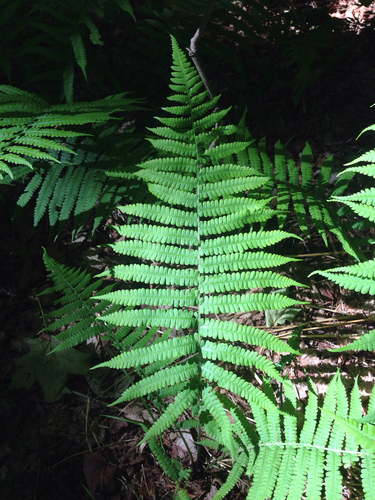
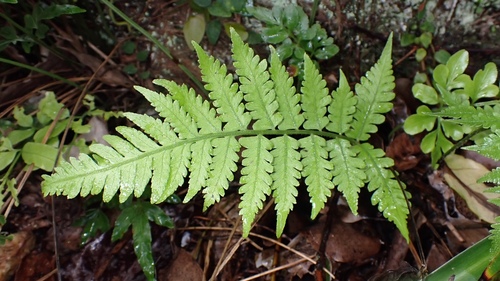
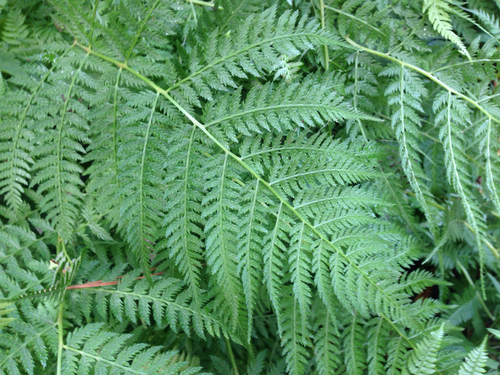
How to Identify Athyriaceae

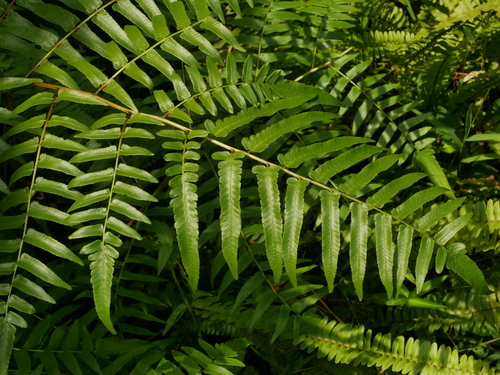
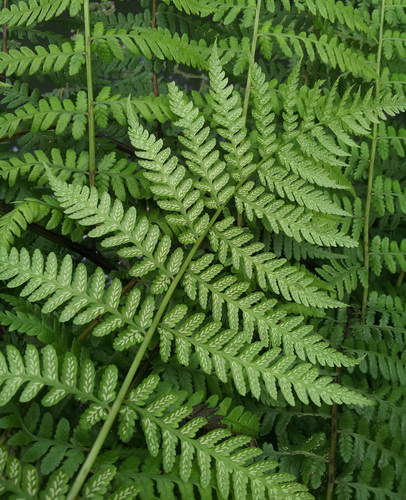
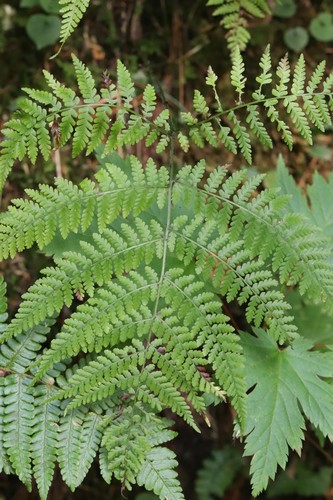
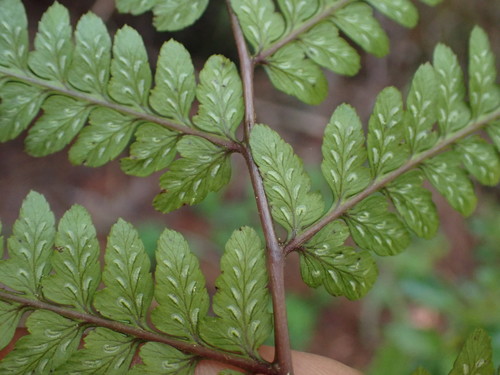
Athyriaceae is a plant family in the Plantae kingdom, order Polypodiales, class Polypodiopsida. The family contains 34 accepted species worldwide. Some species in this family are toxic — exercise caution when handling unknown specimens.

Key Identification Features

For instant identification in the field, use the iNature app — AI-powered, works offline.
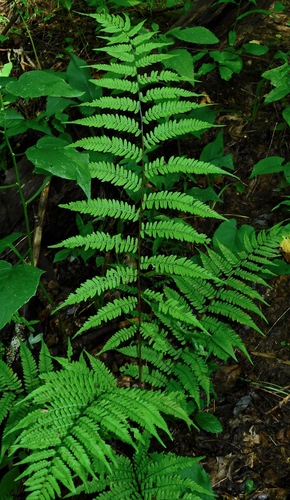
Representative Athyriaceae Species

How to identify Athyrium asplenioides (Michx.) Desv.

Athyrium asplenioides (Michx.) Desv.

Athyrium asplenioides (Michx.) Desv.

Southern lady fern Athyrium asplenioides is a deciduous fern species in the fami…

How to identify Diplazium esculentum (Retz.) Sw.

Diplazium esculentum (Retz.) Sw.

Diplazium esculentum (Retz.) Sw.

Diplazium esculentum is an edible large perennial fern widely used as a vegetabl…

⚠️ Poisonous
How to identify Diplazium australe (R.Br.) Wakef.

Diplazium australe (R.Br.) Wakef.

Diplazium australe (R.Br.) Wakef.

Diplazium australe, the Austral lady fern, is a small fern native to moist shade…

How to identify Diplazium sibiricum (Turcz. ex Kunze) Sa.Kurata

Diplazium sibiricum (Turcz. ex Kunze) Sa.Kurata

Diplazium sibiricum (Turcz. ex Kunze) Sa.Kurata

Diplazium sibiricum, mole-ladder, is a fern found across parts of Russia, Finlan…

How to identify Athyrium arisanense (Hayata) Tagawa

Athyrium arisanense (Hayata) Tagawa

Athyrium arisanense (Hayata) Tagawa

Athyrium arisanense is an endemic Taiwanese fern of the Athyriaceae family named…

How to identify Athyrium americanum (Butters) Maxon

Athyrium americanum (Butters) Maxon

Athyrium americanum (Butters) Maxon

Athyrium americanum, the American alpine lady fern, is an Aspleniaceae fern nati…

How to identify Athyrium filix-femina (L.) Roth

Athyrium filix-femina (L.) Roth

Athyrium filix-femina (L.) Roth

Athyrium filix-femina, lady fern, is a hardy fern split into three species, grow…

How to identify Athyrium angustum (Willd.) C.Presl

Athyrium angustum (Willd.) C.Presl

Athyrium angustum (Willd.) C.Presl

Athyrium angustum, the northern lady fern, is a distinct fern native to northeas…

How to identify Diplazium dilatatum Blume

Diplazium dilatatum Blume

Diplazium dilatatum Blume

Diplazium dilatatum Blume is a small fern that grows in moist shaded areas acros…

How to identify Deparia acrostichoides (Sw.) M.Kato

Deparia acrostichoides (Sw.) M.Kato

Deparia acrostichoides (Sw.) M.Kato

Deparia acrostichoides, the silvery spleenwort, is a common fern with distinct t…

How to identify Deparia petersenii (Kunze) M.Kato

Deparia petersenii (Kunze) M.Kato

Deparia petersenii (Kunze) M.Kato

Deparia petersenii, the Japanese lady fern, is a perennial invasive fern native …

How to identify Athyrium yokoscense (Franch. & Sav.) Christ

Athyrium yokoscense (Franch. & Sav.) Christ

Athyrium yokoscense (Franch. & Sav.) Christ

Athyrium yokoscense is a heavy metal-tolerant fern found near East Asian mining …

Browse all 34 Athyriaceae species →

Frequently Asked Questions

How do you identify Athyriaceae?

Athyriaceae plants belong to the Polypodiales order in the Plantae kingdom. Athyrium filix-femina (common lady fern) is now commonly split into three distinct species: the typical A. For instant identification, use the iNature app — AI-powered and works offline.

What are the key characteristics of Athyriaceae?

Athyriaceae is classified in the order Polypodiales, class Polypodiopsida, phylum Tracheophyta. Each sorus is covered by a distinct kidney-shaped (reniform) indusium that ranges in color from whitish to brown.

⚠️ Are any Athyriaceae species poisonous?

Yes, some Athyriaceae species are toxic or poisonous. Always exercise caution with unknown specimens. View poisonous Athyriaceae species or browse the full poisonous species guide.

Sources: GBIF, iNaturalist, Wikipedia · Disclaimer

Start Exploring Nature Today

Download iNature for free. 10 identifications on us. No account needed. No credit card required.

Download Free on App Store