How to Identify Asphodelaceae

Asphodelaceae is a plant family in the Plantae kingdom, order Asparagales, class Liliopsida. The family contains 213 accepted species worldwide. Some species in this family are toxic — exercise caution when handling unknown specimens.

Key Identification Features

For instant identification in the field, use the iNature app — AI-powered, works offline.
Representative Asphodelaceae Species

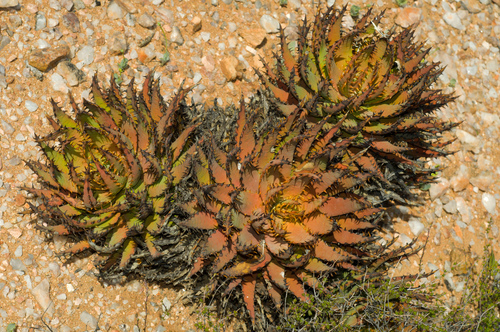
How to identify Aloe melanacantha A.Berger

Aloe melanacantha A.Berger

Aloe melanacantha A.Berger

Aloe melanacantha is a rare succulent endemic to Namaqualand, far western South …

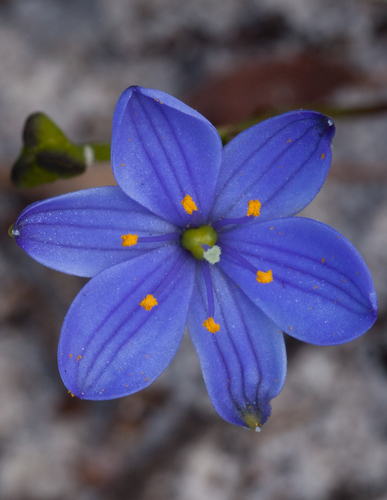
How to identify Chamaescilla corymbosa (R.Br.) F.Muell. ex Benth.

Chamaescilla corymbosa (R.Br.) F.Muell. ex Benth.

Chamaescilla corymbosa (R.Br.) F.Muell. ex Benth.

Chamaescilla corymbosa is an endemic Australian tuberous perennial herb that pro…

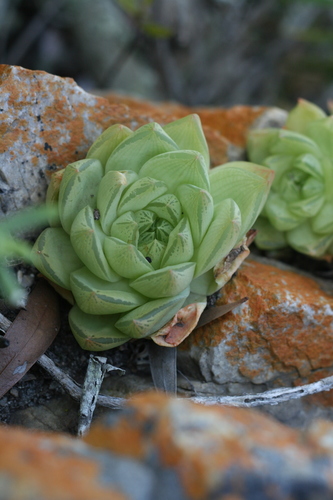
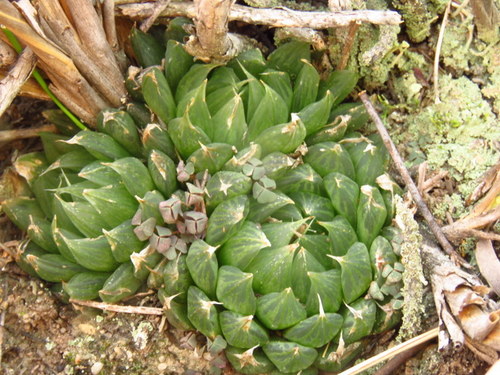
How to identify Haworthia cymbiformis (Haw.) Duval

Haworthia cymbiformis (Haw.) Duval

Haworthia cymbiformis (Haw.) Duval

Haworthia cymbiformis is a small clumping succulent native to Eastern Cape, Sout…

How to identify Aloiampelos commixta (A.Berger) Klopper & Gideon F.Sm.

Aloiampelos commixta (A.Berger) Klopper & Gideon F.Sm.

Aloiampelos commixta (A.Berger) Klopper & Gideon F.Sm.

Aloiampelos commixta is an endemic Cape Peninsula rambling aloe grown as an orna…

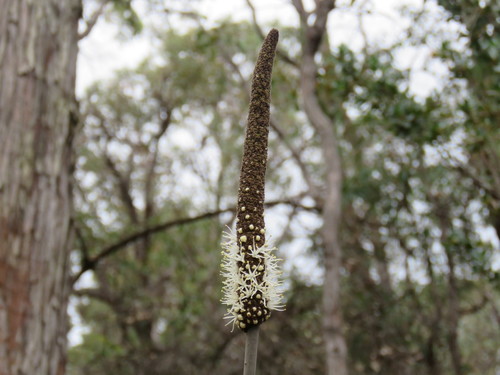
How to identify Xanthorrhoea gracilis Endl.

Xanthorrhoea gracilis Endl.

Xanthorrhoea gracilis Endl.

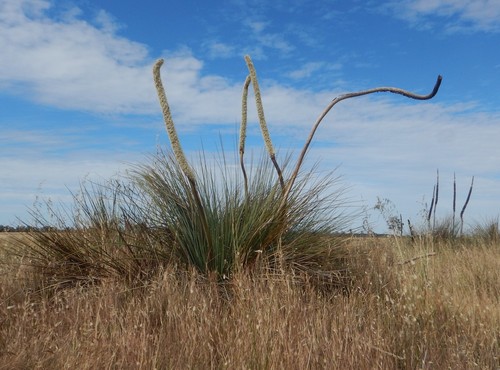
Xanthorrhoea gracilis is a trunkless tufted perennial grass tree native to Weste…

How to identify Xanthorrhoea caespitosa D.J.Bedford

Xanthorrhoea caespitosa D.J.Bedford

Xanthorrhoea caespitosa D.J.Bedford

Xanthorrhoea caespitosa, the sand-heath grasstree, is a vulnerable perennial gra…

How to identify Gasteria disticha (L.) Haw.

Gasteria disticha (L.) Haw.

Gasteria disticha (L.) Haw.

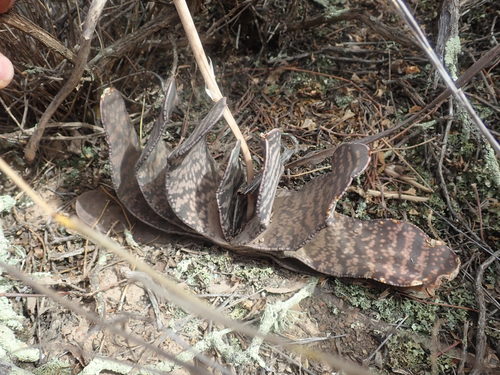
Gasteria disticha is a distichous-leaved succulent native to South Africa’s West…

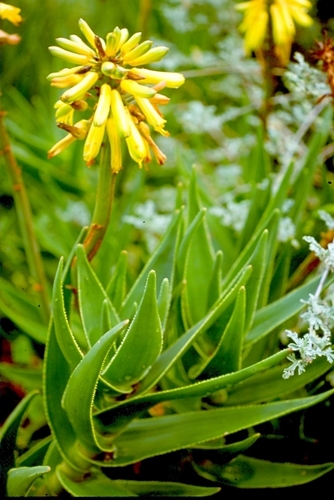
How to identify Aloe broomii Schönland

Aloe broomii Schönland

Aloe broomii Schönland

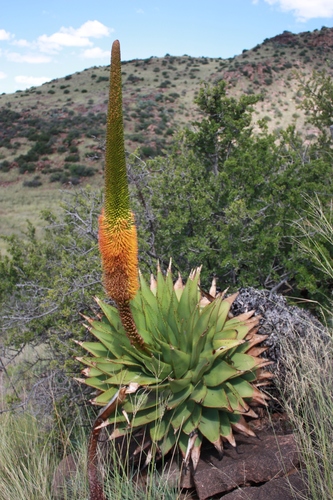
Aloe broomii is a robust succulent aloe native to southern Africa, used for medi…

How to identify Astroloba corrugata N.L.Mey. & Gideon F.Sm.

Astroloba corrugata N.L.Mey. & Gideon F.Sm.

Astroloba corrugata N.L.Mey. & Gideon F.Sm.

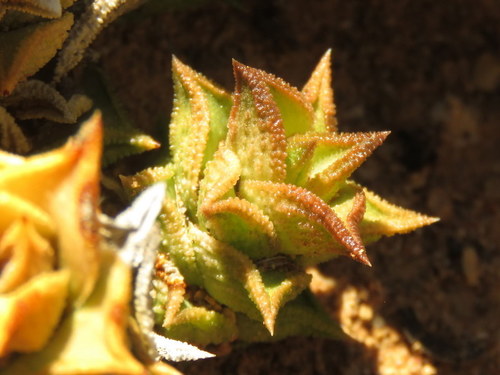
Astroloba corrugata is a compact leafy succulent from South Africa’s Western Cap…

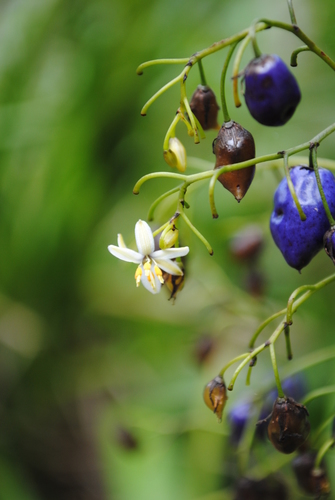
How to identify Dianella sandwicensis Hook. & Arn.

Dianella sandwicensis Hook. & Arn.

Dianella sandwicensis Hook. & Arn.

Dianella sandwicensis, called ʻukiʻuki in Hawaiian, is a native flax lily of Haw…

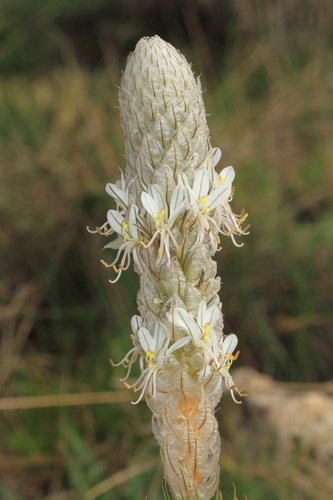
How to identify Asphodeline taurica (Pall. ex M.Bieb.) Endl.

Asphodeline taurica (Pall. ex M.Bieb.) Endl.

Asphodeline taurica (Pall. ex M.Bieb.) Endl.

Asphodeline taurica is scattered in northern and central Greek mountains, reachi…

How to identify Haworthia mucronata Haw.

Haworthia mucronata Haw.

Haworthia mucronata Haw.

Haworthia mucronata is a small South African endemic Haworthia, identifiable by …

Browse all 213 Asphodelaceae species →

Frequently Asked Questions

How do you identify Asphodelaceae?

Asphodelaceae plants belong to the Asparagales order in the Plantae kingdom. A key distinctive feature of this species is its soft, boat-shaped leaves; the species epithet "cymbiformis" literally translates to "boat-shaped". For instant identification, use the iNature app — AI-powered and works offline.

What are the key characteristics of Asphodelaceae?

Asphodelaceae is classified in the order Asparagales, class Liliopsida, phylum Tracheophyta. Its thick, fleshy leaves are evenly spaced along a fine stem, with distinctive green stripes on the internodes.

⚠️ Are any Asphodelaceae species poisonous?

Yes, some Asphodelaceae species are toxic or poisonous. Always exercise caution with unknown specimens. View poisonous Asphodelaceae species or browse the full poisonous species guide.

Sources: GBIF, iNaturalist, Wikipedia · Disclaimer

Start Exploring Nature Today

Download iNature for free. 10 identifications on us. No account needed. No credit card required.

Download Free on App Store