How to Identify Apocynaceae

Apocynaceae is a plant family in the Plantae kingdom, order Gentianales, class Magnoliopsida. The family contains 426 accepted species worldwide. Some species in this family are toxic — exercise caution when handling unknown specimens.

Key Identification Features

For instant identification in the field, use the iNature app — AI-powered, works offline.
Representative Apocynaceae Species

How to identify Asclepias subulata Decne.

Asclepias subulata Decne.

Asclepias subulata Decne.

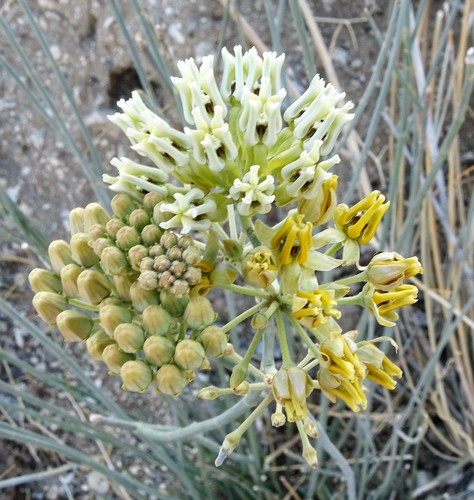
Asclepias subulata, or rush/desert milkweed, is a native North American desert p…

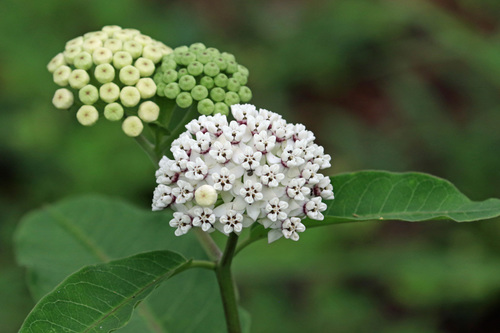
How to identify Asclepias variegata L.

Asclepias variegata L.

Asclepias variegata L.

Asclepias variegata is a perennial herb with white flowers that grows in upland …

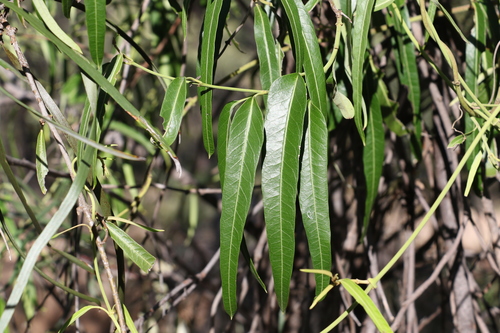
How to identify Parsonsia eucalyptophylla F.Muell.

Parsonsia eucalyptophylla F.Muell.

Parsonsia eucalyptophylla F.Muell.

Parsonsia eucalyptophylla is a native Australian tall woody climbing vine that p…

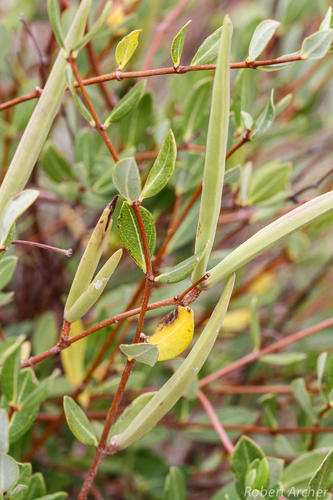
How to identify Cryptolepis oblongifolia (Meisn.) Schltr.

Cryptolepis oblongifolia (Meisn.) Schltr.

Cryptolepis oblongifolia (Meisn.) Schltr.

Cryptolepis oblongifolia, the red-stemmed milk rope, is a multi-stemmed Apocynac…

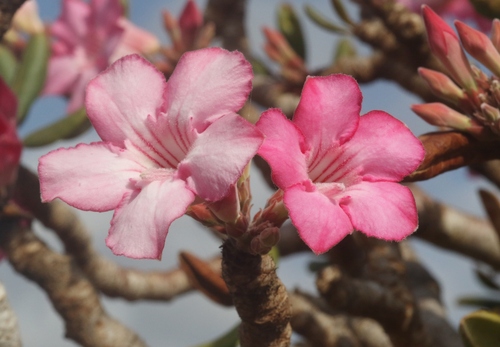
How to identify Adenium obesum subsp. multiflorum (Klotzsch) G.D.Rowley

Adenium obesum subsp. multiflorum (Klotzsch) G.D.Rowley

Adenium obesum subsp. multiflorum (Klotzsch) G.D.Rowley

Adenium obesum subsp. multiflorum is a succulent shrub grown as a houseplant, wi…

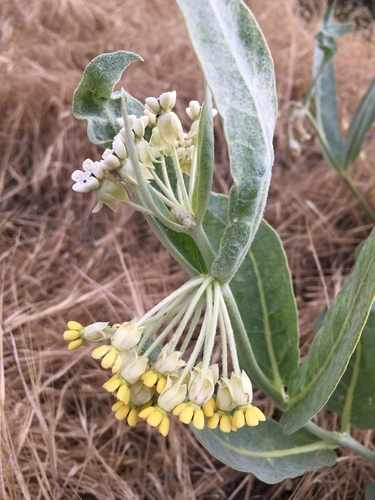
How to identify Asclepias vestita Hook. & Arn.

Asclepias vestita Hook. & Arn.

Asclepias vestita Hook. & Arn.

Asclepias vestita, or woolly milkweed, is an endemic California perennial milkwe…

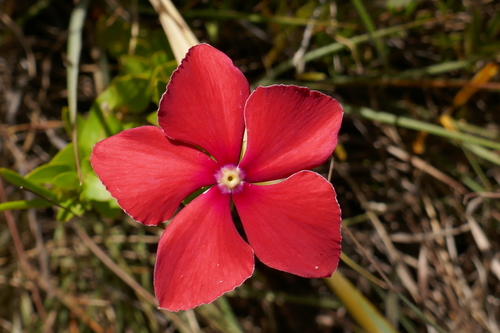
How to identify Catharanthus ovalis Markgr.

Catharanthus ovalis Markgr.

Catharanthus ovalis Markgr.

Catharanthus ovalis is an endemic Madagascan flowering plant in the dogbane fami…

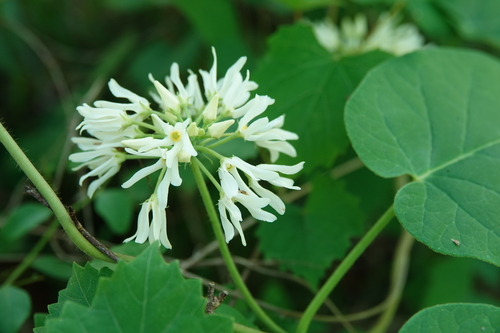
How to identify Matelea baldwyniana (Sweet) Woodson

Matelea baldwyniana (Sweet) Woodson

Matelea baldwyniana (Sweet) Woodson

Matelea baldwyniana is a perennial milkweed vine native to central and southeast…

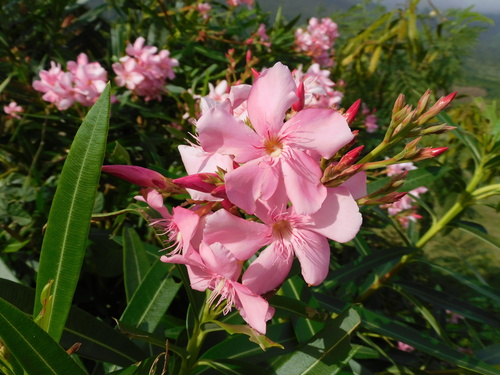
How to identify Nerium oleander L.

Nerium oleander L.

Nerium oleander L.

Nerium oleander L., or oleander, is a widespread toxic ornamental shrub detailed…

⚠️ Poisonous
How to identify Hoya pubicalyx Merr.

Hoya pubicalyx Merr.

Hoya pubicalyx Merr.

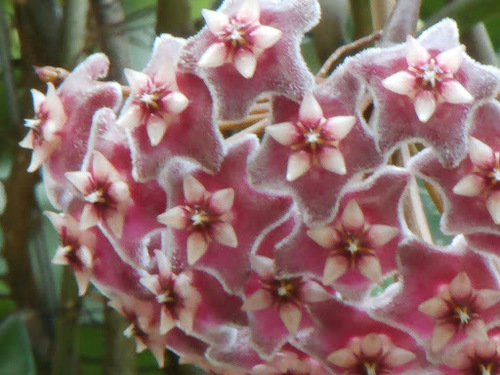
Hoya pubicalyx Merr. is a vining epiphytic plant, grown as a houseplant, feature…

How to identify Apocynum cannabinum L.

Apocynum cannabinum L.

Apocynum cannabinum L.

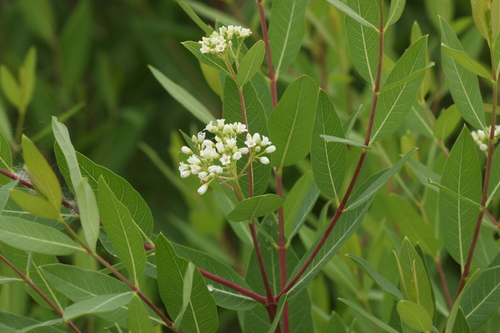
Apocynum cannabinum is a toxic North American plant with edible seeds and a hist…

⚠️ Poisonous
How to identify Carissa haematocarpa (Eckl.) A.DC.

Carissa haematocarpa (Eckl.) A.DC.

Carissa haematocarpa (Eckl.) A.DC.

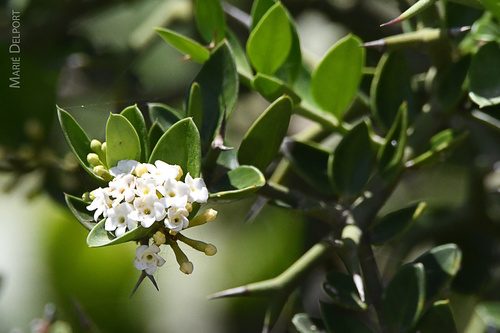
Carissa haematocarpa is a drought-tolerant southern African spiny shrub with edi…

Browse all 426 Apocynaceae species →

Frequently Asked Questions

How do you identify Apocynaceae?

Apocynaceae plants belong to the Gentianales order in the Plantae kingdom. Inflorescences holding distinctive flowers grow at the tops of the stems. For instant identification, use the iNature app — AI-powered and works offline.

What are the key characteristics of Apocynaceae?

Apocynaceae is classified in the order Gentianales, class Magnoliopsida, phylum Tracheophyta. This species was first formally published as a distinct species in 1970.

⚠️ Are any Apocynaceae species poisonous?

Yes, some Apocynaceae species are toxic or poisonous. Always exercise caution with unknown specimens. View poisonous Apocynaceae species or browse the full poisonous species guide.

Sources: GBIF, iNaturalist, Wikipedia · Disclaimer

Start Exploring Nature Today

Download iNature for free. 10 identifications on us. No account needed. No credit card required.

Download Free on App Store