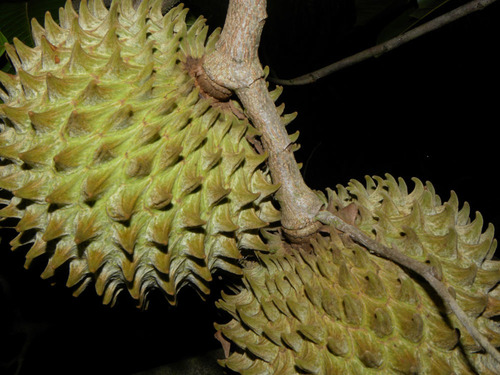
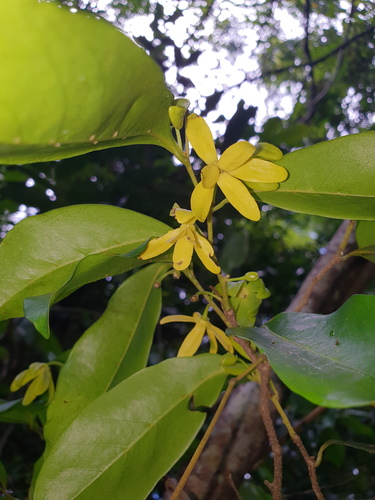
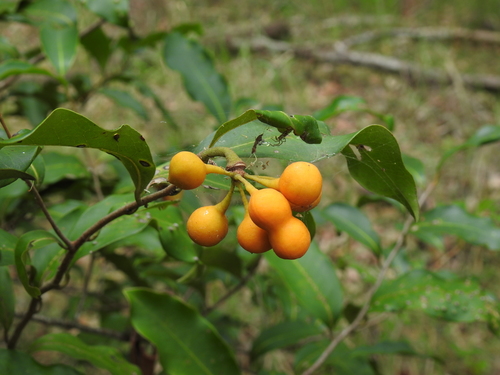
How to Identify Annonaceae

Annonaceae is a plant family in the Plantae kingdom, order Magnoliales, class Magnoliopsida. The family contains 38 accepted species worldwide. Some species in this family are toxic — exercise caution when handling unknown specimens.

Key Identification Features

For instant identification in the field, use the iNature app — AI-powered, works offline.
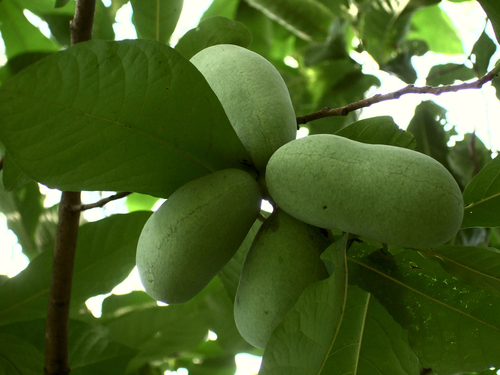
Representative Annonaceae Species

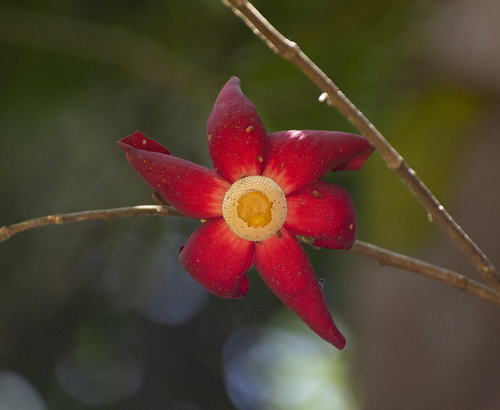
How to identify Asimina triloba (L.) Dunal

Asimina triloba (L.) Dunal

Asimina triloba (L.) Dunal

Asimina triloba, or pawpaw, is a temperate North American native small tree grow…

⚠️ Poisonous
How to identify Annona macroprophyllata Donn.Sm.

Annona macroprophyllata Donn.Sm.

Annona macroprophyllata Donn.Sm.

Annona macroprophyllata Donn.Sm. is a 3–4 m tall ilama bush with documented cult…

How to identify Asimina obovata (Willd.) Nash

Asimina obovata (Willd.) Nash

Asimina obovata (Willd.) Nash

Asimina obovata is a shrub or tree species with alternately arranged pinnate-vei…

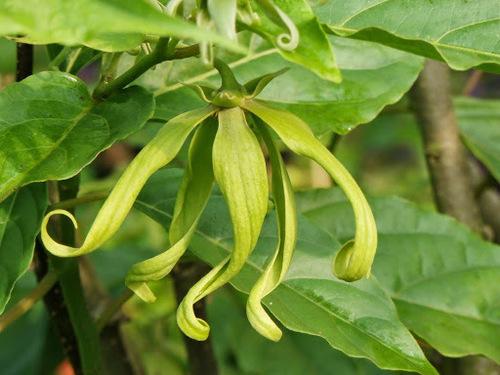
How to identify Cananga odorata (Lam.) Hook.f. & Thomson

Cananga odorata (Lam.) Hook.f. & Thomson

Cananga odorata (Lam.) Hook.f. & Thomson

Cananga odorata, or ylang-ylang, is a fragrant tropical tree widely cultivated f…

How to identify Annona senegalensis Pers.

Annona senegalensis Pers.

Annona senegalensis Pers.

Annona senegalensis Pers. is an African shrub or small tree used widely for food…

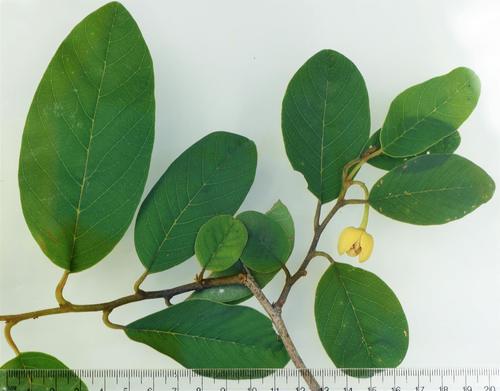
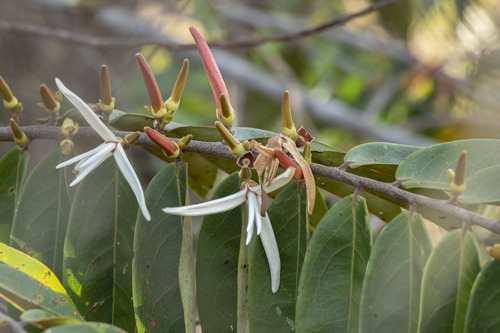
How to identify Uvaria grandiflora Roxb. ex Hornem.

Uvaria grandiflora Roxb. ex Hornem.

Uvaria grandiflora Roxb. ex Hornem.

Uvaria grandiflora is an Annonaceae plant species native to parts of East Asia, …

How to identify Xylopia aromatica (Lam.) Mart.

Xylopia aromatica (Lam.) Mart.

Xylopia aromatica (Lam.) Mart.

Xylopia aromatica is a flowering tree native to tropical Americas, found in Cerr…

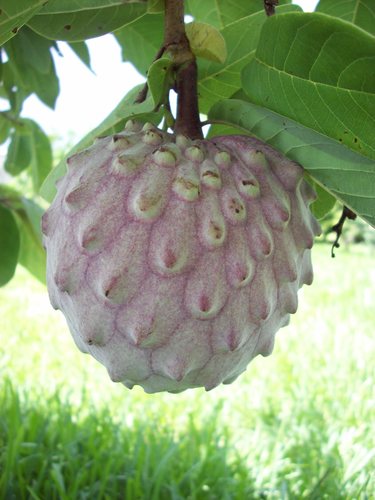
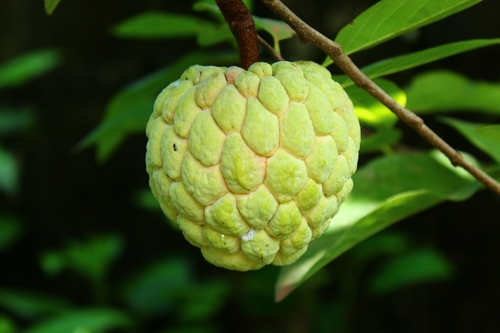
How to identify Annona squamosa L.

Annona squamosa L.

Annona squamosa L.

Annona squamosa, or sugar-apple, is a widely cultivated tropical fruit tree nati…

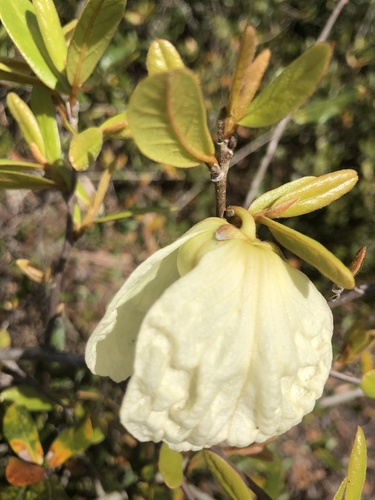
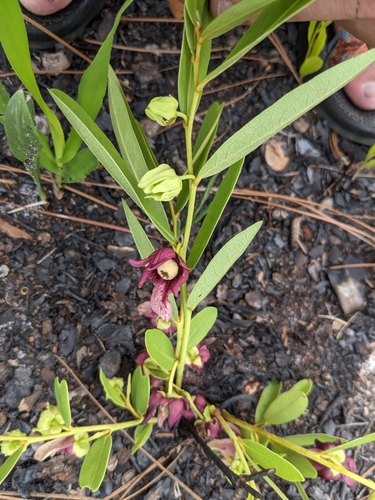
How to identify Asimina pygmaea (W.Bartram) Dunal

Asimina pygmaea (W.Bartram) Dunal

Asimina pygmaea (W.Bartram) Dunal

Asimina pygmaea is a small North American shrub with scented brown-crimson flowe…

How to identify Annona purpurea Moç. & Sessé ex Dunal

Annona purpurea Moç. & Sessé ex Dunal

Annona purpurea Moç. & Sessé ex Dunal

Annona purpurea is a small obscure deciduous tree related to other Annona specie…

How to identify Hubera nitidissima (Dunal) Chaowasku

Hubera nitidissima (Dunal) Chaowasku

Hubera nitidissima (Dunal) Chaowasku

Hubera nitidissima is a small understorey tree or shrub native to parts of Austr…

How to identify Uvaria leichhardtii (F.Muell.) L.L.Zhou, Y.C.F.Su & R.M.K.Sau

Uvaria leichhardtii (F.Muell.) L.L.Zhou, Y.C.F.Su & R.M.K.Sau

Uvaria leichhardtii (F.Muell.) L.L.Zhou, Y.C.F.Su & R.M.K.Sau

Uvaria leichhardtii, the zig-zag vine, is an Annonaceae vine native to parts of …

Browse all 38 Annonaceae species →

Frequently Asked Questions

How do you identify Annonaceae?

Annonaceae plants belong to the Magnoliales order in the Plantae kingdom. Its large leaves cluster symmetrically at the ends of branches, giving the foliage a distinctive imbricated appearance. For instant identification, use the iNature app — AI-powered and works offline.

What are the key characteristics of Annonaceae?

Annonaceae is classified in the order Magnoliales, class Magnoliopsida, phylum Tracheophyta. triloba is described as yeasty, which is one of several features indicating a beetle pollination syndrome.

⚠️ Are any Annonaceae species poisonous?

Yes, some Annonaceae species are toxic or poisonous. Always exercise caution with unknown specimens. View poisonous Annonaceae species or browse the full poisonous species guide.

Sources: GBIF, iNaturalist, Wikipedia · Disclaimer

Start Exploring Nature Today

Download iNature for free. 10 identifications on us. No account needed. No credit card required.

Download Free on App Store