Tree frogs are beloved amphibians famous for their adhesive toe pads, vibrant colors, and nocturnal choruses. The Hylidae family includes the iconic red-eyed tree frog, the spring peeper whose calls herald the arrival of spring, and the White's tree frog popular in the pet trade. This guide covers the most notable tree frog species.
🦎 Reptile & Amphibian Guide
Tree Frogs (Hylidae): Species, Photos & Identification
1
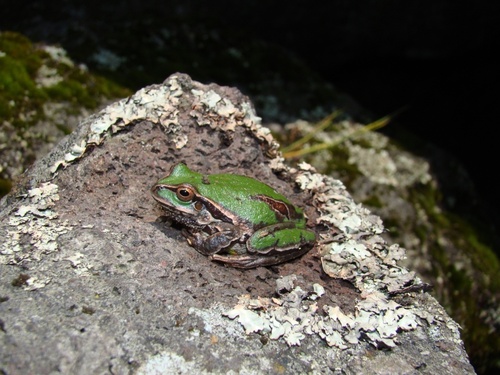
Dryophytes plicatus, the ridged tree frog, is a Hylidae frog species endemic to Mexico that lives in a range of habitats.
The ridged tree frog, scientifically named Dryophytes plicatus, is a species of frog in the Hylidae family that is endemic to Mexico. Its natural habitats include mountainous pine-fir forests at high elevations. At lower elevations, it lives in moderate and low-lying streams and ponds, where it is thought to breed. It can also be found in subtropical or tropical moist montane forests, subtropical ...
View full details → 2
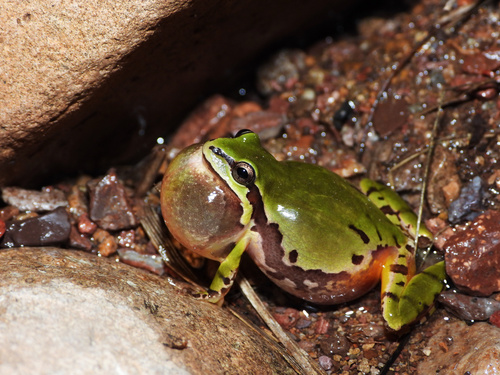
Dryophytes wrightorum, Wright's mountain tree frog, is a Hylidae species found in Mexico and the US, and is Arizona's state amphibian.
Wright's mountain tree frog, with the scientific name Dryophytes wrightorum, is a species of frog in the Hylidae family that is found in both Mexico and the United States. Its natural habitats include temperate forests, temperate grassland, rivers, and freshwater marshes. Dryophytes wrightorum has previously been treated as a synonym of Dryophytes eximius, commonly called the mountain tree frog, w...
View full details → 3
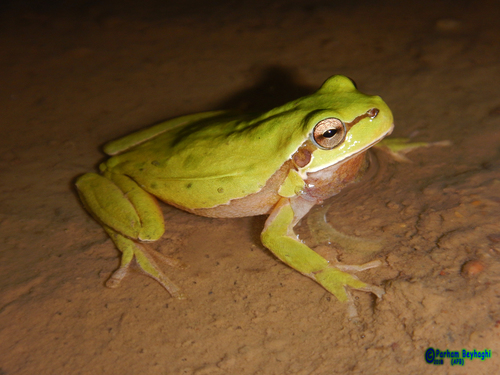
Hyla savignyi, the Middle East tree frog, is an endangered endemic Hylidae frog found across parts of the Middle East and nearby regions.
Hyla savignyi Audouin, 1827, commonly called Savigny's treefrog, lemon-yellow tree frog, and Middle East tree frog, is a frog species belonging to the family Hylidae. This species is endemic to the Middle East and has been classified as an endangered species. Its confirmed geographic range includes Bulgaria, Armenia, Azerbaijan, Cyprus, Egypt, Georgia, Iran, Iraq, Israel, Jordan, Lebanon, Saudi Ar...
View full details → 4
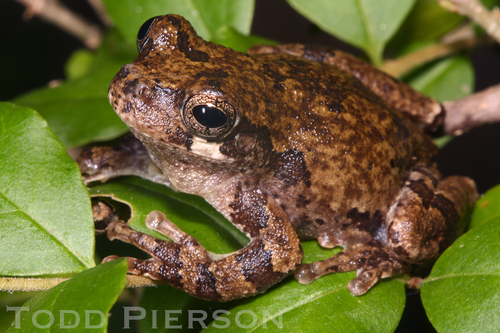
Dryophytes avivoca is a small tree frog native to the southeastern United States, found in wooded swamps.
Dryophytes avivoca, commonly known as the bird-voiced tree frog, is a small frog species that reaches an adult length of around 5 cm (2.0 inches). Its dorsal surface is typically dappled and pale grey or brown, but its skin color can change based on temperature and activity level, and it may also appear more or less pale green. A dark brown cross-shaped marking often appears on its back, with addi...
View full details → 5
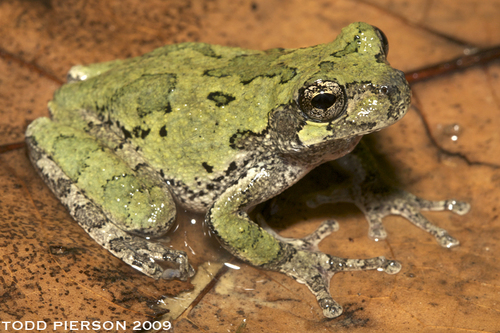
The pine woods tree frog is a Hylidae frog species endemic to the southeastern United States, favoring pine and wooded wetland habitats.
The pine woods tree frog, scientifically named Hyla femoralis Bosc, 1800 (also referenced as Dryophytes femoralis), is a frog species belonging to the family Hylidae that is endemic to the southeastern United States. This species is found across the Atlantic and Gulf Coastal plains of the southeastern United States, with its main range stretching from Virginia to Louisiana, and extending south thr...
View full details → 6
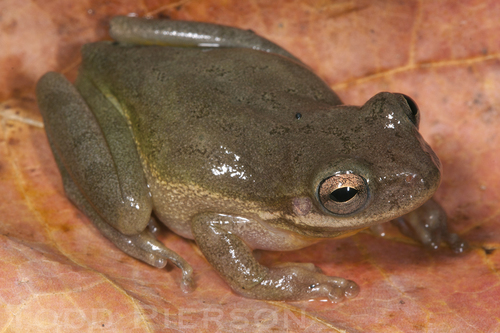
The squirrel tree frog Dryophytes squirellus is a small tree frog native to the southeastern US and introduced to the Bahamas.
Dryophytes squirellus, commonly known as the squirrel tree frog, is a small species of tree frog. Its native range covers the southeastern United States, extending from Texas east to Virginia, south to the Florida Keys, and it is especially common across the Coastal Plain regions of South Carolina and Georgia. Sighting this species as far north as Mississippi is very rare. It has been introduced t...
View full details → 7
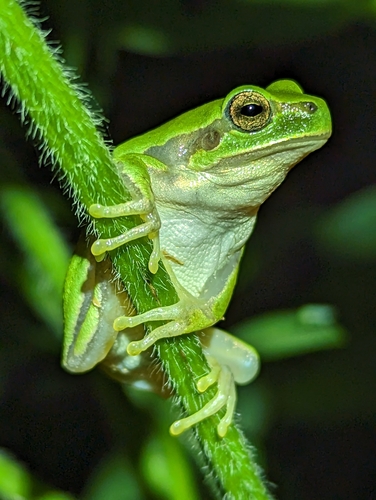
The Chinese immaculate treefrog (Dryophytes immaculatus), a Hylidae frog endemic to China, has declined sharply due to habitat loss.
Dryophytes immaculatus, commonly known as the Chinese immaculate treefrog, is a species of frog in the Hylidae family. This species is endemic to China. Its natural habitat has largely been converted into rice fields, and the species is currently threatened by habitat loss. Over recent decades, its population has experienced a very sharp decline, a pattern that is similar to the population decline...
View full details → 8
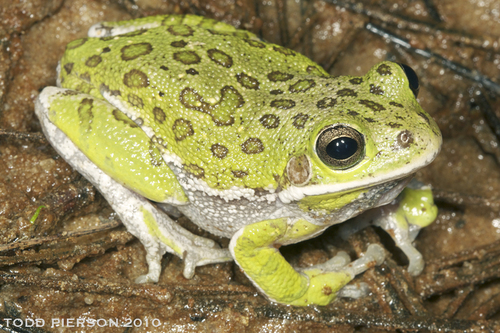
Dryophytes gratiosus, the barking treefrog, is the largest native US tree frog, found across the US Southeast coastal plain.","description":{"optimized_content":"Dryophytes gratiosus is the largest native tree frog in the United States, getting its name from its raucous, explosive call. It has a head-body length of 5 to 7 cm (2.0 to 2.8 in). While its color is variable, it is easily recognizable by characteristic dark, round markings on its dorsum. Individuals can be bright or dull green, brown, yellowish, or gray, with small grey and green-yellow spots. It has prominent, round toe pads, and males have a large vocal sac. This species has skin unlike any other American frog: it is not rough and warty, nor is it smooth, instead being thick and leathery. Its skin can change color based on lighting, time of day, temperature, or surroundings. Color changes are rapid, and its spots can appear to disappear and reappear over time. Its eyes are colored brown, gold, and black. Its geographic range spans from Delaware to southern Florida and eastern Louisiana, most often in coastal areas. Isolated colonies also exist in Maryland, Kentucky, and Tennessee. A temporary population was found in New Jersey in 1957. Adult Dryophytes gratiosus usually live in trees or bushes, and can burrow deep into mud and logs for extra protection from predators. For breeding, barking treefrogs need suitable habitat of shallow, semi-permanent pools with open canopies or grass-dominated ponds that have at least some open water.","one_line_intro":"Dryophytes gratiosus, the largest native US tree frog, lives across the southeastern US coastal areas and breeds in shallow open water pools.","This is Dryophytes gratiosus (barking tree frog), the largest native tree frog in the United States, found across the Southeast US.","Dryophytes gratiosus (barking tree frog) is the largest native tree frog of the United States, found in the US Southeast with some isolated inland populations.","Dryophytes gratiosus, the barking tree frog, is the largest native tree frog in the United States, found from Delaware to Florida and eastern Louisiana.","Dryophytes gratiosus is the largest native tree frog in the United States, distinguished by its leathery skin and variable coloration.","Dryophytes gratiosus, or barking tree frog, is the largest native US tree frog ranging across the southeastern Atlantic and Gulf coasts.","Dryophytes gratiosus is the largest native tree frog native to the United States, with distinctive skin and variable body color.","Dryophytes gratiosus is the largest native US tree frog, found in the Southeast, named for its loud, explosive call.","Barking tree frog (Dryophytes gratiosus) is the largest native tree frog in the United States with variable coloration.","Dryophytes gratiosus, the barking tree frog, is the largest native tree frog in the United States found in the Southeast.","Barking treefrog (Dryophytes gratiosus) is the largest native tree frog in the United States found in the southeast.","Dryophytes gratiosus is the largest native tree frog of the United States, found primarily in southeastern coastal areas.","Dryophytes gratiosus, barking treefrog, is the largest native tree frog in the United States with variable body coloration.","Dryophytes gratiosus is the largest native tree frog in the United States, living across the southeast in trees and breeding pools.","Dryophytes gratiosus, the barking treefrog, is the largest native tree frog native to the United States.","Dryophytes gratiosus, commonly called barking tree frog, is the largest native tree frog in the United States.","Barking tree frog (Dryophytes gratiosus) is the largest native tree frog found in the United States.","Dryophytes gratiosus, the barking tree frog, is the largest native tree frog in the United States.","Dryophytes gratiosus is the largest native tree frog in the United States, found in the southeastern part of the country.","Dryophytes gratiosus, the barking tree frog, is the largest native tree frog in the United States found in coastal Southeast.","Dryophytes gratiosus is a species of tree frog, the largest native one in the United States, found across the Southeast.","Barking treefrog (Dryophytes gratiosus) is the largest native tree frog in the United States, native to the Southeast.","Dryophytes gratiosus is the largest native tree frog in the United States, with unique leathery skin and variable color.","Dryophytes gratiosus, barking tree frog, is the largest native tree frog in the United States, ranging across the Southeast.","Dryophytes gratiosus is the largest native tree frog in the United States, named for its loud raucous call.","Dryophytes gratiosus, the barking tree frog, is the largest native tree frog native to the United States.","Dryophytes gratiosus is the largest native tree frog in the United States, occurring mainly in the Southeast.","Dryophytes gratiosus (barking tree frog) is the largest native tree frog in the United States, found in the Southeast.","Dryophytes gratiosus, also called barking tree frog, is the largest native tree frog in the United States.","Dryophytes gratiosus, the barking tree frog, is the largest native tree frog found in the United States.","Dryophytes gratiosus is the largest native tree frog in the United States, with distinctive leathery textured skin.","Dryophytes gratiosus is the largest native tree frog in the United States, living in trees across the southeastern coastal areas.","Dryophytes gratiosus, commonly known as the barking tree frog, is the largest native tree frog in the United States.","The barking tree frog, Dryophytes gratiosus, is the largest native tree frog in the United States.","Dryophytes gratiosus, the barking tree frog, is the largest native tree frog in the United States with variable color.","Dryophytes gratiosus, or barking treefrog, is the largest native tree frog in the United States.","The barking treefrog, Dryophytes gratiosus, is the largest native tree frog in the United States.","Barking treefrog (Dryophytes gratiosus) is the largest native tree frog in the United States.","Dryophytes gratiosus, known as the barking treefrog, is the largest native tree frog in the United States.","Dryophytes gratiosus, the barking treefrog, is the largest native tree frog in the United States.","Dryophytes gratiosus is the largest native tree frog in the United States, native to the southeastern region.","Dryophytes gratiosus is a species of tree frog that is the largest native one in the United States.","Dryophytes gratiosus is the largest native tree frog in the United States, found in southeastern coastal areas.","Dryophytes gratiosus is the largest native tree frog in the United States, also known as the barking tree frog.","Dryophytes gratiosus, commonly known as barking tree frog, is the largest native tree frog in the US.
Dryophytes gratiosus, first described by LeConte in 1856, is the largest native tree frog species in the United States. It gets its common name from its loud, explosive call. This species measures 5 to 7 cm (2.0 to 2.8 inches) in head-to-body length. Its body color is variable, but it is easily identified by characteristic dark, round markings on its back. Individuals can be bright or dull green, ...
View full details → 9
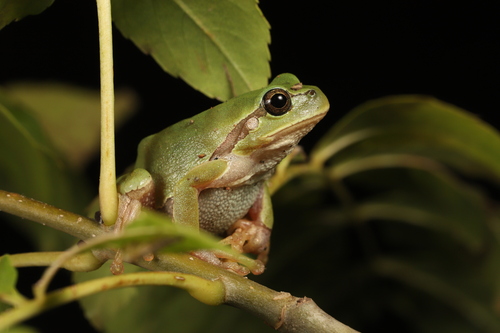
Hyla intermedia, the Italian tree frog, is a small frog native to Italy and nearby parts of southern Switzerland and western Slovenia.
The Italian tree frog (Hyla intermedia Boulenger, 1882) is very similar in colouring to the European tree frog; it was previously considered to be a subspecies of the European tree frog. This species reaches a length of 4 to 5 centimetres (1.6 to 2.0 in), and females are usually larger than males. The skin on its dorsal surface is smooth and bright green. Its ventral surface is whitish, and is cle...
View full details → 10

Dryophytes arenicolor, the canyon tree frog, varies in color for camouflage and has distinct size and marking traits.
Canyon tree frogs (Dryophytes arenicolor) reach a length of 5.0–5.5 cm (2.0–2.2 in). Their base color is typically brown, grey-brown, or grey-green, and they often have darker blotched markings across their bodies. While their coloration can vary quite a lot, it usually matches the color of the soil or rock in their native habitats to provide camouflage. Individuals from limestone habitats are lig...
View full details → 11
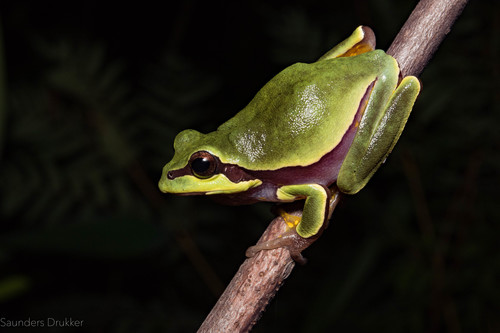
Dryophytes andersonii, the Pine Barrens tree frog, is a North American frog with disjunct US populations, and it is North Carolina's state frog.
Adult Dryophytes andersonii, commonly called the Pine Barrens tree frog, measure 2.8–4.3 centimetres (1.1–1.7 inches) snout-to-vent in length. Individuals of this species are mostly emerald green. This primary green body color is edged by a white stripe, which separates the green from a lavender band that extends downward to cover the belly. The hidden surfaces of the species’ legs are orange to y...
View full details → 12
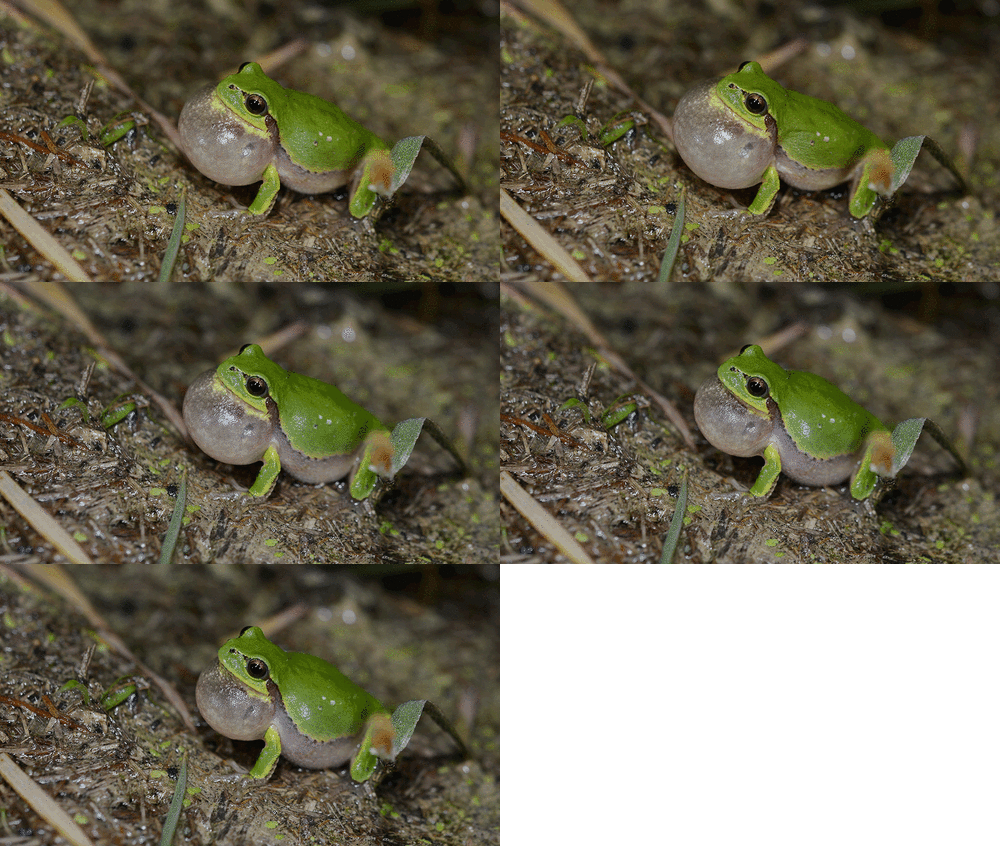
Dryophytes japonicus, the Japanese tree frog, is an Asian amphibian with skin neurotoxins for predator defense.
Japanese tree frogs (Dryophytes japonicus) have an average body length of 32.81±0.96 mm. Their average skull width is 12.02±0.36 mm, and their average skull length is 9.38±0.14 mm. The dorsal (upper) side of their body is green or brown, while the ventral (under) side is white. A defining characteristic of this species is a dark spot on the upper lip, positioned below the eye. On average, female J...
View full details → 13
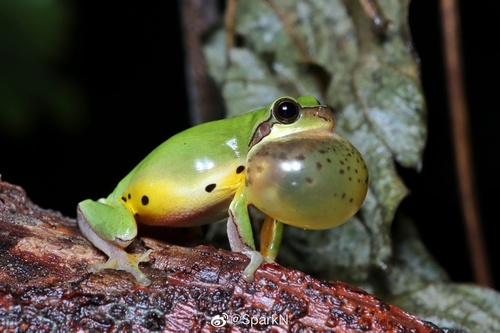
Hyla chinensis is a small Hylidae frog found in eastern/southeastern China and Taiwan, classified as least concern.
The common Chinese tree frog, scientifically named Hyla chinensis Günther, 1858, also goes by the common names common Chinese treetoad and Chinese tree toad. It is a frog species that belongs to the family Hylidae. This species is found in southeastern and eastern China, as well as Taiwan. There is a single recorded sighting from Vietnam, but it is unclear if the recorded individual belongs to thi...
View full details → 14
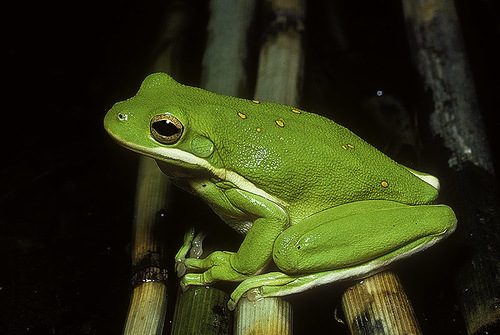
Dryophytes cinereus, the American green tree frog, is a moderately sized tree frog native to the central and southeastern United States.
Dryophytes cinereus, commonly known as the American green tree frog, is a moderately sized amphibian. It has a streamlined, slender build, long legs, and smooth skin, with large protruding eyes that have horizontal pupils. Adults measure between 3.2 and 6.4 centimetres (1+1⁄4 to 2+1⁄2 in) in total length. Recently metamorphosed young-of-the-year juveniles measure approximately 20.6 mm. The species...
View full details → 15
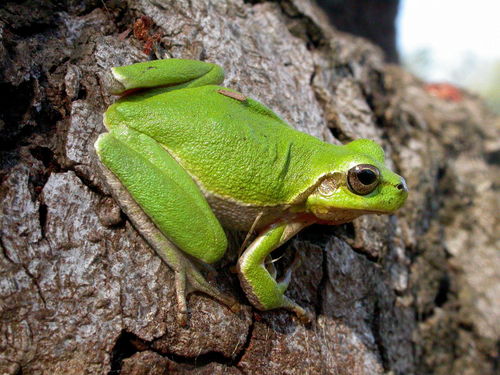
Hyla sarda, the Sardinian or Tyrrhenian tree frog, is a Hylidae species found in parts of the western Mediterranean with varied natural habitats.
The Sardinian tree frog, also called the Tyrrhenian tree frog, has the scientific name Hyla sarda (De Betta, 1853). It is a species of frog belonging to the family Hylidae. This frog is found in Corsica, Sardinia, and the Tuscan Archipelago. Its natural habitats include temperate forests, temperate shrubland, rivers, intermittent rivers, freshwater marshes, intermittent freshwater marshes, and urb...
View full details → 16
Dryophytes euphorbiaceus (Günther, 1858)
Dryophytes euphorbiaceus (Günther, 1858)
🦋 Animalia Hylidae
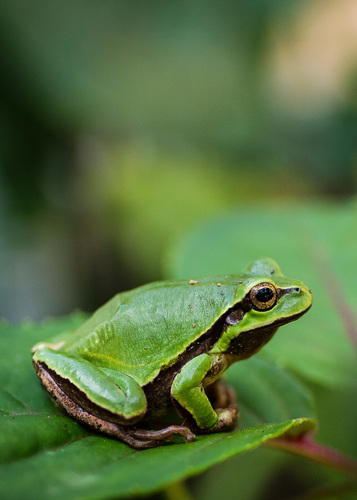
Dryophytes euphorbiaceus, the southern highland tree frog, is a Hylidae frog endemic to Mexico threatened by habitat loss.
The southern highland tree frog, scientifically known as Dryophytes euphorbiaceus, is a species of frog in the Hylidae family that is endemic to Mexico. Its natural habitats include subtropical or tropical moist montane forests, subtropical or tropical high-altitude grassland, intermittent rivers, and intermittent freshwater marshes. This species is currently threatened by habitat loss.
View full details → 17
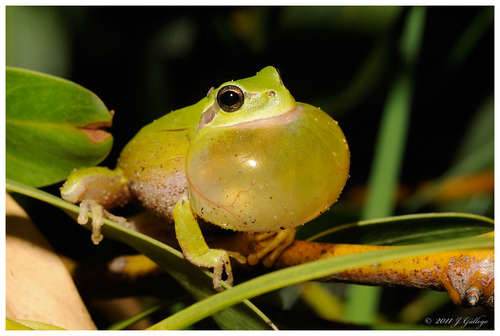
The Mediterranean or stripeless tree frog (Hyla meridionalis) is a frog species native to southwest Europe and northwest Africa, with some introduced populations.
The Mediterranean tree frog (Hyla meridionalis Boettger, 1874), also called the stripeless tree frog, is a species of frog that occurs in southwestern Europe and northwestern Africa. It looks similar to the European tree frog, but is larger — some females reach up to 65 millimetres (2.6 inches) in length. It also has longer hind legs than the European tree frog, and the dark stripe along its flank...
View full details → 18
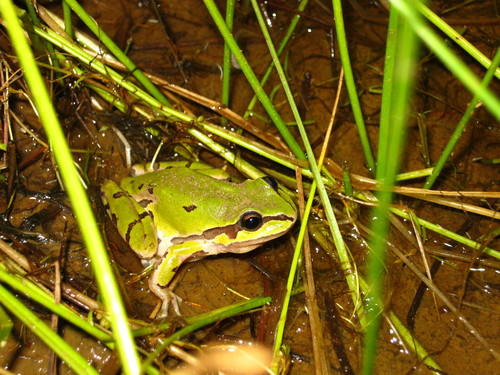
Dryophytes eximius, the mountain tree frog, is a Mexican Hylidae frog that is Arizona's state amphibian, though it does not actually occur there.
Dryophytes eximius, commonly called the mountain tree frog, is a species of frog in the Hylidae family that is endemic to Mexico. Its natural habitats include mesquite grasslands, scrub forests, and pine-oak forests. It is a widely distributed species that faces no major threats. Dryophytes eximius is designated as the state amphibian of Arizona, but as currently circumscribed, this species does n...
View full details → 19
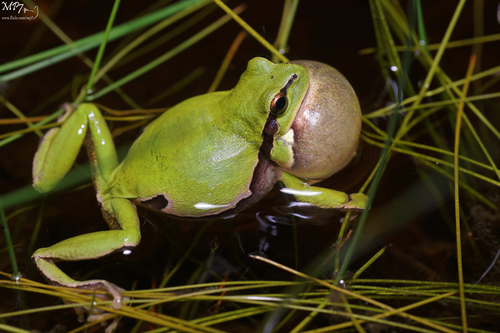
Hyla molleri, the Iberian or Moller's tree frog, is an endemic Hylidae frog from the Iberian Peninsula and southwest France, split from Hyla arborea.
Hyla molleri, commonly called the Iberian tree frog or Moller's tree frog, is a species of frog belonging to the family Hylidae. This species is endemic to the Iberian Peninsula and the extreme southwestern part of France. It was previously classified as a subspecies of Hyla arborea, but was recognized as a separate distinct species based on genetic differences. Its specific epithet molleri was ch...
View full details → 20
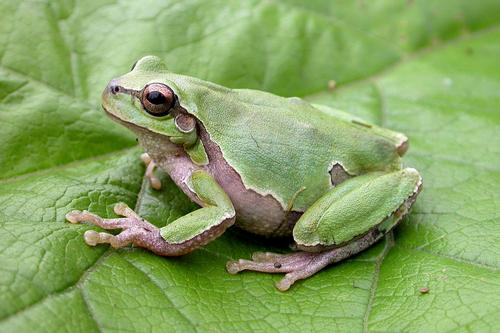
Hyla orientalis (eastern tree frog) is a Hyla species described in 1890, found in eastern Europe, Asia Minor, and western Asia.
Hyla orientalis, commonly called the eastern tree frog, oriental tree frog, or Shelkovnikov's tree frog, is a species belonging to the genus Hyla. It was first formally described by Jacques von Bedriaga in 1890. This species occurs in eastern and southeastern Europe, Asia Minor, and parts of western Asia.
View full details → 21
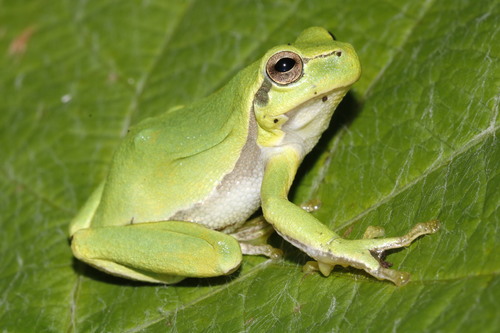
Hyla arborea, the European tree frog, is a small climbing amphibian native to most of Europe, northwest Africa, and temperate Asia.
European tree frogs (scientific name Hyla arborea (Linnaeus, 1758)) are small, slender amphibians with long legs. Males measure 32–43 mm (1.3–1.7 in) in length, while females are larger at 40–50 mm (1.6–2.0 in). Their dorsal skin is smooth, and their ventral skin is granular. Dorsal skin color can change to green, gray, or tan based on environmental temperature, humidity, or the frog’s mood. Ventr...
View full details → 22
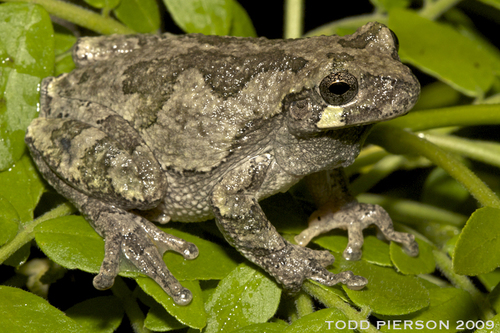
Dryophytes versicolor, the gray treefrog, is a small color-changing North American treefrog species that can survive freezing temperatures.
As the scientific specific epithet versicolor suggests, the gray treefrog (Dryophytes versicolor) is variable in color. It can adjust its color from gray to green or brown to camouflage itself to match its surrounding environment, and is even able to shift between nearly black and nearly white shades. It changes color more slowly than a chameleon. A unique feature of the species' appearance is a d...
View full details → 23
Dryophytes chrysoscelis, Cope's gray treefrog, is a sexually dimorphic treefrog with freeze tolerance that lives across much of North America.
Dryophytes chrysoscelis, also called Cope's gray treefrog, shares several key traits with Dryophytes versicolor. Both species have black-marked bright orange to yellow patches on their hind legs, a feature that sets them apart from other treefrogs like Dryophytes avivoca. These bright-yellow patterns are normally hidden when the frog is at rest, but become exposed when it leaps. This so-called "fl...
View full details → 24
Phyllodytes edelmoi Peixoto, Caramaschi & Freire, 2003
Phyllodytes edelmoi Peixoto, Caramaschi & Freire, 2003
🦋 Animalia Hylidae
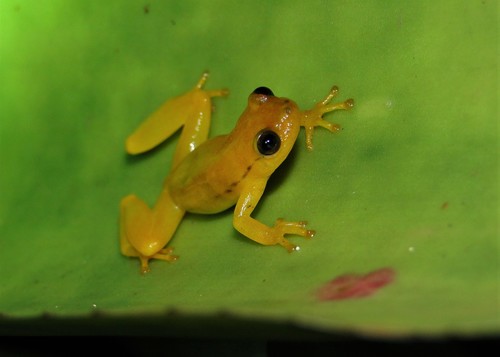
Phyllodytes edelmoi is a non-endangered frog species in Hylidae that is endemic to Brazil.
Phyllodytes edelmoi is a species of frog in the Hylidae family that is endemic to Brazil. Individuals of this species have been observed at elevations up to 650 meters above sea level. They have been found in forests and on rocky ground near cliffs and on mountains. Scientists have observed this species living both on land and in bromeliad plants that grow on trees. Females of this species lay the...
View full details → 25
Phyllodytes luteolus (Wied-Neuwied, 1821)
Phyllodytes luteolus (Wied-Neuwied, 1821)
🦋 Animalia Hylidae
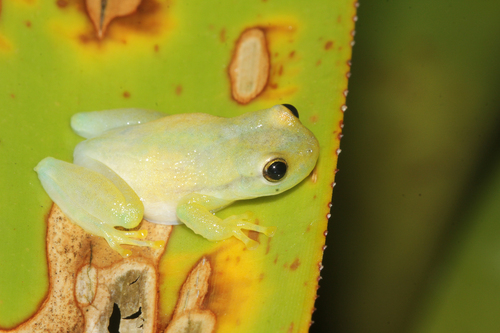
Phyllodytes luteolus, the yellow heart-tongued frog, is a non-endangered Brazilian hylid frog that lives on bromeliads.
The yellow heart-tongued frog, scientifically named Phyllodytes luteolus, is a species of frog in the Hylidae family that is endemic to Brazil. Individuals of this species have been observed at elevations up to 650 meters above sea level. This frog inhabits Atlantic forest and Caatinga habitats, where it lives on bromeliad plants. Each clutch laid by a female of this species contains only a few eg...
View full details → 26

Osteocephalus planiceps is a Hylidae frog found in northwestern South America, threatened by habitat loss.
Osteocephalus planiceps Cope, 1874 is a species of frog belonging to the family Hylidae. This species has been recorded in Colombia, Ecuador, and Peru, and its presence in Brazil is unconfirmed. Its natural habitat is subtropical or tropical moist lowland forests. Osteocephalus planiceps is currently threatened by habitat loss.
View full details → 27
Osteocephalus oophagus Jungfer & Schiesari, 1995
Osteocephalus oophagus Jungfer & Schiesari, 1995
🦋 Animalia Hylidae
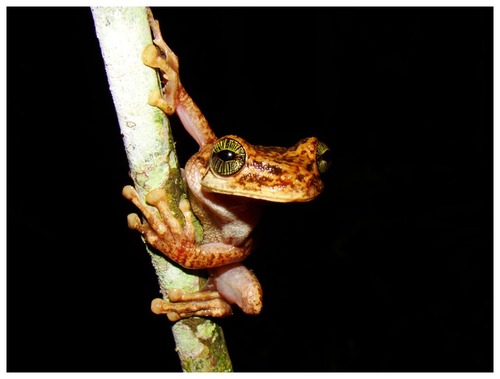
Osteocephalus oophagus is an egg-eating hylid frog found across northern South America that produces bufotenin.
Osteocephalus oophagus is a species of frog belonging to the Hylidae family. It has been recorded in Brazil, Colombia, French Guiana, and Guyana, with an unconfirmed possible presence in Suriname. Its natural habitat is subtropical or tropical moist lowland forests. This species is reported to produce bufotenin. Its specific epithet oophagus means "egg eater", referring to its unique breeding beha...
View full details → 28
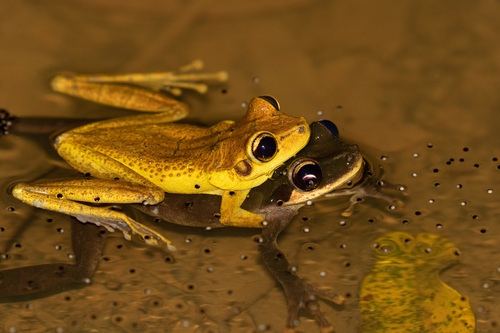
Osteocephalus yasuni is a reasonably abundant nocturnal tree frog native to the Amazonian forests of Ecuador, found in multiple protected areas including Yasuni National Park.
Male Osteocephalus yasuni reach 44–56 mm (1.7–2.2 in) in snout–vent length, while females measure 43–62 mm (1.7–2.4 in) in the same measurement. The species' dorsum is brown and marked with dark brown spots. Ventral coloration differs between sexes and adult males range from bright yellow to yellowish cream, while adult females have cream ventral coloration. Adult males have rough skin, and adult ...
View full details → 29
Osteocephalus taurinus Steindachner, 1862
Osteocephalus taurinus Steindachner, 1862
🦋 Animalia Hylidae
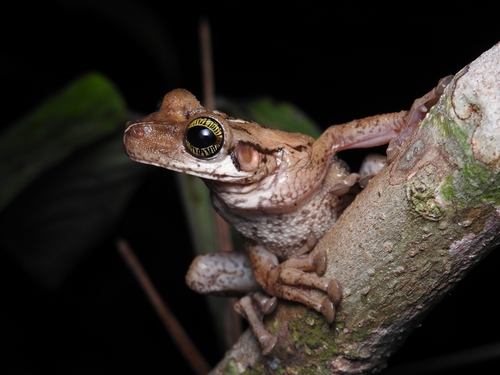
Osteocephalus taurinus is a frog species with distinct size and skin differences between adult males and females, and defined color patterns.
For adult Osteocephalus taurinus, males have a snout-vent length ranging from 71 to 92 mm, while adult females range from 90 to 101 mm. Male frogs have warty skin, and female frogs have smooth skin. The dorsal skin of this frog is colored light brown to dark brown. Some individuals have a light brown stripe running down the center of the back. The hind legs bear dark brown transverse stripes. The ...
View full details → 30
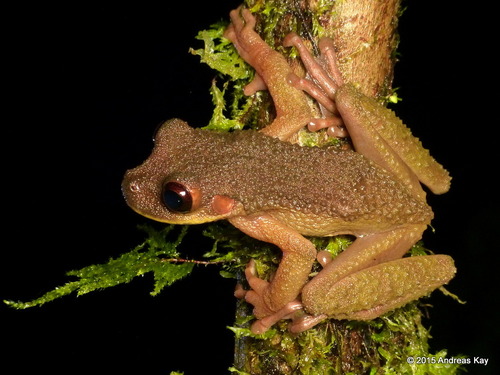
Osteocephalus verruciger, the Ecuador slender-legged tree frog, is a Hylidae frog found in Colombia and Ecuador.
Osteocephalus verruciger, commonly known as the Ecuador slender-legged tree frog, is a species of frog in the family Hylidae. This species is found in Colombia and Ecuador. Its natural habitats include subtropical or tropical moist lowland forests, subtropical or tropical moist montane forests, rivers, intermittent freshwater marshes, rural gardens, and heavily degraded former forests. Adult males...
View full details →Frequently Asked Questions
How many species are in the Hylidae family?
This guide features 30 representative species from the Hylidae family. The full family contains many more species worldwide — explore them all on iNature.
How to identify Hylidae species?
Hylidae species share common features in their flowers, leaves, and growth patterns. This guide provides photos and descriptions for 30 species. For instant field identification, use the iNature app.
Sources: GBIF, iNaturalist, Wikipedia · Disclaimer
Identify any species instantly — even offline
iNature uses on-device AI to identify plants, animals, fungi and more. No internet needed.
Download iNature — FreeStart Exploring Nature Today
Download iNature for free. 10 identifications on us. No account needed. No credit card required.
Download Free on App Store
