Tanagers are among the most vibrantly colored birds in the Americas, with species ranging from the scarlet tanager of eastern forests to the paradise tanager of Amazonia. The Thraupidae family has expanded to include honeycreepers, seedeaters, and Darwin's finches. Explore the stunning diversity of this Neotropical bird family.
🐦 Bird Families
Tanagers (Thraupidae): Species, Photos & Identification
1
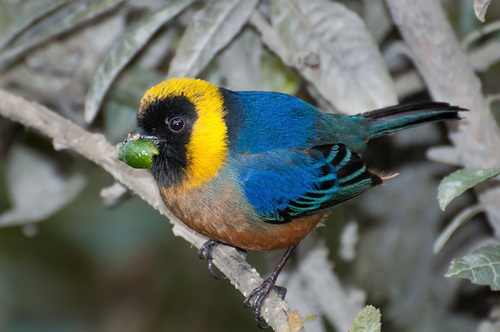
The golden-collared tanager is a Thraupidae bird species found in Bolivia and Peru, living in moist montane forests.
The golden-collared tanager, with the scientific name Iridosornis jelskii, is a bird species that belongs to the tanager family Thraupidae. This species is distributed across Bolivia and Peru. Its natural habitat is subtropical or tropical moist montane forests.
View full details → 2
Iridosornis rufivertex (Lafresnaye, 1842)
Iridosornis rufivertex (Lafresnaye, 1842)
🦋 Animalia Thraupidae
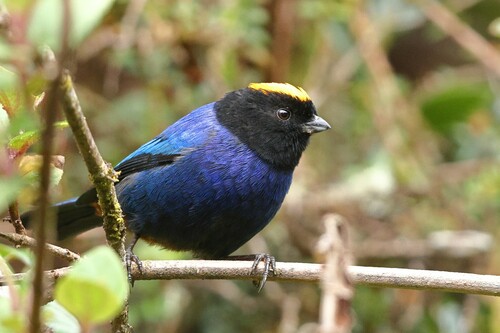
The golden-crowned tanager is a Thraupidae bird species found in Andean South America, living in moist montane forests.
The golden-crowned tanager, with the scientific name Iridosornis rufivertex, is a bird species that belongs to the tanager family Thraupidae. This species occurs in the countries of Colombia, Ecuador, Peru, and Venezuela. Its native natural habitat is subtropical or tropical moist montane forests.
View full details → 3
Iridosornis porphyrocephalus P.L.Sclater, 1856
Iridosornis porphyrocephalus P.L.Sclater, 1856
🦋 Animalia Thraupidae
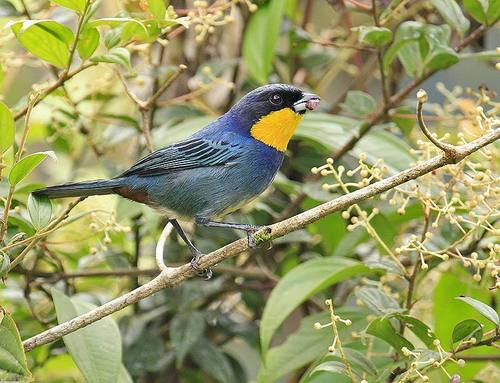
Iridosornis porphyrocephalus, the purplish-mantled tanager, is a Thraupidae bird found in Colombia and Ecuador, threatened by habitat loss.
The purplish-mantled tanager, with the scientific name Iridosornis porphyrocephalus, is a species of bird that belongs to the Thraupidae family. This species can be found in Colombia and Ecuador. Its natural habitats are subtropical or tropical moist montane forests, as well as heavily degraded former forest. The purplish-mantled tanager is currently threatened by habitat loss.
View full details → 4
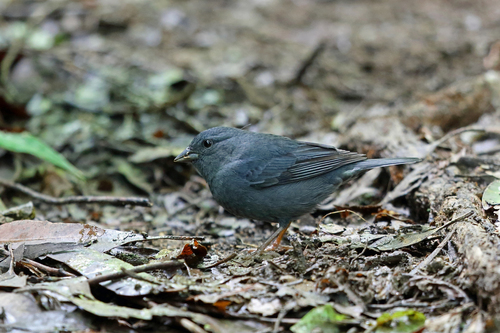
Haplospiza unicolor, the uniform finch, is a Thraupidae bird found in southern Atlantic Forest habitats of South America.
The uniform finch, scientifically named Haplospiza unicolor Cabanis, 1851, is a bird species that belongs to the Thraupidae family. It occurs in the southern Atlantic Forest region of Brazil, Paraguay, and the extreme northeastern part of Argentina. Its natural habitats are subtropical or tropical moist lowland forest, and subtropical or tropical moist montane forest.
View full details → 5
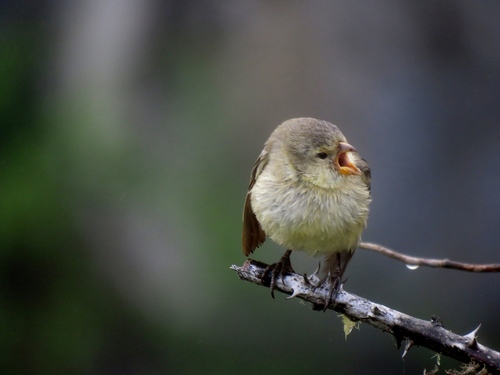
The small tree finch is an endemic Galapagos Darwin's finch currently listed as Least Concern with declining local populations.
The small tree finch (Camarhynchus parvulus) is a bird species in the Darwin's finch group of the tanager family Thraupidae. It has a grasping beak with curved culmens. Its natural habitats are subtropical or tropical dry forests and subtropical or tropical dry shrubland. During the non-breeding season, this species is known to form large groups alongside small ground-finches. It is endemic to the...
View full details → 6
Camarhynchus pallidus (P.L.Sclater & Salvin, 1870)
Camarhynchus pallidus (P.L.Sclater & Salvin, 1870)
🦋 Animalia Thraupidae
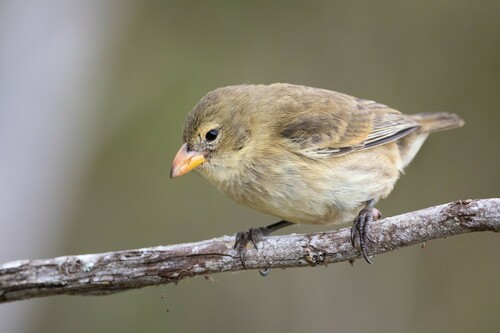
This is a summary of woodpecker finch (Camarhynchus pallidus) description, distribution, and reproductive traits.
Woodpecker finches (Camarhynchus pallidus) have a weight range of 23 to 29 g (0.81 to 1.02 oz) and a total length of approximately 15 cm (5.9 in). While they have fairly short tongues, they possess a relatively longer bill than other Darwin's finch species. This species is native to the Galapagos Islands, and is commonly found on the islands of Isabela, Santa Cruz, San Cristobal, Fernandina, Santi...
View full details → 7
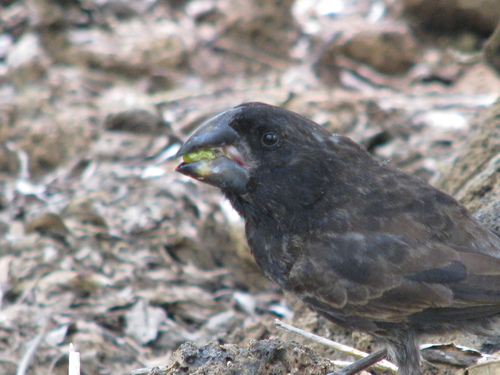
Geospiza magnirostris, the large ground finch, is the largest Darwin's finch, endemic to most of the Galapagos Islands.
The large ground finch (Geospiza magnirostris Gould, 1837) weighs approximately 27–39 g (0.95–1.38 oz), and has a body length between 15–16 cm (5.9–6.3 in). It is the largest species of Darwin's finch in both overall body size and beak size. Feather and bill coloration differs between adult males and adult females. Adult males are mostly black, with slightly browner wings and tail, white streaking...
View full details → 8
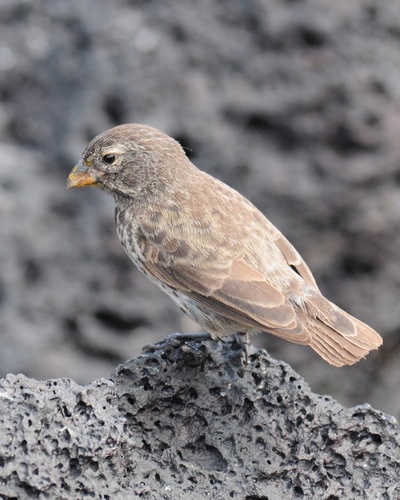
Geospiza fuliginosa, the small ground finch, is an endemic Darwin's finch of the Galápagos Islands, showing trait variation along elevation gradients.
The small ground finch, scientifically named Geospiza fuliginosa Gould, 1837, is the smallest of all ground finches, with a total length of 11 cm (4.3 in). It has a short, pointed beak with a slightly curved culmen. On average, its beak is smaller than the beak of the medium ground finch, but there is substantial overlap in beak size between the two species, especially on islands where only one of...
View full details → 9
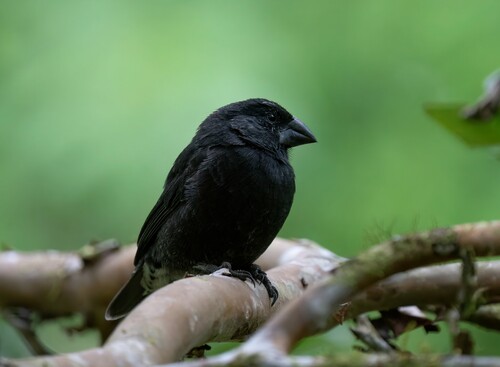
Geospiza fortis, the medium ground finch, is a Galápagos-endemic finch studied for rapid beak evolution and affected by urbanization.
Like other members of its genus, the medium ground finch (Geospiza fortis Gould, 1837) is strongly sexually dimorphic. Females have brown, streaky plumage, while males have solid black plumage with white tips on their undertail coverts. This species reaches 12.5 cm (4.9 in) in length, which falls between the lengths of the small ground finch and large ground finch. Its bill varies quite a bit in s...
View full details → 10
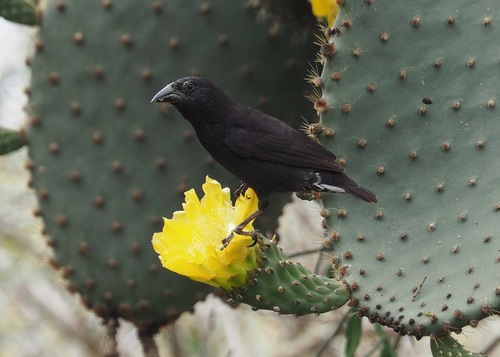
The common cactus finch is a Darwin's finch endemic to the Galapagos Islands, closely associated with Opuntia cacti.
The common cactus finch, also called the small cactus finch (Geospiza scandens), is a species of bird in the Darwin's finch group of the tanager family Thraupidae. It is endemic to the Galapagos Islands, found on most islands there, with the notable exceptions of Fernandina, Española, Genovesa, Darwin, and Wolf. Most of these excepted islands are inhabited by its close relative, the Española cactu...
View full details → 11
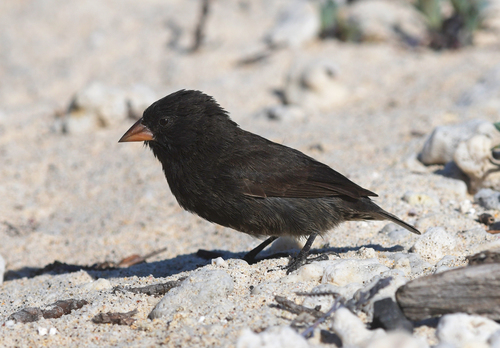
The Genovesa ground finch is a small Galápagos bird, with ongoing taxonomic debate over its status as a separate species.
The Genovesa ground finch, with the scientific name Geospiza acutirostris, is a small bird that is native to the Galápagos Islands. It was previously treated as a subspecies of the sharp-beaked ground finch (Geospiza difficilis), and is endemic to Genovesa Island. The International Ornithologists' Union has recognized it as a separate full species, while other taxonomic authorities still consider ...
View full details → 12
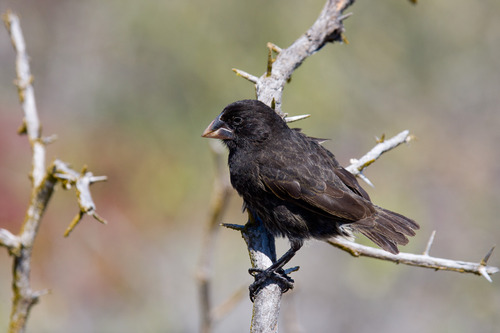
Geospiza conirostris (Española cactus finch) is a large Darwin's finch with distinct sexual dimorphism in coloration.
The Española cactus finch, with the scientific name Geospiza conirostris Ridgway, 1890, is one of the largest species of Darwin's finches. It reaches a length of 15 cm (5.9 in). Adult males are black, and have white-tipped undertail coverts. Females and immature birds have coloration that ranges from dull gray to matte black, and their underpart feathers often have white edges.
View full details → 13
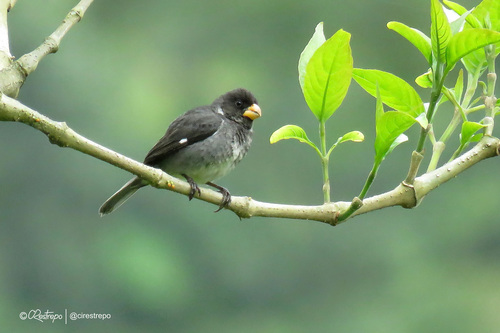
Sporophila intermedia, the grey seedeater, is a Thraupidae bird found across northern South America and Trinidad and Tobago.
The grey seedeater, with the scientific name Sporophila intermedia Cabanis, 1851, is a bird species that belongs to the family Thraupidae. This species can be found in Brazil, Colombia, Ecuador, Guyana, Trinidad and Tobago, and Venezuela. Its natural habitats are subtropical or tropical seasonally wet or flooded lowland grassland, as well as heavily degraded former forest.
View full details → 14
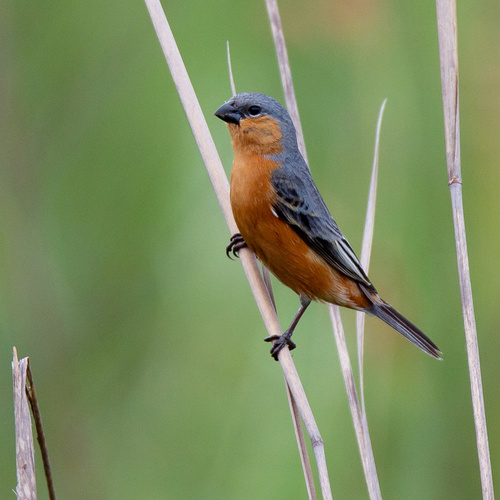
The tawny-bellied seedeater (Sporophila hypoxantha) is a Thraupidae bird found across parts of South America in specific grassland and savanna habitats.
The tawny-bellied seedeater, with the scientific name Sporophila hypoxantha, is a bird species that belongs to the family Thraupidae; it was formerly classified in the family Emberizidae. This species can be found in Argentina, Bolivia, Brazil, Paraguay, and Uruguay. Its natural habitats are dry savanna, and subtropical or tropical seasonally wet or flooded lowland grassland.
View full details → 15
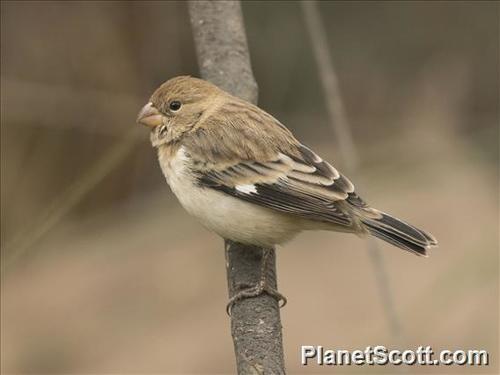
Sporophila telasco, the chestnut-throated seedeater, is a small Neotropical songbird found along western South America's coast.
The chestnut-throated seedeater, with the scientific name Sporophila telasco, is a Neotropical songbird that belongs to the tanager family Thraupidae. It is distributed along the western seaboard of South America, ranging from southwestern Colombia to the far north of Chile. Its natural habitats include subtropical or tropical dry shrubland, subtropical or tropical moist shrubland, swamps, sandy s...
View full details → 16
Sporophila bouvronides (R.Lesson, 1831)
Sporophila bouvronides (R.Lesson, 1831)
🦋 Animalia Thraupidae
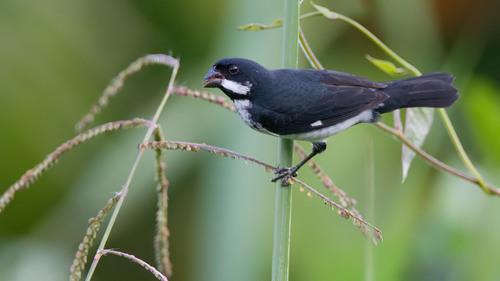
Sporophila bouvronides, or Lesson's seedeater, is a small 10.5–11 cm seedeating bird similar to lined seedeaters.
Lesson's seedeater (Sporophila bouvronides) is a small, sparrow-like bird with a total length of 10.5–11 cm (4.1–4.3 in). Males have a mostly black head featuring a large white whisker-shaped marking, while females have an olive-brown back, pale yellowish belly, and a dull yellow bill. Most Lesson's seedeaters live in open marshlands and disturbed habitats with long grass, particularly near water....
View full details → 17
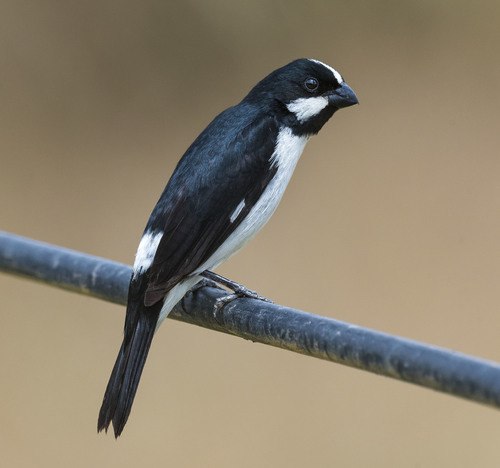
Sporophila lineola, the lined seedeater, is a Thraupidae bird found across much of South and Central America.
The lined seedeater, scientifically known as Sporophila lineola (Linnaeus, 1758), is a bird species that belongs to the family Thraupidae. This species has been recorded in Argentina, Bolivia, Brazil, Colombia, Ecuador, French Guiana, Guyana, Panama, Paraguay, Peru, Suriname, and Venezuela. Its natural habitats include subtropical or tropical moist shrubland, pastureland, and heavily degraded form...
View full details → 18
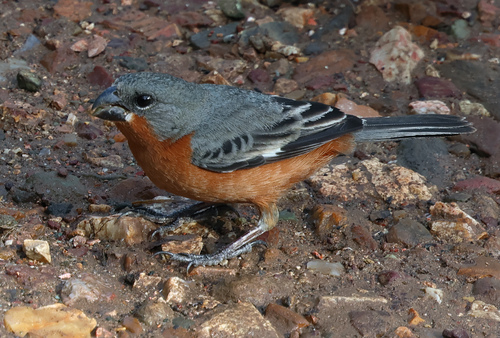
Sporophila minuta, the ruddy-breasted seedeater, is a Thraupidae bird found across Central and South America in open and degraded grassy habitats.
The ruddy-breasted seedeater, scientifically named Sporophila minuta (Linnaeus, 1758), is a bird species that belongs to the tanager family Thraupidae. This species has been recorded in Brazil, Colombia, Costa Rica, Ecuador, El Salvador, French Guiana, Guatemala, Guyana, Honduras, Mexico, Nicaragua, Panama, Suriname, Trinidad and Tobago, and Venezuela. Its natural habitats include dry savanna, sub...
View full details → 19
Sporophila bouvreuil (P.L.S.Müller, 1776)
Sporophila bouvreuil (P.L.S.Müller, 1776)
🦋 Animalia Thraupidae
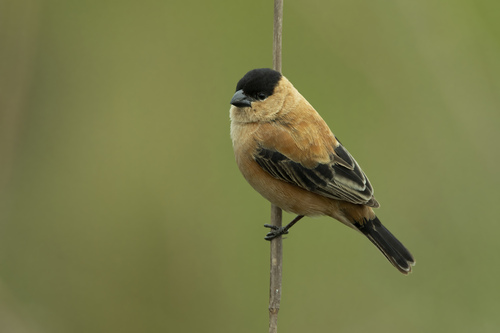
Sporophila bouvreuil, the copper seedeater, is a Thraupidae bird found in Brazil and Suriname in dry savanna.
The copper seedeater, with the scientific name Sporophila bouvreuil, is a bird species that belongs to the family Thraupidae. Before February 2012, this species was lumped together with the pearly-bellied seedeater (Sporophila pileata), and the combined group was known as the capped seedeater. It was officially split from that grouping in February 2012. This species can be found in Brazil and Suri...
View full details → 20
Sporophila peruviana (P.A.Lesson, 1842)
Sporophila peruviana (P.A.Lesson, 1842)
🦋 Animalia Thraupidae
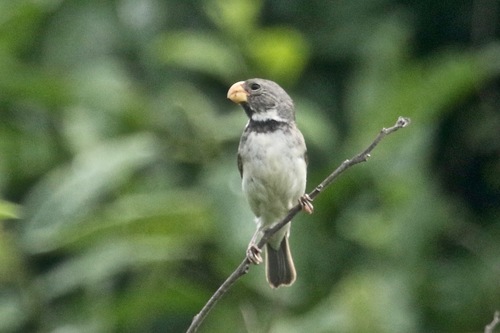
Sporophila peruviana, the parrot-billed seedeater, is a small social Thraupidae bird found in western South America.
The parrot-billed seedeater, scientifically named Sporophila peruviana (P.A.Lesson, 1842), is a small bird species that belongs to the family Thraupidae. It inhabits a variety of shrubby habitats located in western Ecuador and western Peru. When it is not breeding season, this species is quite social, and it is frequently observed in mixed flocks alongside other small seed-eating birds.
View full details → 21
Sporophila cinnamomea (Lafresnaye, 1839)
Sporophila cinnamomea (Lafresnaye, 1839)
🦋 Animalia Thraupidae
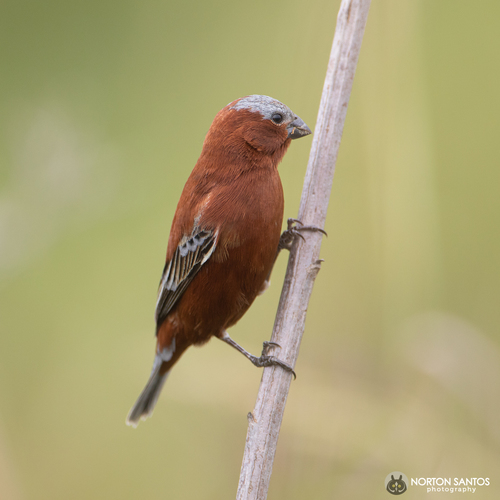
Sporophila cinnamomea, the chestnut seedeater, is a Thraupidae bird threatened by habitat loss in parts of South America.
The chestnut seedeater, scientifically known as Sporophila cinnamomea, is a bird species that belongs to the family Thraupidae. It is distributed across Argentina, Brazil, Paraguay, and Uruguay; in Uruguay, the species can still be observed at Quebrada de los Cuervos. Its natural habitat is subtropical or tropical seasonally wet or flooded lowland grassland. This species is currently threatened by...
View full details → 22
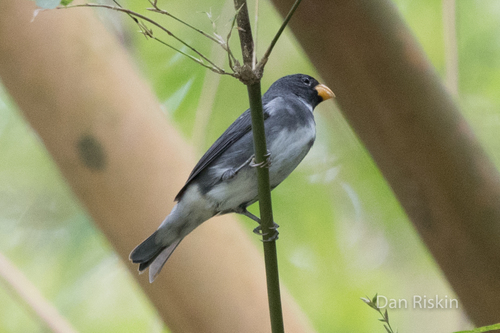
Sporophila schistacea, the slate-coloured seedeater, is a Thraupidae bird found across parts of the Neotropics.
The slate-coloured seedeater, scientifically known as Sporophila schistacea, is a bird species that belongs to the family Thraupidae. Its natural habitats are subtropical or tropical moist lowland forests, and heavily degraded former forests. This species occurs in southern Central America, the southwestern Amazon Basin, Colombia, Venezuela, Trinidad and Tobago, and the Guianas.
View full details → 23
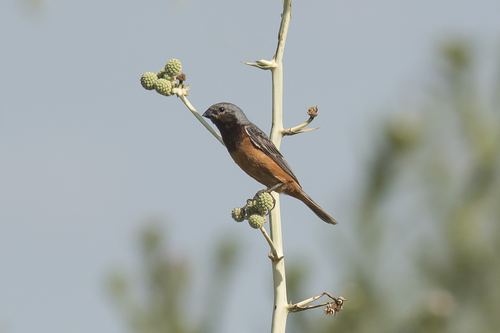
Dark-throated seedeater (Sporophila ruficollis) is a Thraupidae bird growing rare from habitat loss across South American grasslands.
The dark-throated seedeater, scientifically known as Sporophila ruficollis, is a bird species that belongs to the family Thraupidae; it was previously classified under the family Emberizidae. This species can be found in Argentina, Bolivia, Brazil, Paraguay, and Uruguay, and it still occurs at Quebrada de los Cuervos in Uruguay. Its natural habitats are dry savanna, as well as subtropical or tropi...
View full details → 24
Sporophila castaneiventris Cabanis, 1849
Sporophila castaneiventris Cabanis, 1849
🦋 Animalia Thraupidae
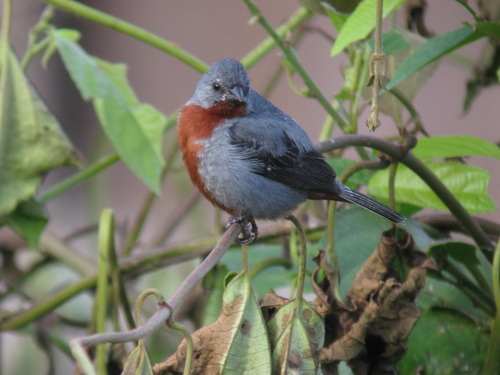
The chestnut-bellied seedeater is a Thraupidae bird species found across multiple South American countries.
The chestnut-bellied seedeater, with the scientific name Sporophila castaneiventris Cabanis, 1849, is a bird species that belongs to the family Thraupidae. This species can be found in Bolivia, Brazil, Colombia, Ecuador, French Guiana, Guyana, Peru, Suriname, and Venezuela. Its natural habitats are subtropical or tropical moist shrubland, as well as heavily degraded former forest.
View full details → 25
Sporophila frontalis (J.Verreaux, 1869)
Sporophila frontalis (J.Verreaux, 1869)
🦋 Animalia Thraupidae
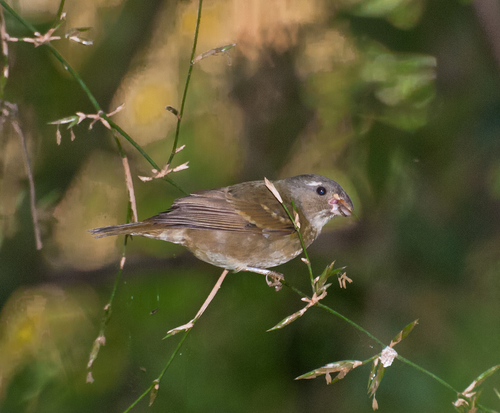
The buffy-fronted seedeater is a Thraupidae bird found in eastern South America, threatened by habitat loss.
The buffy-fronted seedeater, with the scientific name Sporophila frontalis, is a species of bird that belongs to the family Thraupidae. It occurs in eastern South America, where its range is concentrated mainly in far northeastern Argentina and along the southeastern coastline of Brazil. Its natural habitats are subtropical or tropical moist lowland forest, as well as subtropical or tropical moist...
View full details → 26
Sporophila ardesiaca (A.J.C.Dubois, 1894)
Sporophila ardesiaca (A.J.C.Dubois, 1894)
🦋 Animalia Thraupidae
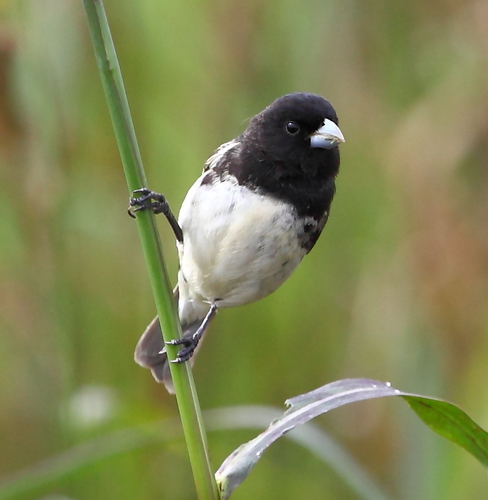
Dubois's seedeater (Sporophila ardesiaca) is a Thraupidae bird endemic to semi-open habitats of east-central Brazil.
Dubois's seedeater, scientifically named Sporophila ardesiaca, is a bird species that belongs to the family Thraupidae. It is closely related to the widespread yellow-bellied seedeater, and some sources suggest it may be more appropriately classified as a subspecies of the yellow-bellied seedeater. This species is endemic to east-central Brazil, and it occurs in a wide variety of semi-open habitat...
View full details → 27
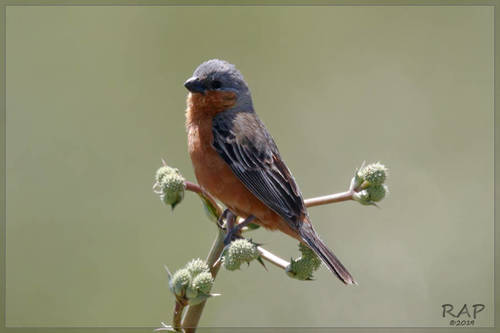
Sporophila hypochroma, the rufous-rumped seedeater, is a Thraupidae bird threatened by habitat loss in South America.
The rufous-rumped seedeater, scientifically named Sporophila hypochroma Todd, 1915, is also commonly called the grey-and-chestnut seedeater. It is a bird species that belongs to the family Thraupidae. This species breeds in southern Paraguay, Argentina, and Uruguay, and migrates north to Bolivia, the Pantanal, and central Brazil. Its natural habitats include dry savanna, subtropical or tropical se...
View full details → 28
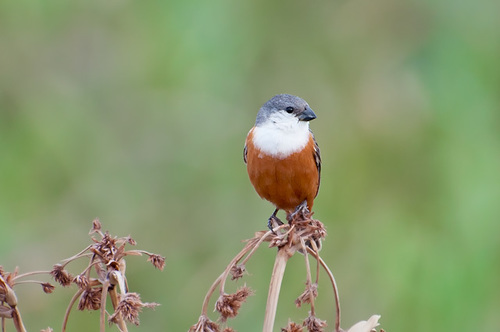
Sporophila palustris, the marsh seedeater, is a migratory Thraupidae bird found in South America threatened by habitat loss, trapping and pesticides.
The marsh seedeater, scientifically named Sporophila palustris (Barrows, 1883), is a bird species that belongs to the family Thraupidae. This species shows sexual dichromatism: males have a distinct appearance with a bright white throat, grey crown, and chestnut belly, while females look similar to other brown female seedeater species. It is distributed across Argentina, Brazil, Paraguay, and Urug...
View full details → 29
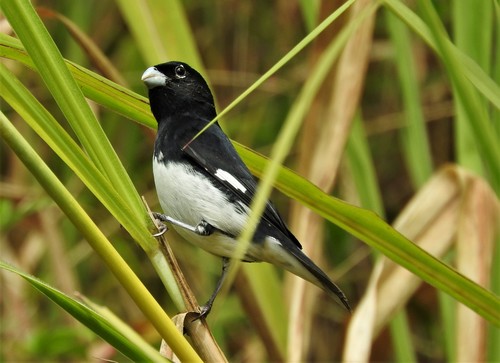
Sporophila luctuosa, the black-and-white seedeater, is a Thraupidae bird found in South America in specific shrubland and degraded forest habitats.
The black-and-white seedeater, scientifically named Sporophila luctuosa, is a bird species that belongs to the family Thraupidae. This species occurs in Bolivia, Brazil, Colombia, Ecuador, Peru, and Venezuela. Its natural habitats include subtropical or tropical moist shrubland, subtropical or tropical high-altitude shrubland, and heavily degraded former forest.
View full details → 30
Sporophila americana (J.F.Gmelin, 1789)
Sporophila americana (J.F.Gmelin, 1789)
🦋 Animalia Thraupidae
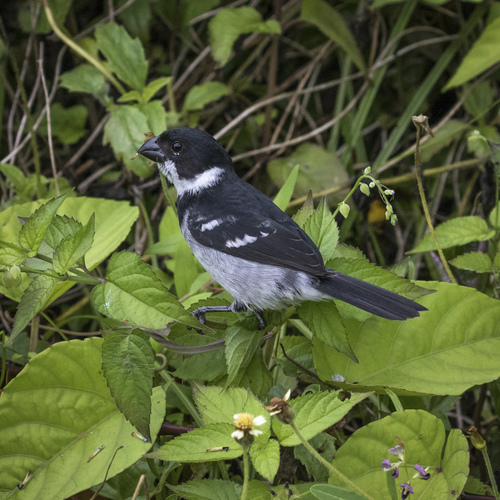
Sporophila americana is a small neotropical seedeater with distinct male and female plumage, classified as least concern overall.
Sporophila americana (first described by J.F. Gmelin in 1789) has a total length of approximately 11 cm, or 4 and 1/4 inches. Adult males have a relatively heavy black bill. Their upperparts are black, with the exception of a greyish rump that is actually white with fine black streaks, a pattern only visible when viewed up close, and two distinct white wing-bars, where the lower bar is often reduc...
View full details →Frequently Asked Questions
How many species are in the Thraupidae family?
This guide features 30 representative species from the Thraupidae family. The full family contains many more species worldwide — explore them all on iNature.
How to identify Thraupidae species?
Thraupidae species share common features in their flowers, leaves, and growth patterns. This guide provides photos and descriptions for 30 species. For instant field identification, use the iNature app.
Sources: GBIF, iNaturalist, Wikipedia · Disclaimer
Identify any species instantly — even offline
iNature uses on-device AI to identify plants, animals, fungi and more. No internet needed.
Download iNature — FreeStart Exploring Nature Today
Download iNature for free. 10 identifications on us. No account needed. No credit card required.
Download Free on App Store
