The Cyperaceae (sedge family) includes nearly 5,500 species of grass-like plants found predominantly in wet habitats worldwide. The classic saying "sedges have edges" refers to their distinctive triangular stems. This guide covers the most commonly encountered sedge genera including Carex, Cyperus, and Eleocharis.
🌱 Plant Families
Sedge Family (Cyperaceae): Species & Identification Guide
1
Bolboschoenus fluviatilis (Torr.) Soják
Bolboschoenus fluviatilis (Torr.) Soják
🌿 Plantae Cyperaceae
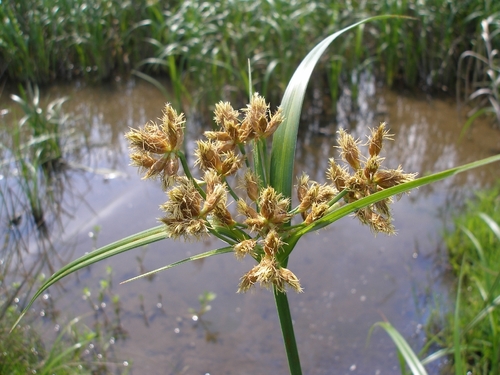
Bolboschoenus fluviatilis (river bulrush) is a Cyperaceae flowering plant that supports wildlife and stabilizes intertidal habitats.
Bolboschoenus fluviatilis, commonly known as river bulrush, is a flowering plant species that belongs to the sedge family Cyperaceae. Its native range covers Australia, New Zealand, New Caledonia, Canada, the United States, and northeastern Mexico. Both B. fluviatilis itself and its fruits are important food sources for waterfowl, including geese, ducks, bitterns, and swans. This plant also provid...
⚠️ Toxicity: Insufficient toxicity evidence; avoid direct contact and ingestion.
View full details →
2
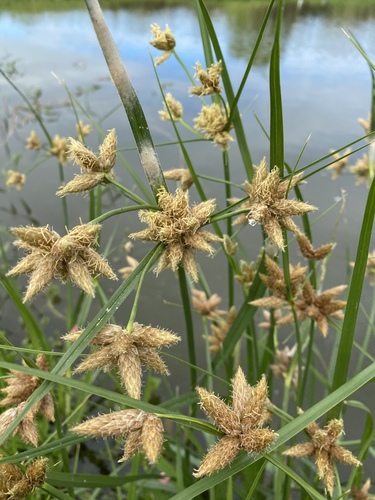
Bolboschoenus maritimus is a halophytic Cyperaceae flowering plant found across much of the world's temperate and subtropical regions.
Bolboschoenus maritimus (L.) Palla is a flowering plant species belonging to the Cyperaceae family. Its common names are sea clubrush, cosmopolitan bulrush, alkali bulrush, saltmarsh bulrush, and bayonet grass. It grows in seaside wetland habitats across much of the world, and is widespread throughout most of temperate and subtropical Africa, Asia, Europe, North America, South America, and various...
⚠️ Toxicity: Insufficient toxicity evidence; avoid direct contact and ingestion.
View full details →
3
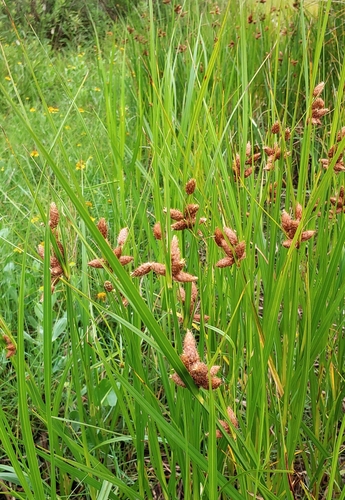
Bolboschoenus robustus is a North American coastal perennial herb that serves as wildlife food and has traditional Indigenous uses.
Bolboschoenus robustus is a perennial herb that grows from a rhizome system with attached tubers. Its stems are erect, three-angled, and the angles are rough with short hairs, reaching a maximum height of well over one meter. Leaves sheath the stem and produce long, flat or V-shaped blades. The inflorescence holds one or more clusters of many spikelets, along with long, leaflike bracts. This speci...
⚠️ Toxicity: Insufficient toxicity evidence; avoid direct contact and ingestion.
View full details →
4
Bulbostylis barbata (Rottb.) C.B.Clarke
Bulbostylis barbata (Rottb.) C.B.Clarke
🌿 Plantae Cyperaceae
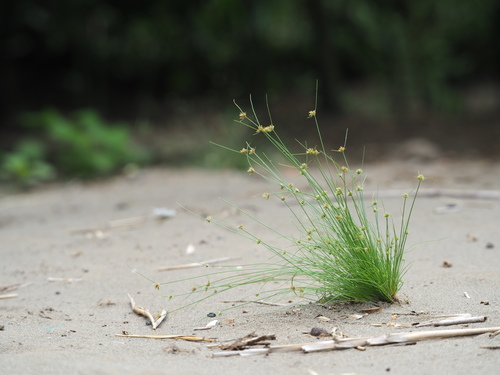
Bulbostylis barbata is an annual tufted flowering sedge native to Western Australia that produces brown flowers.
Bulbostylis barbata is a flowering plant species belonging to the sedge family, Cyperaceae, and it is native to Western Australia. This annual grass-like plant has a tufted growth habit, and typically reaches between 2 and 35 centimetres (1 to 14 inches) in height. It flowers between February and September, and produces brown blooms. It is rarely found growing alone. It occurs in rock crevices, al...
⚠️ Toxicity: Insufficient toxicity evidence; avoid direct contact and ingestion.
View full details →
5
Bulbostylis capillaris (L.) Kunth ex C.B.Clarke
Bulbostylis capillaris (L.) Kunth ex C.B.Clarke
🌿 Plantae Cyperaceae
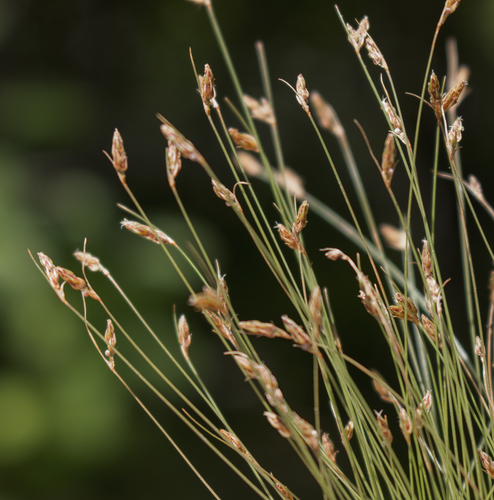
Bulbostylis capillaris is a small annual sedge native to the Americas, used to treat UTIs with no confirmed effectiveness.
Bulbostylis capillaris (L.) Kunth ex C.B.Clarke is a species of sedge with two common names: densetuft hairsedge and threadleaf beakseed. It is native to a large area covering much of North America, South America, and the West Indies, ranging from Canada in the north to Bolivia in the south. This plant can grow in many different habitat types, and it is most commonly found in moist areas like stre...
⚠️ Toxicity: Insufficient toxicity evidence; avoid direct contact and ingestion.
View full details →
6
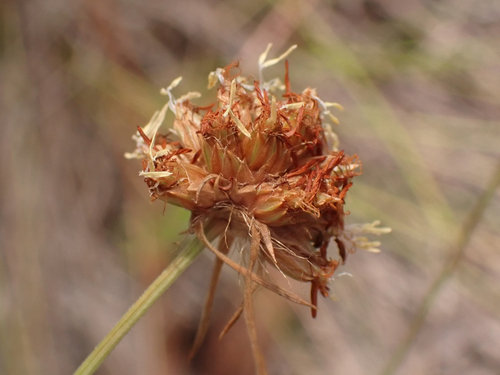
Bulbostylis warei in Baldwin Co., Alabama, is rare in coastal deep white sands; specimens T. Wayne Barger 5017 (2019) and Gena Todia 5917 (2021) were collected from an undeveloped and a to - be - developed lot respectively.
Voucher Specimens: In Alabama, specifically in Baldwin County, this species is rare in the deep, white sands of the coastal area. A specimen (T. Wayne Barger 5017, ALNHS 6651) was collected on November 6, 2019, from the northeast quadrant of an undeveloped lot with minimal or sparse ground - cover. Another specimen (Gena Todia 5917, ALNHS 7862) was collected on September 21, 2021, where numerous i...
View full details → 7
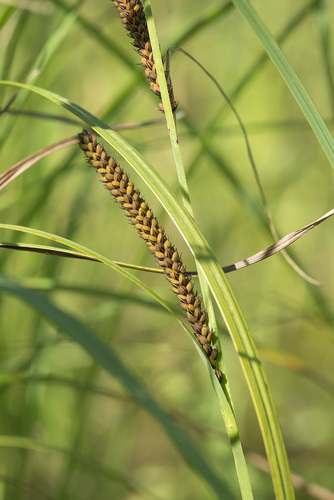
Carex acuta L. is a rhizomatous wetland sedge found across parts of the Palaearctic, with brown spike flowers in late spring to summer.
Carex acuta L. is a slender, tuft-forming, rhizomatous plant that reaches a maximum height of 90 cm. It has narrow, flat leaves and three-angled stems. Its inflorescence takes the form of a spike, with brown flowers that bloom in late spring and summer. This species grows on river and lake margins within the Palaearctic terrestrial ecoregions. It occupies beds in wet, alkaline or slightly acid dep...
⚠️ Toxicity: Insufficient toxicity evidence; avoid direct contact and ingestion.
View full details →
8
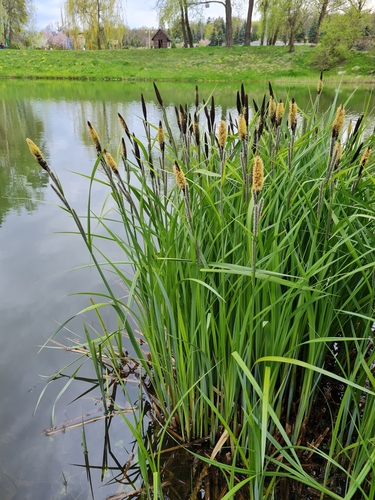
Carex acutiformis Ehrh. is a rhizomatous tufted sedge native to northern and western Europe, found in moist habitats.
Carex acutiformis Ehrh. is a tuft-forming, rhizomatous plant that grows up to 150 centimetres (59 in) tall. Its stems are slender and three-angled. The leaves are narrow, tend to droop at the tips, and reach up to 160 cm (63 in) long and 5–20 mm (0.2–0.8 in) wide. Its inflorescence holds 2 to 3 male spikelets and 3 to 4 female spikelets. Male spikelets are 1 to 4 cm long and typically purple-brown...
⚠️ Toxicity: Insufficient toxicity evidence; avoid direct contact and ingestion.
View full details →
9
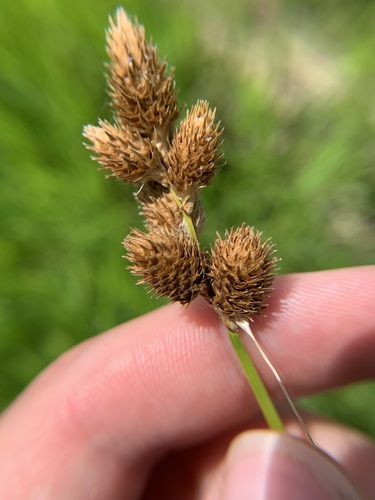
Carex alata Torr. is a perennial plant that flowers in spring and may go dormant in hot, dry summers.
Carex alata Torr. is a perennial sedge species. It produces flowers in spring, and forms fruits during late spring and summer. If its growing soil is not kept consistently moist during hot summer weather, the plant may enter dormancy.
⚠️ Toxicity: Insufficient toxicity evidence; avoid direct contact and ingestion.
View full details →
10
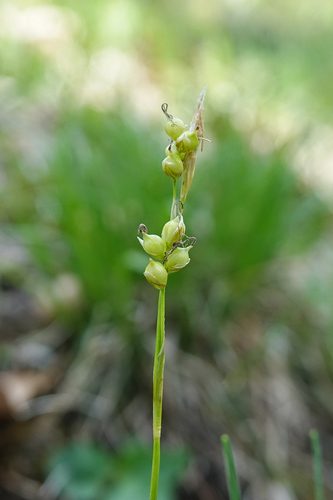
Carex alba Scop. is a small sedge species that flowers and fruits in summer, growing in dry temperate wooded areas and slopes.
Carex alba Scop. is a species of sedge that typically grows in thick clumps. Mature plants reach between 15–30 cm (5.9–11.8 in) in height. Its stems are slender, trigonous, and smooth, with leafless sheaths at the base. Its leaves are shorter than the stem and have flat blades. The plant's bracts are greenish-brown and sheathlike. Its flowers grow as terminal spikes and are white in colour. Its nu...
⚠️ Toxicity: Insufficient toxicity evidence; avoid direct contact and ingestion.
View full details →
11
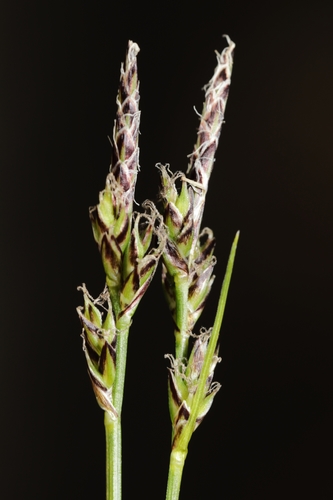
Carex albicans, whitetinge sedge, is a perennial flowering sedge native to eastern North American dry forests and woodlands.
Carex albicans, commonly known as whitetinge sedge, is a species of flowering plant in the sedge family, Cyperaceae. It is native to eastern North America, occurring in both Canada and the United States. Its typical natural habitat is dry forests and woodlands. Carex albicans is a perennial graminoid. It produces fruit in early spring, and its fruits are partially dispersed by ants. Carex section ...
⚠️ Toxicity: Insufficient toxicity evidence; avoid direct contact and ingestion.
View full details →
12
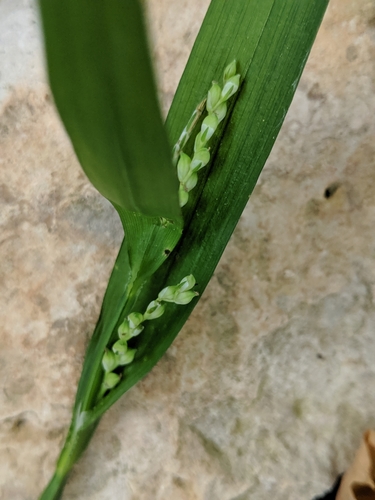
Carex albursina is a wide-leaved sedge native to eastern North America that grows in moist woods.
Carex albursina E.Sheld., commonly called White bear sedge or blunt-scaled wood sedge, is a wide-leaved sedge species. It usually grows in moist deciduous or mixed woodlands in eastern North America. This species was named for White Bear Lake in east central Minnesota, where it was discovered by Edmund Sheldon in the 1890s. Its leaves measure 10–38 mm (3⁄8–1+1⁄2 inches) wide and 10–35 cm (4–14 inc...
⚠️ Toxicity: Insufficient toxicity evidence; avoid direct contact and ingestion.
View full details →
13
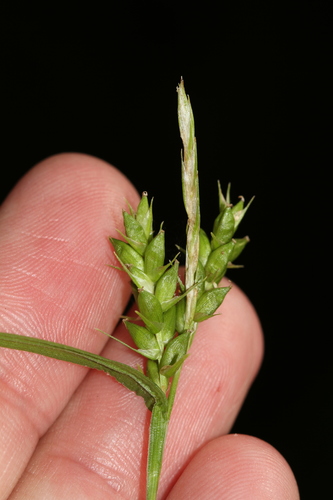
Carex amphibola is a Cyperaceae flowering plant native to eastern North America that grows in mesic deciduous forests near streams.
Carex amphibola Steud., commonly called gray sedge, is a species of flowering plant in the family Cyperaceae. It was first formally named in 1855. This species is native to eastern Canada and the eastern United States. It is frequently confused with Carex grisea, and the two can be distinguished by features of their perigynia: C. amphibola has gray-green perigynia with angular tips, while C. grise...
⚠️ Toxicity: Insufficient toxicity evidence; avoid direct contact and ingestion.
View full details →
14
Carex annectens (E.P.Bicknell) E.P.Bicknell
Carex annectens (E.P.Bicknell) E.P.Bicknell
🌿 Plantae Cyperaceae
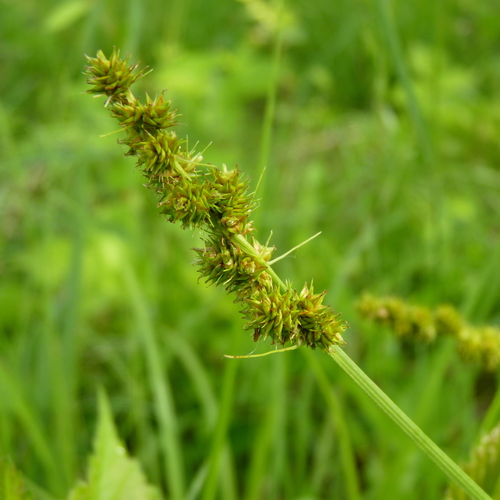
Carex annectens is a sedge often confused with Carex vulpinoidea, distinguished by longer leaves, elongated perigynia, and longer spikes.
Scientific name: Carex annectens (E.P.Bicknell) E.P.Bicknell. This species is frequently confused with Carex vulpinoidea. It can be told apart from C. vulpinoidea by three key traits: its longer leaves, which exceed the height of the flowering stems, its more elongated perigynia, and its longer flowering spikes, which are often more than 5.5 cm long. Like many other sedges, the perigynia of Carex ...
⚠️ Toxicity: Insufficient toxicity evidence; avoid direct contact and ingestion.
View full details →
15
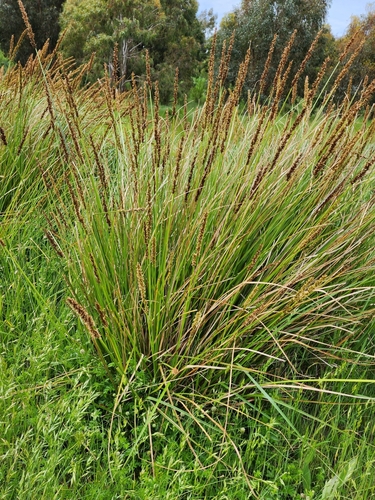
Carex appressa is a perennial tufted sedge that grows in wet areas and feeds Heteronympha cordace larvae.
Carex appressa R.Br. is a densely tufted perennial sedge that forms clumps up to 50 cm (20 inches) in diameter. Its stems grow to roughly 100 cm (39 inches) in height; they are hard, solid, and become rough toward the top of the stem. The plant's leaves are 3–6 mm (0.12–0.24 inches) wide, rough on the margins, and mostly grow out from the plant's base. It produces a brownish, spike-like infloresce...
⚠️ Toxicity: Insufficient toxicity evidence; avoid direct contact and ingestion.
View full details →
16
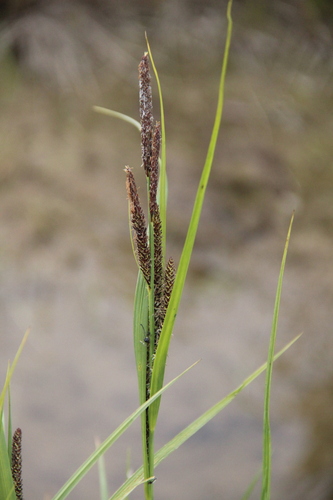
Carex aquatilis, water sedge, is a perennial circumboreal sedge often used for revegetating harvested peat areas.
Carex aquatilis Wahlenb. is a species of sedge that has two common names: water sedge and leafy tussock sedge. It has a circumboreal distribution, growing across the northern regions of the Northern Hemisphere. It can be found in many types of mountainous and arctic habitats, including temperate coniferous forest, alpine meadows, tundra, and wetlands. There are several recognized varieties of this...
⚠️ Toxicity: Insufficient toxicity evidence; avoid direct contact and ingestion.
View full details →
17
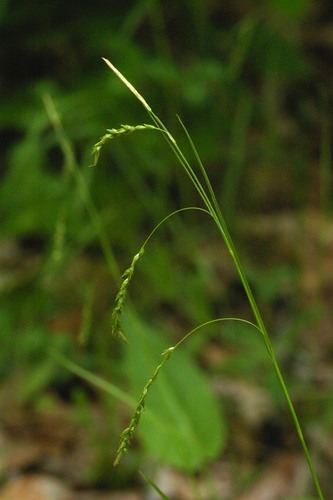
Carex arctata Boott, or drooping woodland sedge, is a North American native sedge that grows in bogs and forests across eastern regions.
Carex arctata Boott, commonly known as drooping woodland sedge, is a species of sedge native to eastern North America. It has several alternative common names: black sedge, compressed sedge, and drooping wood sedge. In Canada, its range extends from Manitoba to the Maritimes; in the United States, it reaches south to northwestern North Carolina and west to Minnesota. This sedge grows in bogs, hard...
⚠️ Toxicity: Insufficient toxicity evidence; avoid direct contact and ingestion.
View full details →
18
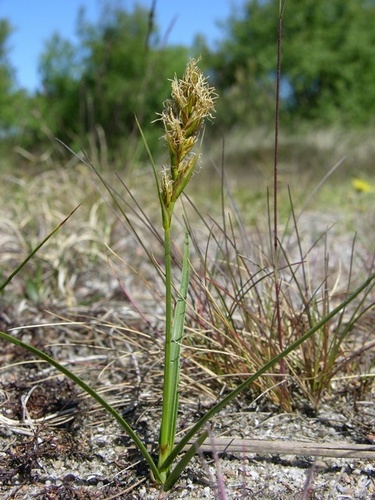
Carex arenaria L. (sand sedge) is a perennial sandy-habitat sedge that spreads via underground stolons.
Carex arenaria L., commonly known as sand sedge, is a perennial sedge species belonging to the genus Carex. As its species epithet indicates – the Latin arenarius translates to "sandy" – this species is commonly found growing in dunes and other sandy habitats. It spreads via long stolons that grow beneath the soil surface.
⚠️ Toxicity: Insufficient toxicity evidence; avoid direct contact and ingestion.
View full details →
19
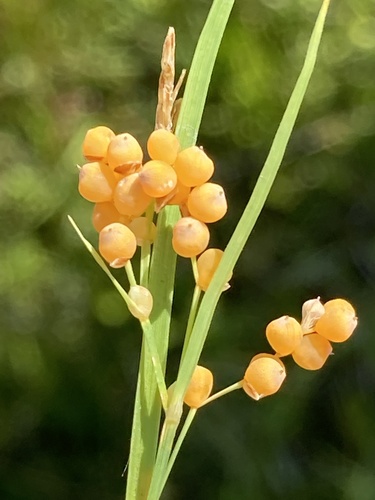
Carex aurea Nutt. is a small sedge that has orange-ripening fruit sacs after flowering.
This sedge species, Carex aurea Nutt., produces stems that grow up to approximately 40 centimeters, or 16 inches, tall. Its inflorescence bears both staminate and pistillate flowers; pistillate flowers develop into rounded fruits. Each fruit is enclosed in a sac-like structure called a perigynium. When fully grown, the perigynium is fleshy and green, and it turns bright orange just before it detac...
⚠️ Toxicity: Insufficient toxicity evidence; avoid direct contact and ingestion.
View full details →
20
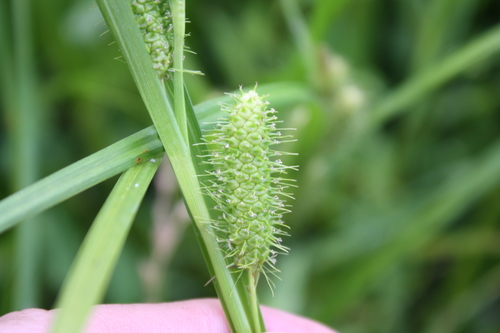
Carex aureolensis Steud. is a tussock-forming perennial sedge native to temperate Americas.
Carex aureolensis Steud. is a tussock-forming perennial sedge species that belongs to the family Cyperaceae. This species is native to temperate regions of the Americas, ranging from Illinois in the north to northern Argentina in the south.
⚠️ Toxicity: Insufficient toxicity evidence; avoid direct contact and ingestion.
View full details →
21
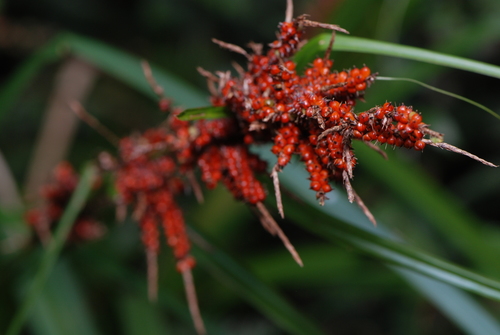
Carex baccans, the crimson-seeded sedge, is a Cyperaceae flowering plant widespread in subtropical and tropical Asia.
Carex baccans Nees, commonly known as the crimson-seeded sedge, is a flowering plant species belonging to the family Cyperaceae. It has a widespread distribution across subtropical and tropical Asia, covering most of the Indian Subcontinent, southern China, most of Malesia with the exception of Borneo, and extending to New Guinea. An endophytic bacterial species, Glycomyces endophyticus, has been ...
⚠️ Toxicity: Insufficient toxicity evidence; avoid direct contact and ingestion.
View full details →
22
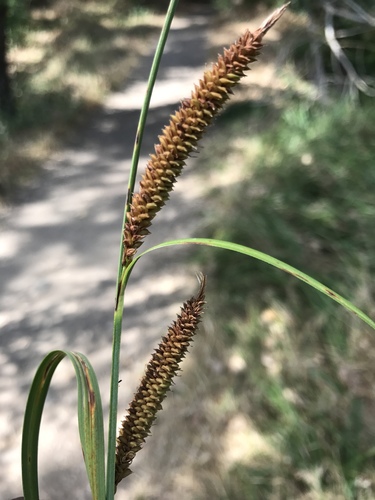
Carex barbarae, Santa Barbara sedge, is a US West Coast sedge historically used by native groups for basketry and fiber.
This sedge species, Carex barbarae, produces angled, hairless stems that can reach up to one meter in height or slightly taller, and it does not grow in clumps. Its tough, narrow leaves have basal sheaths that are red-spotted or purple and prone to shredding. The inflorescence produces both erect and drooping spikes, which can be up to around 8 centimeters long, along with a long associated bract ...
⚠️ Toxicity: Insufficient toxicity evidence; avoid direct contact and ingestion.
View full details →
23
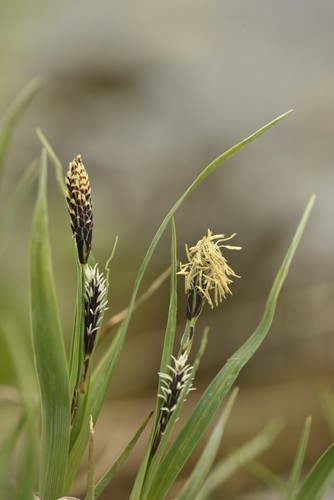
Carex bigelowii is a circumboreal arctic-alpine sedge that can colonize disturbed habitats and produce 200-year-viable seeds.
The scientific name of this plant is Carex bigelowii Torr. ex Schwein. This species produces 3-angled stems that grow up to 50 centimeters (1.6 ft) tall, and it may grow in a tuft or singly. Its leaves are stiff and dark green, and leaves from previous growing seasons may remain on the plant. Its inflorescence is accompanied by a short bract, and holds 1–3 black pistillate spikes positioned below ...
⚠️ Toxicity: Insufficient toxicity evidence; avoid direct contact and ingestion.
View full details →
24
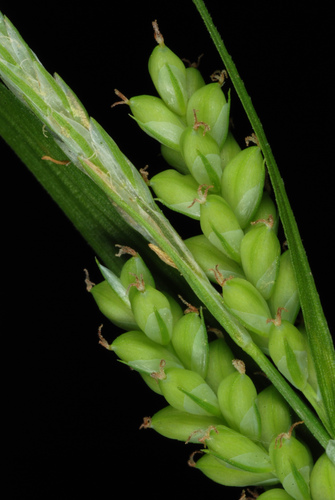
Carex blanda is a common, aggressively spreading native sedge of eastern and central North America.
Carex blanda, commonly called the common woodland sedge or eastern woodland sedge, is a sedge species native to a wide range of habitats across the eastern and central United States and Canada. Its leaves measure 1–10 mm (1⁄32–13⁄32 inches) wide and 14–36 cm (5.5–14.2 inches) long. Its stem usually bears a staminate (male) spike at its tip, with two pistillate (female) spikes clustered closely nea...
⚠️ Toxicity: Insufficient toxicity evidence; avoid direct contact and ingestion.
View full details →
25
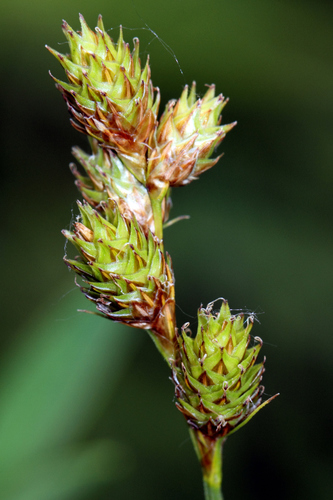
Carex brevior is a North American sedge in Carex sect. Ovales that forms dense tufts and grows in open, often disturbed habitats.
Carex brevior (Dewey) Mack. ex Lunell forms dense tufts with short-prolonged rhizomes, and its clumps sometimes appear elongated. Flowering culms of this species are 15–120 cm (5.9–47.2 in) tall, with 3 to 5 leaves growing on each culm. It produces few vegetative culms, and unlike many other sedges, its leaves are not arranged in a striking 3-ranked pattern. Its leaf sheaths are white and papery, ...
⚠️ Toxicity: Insufficient toxicity evidence; avoid direct contact and ingestion.
View full details →
26
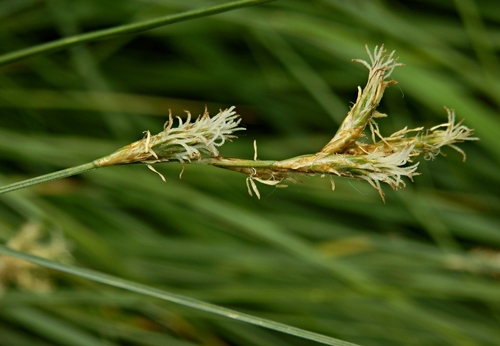
Carex brizoides (quaking sedge) is a European Carex species that grows invasively in disturbed native woodlands.
Carex brizoides, commonly known as quaking sedge or quaking-grass sedge, is a species of flowering plant in the genus Carex. This species is native to central and southern Europe. Even in regions where it is an indigenous native species, it grows invasively in disturbed woodland habitats. In these areas, it forms a dense thick layer across the forest floor, which reduces overall plant species dive...
⚠️ Toxicity: Insufficient toxicity evidence; avoid direct contact and ingestion.
View full details →
27
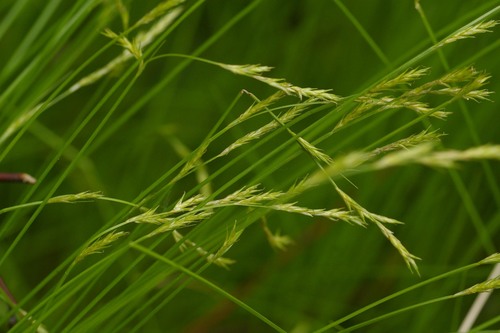
Carex bromoides is a native North American sedge species found mostly in eastern North America’s wooded wetlands.
Carex bromoides Willd., commonly called brome-like sedge, brome-sedge, and dropseed of the woods, is a sedge species belonging to the genus Carex. This species is native to North America. Its distribution covers most of eastern North America, spanning Mexico, the United States, and Canada. It grows mainly in wooded wetland habitats, and can also be found occasionally in wet meadows.
⚠️ Toxicity: Insufficient toxicity evidence; avoid direct contact and ingestion.
View full details →
28
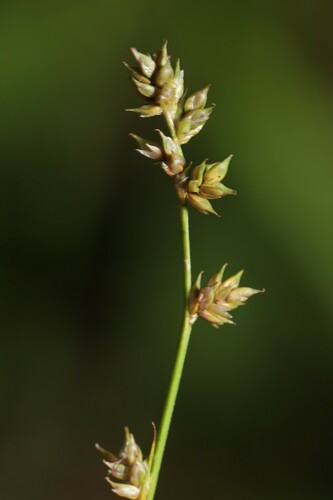
Carex brunnescens is a morphologically variable sedge species native to circumboreal regions, found in multiple habitats.
Carex brunnescens, commonly known as brownish sedge or green bog sedge, is a plant species that belongs to the sedge family Cyperaceae. It has a circumboreal distribution, and is native to both North America and Eurasia. In the United States, it occurs mainly in the Northeast and Midwest, extending south into the Appalachian Mountains, with isolated disjunct populations located further west in the...
⚠️ Toxicity: Insufficient toxicity evidence; avoid direct contact and ingestion.
View full details →
29
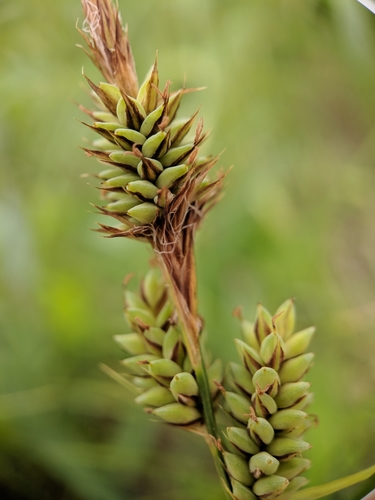
Carex buxbaumii, or Buxbaum's/club sedge, is a northern Northern Hemisphere clumping sedge that grows in wet habitats.
Carex buxbaumii Wahlenb. is a species of sedge that is commonly called Buxbaum's sedge or club sedge. It is native to a large portion of the northern Northern Hemisphere, with its range extending from Alaska to Greenland to Eurasia, and covering most of Canada and the United States. This plant grows in wet habitats, including marshes and fens. It forms clumps that grow from long rhizomes. Its stem...
⚠️ Toxicity: Insufficient toxicity evidence; avoid direct contact and ingestion.
View full details →
30
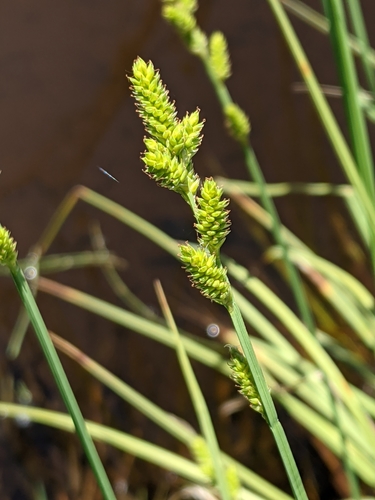
Carex canescens is a widespread perennial Cyperaceae species that grows in damp habitats and can be invasive in disturbed Patagonian peatlands.
Carex canescens L., also known by the synonyms Carex cinerea Poll. and Carex curta Gooden., is a perennial plant species in the family Cyperaceae. It grows in damp forests and wetlands. This species is widespread across much of Europe, Asia, Australia, New Guinea, North America, Greenland, and southern South America. It has been documented as an invasive species in Sphagnum peatlands disturbed by ...
⚠️ Toxicity: Insufficient toxicity evidence; avoid direct contact and ingestion.
View full details →
Frequently Asked Questions
How many species are in the Cyperaceae family?
This guide features 30 representative species from the Cyperaceae family. The full family contains many more species worldwide — explore them all on iNature.
How to identify Cyperaceae species?
Cyperaceae species share common features in their flowers, leaves, and growth patterns. This guide provides photos and descriptions for 30 species. For instant field identification, use the iNature app.
Sources: GBIF, iNaturalist, Wikipedia · Disclaimer
Identify any species instantly — even offline
iNature uses on-device AI to identify plants, animals, fungi and more. No internet needed.
Download iNature — FreeStart Exploring Nature Today
Download iNature for free. 10 identifications on us. No account needed. No credit card required.
Download Free on App Store
