The Rosaceae (rose family) is one of the most important plant families, including roses, apples, cherries, strawberries, and almonds. This guide covers the diversity of species in this beloved family.
🌹 Plant Families
Rose Family (Rosaceae) — Complete Species Guide
1
Acaena anserinifolia (J.R.Forst. & G.Forst.) Druce
Acaena anserinifolia (J.R.Forst. & G.Forst.) Druce
🌿 Plantae Rosaceae
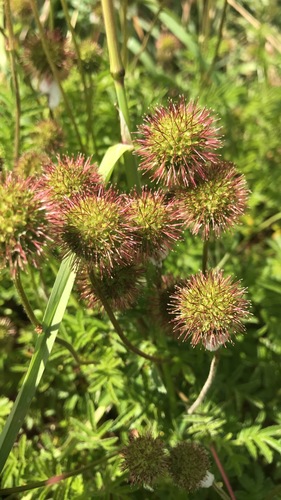
Acaena anserinifolia is a small New Zealand native plant with traditional medicinal uses and cultivated as a garden plant globally.
Scientific name: Acaena anserinifolia (J.R.Forst. & G.Forst.) Druce Description: Bidibidi (also called piripiri) is a small plant with deeply divaricated opposite leaflets and long stems that terminate in a globular capitulum. Its flowers can be pink, red, or white. It can be distinguished from the related species Acaena novae-zelandiae by two key features: the distinctive tuft of brush-like hair...
⚠️ Toxicity: Insufficient toxicity evidence; avoid direct contact and ingestion.
View full details →
2
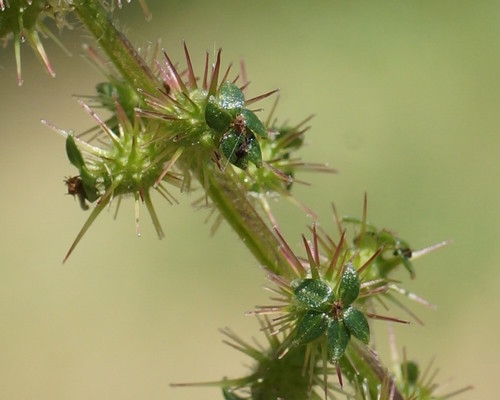
Acaena echinata Nees is a plant with specific leaf, flower and burr characteristics that grows 25–40 cm tall.
Acaena echinata Nees grows to a height between 25–40 cm (9.84–15.75 in). It produces shiny green fern-like leaves that measure 6–15 cm (2.36–5.91 in) in length, and the underside of these leaves is hairy. This species bears tiny pale green flowers with purple stamens that are arranged in a spike, and the burrs it produces have sharp barbs.
⚠️ Toxicity: Insufficient toxicity evidence; avoid direct contact and ingestion.
View full details →
3
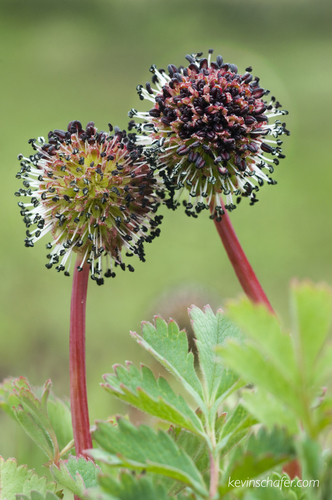
Acaena magellanica is a perennial native South American sub-Antarctic mat-forming plant with hooked seed burrs.
**Description**: Acaena magellanica (Lam.) Vahl is a perennial mat-forming plant with creeping stems, growing up to 14 cm (6 in) tall. Its leaves are oblong to linear-lanceolate, bearing 5 to 10 pairs of ovate leaflets. It produces globular flower heads that grow on wiry stems held well above the foliage. After flowering, it forms brown, prickly seed heads; the seeds have small hooks that allow th...
⚠️ Toxicity: Insufficient toxicity evidence; avoid direct contact and ingestion.
View full details →
4
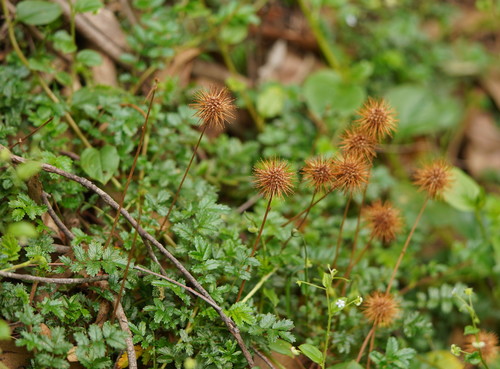
Acaena novae-zelandiae is a small herbaceous perennial native to NZ, Australia, and New Guinea, sometimes used for garden ground cover.
Scientific name: Acaena novae-zelandiae Kirk Description: Acaena novae-zelandiae is a small herbaceous perennial plant. It is stoloniferous, with prostrate stems measuring 1.5–2 mm in diameter. Damage to its stolons stimulates the production of new shoots. It bears imparipinnate leaves approximately 2–11 cm long, with 9–15 toothed, oblong leaflets. The adaxial (upper) leaf surface is dark green a...
⚠️ Toxicity: Insufficient toxicity evidence; avoid direct contact and ingestion.
View full details →
5
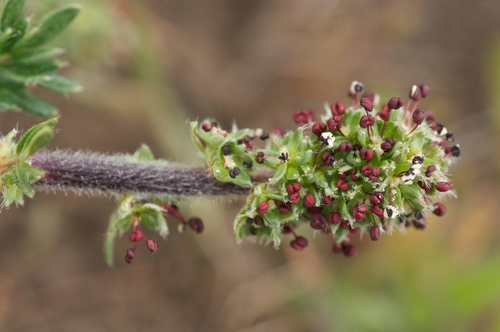
Acaena pinnatifida is a Rosaceae flowering plant found in California, Chile and Argentina, with California populations sometimes separated taxonomically.
Scientific name: Acaena pinnatifida Ruiz & Pav. Introduction: Acaena pinnatifida is a flowering plant species belonging to the family Rosaceae. Its common names are Argentinian biddy-biddy and California sheepbur. This plant grows in California (United States), Argentina, and Chile. Populations of this species found in California are sometimes classified as a separate species or variety from popu...
⚠️ Toxicity: Insufficient toxicity evidence; avoid direct contact and ingestion.
View full details →
6
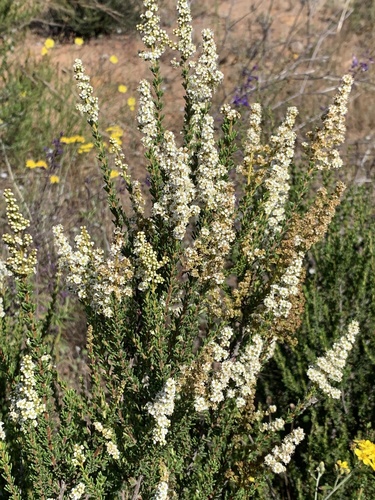
Adenostoma fasciculatum (chamise) is a common North American chaparral shrub with medicinal uses for skin irritation.
Adenostoma fasciculatum Hook. & Arn., commonly called chamise, is a shrub that typically grows less than 4 meters tall. It has long, arching stems covered in brown to gray bark, with a diffusely branched spreading growth habit; some forms grow prostrate. The numerous slender stems are generally erect and usually lack permanent branches. Young stems have reddish bark, which ages to gray exfoliating...
⚠️ Toxicity: Insufficient toxicity evidence; avoid direct contact and ingestion.
View full details →
7
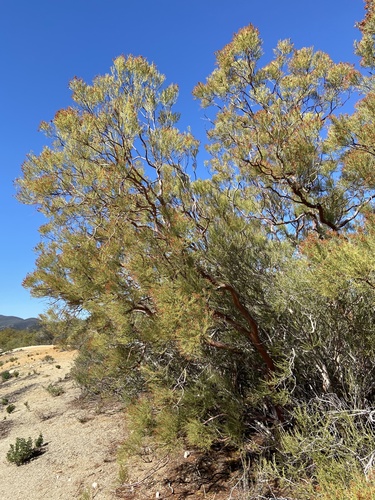
Adenostoma sparsifolium (redshanks) is a chaparral tree in California’s Peninsular Ranges, closely related to chamise and fire-adapted.
One of the most distinctive traits of the tree Adenostoma sparsifolium is its shaggy, peeling bark that forms loose strips, a feature that inspired its common names. This species produces multiple stems growing from a single root system; these stems do not grow foliage until they reach a certain height above the ground. As reflected in its species epithet "sparsifolium", Adenostoma sparsifolium be...
⚠️ Toxicity: Insufficient toxicity evidence; avoid direct contact and ingestion.
View full details →
8
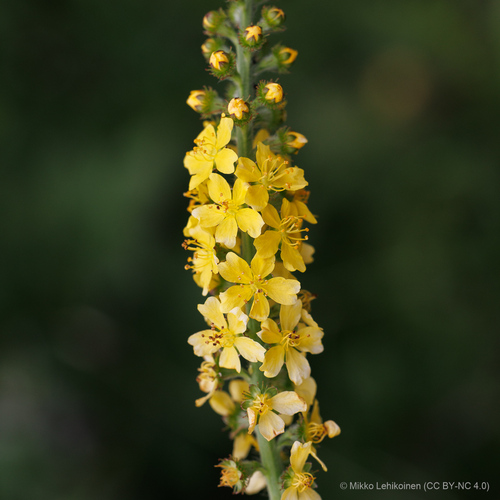
Agrimonia eupatoria L., or common agrimony, is a deciduous perennial herb native to Europe and Southwestern Asia with hooked hooked seed burd.
Common agrimony, scientifically known as Agrimonia eupatoria L., is a deciduous perennial herbaceous plant that reaches heights of up to 100 cm (39 in). It has deep rhizome roots, from which its stems grow. Its defining vegetative feature is the typical serrated-edged pinnate leaves. Short-stemmed flowers of common agrimonia bloom from June to September, arranged in long, spike-like racemose infl...
⚠️ Toxicity: Insufficient toxicity evidence; avoid direct contact and ingestion.
View full details →
9
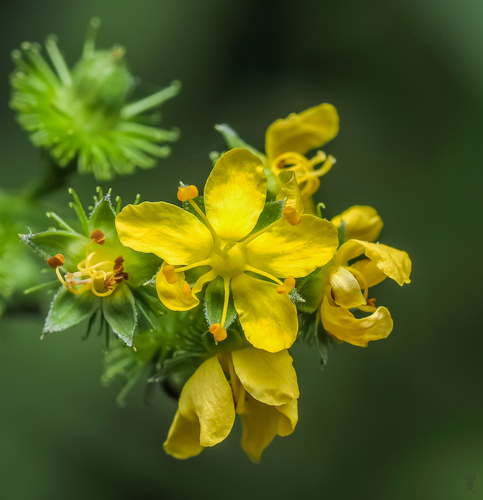
Agrimonia gryposepala is a scented flowering plant native to North America, with a history of diverse indigenous medicinal uses.
Agrimonia gryposepala Wallr. typically grows between 30 and 150 centimeters (1 to 5 feet) tall. It produces a cluster of small, yellow five-parted flowers on a hairy stalk, which sits above pinnate leaves. Its fruits are clustered dry hooked seeds. Crushing the plant's stem releases a spicy scent. Its native range covers most of the United States and Canada, excluding the Rocky Mountains, and exte...
⚠️ Toxicity: Insufficient toxicity evidence; avoid direct contact and ingestion.
View full details →
10
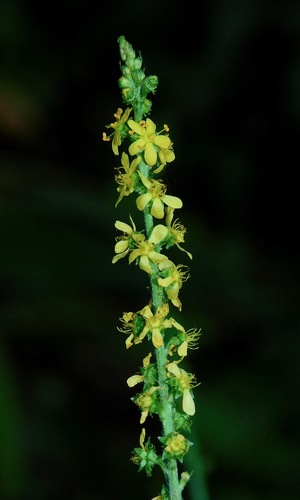
Agrimonia parviflora, commonly harvestlice or swamp agrimony, is a hardy herbaceous plant native to Canada and much of the United States.
Agrimonia parviflora Aiton, commonly known as harvestlice or swamp agrimony, is an erect, rapidly growing plant that can reach up to 6.0 feet (1.8 m) in height. It has long fibrous roots that grow up to 6 inches (15 cm) in length, and produces multiple stems. Its stems are pubescent, and it bears alternating odd-pinnate compound leaves. Each leaf can hold up to 17 primary lanceolate leaflets with ...
⚠️ Toxicity: Insufficient toxicity evidence; avoid direct contact and ingestion.
View full details →
11
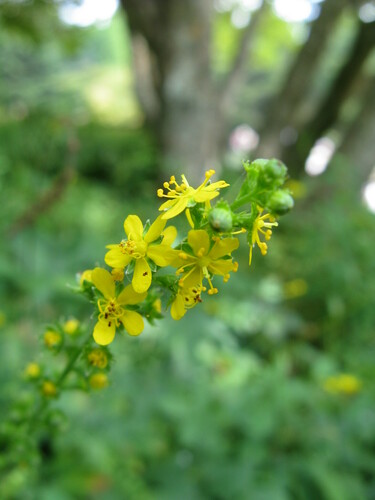
Agrimonia pilosa Ledeb. is a perennial herb used in traditional East Asian and South Asian medicine for multiple conditions.
Agrimonia pilosa Ledeb. is a perennial herb with an erect stem that reaches 30–120 cm (12–47 in) in height. It grows along roadsides or in grassy areas at a wide range of altitudes, and can thrive in light sandy, loamy, or heavy soils. It grows properly in either acidic or basic alkaline soils. This species has many lateral roots, and its short rhizome is usually tuberous. Stems are yellowish gree...
⚠️ Toxicity: Insufficient toxicity evidence; avoid direct contact and ingestion.
View full details →
12
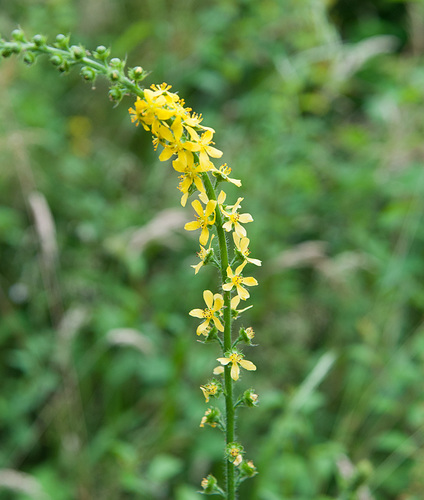
Agrimonia procera (fragrant agrimony) is a disjunctly distributed herbaceous perennial with fragrant glandular leaves and hooked bristled fruits.
Agrimonia procera Wallr., commonly called fragrant agrimony, is a herbaceous perennial plant that grows to about 1 meter tall. It has a green stem that may be branched or unbranched, covered in glandular hairs 2 mm long or slightly longer. Its leaves are pinnate, with 3 to 6 pairs of oval, distinctly serrated primary leaflets, an irregular number of smaller secondary leaflets, and a terminal leafl...
⚠️ Toxicity: Insufficient toxicity evidence; avoid direct contact and ingestion.
View full details →
13
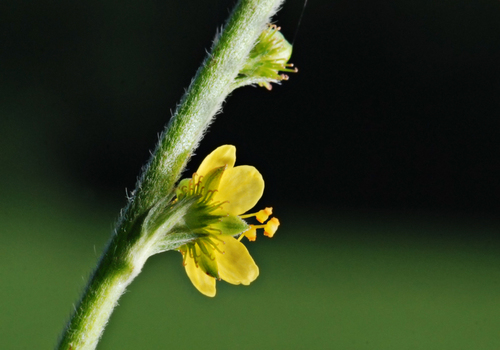
Agrimonia pubescens is a hairy-stemmed perennial herb with yellow flowers, found mostly east of the Mississippi in the US.
Agrimonia pubescens Wallr. is an erect perennial herb that can grow over 40 inches (1,000 millimeters) tall. Its stems are erect and covered in fine, short soft hairs (canescent or pubescent). Each compound leaf holds 5 to 13 leaflets; these leaflets are oblong, toothed along the edges, and pinnately divided a single time. The overall compound leaf has a lanceolate shape, with the terminal leaflet...
⚠️ Toxicity: Insufficient toxicity evidence; avoid direct contact and ingestion.
View full details →
14
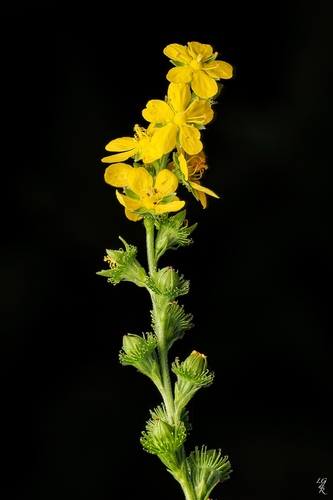
Agrimonia striata is a perennial forb in the rose family native to parts of North America.
Agrimonia striata Michx. has several common names: roadside agrimony, grooved agrimony, agrimony, cocklebur, woodland agrimony, and woodland grooveburr. This species is a perennial forb in the rose family Rosaceae. It reaches a height of around 40 inches, or 1 meter. It bears a dense raceme of five-parted yellow flowers on a hairy stalk, which grows above pinnately-divided leaves. It is native to ...
⚠️ Toxicity: Insufficient toxicity evidence; avoid direct contact and ingestion.
View full details →
15
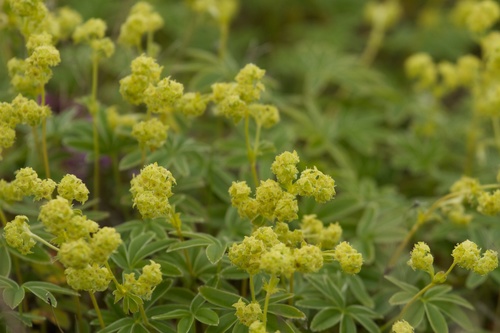
Alchemilla alpina L., or alpine lady's-mantle, is an apomictic perennial herb native to northern European mountains and southern Greenland.
Alpine lady's-mantle, scientifically known as Alchemilla alpina L., is a perennial plant with a woody rhizome, reaching a height between 5 and 20 cm (2 and 8 in). Its weak, silkily hairy stems grow from a basal rosette. The leaves are palmate, with approximately seven lanceolate leaflets that have toothed tips; the leaf upper surface is smooth, while the underside is densely hairy. Stems bear leav...
⚠️ Toxicity: Insufficient toxicity evidence; avoid direct contact and ingestion.
View full details →
16
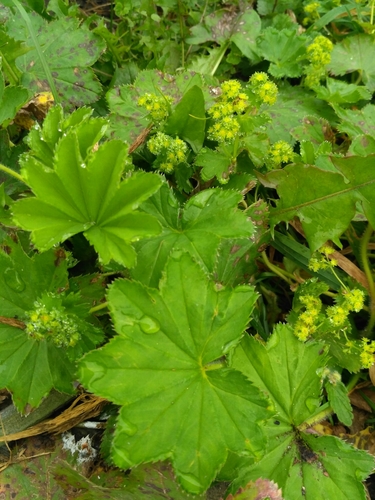
Alchemilla micans is a flowering plant from the Rosaceae family native to Europe.
Alchemilla micans Buser is a flowering plant species in the Rosaceae family. This plant is native to Europe.
⚠️ Toxicity: Insufficient toxicity evidence; avoid direct contact and ingestion.
View full details →
17
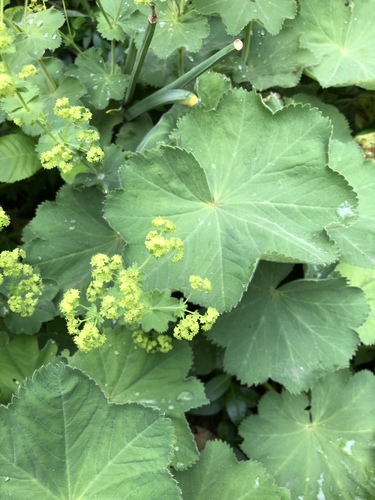
Alchemilla mollis is an herbaceous perennial ornamental flowering plant native to Southern Europe, with conflicting records of medicinal use.
Alchemilla mollis, commonly known as garden lady's-mantle or simply lady's-mantle, is a species of flowering plant in the Rosaceae family. This herbaceous perennial is native to Southern Europe, and is grown as an ornamental garden plant across the world. It reaches a height of 30 to 45 cm (12 to 18 in). Its leaves have palmate venation and scalloped, serrated margins. The plant's stipules are not...
⚠️ Toxicity: Insufficient toxicity evidence; avoid direct contact and ingestion.
View full details →
18
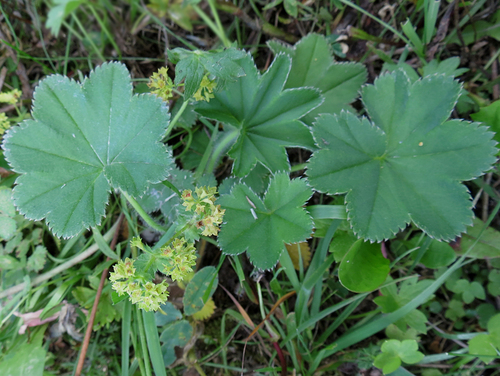
Alchemilla monticola, or hairy lady's mantle, is a Rosaceae species native from Europe to Siberia and Central China.
Alchemilla monticola Opiz, commonly known as hairy lady's mantle, is a plant species classified in the family Rosaceae. Its native range extends from Europe to Siberia and Central China.
⚠️ Toxicity: Insufficient toxicity evidence; avoid direct contact and ingestion.
View full details →
19
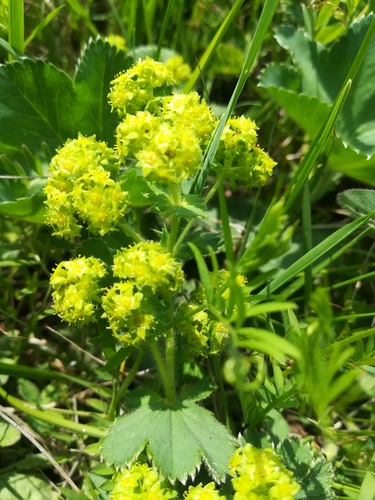
Alchemilla plicata Buser is a flowering Rosaceae plant species with a native range in Europe.
Alchemilla plicata Buser is a species of flowering plant that belongs to the Rosaceae plant family. It is native to Europe.
⚠️ Toxicity: Insufficient toxicity evidence; avoid direct contact and ingestion.
View full details →
20
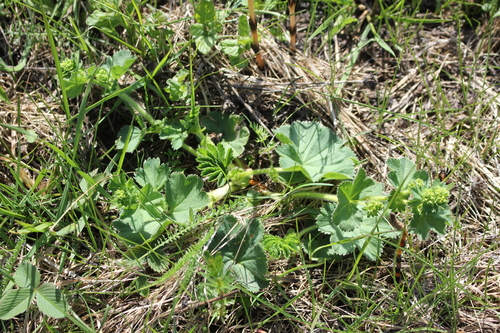
Alchemilla propinqua is a flowering Rosaceae plant species native to Central and Eastern Europe.
Alchemilla propinqua H.Lindb. ex Juz. is a flowering plant species that is part of the Rosaceae plant family. This species is native to Central and Eastern Europe.
⚠️ Toxicity: Insufficient toxicity evidence; avoid direct contact and ingestion.
View full details →
21
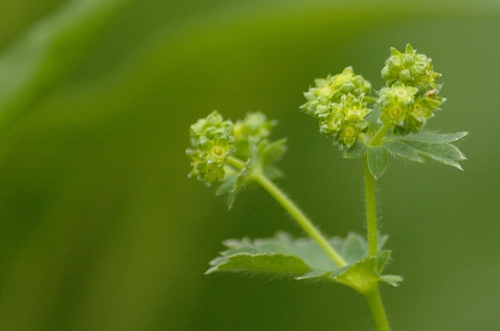
Alchemilla vulgaris (lady's mantle) is an identifiable plant with distinct lobed leaves that blooms June to September in Britain and Ireland.
Identification of Alchemilla to the genus level is fairly straightforward thanks to its distinctively corrugated, lobed leaves. These leaves are kidney-shaped to semicircular, with 5 to 11 lobes total, and upper leaves have fewer lobes than lower leaves. This genus produces clusters of yellowish-green flowers. Each individual flower is typically 3mm in diameter. It has no true petals, but does hav...
⚠️ Toxicity: Insufficient toxicity evidence; avoid direct contact and ingestion.
View full details →
22
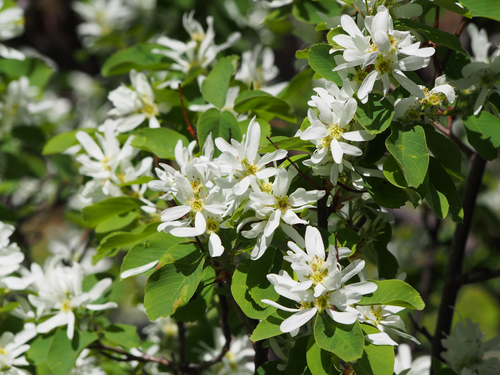
Amelanchier alnifolia, also called Saskatoon, is a deciduous North American small shrub or tree that produces edible purple pomes.
Amelanchier alnifolia (Nutt.) Nutt. is a deciduous shrub or small tree. It most often reaches 1 to 8 metres (3 to 26 feet) in height, and rarely grows as tall as 10 m (33 ft). Its growth form ranges from producing suckers to form large colonies, to growing in tight clumps. Its leaves are oval to nearly circular, measuring 2 to 5 centimetres (3⁄4 to 2 inches) long and 1 to 4.5 cm (1⁄2 to 1+3⁄4 in) ...
⚠️ Toxicity: Insufficient toxicity evidence; avoid direct contact and ingestion.
View full details →
23
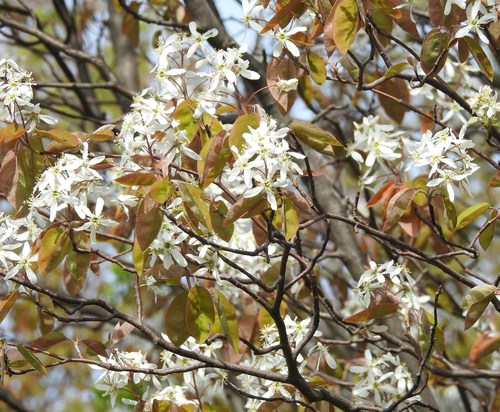
Amelanchier arborea, the common serviceberry, is a North American small tree with edible fruit eaten by wildlife and people.
Amelanchier arborea, commonly known as downy serviceberry or common serviceberry, is native to eastern North America. Its range extends from the Gulf Coast north to Thunder Bay in Ontario and Lake St. John in Quebec, and west to Texas and Minnesota. Additional common names include shadberries (named because its blooming aligns with shad runs in New England), Juneberries (named because berries typi...
⚠️ Toxicity: Insufficient toxicity evidence; avoid direct contact and ingestion.
View full details →
24
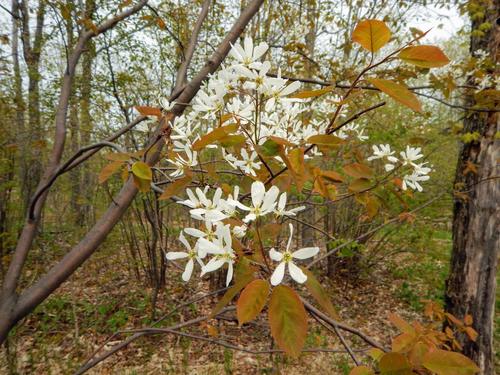
Amelanchier laevis is a deciduous tree grown as an ornamental, with edible fruit and bark used for herbal medicine.
Amelanchier laevis Wiegand grows stems 1 to 15 meters (3 ft 3 in – 49 ft 3 in), or sometimes 2 to 17 meters (6 ft 7 in – 55 ft 9 in), that form small clumps. Its petioles measure 12 to 25 millimeters (0.47–0.98 in), and it bears elliptic, nearly ovate green leaf blades. Its leaves have 12 to 17 lateral veins and 6 to 8 teeth per centimeter. In spring, white blossoms develop from pink buds, and the...
⚠️ Toxicity: Insufficient toxicity evidence; avoid direct contact and ingestion.
View full details →
25
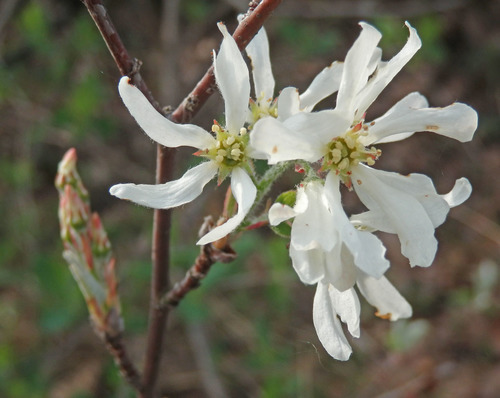
Amelanchier ovalis is the only native European Amelanchier shrub, used for restoration and edible fruit processing.
The genus Amelanchier contains 25 species found across the northern hemisphere; Amelanchier ovalis Medik. is the only Amelanchier species that naturally occurs in Europe. This species shows wide morphological variation in its flowers and leaves, and is divided into two subspecies that can be distinguished by their chromosome counts: the diploid (2n=34) A. ovalis subsp. ovalis, and the tetraploid (...
⚠️ Toxicity: Insufficient toxicity evidence; avoid direct contact and ingestion.
View full details →
26
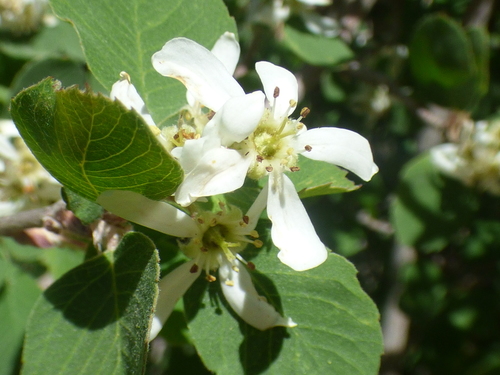
Amelanchier utahensis, the Utah serviceberry, is a North American deciduous shrub with edible bland berries and drought and fire tolerance.
Amelanchier utahensis is a spreading deciduous plant that grows to a maximum height of 3.2 meters (10 feet). It produces green, rounded or spade-shaped leaves that are commonly toothed, measure 1 to 2.5 centimeters (1⁄2 to 1 inch) long, and drop from the plant in autumn. In mid-spring, this shrub produces short inflorescences of white flowers; each flower has five narrow, widely spaced petals that...
⚠️ Toxicity: Insufficient toxicity evidence; avoid direct contact and ingestion.
View full details →
27
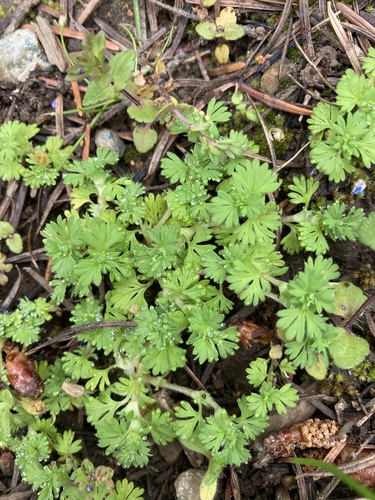
Aphanes arvensis L. is a small edible plant found across Europe to Iran with tiny clustered flowers.
This plant, also known by the synonym Alchemilla arvensis, grows 2 to 20 centimetres (3⁄4–7+3⁄4 inches) tall. Its leaves measure 2 to 10 millimetres (1⁄16–3⁄8 inches) long, are fan-shaped, short-stalked, and have 3 main lobes with deep teeth. Minute flowers less than 2 mm wide are produced from April to October. They grow in dense clusters in leaf axils, surrounded by cup-like structures formed fr...
⚠️ Toxicity: Insufficient toxicity evidence; avoid direct contact and ingestion.
View full details →
28
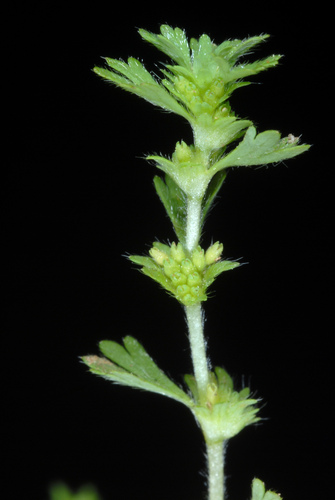
Aphanes australis, or slender parsley-piert, is a small winter annual herb native to Western Europe, introduced to the Americas, Australia and New Zealand.
Slender parsley-piert, scientifically named Aphanes australis Rydb., is a pale green winter annual herb. It has prostrate, branched, leafy stems that can grow up to 15 cm long. Its leaves are alternate, arranged in a spiral around the stem, with a short petiole and large, deeply lobed stipules at the base. The leaves are roughly 0.5 cm long, broadly ternate with deeply lobed leaflets, and covered ...
⚠️ Toxicity: Insufficient toxicity evidence; avoid direct contact and ingestion.
View full details →
29
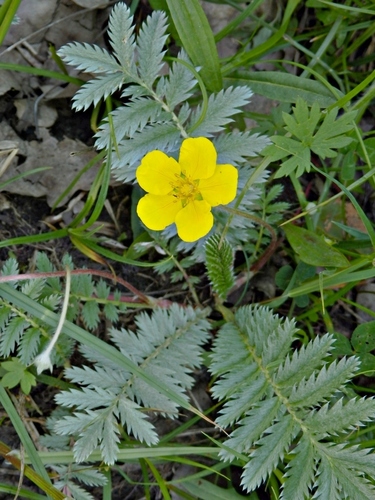
Argentina anserina (silverweed) is a low-growing perennial herb native to the temperate Northern Hemisphere with edible roots and historical uses.
Argentina anserina, commonly called silverweed, is a low-growing perennial herbaceous plant that reaches up to 20 centimetres (8 inches) in height. It produces creeping red stolons that can grow up to 80 cm (31 in) long. Its leaves measure 10–20 cm (4–8 in) long, and are evenly pinnate divided into saw-toothed leaflets. Each leaflet is 2–5 cm long and 1–2 cm broad, with 6–14 teeth per side. Leafle...
⚠️ Toxicity: Insufficient toxicity evidence; avoid direct contact and ingestion.
View full details →
30
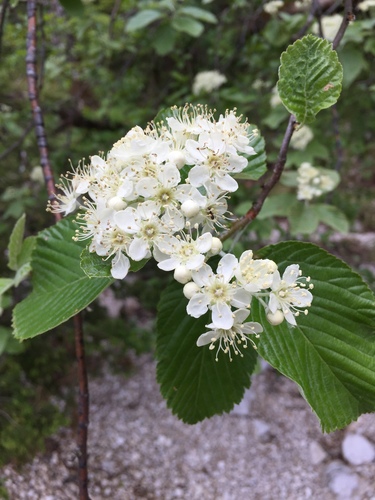
Aria edulis (common whitebeam) is a deciduous Rosaceae tree native to Europe, North Africa, and temperate Asia.
Aria edulis, commonly known as whitebeam or common whitebeam, is a species of deciduous tree belonging to the Rosaceae family. This tree often produces new shoots around its trunk. It is typically compact with a rounded domed shape, and has a small number of upswept branches. Its leaves have an almost-white underside. Hermaphrodite cream-white flowers bloom in May, and are pollinated by insects. T...
⚠️ Toxicity: Insufficient toxicity evidence; avoid direct contact and ingestion.
View full details →
Frequently Asked Questions
How many species are in the Rosaceae family?
This guide features 30 representative species from the Rosaceae family. The full family contains many more species worldwide — explore them all on iNature.
How to identify Rosaceae species?
Rosaceae species share common features in their flowers, leaves, and growth patterns. This guide provides photos and descriptions for 30 species. For instant field identification, use the iNature app.
Sources: GBIF, iNaturalist, Wikipedia · Disclaimer
Identify any species instantly — even offline
iNature uses on-device AI to identify plants, animals, fungi and more. No internet needed.
Download iNature — FreeStart Exploring Nature Today
Download iNature for free. 10 identifications on us. No account needed. No credit card required.
Download Free on App Store
