The Convolvulaceae (morning glory family) is known for its twining vines with trumpet-shaped flowers that open fresh each morning. The family includes the sweet potato — one of the world's most important food crops — as well as ornamental morning glories and the persistent bindweeds. This guide covers the most commonly encountered species.
🌱 Plant Families
Morning Glory Family (Convolvulaceae) — Species Guide
1
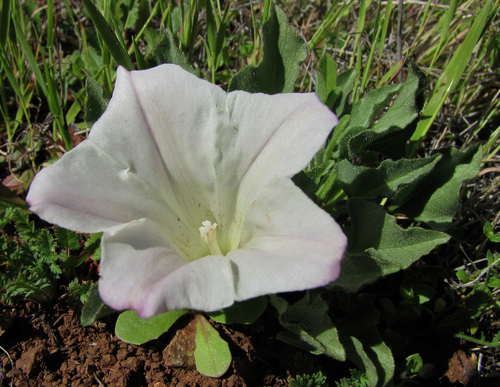
Calystegia collina is a non-climbing prostrate rhizomatous perennial morning glory with white single flowers.
Calystegia collina is a rhizomatous perennial herb with densely hairy stems and foliage. Its stem grows prostrate along the ground, and unlike many other morning glory species, it generally does not climb. The stem reaches a maximum length of about 30 centimeters. It produces small leaves that are either kidney-shaped or deeply lobed, with wavy or crinkled edges. Each inflorescence bears a single ...
⚠️ Toxicity: Insufficient toxicity evidence; avoid direct contact and ingestion.
View full details →
2
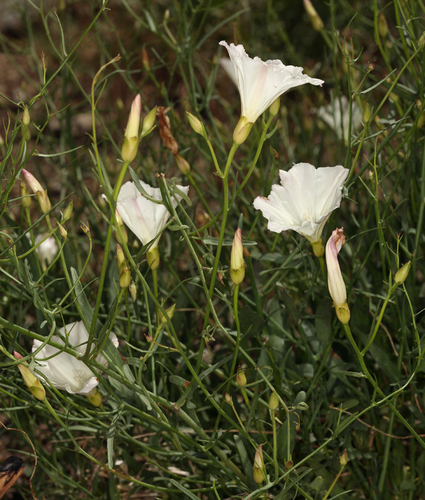
Calystegia longipes is a bushy woody perennial morning glory herb that bears single white to pale pink or lavender flowers.
Calystegia longipes is a woody perennial herb that grows in a bushy form up to 1 meter tall, with numerous spreading, erect, and twining branches. Its small leaves range in shape from linear to narrowly lance-shaped, and sometimes bear small lobes branching off from their sides. The inflorescence consists of a single solitary flower, borne on a long peduncle that can reach 20 centimeters in length...
⚠️ Toxicity: Insufficient toxicity evidence; avoid direct contact and ingestion.
View full details →
3
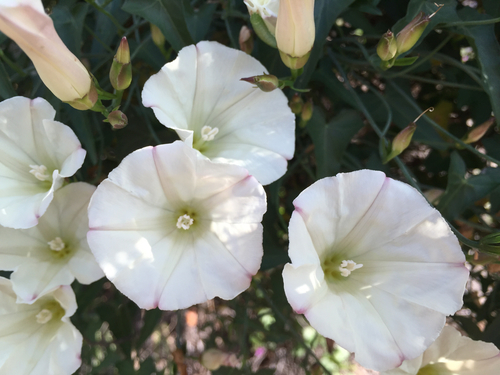
Calystegia macrostegia is a California-Baja native vine cultivated as an ornamental pollinator plant.
Calystegia macrostegia is a woody perennial herb or small shrub. It can grow as either a low herbaceous vine or a stout, woody climbing plant that can reach nearly 9 metres (30 ft) in length. Its triangular leaves may be over 10 centimeters wide. This vine produces blooms that range in color from white, to very pale pink, to lavender; bloom color often varies based on drought conditions or tempera...
⚠️ Toxicity: Insufficient toxicity evidence; avoid direct contact and ingestion.
View full details →
4
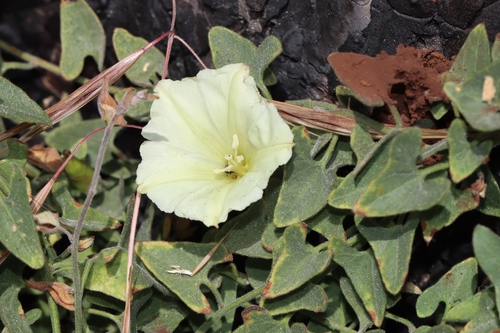
Calystegia occidentalis is a woody hairy perennial climbing herb with lobed leaves and pale yellow to white flowers.
Calystegia occidentalis is a woody perennial herb that grows spreading, twisting, or climbing branches, which are usually quite hairy in texture. Its small leaves grow up to 4 centimeters long, and are lobed into various spade or arrowhead shapes. Its inflorescence holds one to four flowers on a single peduncle; each individual bloom is 2 to 5 centimeters wide, and ranges in color from white to cr...
⚠️ Toxicity: Insufficient toxicity evidence; avoid direct contact and ingestion.
View full details →
5
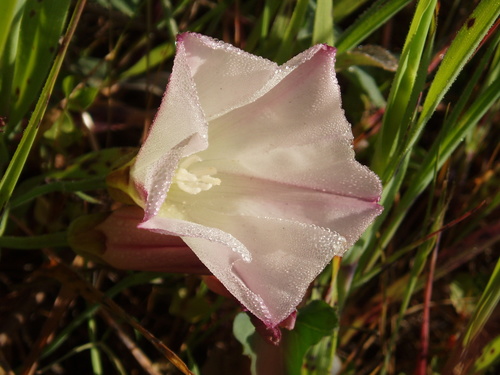
Calystegia purpurata is a robust perennial climbing morning glory with lobed triangular leaves and multi-colored flowers.
Calystegia purpurata (Greene) Brummitt is a robust perennial herb that grows from a woody caudex. It produces spreading or climbing stems that can reach up to 70 centimeters in length. Its leaves are lobed, generally triangular in shape, and can grow up to 5 centimeters long. The inflorescence bears 1 to 5 flowers at the top of peduncles. The flower is a morning glory up to 5 centimeters wide, and...
⚠️ Toxicity: Insufficient toxicity evidence; avoid direct contact and ingestion.
View full details →
6
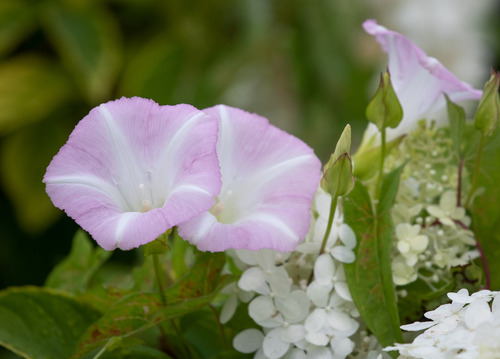
Calystegia sepium is a toxic twining herbaceous perennial identified by its non-overlapping narrow floral bracteoles.
Calystegia sepium (L.) R.Br. is an herbaceous perennial that twines counter-clockwise, growing up to 3 meters (10 feet) in height. Its leaves are arranged alternately along the spiraling stem; they are dull green on the upper surface and paler below, simple and sagittate (arrowhead shaped), 5 to 10 centimeters (2 to 4 inches) long, and 3 to 7 centimeters (1+1⁄4 to 2+3⁄4 inches) broad. Flowers are ...
⚠️ Toxicity: Toxicity risk detected (mainly via ingestion); avoid direct contact and ingestion.
View full details →
7
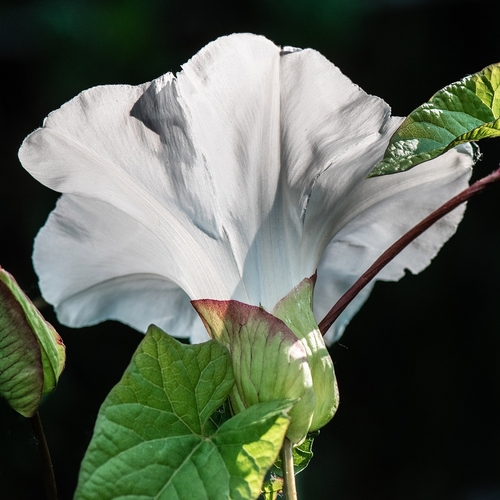
Calystegia silvatica, large bindweed, is a tall twining perennial distinguished from C. sepium by overlapping bracteoles and a U-shaped leaf sinus.
Large bindweed (Calystegia silvatica (Kit.) Griseb.) is a hairless herbaceous perennial that twines counter-clockwise, growing up to 5 meters tall. Its leaves grow alternately along the spiralling stem on petioles that reach up to 15 cm long. Leaves are simple, arrowhead-shaped (sagittate), dull green on the upper surface and paler below, growing up to 15 cm long and up to 9 cm wide. Flowers are w...
⚠️ Toxicity: Insufficient toxicity evidence; avoid direct contact and ingestion.
View full details →
8
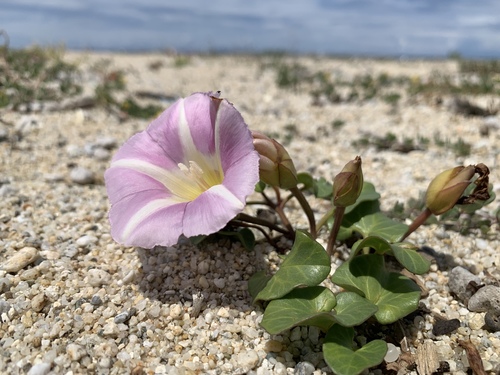
Calystegia soldanella is a perennial coastal vine found in temperate regions worldwide with morning glory-like pastel to purple flowers.
Calystegia soldanella (L.) R.Br. is a perennial vine that grows in beach sand and other coastal habitats in temperate regions across the world. It is also called 'The Prince's Flower', named for Prince Charles Edward Stuart, who sowed it on the Island of Eriskay, Scotland when he landed there in 1745 to lead the Jacobite rising. This plant produces trailing, fleshy stems, kidney-shaped leaves, cre...
⚠️ Toxicity: Insufficient toxicity evidence; avoid direct contact and ingestion.
View full details →
9
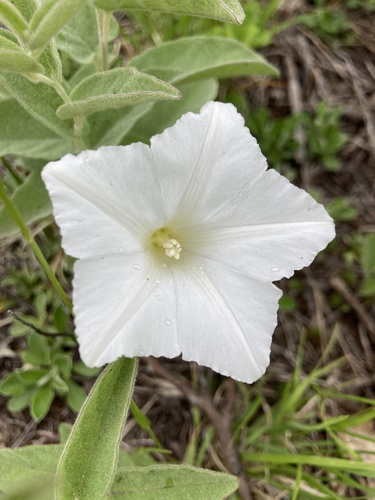
Calystegia spithamaea is a flowering plant species native to eastern North America with several common common names including low false bindweed.
Calystegia spithamaea, with the full scientific name Calystegia spithamaea (L.) Pursh, has several common names: low false bindweed, low bindweed, erect bindweed, and upright bindweed. This plant species occurs in eastern North America.
⚠️ Toxicity: Insufficient toxicity evidence; avoid direct contact and ingestion.
View full details →
10
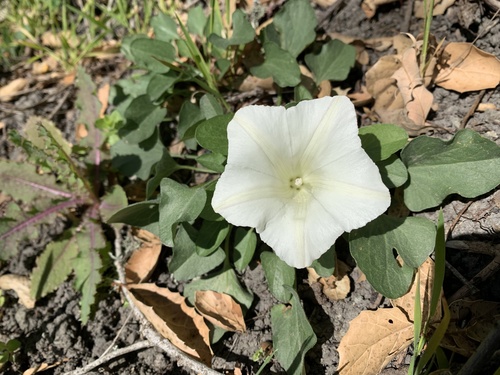
Calystegia subacaulis is a short hairy perennial morning glory herb with white to light purple flowers.
Calystegia subacaulis Hook. & Arn. is a hairy perennial herb. It grows from a woody caudex or rhizome, and produces stems that do not exceed around 20 centimeters in length. Its leaves measure 3 to 4 centimeters long, and are triangular or arrowhead-shaped with small side lobes. The inflorescence bears morning glory flowers on short peduncles. Each individual flower is 3 to 6 centimeters wide, whi...
⚠️ Toxicity: Insufficient toxicity evidence; avoid direct contact and ingestion.
View full details →
11
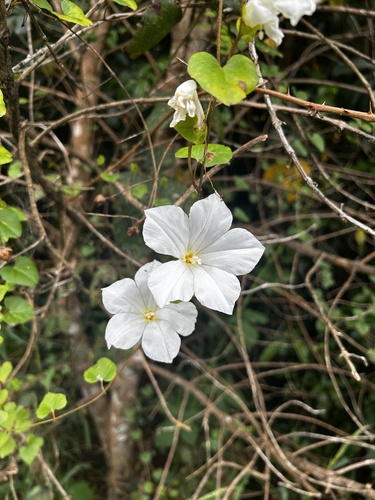
Calystegia tuguriorum, commonly called New Zealand bindweed, is a perennial vine found across New Zealand, Chile, and the Juan Fernández Islands.
Calystegia tuguriorum, a morning glory, is a bindweed species with common names including New Zealand bindweed, pōuwhiwhi, and pōwhiwhi. It is a perennial vine. It grows in coastal and lowland areas across all of New Zealand, and also occurs in Chile and on the Juan Fernández Islands.
⚠️ Toxicity: Insufficient toxicity evidence; avoid direct contact and ingestion.
View full details →
12
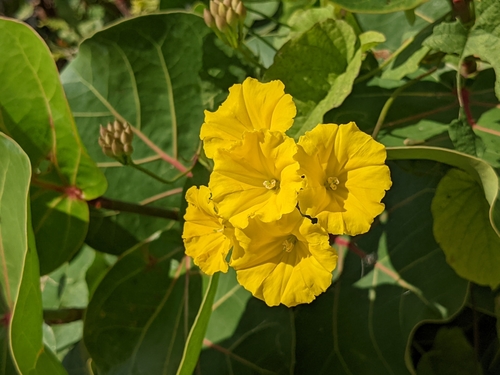
Camonea umbellata is a thin vine with common uses in Indian traditional medicine that produces flowers attractive to bees, butterflies, and birds.
Camonea umbellata, which has the scientific name Camonea umbellata (L.) A.R.Simões & Staples, is commonly known by the common names hogvine, yellow merremia, and yellow wood rose. It is a thin vine that grows to a maximum thickness of 2 cm (0.79 in). This species has multiple uses in Indian traditional medicine. Its flowers attract bees, butterflies, and birds.
⚠️ Toxicity: Insufficient toxicity evidence; avoid direct contact and ingestion.
View full details →
13
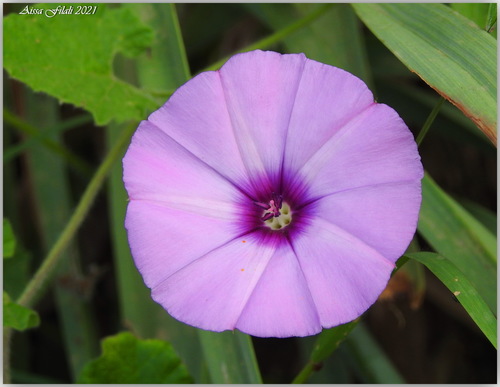
Convolvulus althaeoides, or mallow bindweed, is a Mediterranean climbing perennial pink-flowered morning glory introduced to other similar climates.
Convolvulus althaeoides L. is a species of morning glory that has two common names: mallow bindweed and mallow-leaved bindweed. This flowering plant is native to the Mediterranean Basin. It can occasionally be found in other regions with similar climates, including California in the United States, where it was introduced. It is a climbing perennial plant that produces solitary flowers on long pedu...
⚠️ Toxicity: Insufficient toxicity evidence; avoid direct contact and ingestion.
View full details →
14
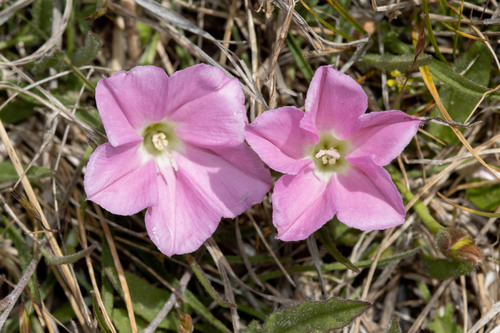
Convolvulus angustissimus (Australian bindweed) is a small trailing bindweed native to most Australian mainland states, excluding the Northern Territory.
Convolvulus angustissimus R.Br. (Australian bindweed) has slender, twisted, trailing branches with terete stems that are hairy when young. It grows to a height of 0.02 to 0.6 metres (0.07 to 1.97 ft). Its leaves vary in shape and grow along the full length of stems: basal leaves are oblong to oval, with toothed or slightly lobed margins, and have a heart-shaped or squared base. Upper leaves are ov...
⚠️ Toxicity: Insufficient toxicity evidence; avoid direct contact and ingestion.
View full details →
15
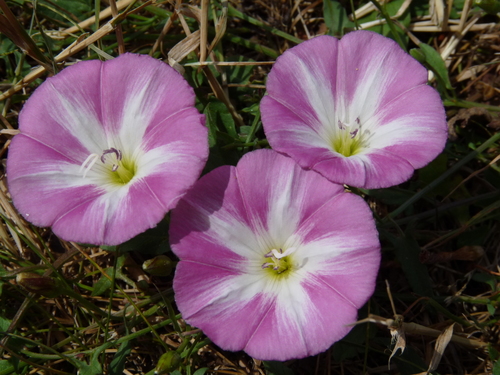
Convolvulus arvensis (field bindweed) is a perennial climbing vine, with detailed traits, ecology, and traditional uses described.
Convolvulus arvensis L. is a perennial vine that typically climbs to 1 metre (3.3 ft). This species produces woody rhizomes, which allow it to resprout in spring, or regrow after its aboveground vines are removed. Its leaves are alternately arranged in a spiral pattern; they range from linear to arrowhead-shaped, 2–5 cm (0.79–1.97 in) long, and grow from a 1–3 cm (0.39–1.18 in) petiole. Stems clim...
⚠️ Toxicity: Toxicity risk detected (mainly via ingestion); avoid direct contact and ingestion.
View full details →
16
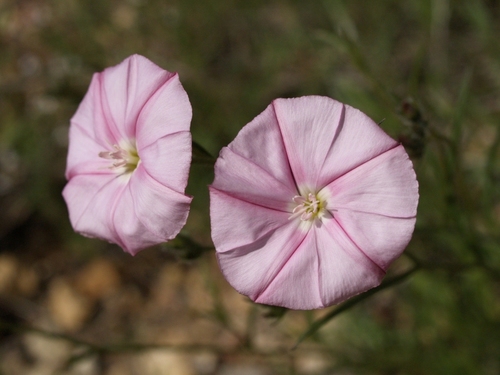
Convolvulus cantabrica L. is a flowering bindweed native to southern Europe and Mediterranean coastal regions.
This bindweed, Convolvulus cantabrica L., is a scapose hemicryptophyte that averages 20 to 50 centimeters (7.9 to 19.7 inches) in height. It produces simple, alternate lanceolate leaves that are coarsely hairy on both surfaces. Its wide funnel-shaped flowers are actinomorphic (radially symmetrical), arranged on long petioles at leaf axils. The corolla measures 15 to 25 millimeters long and is usua...
⚠️ Toxicity: Insufficient toxicity evidence; avoid direct contact and ingestion.
View full details →
17
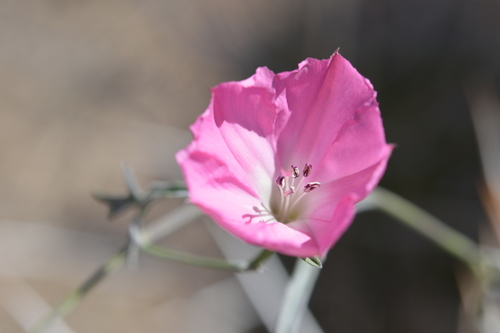
Convolvulus chilensis Pers. is a pubescent herb from a thick rootstock with trailing (rarely twining) stems up to 2.5 m long, variable leaves, axillary pink flowers, glabrous ovary and capsule, and rugose seeds.
Convolvulus chilensis Pers. is a thinly to densely pubescent herb that grows from a thick rootstock. Its young parts may be sericeous but become more or less glabrescent over time. The stems trail (rarely twine) and can reach up to 2.5 m in length. The leaves are petiolate, measuring 2 - 8 x 2 - 6 cm, and highly variable in shape. They are usually linear or oblong with prominent, elongate, bifurca...
View full details → 18
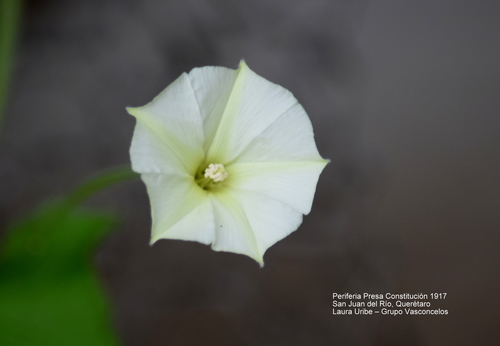
Convolvulus crenatifolius Ruiz & Pav. is a pubescent to densely hirsute herb with twining stems up to 3 m, ovate - deltoid leaves, and white - to - pink deeply lobed corollas in axillary umbellate cymes.
This is a pubescent to densely hirsute herb. Its stems can twine up to 3 m high. The leaves are petiolate, measuring 3 - 8 x 1 - 4 cm, ovate - deltoid, strongly auriculate, usually large. The apex is usually obtuse and mucronate, the margin is undulate to sinuate, and the base is broadly cordate to hastate with the midrib area cuneate onto the petiole. The petioles are 7 - 15 mm long. The flowers ...
View full details → 19
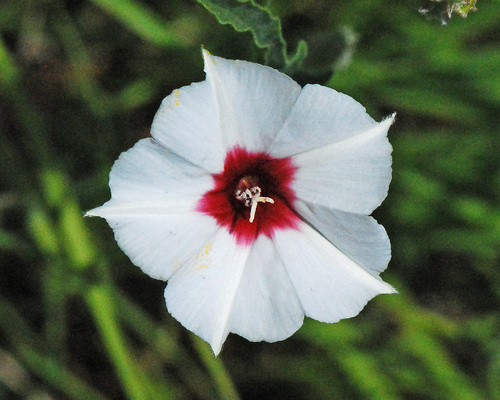
Texas bindweed (Convolvulus equitans Benth.) is a morning glory species native to the central-western US and Mexico.
Convolvulus equitans Benth., commonly called Texas bindweed, is a species of morning glory. It is native to central and western parts of the United States, as well as Mexico. Its scientific species epithet equitans comes from Latin meaning "riding on horseback", and the name refers to the plant's overlapping petals.
⚠️ Toxicity: Insufficient toxicity evidence; avoid direct contact and ingestion.
View full details →
20
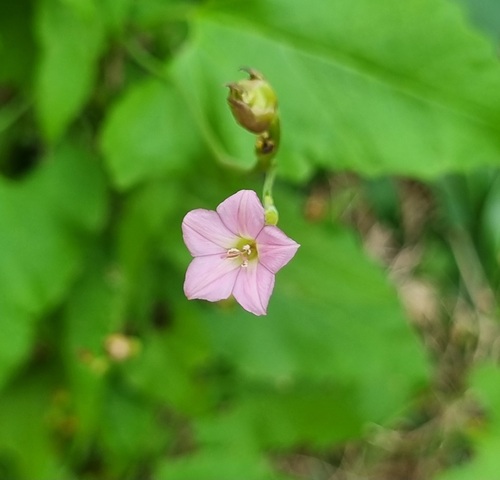
Convolvulus farinosus is a Convolvulaceae plant species native to sub-Saharan Africa.
Convolvulus farinosus L. is a plant species that belongs to the Convolvulaceae family. It is native to sub-Saharan Africa.
⚠️ Toxicity: Insufficient toxicity evidence; avoid direct contact and ingestion.
View full details →
21
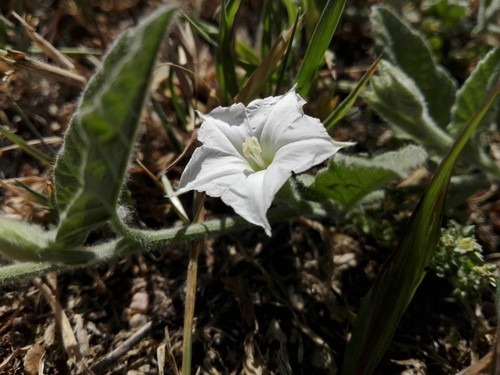
Convolvulus hermanniae L'Hér. is a trailing or twining grey - tomentose herb from a 1 - cm thick rootstock, with specific leaf, flower, and fruit features, and two recognized subspecies based on ovary and capsule indumentum.
Convolvulus hermanniae L'Hér. is a trailing or, less commonly, twining herb that grows from a thickened woody rootstock about 1 cm thick. All vegetative parts are grey - tomentose. The stems can reach up to 1 m long, and those of twining plants seem more slender. There are numerous stems. The leaves have petioles, measuring 2 - 6.5 x 0.5 - 3 cm, being ovate to ovate - deltoid. The auricles are not...
View full details → 22
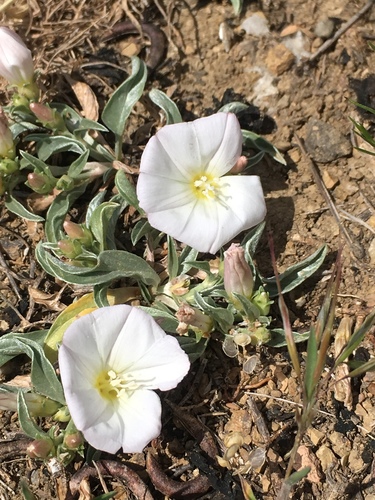
Convolvulus lineatus is a low trailing silver perennial bindweed, distributed from North Africa east to Turkmenistan, pollinated by visiting insects.
Convolvulus lineatus L. is a perennial hemicryptophyte, meaning its overwintering buds sit at soil level. It is characterized by a woody rootstock and low, trailing herbaceous stems, and typically grows to around 25 cm tall. It reproduces vegetatively via rhizomes, which are underground stems that let it spread close to the parent plant, and it often forms small clonal patches. Its leaves range fr...
⚠️ Toxicity: Insufficient toxicity evidence; avoid direct contact and ingestion.
View full details →
23
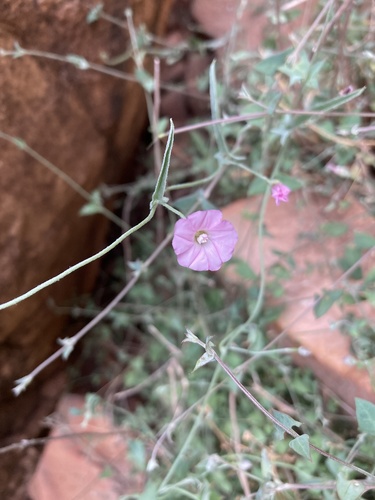
Convolvulus remotus R.Br. is a perennial twining bindweed found across multiple Australian regions.
Convolvulus remotus R.Br. is a perennial twining plant with terete, hairy, flattened stems. Its leaves are oval or oblong, measuring 1–8 cm (0.39–3.15 in) in length and 5–40 mm (0.20–1.57 in) in width, with either pointed or rounded apexes, and attached by a 2–20 mm (0.079–0.787 in) long petiole. Flowers appear either singly or in clusters of 2 to 3 in leaf axils. They are funnel-shaped, pink, 8–...
⚠️ Toxicity: Insufficient toxicity evidence; avoid direct contact and ingestion.
View full details →
24
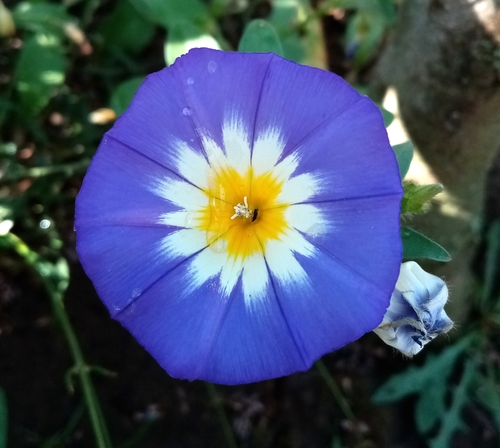
Convolvulus tricolor L. is an annual ornamental flowering plant native to the Mediterranean Basin with distinct tri-colored funnel-shaped flowers.
Convolvulus tricolor L. is an annual plant that grows to a short to medium height. It produces solitary, long-stalked flowers. Each flower is a funnel-shaped tri-colored bloom roughly three centimeters wide: it is blue with white accents and a yellow center. This species is commonly found growing on cultivated land, in dry open habitats, in sandy areas, and along roadsides. It is native to the Med...
⚠️ Toxicity: Insufficient toxicity evidence; avoid direct contact and ingestion.
View full details →
25
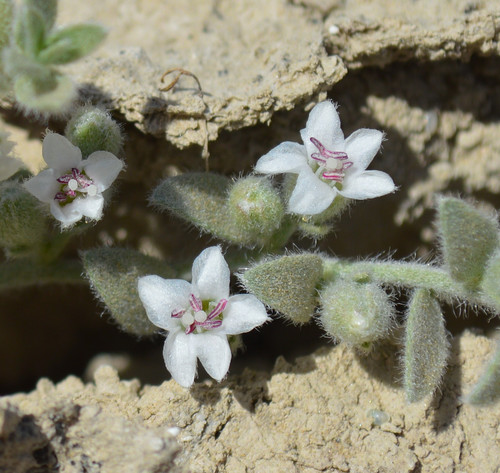
Cressa truxillensis, or spreading alkaliweed, is a morning glory family perennial native to the western US and Mexico that grows in saline or alkaline soils.
Cressa truxillensis Kunth is a species of flowering plant in the morning glory family, commonly called spreading alkaliweed. It is native to the western United States and Mexico, where it grows in habitats with saline or alkaline soils, including beaches, desert flats, and playas. This is a perennial herb that grows an erect, heavily branched stem reaching roughly 25 centimeters (10 inches) tall. ...
⚠️ Toxicity: Insufficient toxicity evidence; avoid direct contact and ingestion.
View full details →
26
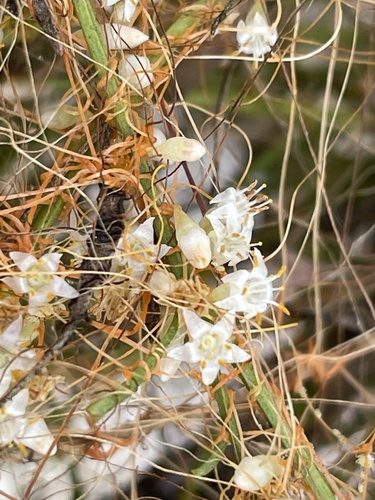
Cuscuta californica is a parasitic dodder vine found across western North America that grows on host plants.
Cuscuta californica Choisy is a parasitic vine that looks like a tangle of yellow-orange straw wrapped tightly around its host plant. Almost all of its structure is stem; its leaves are reduced to small scales on the stem surface, as they do not need to carry out photosynthesis when the dodder obtains all its nutrients from its host. It produces tiny white flowers only about 3 to 5 millimeters wid...
⚠️ Toxicity: Insufficient toxicity evidence; avoid direct contact and ingestion.
View full details →
27
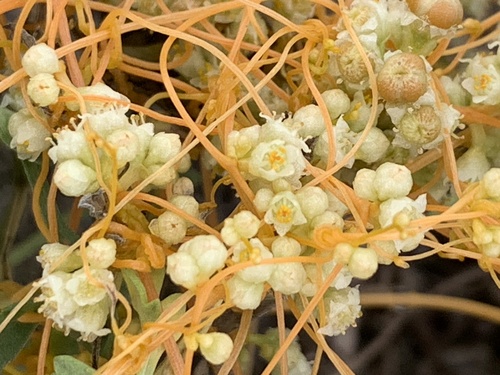
Cuscuta campestris is a widespread holoparasitic agricultural weed that depends entirely on host plants for nutrients.
Cuscuta campestris Yunck., commonly called field dodder, is a widespread holoparasitic vine that grows on other host plants. It lacks true leaves and roots, and has very little to no chlorophyll, so it cannot carry out significant photosynthesis and is entirely dependent on host plants for nutrients. Its life cycle begins with seed germination near the soil surface, where it produces thin, pale gr...
⚠️ Toxicity: Insufficient toxicity evidence; avoid direct contact and ingestion.
View full details →
28
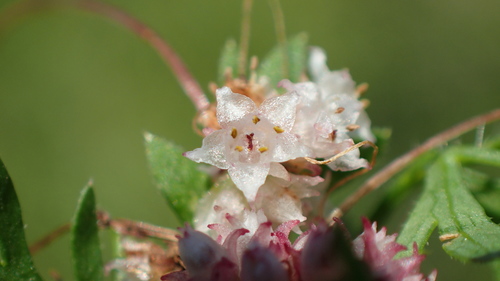
Cuscuta epithymum is a rootless holoparasitic dodder widely used in traditional medicine with reported hepatotoxicity at high long-term doses.
Cuscuta epithymum (L.) L. is a rootless holoparasitic plant. It produces thin, 0.25–0.40 mm wide, hairless, thread-like (filiform) stems that can be pink, red, yellow or purple. Its leaves are very small and grow as scale-like structures along the stems. The species attaches to its host plant using specialized structures called haustoria. Its white or pink flowers grow in clusters of 7 to 25 direc...
⚠️ Toxicity: Insufficient toxicity evidence; avoid direct contact and ingestion.
View full details →
29
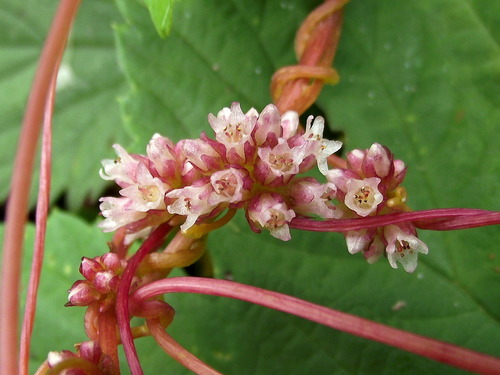
Cuscuta europaea L. is a species with detailed morphological traits and a known distribution across Europe, Asia, and North Africa.
Cuscuta europaea L. has long, thin yellowish or reddish stems. Its inflorescences form laterally along stems, with flowers arranged in compact glomerules that hold few to many flowers. Flower pedicels grow up to 1.5 millimetres long. The 1.5 mm cup-shaped calyx has 4 or 5 triangular-ovate sepals. The 2.5–3 millimetre corolla is pink, with 4 or sometimes 5 lobes. The corolla persists after anthesis...
⚠️ Toxicity: Insufficient toxicity evidence; avoid direct contact and ingestion.
View full details →
30
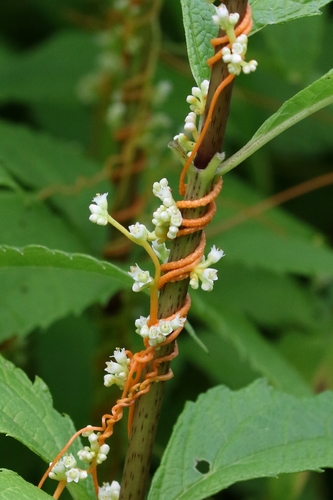
Cuscuta gronovii, common dodder, is a small-chlorophyll parasitic annual vine native to North America that infects host plants.
Cuscuta gronovii Willd. ex Schult. is a member of Convolvulaceae, the family that includes morning glories, a family which contains around 200 species total. It is a parasitic annual vine that forms a parasitic relationship with the host plants it infects. Its stems are orange-yellow in color, and the vine can grow to one meter or longer, wrapping and entangling itself around its host plant. While...
⚠️ Toxicity: Toxicity risk detected (mainly via contact or ingestion); avoid direct contact and ingestion.
View full details →
Frequently Asked Questions
How many species are in the Convolvulaceae family?
This guide features 30 representative species from the Convolvulaceae family. The full family contains many more species worldwide — explore them all on iNature.
How to identify Convolvulaceae species?
Convolvulaceae species share common features in their flowers, leaves, and growth patterns. This guide provides photos and descriptions for 30 species. For instant field identification, use the iNature app.
Sources: GBIF, iNaturalist, Wikipedia · Disclaimer
Start Exploring Nature Today
Download iNature for free. 10 identifications on us. No account needed. No credit card required.