The Poaceae (grass family) is arguably the most economically important plant family on Earth, providing wheat, rice, corn, sugarcane, and bamboo. Grasses cover roughly 40% of the planet's land surface outside of Greenland and Antarctica. This guide helps you identify common grasses from lawns to prairies to tropical bamboo forests.
🌱 Plant Families
Guide to Grasses (Poaceae) — Identification & Photos
1
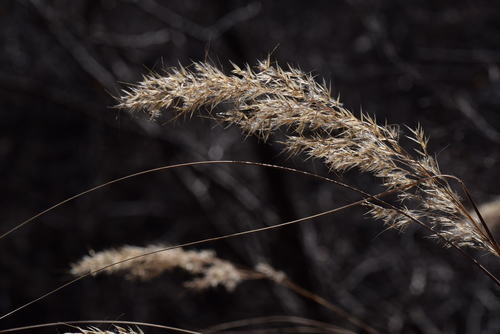
Achnatherum calamagrostis is a grass species first described by Linnaeus in 1759 and reclassified to Achnatherum in 1812.
The scientific name of this species is Achnatherum calamagrostis (L.) P.Beauv. The species was first described by Linnaeus in 1759 under the name Agrostis calamagrostis, in his work Systema naturae per regna tria naturae. In 1812, Palisot de Beauvois transferred the species to the genus Achnatherum, publishing this reclassification in his Essai d'une Nouvelle Agrostographie. The translated origina...
⚠️ Toxicity: Insufficient toxicity evidence; avoid direct contact and ingestion.
View full details →
2
Achnatherum virescens (Trin.) Banfi, Galasso & Bartolucci
Achnatherum virescens (Trin.) Banfi, Galasso & Bartolucci
🌿 Plantae Poaceae
Achnatherum virescens (Trin.) Banfi, Galasso & Bartolucci is a newly combined species with basionym Urachne virescens Trin. (1820) and several equivalent names.
Achnatherum virescens (Trin.) Banfi, Galasso & Bartolucci is a newly combined species. Its basionym is Urachne virescens Trin., described in Fund. Agrost. (Trinius) on page 110 in January 1820. It is also equivalent to several other names, including Milium paradoxum (L.) L. var. virescens (Trin.) Fiori, Milium virescens (Trin.) Borbás, Oryzopsis paradoxa (L.) Nutt. var. virescens (Trin.) K.Richt.,...
View full details → 3
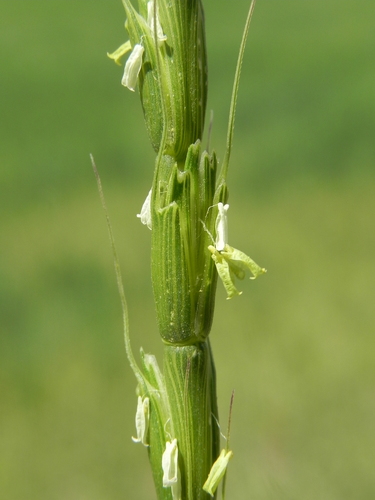
Aegilops cylindrica, or jointed goatgrass, is an annual grass native to Southern Europe and Russia that is a damaging invasive weed of winter wheat in the US.
Aegilops cylindrica, commonly called jointed goatgrass, is an annual grass species belonging to the tribe Triticeae, the same group that includes wheat and other cereals. It is native to Southern Europe and Russia, and is not originally from North America. After its introduction to North America in the late 19th century, it has become a damaging invasive weed. Because it is closely related to wint...
⚠️ Toxicity: Insufficient toxicity evidence; avoid direct contact and ingestion.
View full details →
4
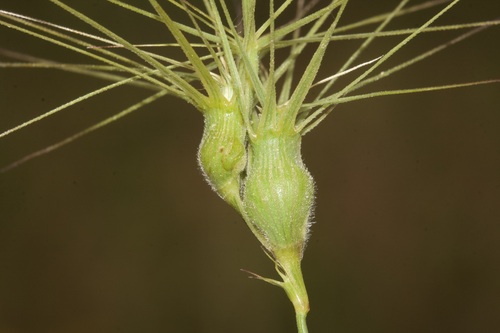
Aegilops geniculata, commonly ovate goatgrass, is a grass native to the Mediterranean and western Asia, and a noxious weed elsewhere.
Aegilops geniculata Roth is a grass species that is commonly called ovate goatgrass. It is native to the Mediterranean region and western Asia, which includes Palestine and the Levant. Outside its native range, it is classified as a noxious weed.
⚠️ Toxicity: Insufficient toxicity evidence; avoid direct contact and ingestion.
View full details →
5
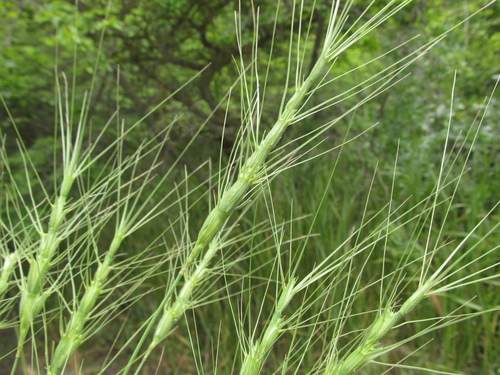
Aegilops triuncialis L., or barbed goatgrass, is a grass that uses awns on its mature spikelets to spread seeds.
Barbed goatgrass (Aegilops triuncialis L.) grows to a height of 8 to 16 inches, or 20 to 41 cm. It produces few to many rigid, loosely erect above-ground stems called culms. In late spring, the plant forms rigid flower spikes, each holding three to six spikelets. These spikelets bear long, stiff awns that help with seed distribution. When the grass reaches maturity, entire spikelets detach from th...
⚠️ Toxicity: Insufficient toxicity evidence; avoid direct contact and ingestion.
View full details →
6
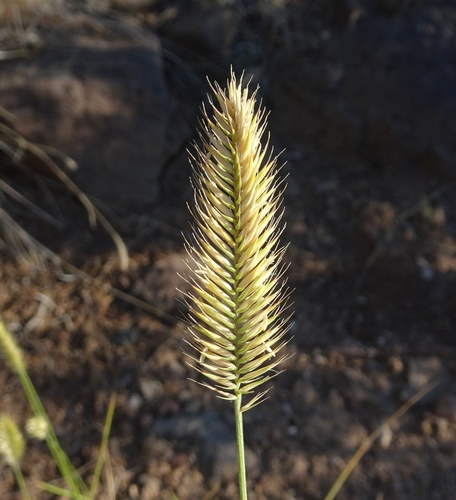
Agropyron cristatum, or crested wheatgrass, is a drought-tolerant tufted grass used for forage, reclamation, and wheat breeding.
Agropyron cristatum (L.) Gaertn. is a densely tufted grass. At maturity, its culms reach 30 to 50 cm high. Its sheaths are scabrous, with the lowest sheaths sometimes being pubescent. Its leaf blades grow up to 8 mm wide, and are scabrous to pubescent on their upper surface. Its spikes are flat, 2–7 cm long, and hold densely crowded 3–5-flowered spikelets that measure 8–15 mm long and grow in a sp...
⚠️ Toxicity: Insufficient toxicity evidence; avoid direct contact and ingestion.
View full details →
7
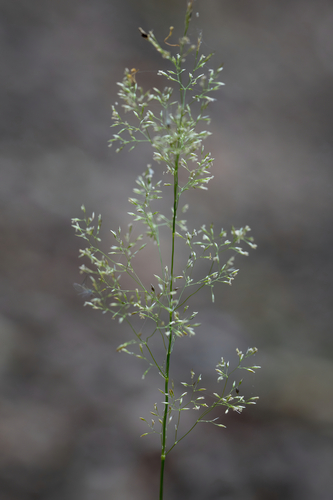
Agrostis capillaris L. is a grass with distinct traits that set it apart from related Agrostis stolonifera.
Agrostis capillaris L. forms a dense sward of fine leaves. Its ligule is short and not pointed, which distinguishes it from creeping bent (Agrostis stolonifera), which has a pointed ligule up to 5mm long. Flowering panicles emerge between May and June; they are finely branched and appear as a purple haze when viewed from a distance. The panicle remains through winter after seeds are shed.
⚠️ Toxicity: Insufficient toxicity evidence; avoid direct contact and ingestion.
View full details →
8
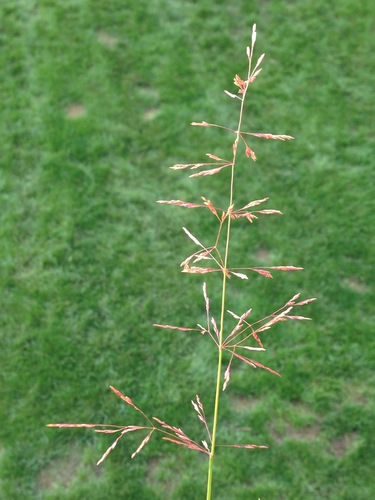
Agrostis gigantea Roth is a grass species with dull green leaves that flowers between June and August.
This species, Agrostis gigantea Roth, has dull green leaves that are rolled in the shoot, not hairy, and lack auricles. Its ligule is blunt, toothed, and reaches a maximum length of 6 millimetres (0.24 inches). The plant produces open, loose panicles that are either green or purplish in colour. It flowers from June to August, and grows from rhizomes.
⚠️ Toxicity: Insufficient toxicity evidence; avoid direct contact and ingestion.
View full details →
9
Agrostis hyemalis (Walter) Britton, Sterns & Poggenb.
Agrostis hyemalis (Walter) Britton, Sterns & Poggenb.
🌿 Plantae Poaceae
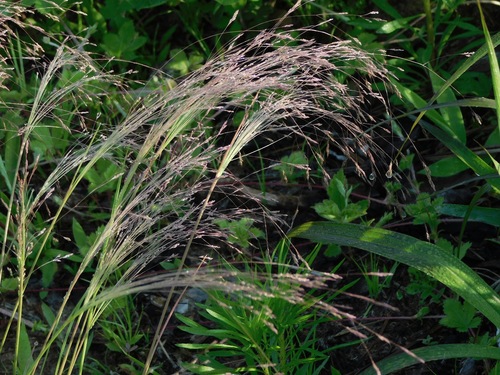
Representative specimens of Agrostis hyemalis were examined from multiple municipalities in Mexican states like Aguascalientes, Baja California, etc., and from Arizona and Texas in the USA, with details on collection dates, coordinates, altitudes, collectors, and depositories, and more specimens in Suppl. materials 2, 3.
Representative specimens of Agrostis hyemalis were examined from various locations. In Mexico, specimens were collected from multiple municipalities in different states. For example, in Aguascalientes, a specimen was collected on 29 Mar 2010 at the margin of Presa Los Adobes in Municipio Calvillo (21.805 ° N, 102.6886111 ° W, 1960 m alt., F. Macias 5, deposited in FCME, IEB, INEGI, MEXU [*], UAMIZ...
View full details → 10
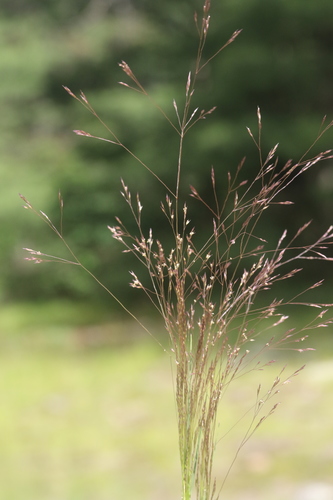
Agrostis scabra is a perennial bunchgrass found across North America and eastern Asia, used for alpine disturbed land revegetation.
Agrostis scabra Willd. is a perennial bunchgrass that grows mostly upright, reaching heights between 6 and 39 inches (15 and 99 cm), and may grow as tall as 50 inches (130 cm). In Colorado, this species has been found growing at elevations as high as 12,000 feet (3,658 m). Its leaves are rough from tiny hairs, and can grow up to around 14 centimeters long. When the inflorescence reaches maturity, ...
⚠️ Toxicity: Insufficient toxicity evidence; avoid direct contact and ingestion.
View full details →
11
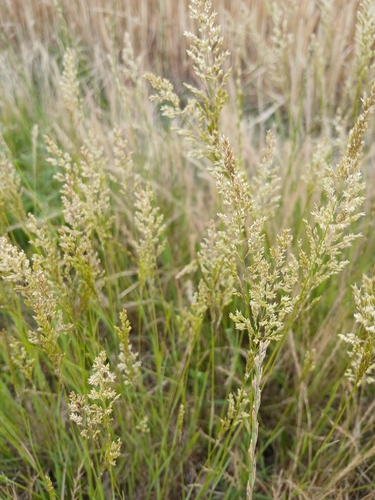
Agrostis stolonifera (creeping bentgrass) is a widely naturalised turf grass used especially on golf courses.
Agrostis stolonifera L. is a stoloniferous grass that can form mats or tufts. Its prostrate stems grow 0.4–1.0 metres (1 ft 4 in – 3 ft 3 in) long, with leaf blades 2–10 centimetres (0.79–3.94 in) long, and a panicle that reaches up to 40 cm (16 in) in height. The ligule is pointed and up to 5 millimetres (0.20 in) long; this distinguishes it from common bent (Agrostis capillaris), which has a sho...
⚠️ Toxicity: Insufficient toxicity evidence; avoid direct contact and ingestion.
View full details →
12
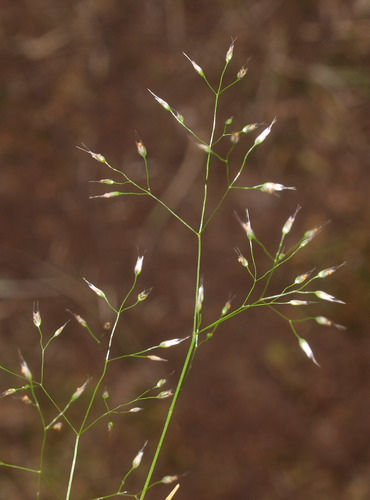
Aira caryophyllea, or silver hairgrass, is a native Eurasian and African bunchgrass widely naturalized elsewhere.
Aira caryophyllea L., a grass species commonly called silver hairgrass, is a type of bunchgrass. It is native to Europe, Africa, and Asia. It has been introduced to other continents including North America, where it has become naturalized and common. When fresh, this grass is light green, with a silvery sheen on its spikelets. After it dries, it changes to a straw-colored or white appearance. Its ...
⚠️ Toxicity: Insufficient toxicity evidence; avoid direct contact and ingestion.
View full details →
13
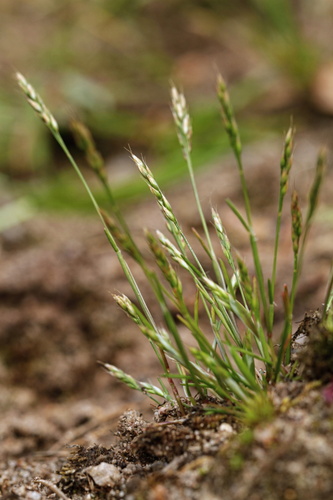
Aira praecox is an annual tuft-forming grass native to Europe and introduced to North America, serving as food for some moth and butterfly larvae.
Aira praecox L. is a species of grass with several common names: early hair-grass, yellow hairgrass, and spike hairgrass. It is native to Europe, where it grows in dry sandy sites, rocky outcrops, and heath grassland. It has been introduced to North America, where it occurs on both the east and west coasts in sandy or rocky habitats like beaches and roadsides. This is an annual, tuft-forming grass...
⚠️ Toxicity: Insufficient toxicity evidence; avoid direct contact and ingestion.
View full details →
14
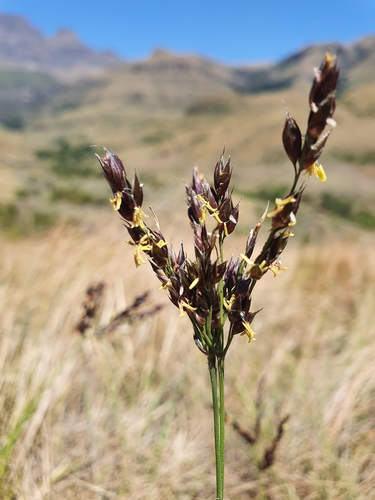
Alloteropsis semialata is a grass distributed across tropical and subtropical Old World regions, with seeds and rhizomes eaten by various animals.
Alloteropsis semialata (R.Br.) Hitchc. typically grows to a height of 20 to 150 centimeters (8 to 59 inches) from a short, white rhizome. Its leaf blades are usually 10 to 50 cm (4 to 19 and 1/2 inches) long and 1 to 10 millimeters (1/16 to 3/8 of an inch) wide. This plant produces fertile spikelets that each contain 2 flowers. It is distributed across a large portion of tropical and subtropical A...
⚠️ Toxicity: Insufficient toxicity evidence; avoid direct contact and ingestion.
View full details →
15
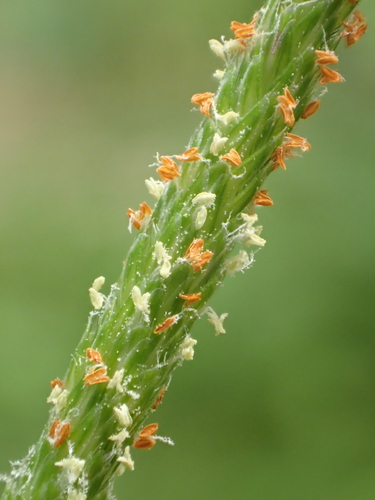
Alopecurus aequalis Sobol. is a variable perennial C3 bunchgrass, with one rare California variety listed as endangered in the US.
Alopecurus aequalis Sobol. is a variable perennial bunchgrass. It grows in clumps of erect stems that reach 20 to approximately 70 centimeters in height. Its leaves are between 2 and 15 centimeters long, with basal leaves being the longest, while the small number of stem leaves bear long sheaths. Leaf blades are narrow, measuring roughly 1 to 8 millimeters wide. This species produces a cylindrical...
⚠️ Toxicity: Insufficient toxicity evidence; avoid direct contact and ingestion.
View full details →
16
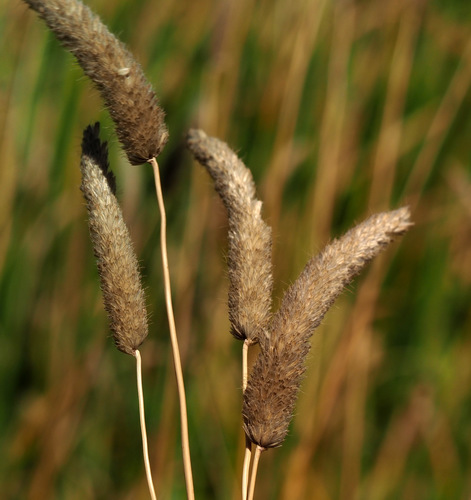
Alopecurus arundinaceus is a rhizomatous perennial Poaceae species useful for forage and erosion control, native to Eurasia and northern Africa.
Alopecurus arundinaceus, commonly known as creeping meadow foxtail or creeping foxtail, is a rhizomatous perennial grass species belonging to the grass family Poaceae. It is native to Eurasia and northern Africa, and has been widely introduced to other regions around the world. This sod-forming grass is useful as a forage crop and for erosion control. Its flowering period occurs between April and ...
⚠️ Toxicity: Insufficient toxicity evidence; avoid direct contact and ingestion.
View full details →
17
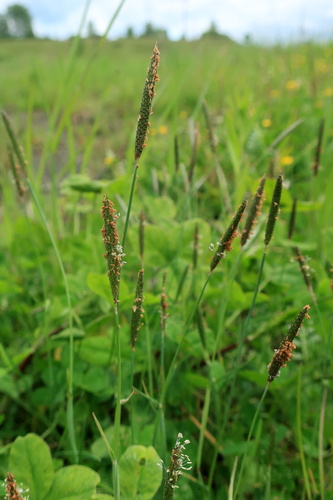
Alopecurus geniculatus, water or marsh foxtail, is a perennial grass native to Eurasia that grows in moist areas.
Alopecurus geniculatus is a grass species commonly called water foxtail or marsh foxtail. It is native to most of Eurasia, and has been introduced to North America, South America, and Australia. It grows in moist habitats. This is a perennial bunch grass with erect stems that reach up to approximately 60 cm (24 inches) tall. Its leaves grow up to 12 cm (5 inches) in length. The inflorescence is a ...
⚠️ Toxicity: Insufficient toxicity evidence; avoid direct contact and ingestion.
View full details →
18
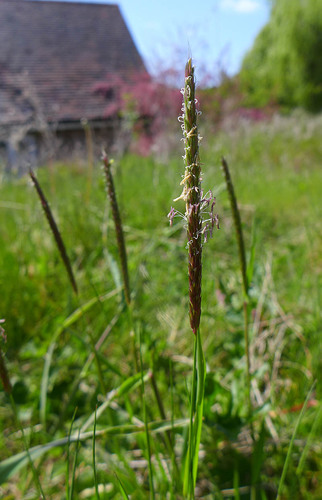
Alopecurus myosuroides Huds. is a tuft-forming grass that flowers from May to August, reaching up to 80 cm in height.
Alopecurus myosuroides Huds. can grow up to 80 cm tall, and often grows in tufts. Its leaves are hairless. The leaf sheath is smooth, and ranges in color from green to purplish. The pointed leaf blade is 3 to 16 cm long and 2 to 8 millimeters wide, is green in color, and has a rough texture. Its cylindrical spikelets are yellow-green, pale green or purple, and can reach 1 to 12 centimeters in leng...
⚠️ Toxicity: Insufficient toxicity evidence; avoid direct contact and ingestion.
View full details →
19
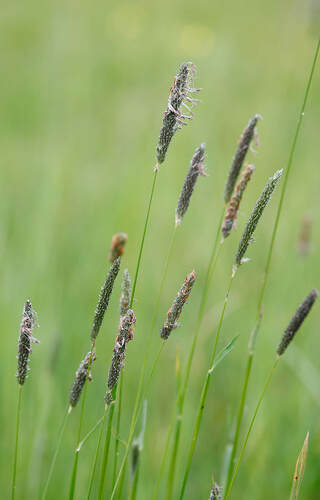
Alopecurus pratensis, meadow foxtail, is an early-flowering grass that hosts insects and multiple fungal species.
Alopecurus pratensis L., commonly known as meadow foxtail, flowers from April to June, making it one of the earliest grasses to bloom. This early flowering means surveys conducted in mid-summer often fail to detect the species. It can reach around 110 centimetres (43 inches) in height. Its stems are erect and firm along the shaft, with smooth, cylindrical leaf sheaths. Its leaves are approximately...
⚠️ Toxicity: Insufficient toxicity evidence; avoid direct contact and ingestion.
View full details →
20
Ampelodesmos mauritanicus (Poir.) T.Durand & Schinz
Ampelodesmos mauritanicus (Poir.) T.Durand & Schinz
🌿 Plantae Poaceae
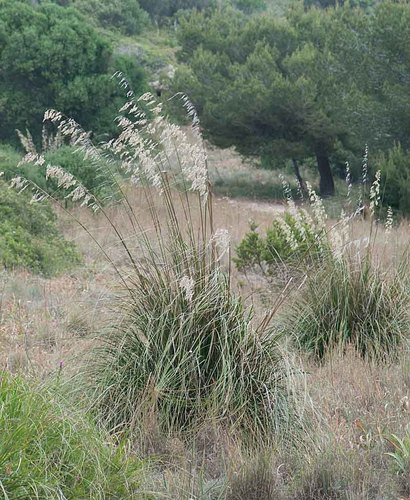
Ampelodesmos mauritanicus is a large Mediterranean perennial bunchgrass grown ornamentally and used for fiber.
The genus Ampelodesmos is a group of Mediterranean plants in the grass family, with common names including stramma, Mauritania grass, rope grass, and dis(s) grass. This genus is placed in its own unique tribe, Ampelodesmeae, within the grass subfamily Pooideae. Researchers believe the genus originated through ancient hybrid speciation, from a cross between parent species from the tribes Stipeae an...
⚠️ Toxicity: Insufficient toxicity evidence; avoid direct contact and ingestion.
View full details →
21
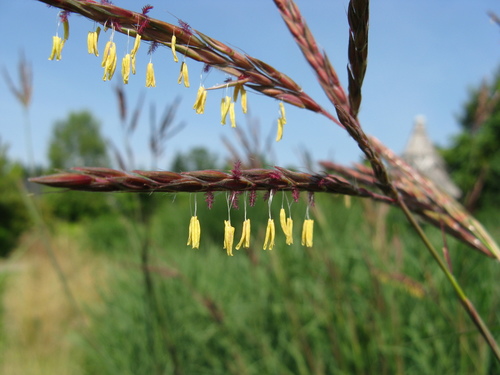
Andropogon gerardi, big bluestem, is a perennial warm-season prairie bunchgrass with forage, landscaping and potential biofuel uses.
Andropogon gerardi Vitman, commonly known as big bluestem, is a perennial warm-season bunchgrass. It tolerates a wide range of soil conditions. Its main roots grow 1.8–3.0 m (6–10 ft) deep, and the plants produce strong, tough rhizomes that allow it to form very dense, strong sod. Growth height ranges from 1–3 m (3.3–9.8 ft), depending on local soil and moisture conditions. As the plant matures, i...
⚠️ Toxicity: Insufficient toxicity evidence; avoid direct contact and ingestion.
View full details →
22
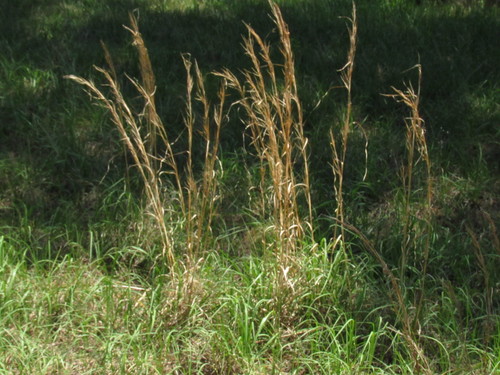
Andropogon virginicus L. is a flammable adaptable bunchgrass with multiple landscaping, ecological, and traditional uses.
Andropogon virginicus L. is a slender bunchgrass with an upright, vase-shaped growth habit and very dense fibrous roots. Its leaves are medium green, erect, linear, and approximately 1/4 inch (0.64 cm) wide. The culms bear bristle-tipped spikelets that are most visible during summer and fall. This species is native to the lower forty-eight United States, Puerto Rico, Canada, the Bahamas, Belize, C...
⚠️ Toxicity: Insufficient toxicity evidence; avoid direct contact and ingestion.
View full details →
23
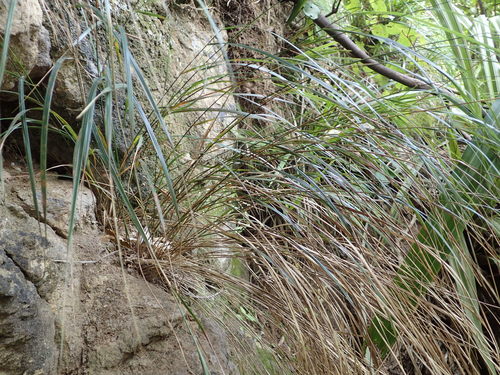
Anemanthele lessoniana, a rare New Zealand wild grass, is widely grown as an ornamental garden plant and holds a Royal Horticultural Society Award of Garden Merit.
Anemanthele is a genus of plants belonging to the grass family that is native to New Zealand. The only known species in this genus is Anemanthele lessoniana, which is commonly known by three common names: gossamer grass, New Zealand wind grass, and pheasant's tail grass. While this grass is naturally rare in the wild, it is widely cultivated as an attractive ornamental garden plant. It grows margi...
⚠️ Toxicity: Insufficient toxicity evidence; avoid direct contact and ingestion.
View full details →
24
Anthoxanthum nitens (Weber) Y.Schouten & Veldkamp
Anthoxanthum nitens (Weber) Y.Schouten & Veldkamp
🌿 Plantae Poaceae
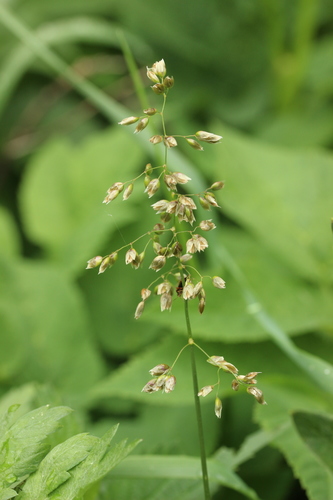
Anthoxanthum nitens (sweetgrass, formerly Hierochloe odorata) is a hardy perennial grass with mosquito-repellent chemicals used in basketry.
This species is previously known as Hierochloe odorata, commonly called sweetgrass. It is an extremely hardy perennial that can grow within the Arctic Circle. Its leaves do not form rigid stems, reaching only around 20 cm (7.9 in) in height. By late summer, leaves grow outward horizontally, reaching 100 cm (39 in) long or more. The base of the leaf, located just below the soil surface, is broad, w...
⚠️ Toxicity: Insufficient toxicity evidence; avoid direct contact and ingestion.
View full details →
25
Anthoxanthum occidentale (Buckley) Veldkamp
Anthoxanthum occidentale (Buckley) Veldkamp
🌿 Plantae Poaceae
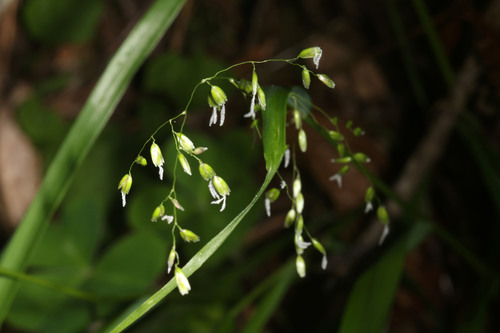
Anthoxanthum occidentale (California sweetgrass) is a rhizomatous perennial grass native to the U.S. west coast. It is a close relative of widely known sweet grass.
Anthoxanthum occidentale, commonly called California sweetgrass, is a species of grass. It is a close relative of the more widely known sweet grass. It is native to the west coast of the United States, ranging from Washington to California, where it grows in the coniferous forests of the coastal mountain ranges. This is a rhizomatous perennial grass. Its leaves grow up to 30 centimeters long and 1...
⚠️ Toxicity: Insufficient toxicity evidence; avoid direct contact and ingestion.
View full details →
26
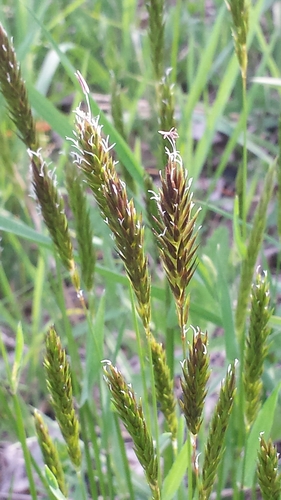
Anthoxanthum odoratum, sweet vernal grass, is a tufted perennial grass native to Eurasia, known for its hay-and-vanilla scent when dried.
Anthoxanthum odoratum is a short-lived perennial grass that grows in tufts, with stems reaching up to 70 cm (28 in) tall. Its leaves are short and broad, 3–5 mm (0.12–0.20 in) wide, and range from hairless to loosely hairy. It flowers in late spring and early summer, which is quite early in the growing season. It produces flower spikes 4–6 centimetres (1.6–2.4 in) long, holding crowded, oblong-sha...
⚠️ Toxicity: Insufficient toxicity evidence; avoid direct contact and ingestion.
View full details →
27
Aristida adscensionis L. is a variable annual tufted bunchgrass that grows 5–80 cm tall and produces three-awned fruits.
Aristida adscensionis L. is an annual bunchgrass that is highly variable in appearance, with its final size and shape mostly determined by environmental growing conditions. It grows as a tuft, reaching heights between 5 and 80 centimeters. It produces a narrow inflorescence made of spikelets, and each of its fruits bears three awns.
⚠️ Toxicity: Insufficient toxicity evidence; avoid direct contact and ingestion.
View full details →
28
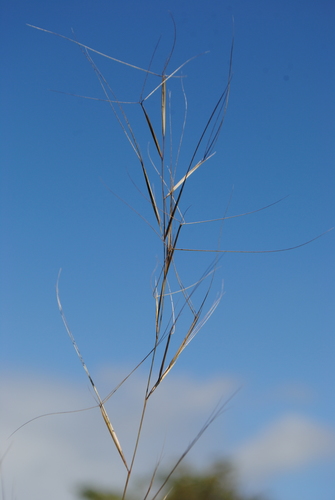
Aristida oligantha, the prairie threeawn, is an annual North American grass that grows in dry disturbed areas and has three-awned grains.
Aristida oligantha Michx. is a species of grass that has the common names prairie threeawn, oldfield threeawn, and ant rice. It is native to the United States and southern Canada, and it can also be found in northern Mexico. It grows in a wide variety of habitat types, and thrives particularly in dry areas with sandy or gravelly soils. It appears in disturbed and burned areas, and is sometimes con...
⚠️ Toxicity: Insufficient toxicity evidence; avoid direct contact and ingestion.
View full details →
29
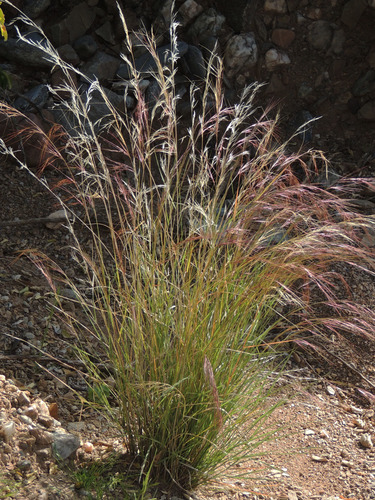
Aristida purpurea Nutt. is a widespread North American perennial bunchgrass that is poor livestock forage.
Aristida purpurea Nutt. is a perennial bunchgrass that grows erect to less than 1 meter (3 feet) in height. Its flower glumes often range in color from light brown to reddish-purple. Several varieties of this species exist, with overlapping geographical ranges. It is not considered good forage for grazing livestock, because its awns are sharp and the protein content of the grass is low. This grass...
⚠️ Toxicity: Insufficient toxicity evidence; avoid direct contact and ingestion.
View full details →
30
Arrhenatherum elatius (L.) P.Beauv. ex J.Presl & C.Presl
Arrhenatherum elatius (L.) P.Beauv. ex J.Presl & C.Presl
🌿 Plantae Poaceae
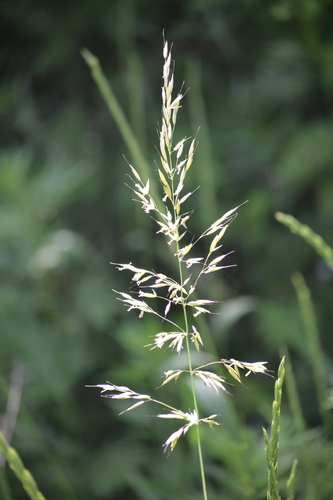
Arrhenatherum elatius is a coarse tall grass with four accepted subspecies, found in multiple European habitat types.
Arrhenatherum elatius (L.) P.Beauv. ex J.Presl & C.Presl is a coarse grass that grows up to 1.8 m (6 ft) tall. Its leaves are 4–10 mm wide, bright green, broad, slightly hairy, and rough. Its ligule is 1–3 mm long with a smooth edge. Its panicle can reach up to 30 cm (12 in) in length; the clustered spikelets bear projecting, angled awns up to 17 mm (1 in) long, and are either green or purplish. T...
⚠️ Toxicity: Insufficient toxicity evidence; avoid direct contact and ingestion.
View full details →
Frequently Asked Questions
How many species are in the Poaceae family?
This guide features 30 representative species from the Poaceae family. The full family contains many more species worldwide — explore them all on iNature.
How to identify Poaceae species?
Poaceae species share common features in their flowers, leaves, and growth patterns. This guide provides photos and descriptions for 30 species. For instant field identification, use the iNature app.
Sources: GBIF, iNaturalist, Wikipedia · Disclaimer
Identify any species instantly — even offline
iNature uses on-device AI to identify plants, animals, fungi and more. No internet needed.
Download iNature — FreeStart Exploring Nature Today
Download iNature for free. 10 identifications on us. No account needed. No credit card required.
Download Free on App Store
