Finches are small, seed-eating songbirds famous for inspiring Darwin's theory of evolution through the Galapagos finches. The Fringillidae family includes goldfinches, crossbills, siskins, and hawfinches, found across Eurasia, Africa, and the Americas. This guide showcases the most widespread and recognizable finch species.
🐦 Bird Families
Finches (Fringillidae): Species, Photos & Identification
1
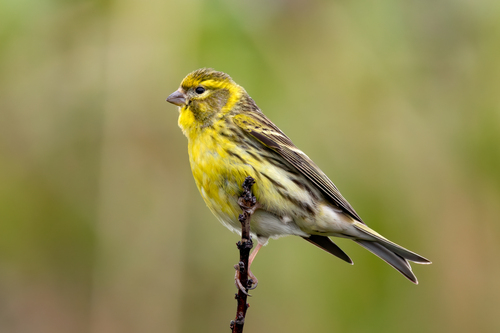
Serinus serinus, the European serin, is a small finch native to Europe and North Africa, feeding mainly on seeds.
The European serin, with the scientific name Serinus serinus (Linnaeus, 1766), is a small short-tailed bird that measures 11–12 cm in length. Its upper parts are dark-streaked greyish green, and it has a yellow rump. Its yellow breast and white belly are also heavily streaked. Males have a brighter yellow face and breast, along with yellow wing bars and yellow tail sides. The song of this species ...
View full details → 2
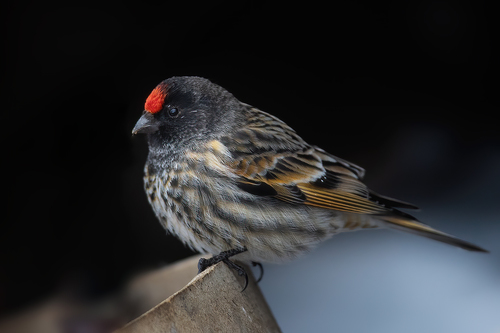
Serinus pusillus, the red-fronted serin, is a small finch of high mountain regions from the Caucasus to the Himalayas.
The red-fronted serin, also called the fire-fronted serin (Serinus pusillus), is a small passerine bird that belongs to the finch family Fringillidae. It favors high mountain habitats, and measures 11–12 cm (4.3–4.7 in) in length. This species breeds in the Caucasus, and in the higher mountains of Turkey and Iran. Vagrant individuals occasionally reach the Greek Eastern Aegean Islands during winte...
View full details → 3
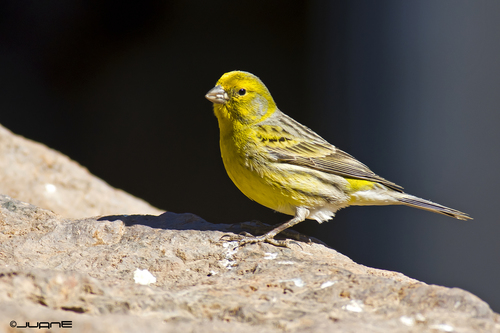
Serinus canaria, the Atlantic canary, is a small finch native to Macaronesia with introduced populations elsewhere.
The Atlantic canary (Serinus canaria (Linnaeus, 1758)) measures 10 to 12 cm (3.9 to 4.7 in) in length, with a wingspan of 21 to 23.7 cm (8.3 to 9.3 in) and a weight ranging from 8.4 to 24.3 g (0.30 to 0.86 oz), with an average weight of approximately 15 g (0.53 oz). Adult males have a mostly yellow-green head and underparts, with brighter yellow coloring on the forehead, face, and supercilium. Th...
View full details → 4
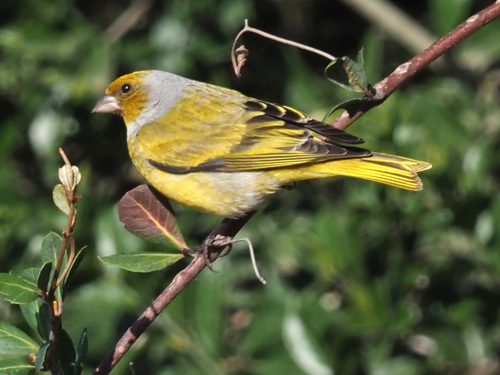
The Cape canary is a small common seed-eating finch native to southern Africa and introduced to Mauritius and Réunion.
The Cape canary, scientifically named Serinus canicollis, is a small passerine bird belonging to the finch family. It is a resident breeding species native to southern Africa, and has been introduced to the islands of Mauritius and Réunion. Its preferred habitats are fynbos, grassland and gardens, located mostly in highland areas. It constructs a compact cup-shaped nest in scrub vegetation. The Ca...
View full details → 5
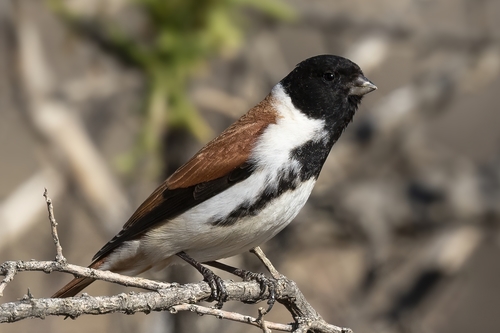
The black-headed canary Serinus alario is a small 12–15 cm bird with distinct plumage differences between sexes and juveniles.
This bird species, known commonly as the black-headed canary, has a scientific name of Serinus alario (Linnaeus, 1758). It has a total body length of 12 to 15 cm. The adult male black-headed canary has rich brown upper body and tail, a white hind collar, and mostly white underparts. Its head and central breast are solidly black. The adult female is similar in overall appearance to the male, but ha...
View full details → 6
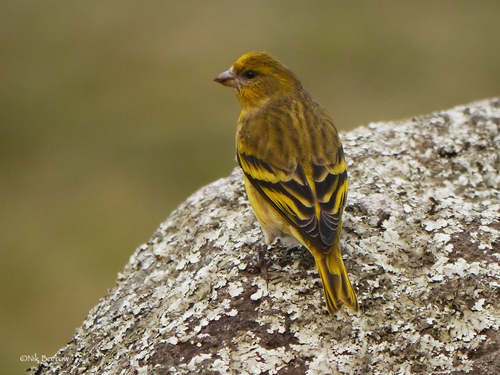
Serinus flavivertex, the yellow-crowned canary, is a small common finch native to eastern Africa.
The yellow-crowned canary, with the scientific name Serinus flavivertex, is a small passerine bird that belongs to the finch family. It is a non-migratory breeding bird native to eastern Africa. This species was previously classified as the same species as the Cape canary, Serinus canicollis. Its natural habitats include fynbos, grassland, and gardens, and it prefers to live in highland regions. I...
View full details → 7

The velvet-fronted euphonia (Euphonia concinna) is an endemic Colombian bird species in the Fringillidae family.
The velvet-fronted euphonia, with the scientific name Euphonia concinna P.L.Sclater, 1855, is a bird species that belongs to the family Fringillidae. It was recently reclassified into Fringillidae after previously being placed in the Thraupidae family. This species is endemic to Colombia. Its natural habitats are subtropical or tropical dry forests, as well as heavily degraded former forest.
View full details → 8
Euphonia fulvicrissa P.L.Sclater, 1857
Euphonia fulvicrissa P.L.Sclater, 1857
🦋 Animalia Fringillidae
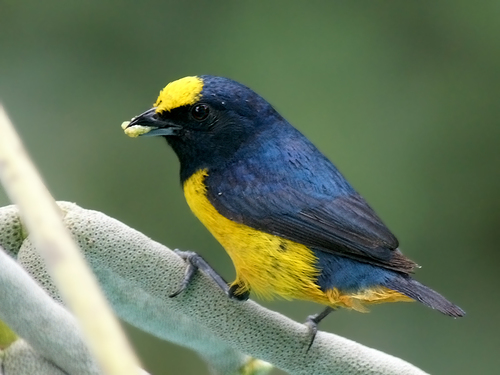
Fulvous-vented euphonia (Euphonia fulvicrissa) is a Fringillidae bird species found in Tumbes-Chocó-Magdalena.
The fulvous-vented euphonia, with the scientific name Euphonia fulvicrissa P.L.Sclater, 1857, is a species of bird in the family Fringillidae. It was formerly classified within the family Thraupidae. This species is found in the Tumbes-Chocó-Magdalena region. Its natural habitats are subtropical or tropical moist lowland forests, as well as heavily degraded former forest.
View full details → 9
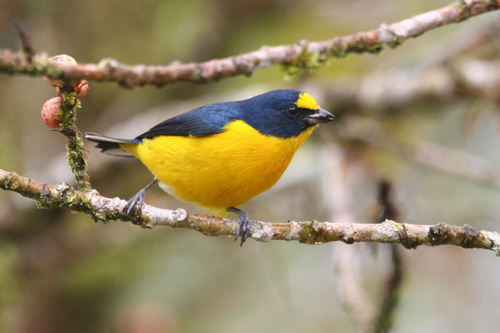
Euphonia hirundinacea is a small neotropical passerine specialized to feed on mistletoe berries.
The yellow-throated euphonia (Euphonia hirundinacea Bonaparte, 1838) is a small, short-billed, short-tailed arboreal passerine with pointed wings. Adult individuals measure 10–12 cm in total length, of which the tail contributes 3.3 to 3.6 cm. They have a wingspan of 5.8 to 6.1 cm and weigh between approximately 11.6 and 17.8 g. Adult males of the nominate subspecies have a small bright yellow pat...
View full details → 10
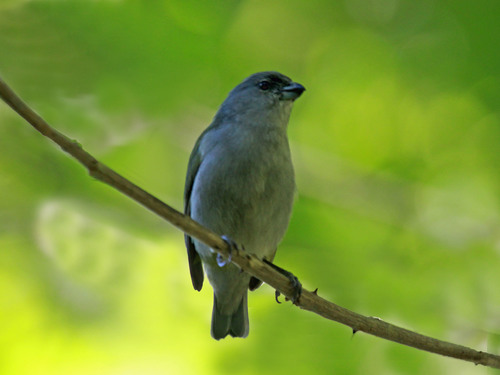
Jamaican euphonia (Euphonia jamaica) is a non-migratory small finch species endemic to Jamaica.
The Jamaican euphonia (Euphonia jamaica (Linnaeus, 1766)) is a species of bird in the finch family Fringillidae. This species is small, and its appearance varies by sex and age. It is the only Euphonia species that lives in Jamaica, and local Jamaicans give it the nickname "Short-Mouth Bluequit". While this species is not migratory and does not leave the island of Jamaica, individuals have been re...
View full details → 11
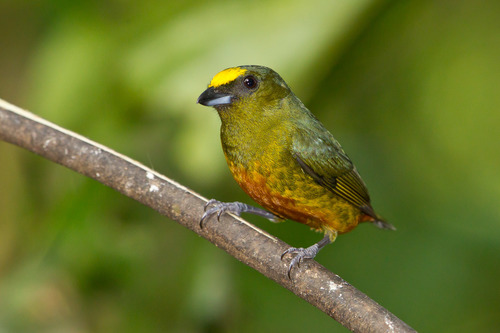
Euphonia gouldi, the olive-backed euphonia, is a small finch native to Central American Caribbean lowlands and foothills.
The olive-backed euphonia, with the scientific name Euphonia gouldi P.L.Sclater, 1857, is a small passerine bird that belongs to the finch family. It is a resident breeding species found in the Caribbean lowlands and foothills, ranging from southern Mexico to western Panama. This bird occupies wet forests, tall second growth, and adjacent bushy clearings, usually living at altitudes between sea le...
View full details → 12
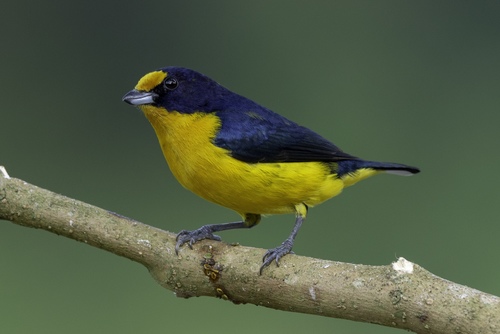
Euphonia violacea, the violaceous euphonia, is a small South American bird with distinct male and female plumage.
Adult violaceous euphonias (scientific name: Euphonia violacea (Linnaeus, 1758)) measure 11.4 cm in length and weigh 14 grams. Males have glossy blue-black upperparts, paired with a deep golden yellow forehead and underparts. Females and immature individuals have olive green upperparts and greenish yellow underparts. This species is a resident breeder. Its breeding range extends from Trinidad, Tob...
View full details → 13
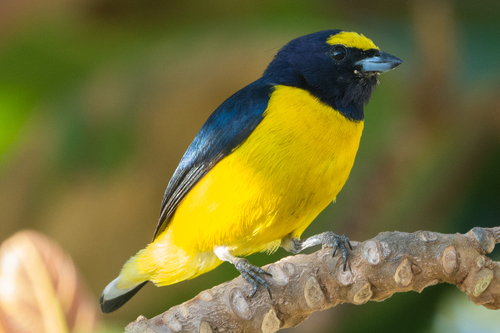
Scrub euphonia, Euphonia affinis, is a small-billed bird found across Central America in human-disturbed and open habitats.
The species, known as the scrub euphonia and formally named Euphonia affinis (Lesson, 1842), has consistent physical traits across both sexes: a thin, fine bill that is smaller than the bills of other euphonias, along with dark legs and dark eyes. Males have bright yellow underparts, black upperparts, a small yellow spot on the forecrown, and a white crissum. Females have a grey head, dusky olive ...
View full details → 14
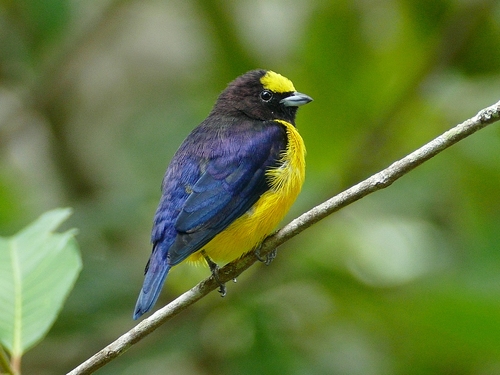
Euphonia chlorotica, the purple-throated euphonia, is a Neotropical fringillid songbird with five recognized subspecies.
The purple-throated euphonia, with the scientific name Euphonia chlorotica, is a songbird species in the finch family Fringillidae. It was formerly classified in the Thraupidae family. This species is found in Argentina, Bolivia, Brazil, Colombia, Ecuador, French Guiana, Guyana, Paraguay, Peru, Suriname, Uruguay and Venezuela. Its natural habitats are subtropical or tropical moist lowland forests,...
View full details → 15
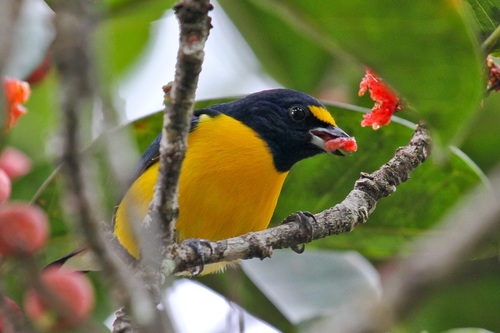
Euphonia minuta is a small 9.5 cm bird species with two disjunct populations found in Central and South America.
Euphonia minuta Cabanis, 1849, commonly known as the white-vented euphonia, measures approximately 9.5 cm (3.7 in) in length. Both males and females of this species have a whitish midbelly and crissum. Males have blue-black upperparts, a yellow forehead, purple-black throats, and bright yellow underparts. Females have olive-green upperparts and whitish throats. This species produces calls that are...
View full details → 16
Euphonia chrysopasta P.L.Sclater & Salvin, 1869
Euphonia chrysopasta P.L.Sclater & Salvin, 1869
🦋 Animalia Fringillidae
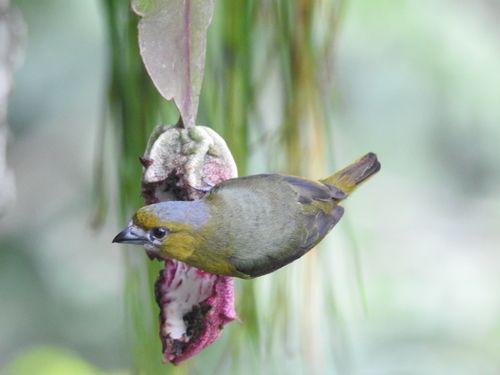
Euphonia chrysopasta is a recently reclassified songbird found in northern South America that lives in moist lowland forests and swamps.
Euphonia chrysopasta, commonly known as the white-lored euphonia or golden-bellied euphonia, is a species of songbird. It was recently reclassified from the family Thraupidae to the family Fringillidae. This species occurs in Bolivia, Brazil, Colombia, Ecuador, French Guiana, Guyana, Peru, Suriname, and Venezuela. Its natural habitats are subtropical or tropical moist lowland forest and subtropica...
View full details → 17
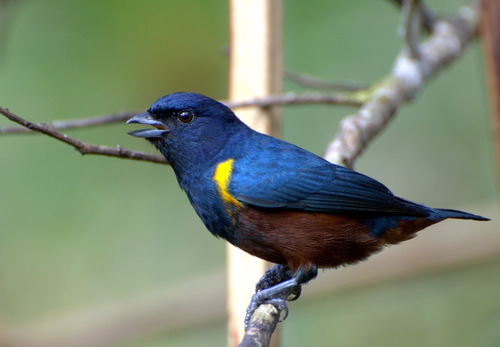
Chestnut-bellied euphonia (Euphonia pectoralis) is a Fringillidae bird species found in parts of South America.
The chestnut-bellied euphonia, with the scientific name Euphonia pectoralis, is a bird species that belongs to the Fringillidae family. It was previously classified in the related Thraupidae family instead. This species can be found in Argentina, Brazil, and Paraguay. Its natural habitats are subtropical or tropical moist lowland forest, and subtropical or tropical moist montane forest. The taxon ...
View full details → 18
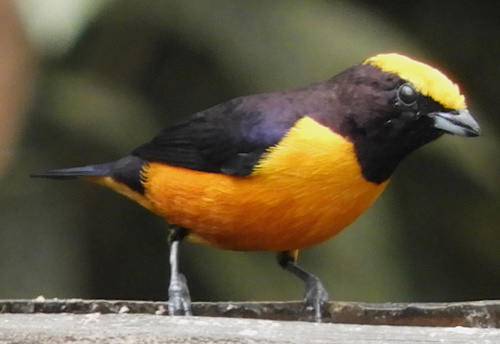
Euphonia saturata, the orange-crowned euphonia, is a Fringillidae bird species found in western South America.
The orange-crowned euphonia, with the scientific name Euphonia saturata (Cabanis, 1861), is a bird species that belongs to the finch family Fringillidae. This species is distributed across Colombia, Ecuador, and Peru. Its natural habitats include subtropical or tropical dry forest, subtropical or tropical moist lowland forest, and heavily degraded former forest.
View full details → 19
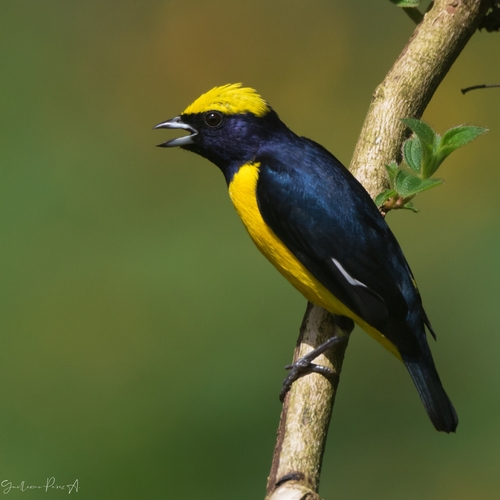
Euphonia luteicapilla, the yellow-crowned euphonia, is a common fringillid bird found in Central America.
The yellow-crowned euphonia, with the scientific name Euphonia luteicapilla, is a species of bird that belongs to the finch family Fringillidae. Its distribution covers Costa Rica, Nicaragua, and Panama, and it is likely the most common euphonia species within this range. Its natural habitats include subtropical or tropical dry forest, subtropical or tropical moist lowland forest, and heavily degr...
View full details → 20
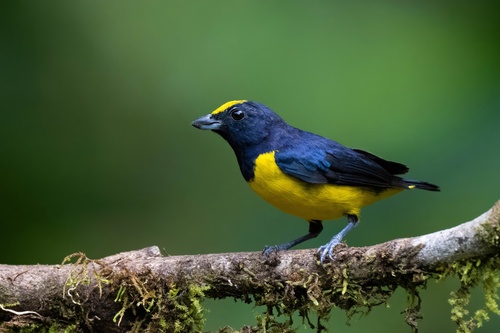
Euphonia imitans, the spot-crowned euphonia, is a Fringillidae bird found in Costa Rica and Panama.
The spot-crowned euphonia, with the scientific name Euphonia imitans (Hellmayr, 1936), is a bird species that belongs to the finch family Fringillidae. This species is native to Costa Rica and Panama. Its natural habitats are subtropical or tropical moist lowland forest, as well as heavily degraded former forest.
View full details → 21
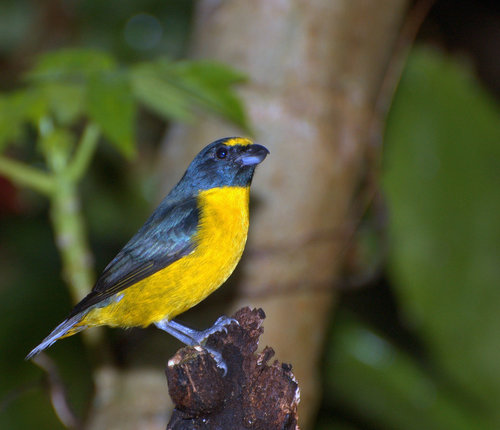
Green-chinned euphonia (Euphonia chalybea) is a Fringillidae bird threatened by habitat loss in parts of South America.
The green-chinned euphonia, with the scientific name Euphonia chalybea, is a species of bird classified in the finch family Fringillidae. This species is distributed across Selva Misionera in Argentina, southern Brazil, and eastern Paraguay. Its native natural habitat is subtropical or tropical moist lowland forest. Currently, the green-chinned euphonia is threatened by habitat loss.
View full details → 22
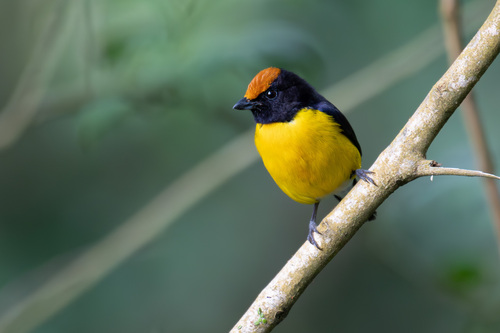
The tawny-capped euphonia is a Fringillidae bird species found in Colombia, Costa Rica, and Panama in several forest habitats.
The tawny-capped euphonia, scientifically named Euphonia anneae, is a bird species that belongs to the finch family Fringillidae. This species can be found in Colombia, Costa Rica, and Panama. Its natural habitats include subtropical or tropical moist lowland forest, subtropical or tropical moist montane forest, and heavily degraded former forest.
View full details → 23
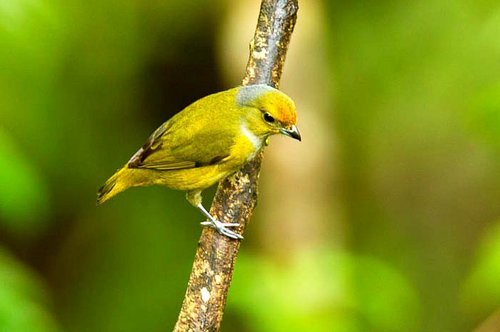
Bronze-green euphonia (Euphonia mesochrysa) is a Fringillidae bird found in Andean South America in moist montane forests.
The bronze-green euphonia, scientifically named Euphonia mesochrysa, is a bird species that is currently classified in the family Fringillidae; it was previously placed in the family Thraupidae. This species can be found in Bolivia, Colombia, Ecuador, and Peru. Its natural habitat is subtropical or tropical moist montane forests.
View full details → 24
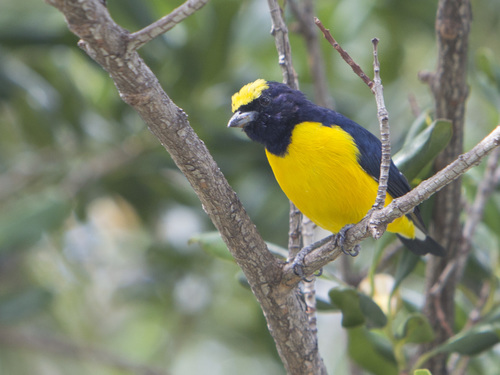
Euphonia trinitatis, the Trinidad euphonia, is a small sexually dimorphic passerine found in northern South America and Trinidad.
The Trinidad euphonia, scientifically named Euphonia trinitatis Strickland, 1851, is a small, stout, short-tailed passerine bird. It measures 9.7–11 cm (3.8–4.3 in) in length and weighs 8.8–14 g (0.31–0.49 oz), and shows clear sexual dimorphism in its plumage. Males have glossy blue-black plumage on the head, back, chin, and throat, paired with a bright yellow forehead, crown, and underparts. The ...
View full details → 25
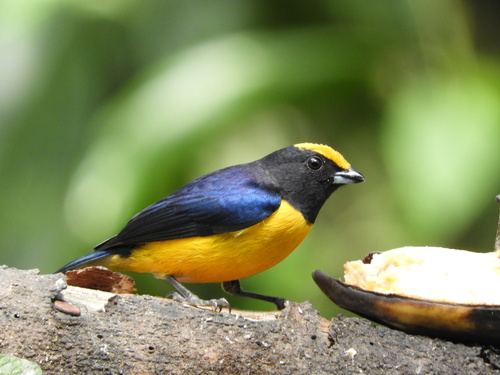
The orange-bellied euphonia is a finch species found across northern and central South America and Panama with eleven recognized subspecies.
The orange-bellied euphonia, with the scientific name Euphonia xanthogaster Sundevall, 1834, is a bird species belonging to the finch family Fringillidae. It was formerly classified as a tanager in the family Thraupidae. This species can be found in Bolivia, Brazil, Colombia, Ecuador, Guyana, Panama, Peru, and Venezuela. Its natural habitats are subtropical or tropical moist lowland forest, and su...
View full details → 26
Euphonia laniirostris d'Orbigny & Lafresnaye, 1837
Euphonia laniirostris d'Orbigny & Lafresnaye, 1837
🦋 Animalia Fringillidae
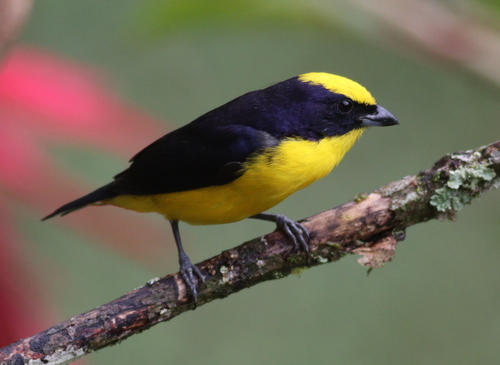
The thick-billed euphonia is a small finch species found across parts of Central and South America in various forest habitats.
The thick-billed euphonia, with the scientific name Euphonia laniirostris, is a bird species that belongs to the family Fringillidae; it was previously classified in the family Thraupidae. Adult thick-billed euphonias reach a length of 10 cm (3.9 in). Males of this species have entirely yellow underparts from the throat to the vent, with only a small terminal white patch on the undertail. Their up...
View full details → 27
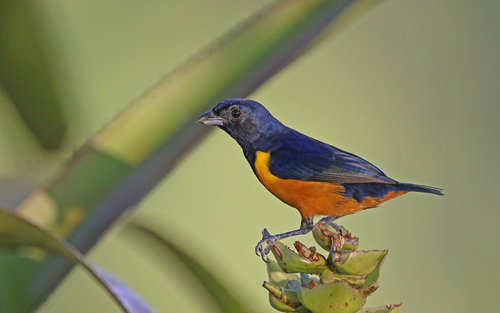
Rufous-bellied euphonia (Euphonia rufiventris) is a Fringillidae bird species native to northern and central South America.
The rufous-bellied euphonia, with the scientific name Euphonia rufiventris (Vieillot, 1819), is a bird species that belongs to the finch family Fringillidae. This species can be found in Bolivia, Brazil, Colombia, Ecuador, Peru, and Venezuela. Its natural habitat is subtropical or tropical moist lowland forest.
View full details → 28
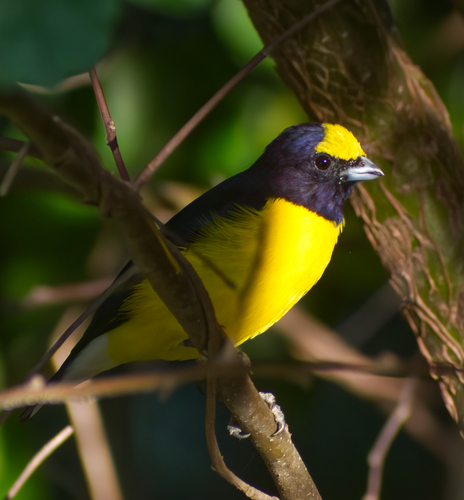
Euphonia godmani, the West Mexican euphonia, is a fringillid bird split in 2021 found in Mexican forests.
The West Mexican euphonia, with the scientific name Euphonia godmani Brewster, 1889, is a species of bird that belongs to the finch family Fringillidae. This species was split from the scrub euphonia, Euphonia affinis, in 2021. It is found exclusively in Mexico. Its natural habitats include subtropical or tropical dry forest, subtropical or tropical moist lowland forest, and heavily degraded forme...
View full details → 29
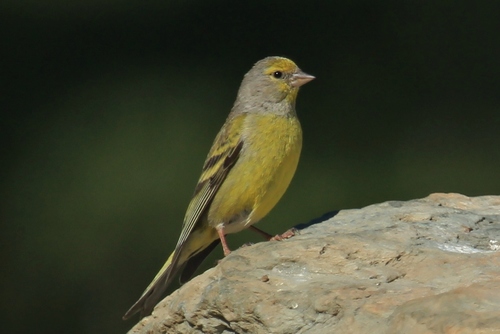
Carduelis citrinella, the citril finch, is a small finch with yellow markings, classified as Least Concern by the IUCN.
Description and systematics: The citril finch (scientific name Carduelis citrinella (Pallas, 1764)) has a total length of 12 cm (4.7 in) and an average weight of around 12.5 g (0.44 oz). Its upper body is greyish, with a brown tint to the back that also has dark black streaks. Its underparts and double wing bars are yellow. Like related species, it has a bright face mask, which is also yellow in t...
View full details → 30

Carduelis carduelis, the European goldfinch, is a small finch native to Eurasia and North Africa, introduced widely elsewhere.
The average adult European goldfinch (Carduelis carduelis) measures 12–13 cm (4.7–5.1 in) in length, with a 21–25 cm (8.3–9.8 in) wingspan, and weighs 14 to 19 g (0.49 to 0.67 oz). There is very little visible difference between males and females, as both sexes share a red face, black and white patterned head, warm brown upperparts, white underparts with buff flanks and breast patches, and black-a...
View full details →Frequently Asked Questions
How many species are in the Fringillidae family?
This guide features 30 representative species from the Fringillidae family. The full family contains many more species worldwide — explore them all on iNature.
How to identify Fringillidae species?
Fringillidae species share common features in their flowers, leaves, and growth patterns. This guide provides photos and descriptions for 30 species. For instant field identification, use the iNature app.
Sources: GBIF, iNaturalist, Wikipedia · Disclaimer
Identify any species instantly — even offline
iNature uses on-device AI to identify plants, animals, fungi and more. No internet needed.
Download iNature — FreeStart Exploring Nature Today
Download iNature for free. 10 identifications on us. No account needed. No credit card required.
Download Free on App Store
