The Anatidae family includes ducks, geese, and swans — some of the most recognizable waterbirds on Earth. From the common mallard to the elegant mute swan, learn to identify these birds.
🦆 Bird Families
Ducks, Geese & Swans — Anatidae Species Guide
1
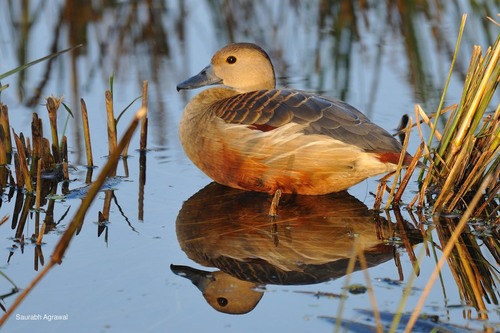
Dendrocygna javanica, the lesser whistling duck, is a common wetland duck found across South and Southeast Asia.
This species, commonly known as the lesser whistling duck, has a scientific name of Dendrocygna javanica (Horsfield, 1821). This chestnut brown duck can only be confused with the fulvous whistling duck (D. bicolor). It differs from fulvous whistling ducks by having chestnut upper-tail coverts, while fulvous whistling ducks have creamy white upper-tail coverts. Dendrocygna javanica has an orange to...
View full details → 2
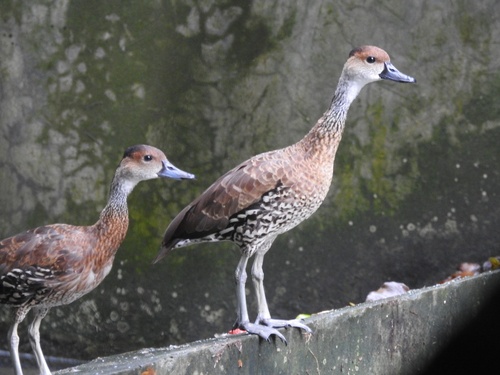
Dendrocygna arborea, the West Indian whistling duck, is a large whistling duck native to the West Indies that feeds on plant matter.
The West Indian whistling duck, with the scientific name Dendrocygna arborea (Linnaeus, 1758), is the largest and darkest species of whistling duck. It measures 48 to 58 cm (19 to 23 in) in length. Females weigh between 800 and 1,320 g (1.76 to 2.91 lb), while males weigh between 760 and 1,240 g (1.68 to 2.73 lb). This species is roughly the same size as a mallard. It has a long black bill, a long...
View full details → 3
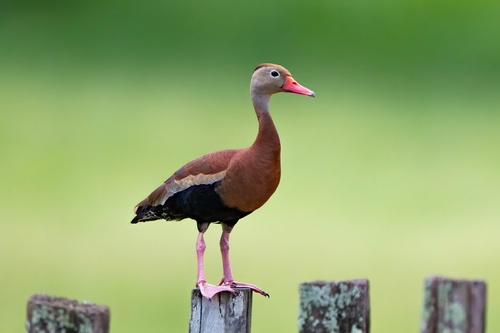
Black-bellied whistling duck (Dendrocygna autumnalis) is a mid-sized social waterfowl widely distributed across the Americas.
The black-bellied whistling duck (scientific name Dendrocygna autumnalis (Linnaeus, 1758)) is a mid-sized waterfowl species. It measures 47 to 56 cm (19 to 22 in) in length, weighs 652 to 1,020 g (1.437 to 2.249 lb), and has a wingspan of 76 to 94 cm (30 to 37 in). This species has a long pink bill, long head, and moderately long legs. Its head is pale gray, and most of its plumage is gray-brown, ...
View full details → 4
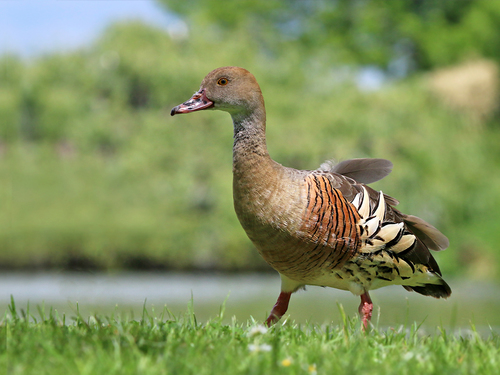
Dendrocygna eytoni is a long-necked duck found in Australia and New Guinea that lives in grasslands and savannas near water.
Description: Dendrocygna eytoni measures 42–60 cm (16.5–23.5 inches) in length and weighs approximately one kilogram (2.2 pounds). It is a long-necked duck with brown upperparts, paler underparts, and a white rump. Its chest is chestnut-colored with thin black bars, and long plumes with black edges grow from its flanks. The species has pink bill and legs, and a yellow iris. Males and females have ...
View full details → 5
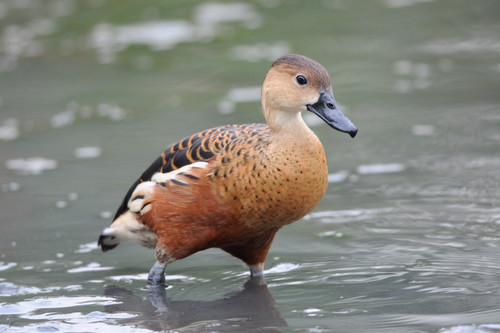
The wandering whistling duck (Dendrocygna arcuata) is a waterfowl named for its whistling calls and wing noise that lives in wetland habitats.
Formerly called tree ducks, the wandering whistling duck got its current common name from its loud whistling calls and the whistling sound its wings produce during flight. This species has long necks and long legs, with an appearance that is intermediate between geese and ducks. They have strong heads and necks, with darker coloration on the crown and hindneck. Their breasts bear black spotting, a...
View full details → 6
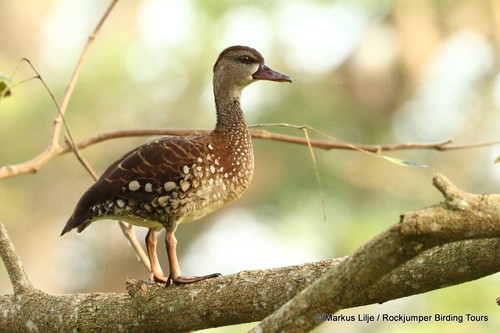
Dendrocygna guttata, the spotted whistling duck, is a small waterfowl species found across the Philippines, Indonesia, New Guinea, and Australia.
The spotted whistling duck (Dendrocygna guttata Schlegel, 1866) is one of the smaller species in the genus Dendrocygna. Adults reach 43–50 cm in length. Males weigh between 590 g and 650 g, while females weigh between 610 g and 860 g. The species gets its common name from the white spots that appear on its flanks and breasts. The sides of the neck, face, and eyebrows are all grey. Black or dark br...
View full details → 7
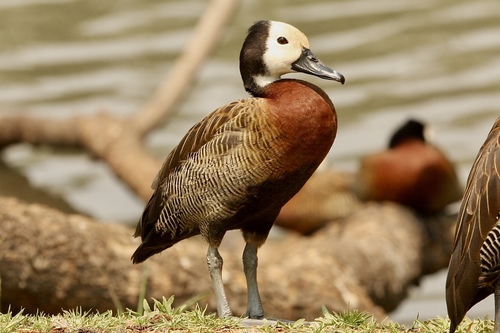
This is a description of the white-faced whistling duck, covering its appearance, distribution, habitat, and basic behavior.
The white-faced whistling duck, scientifically named Dendrocygna viduata (Linnaeus, 1766), has a long grey bill, long head, and moderately long legs. Most of its head and neck are black, with a distinct white patch on the face that gives the species its common name; the extent of visible white facial color varies regionally across the species. As an example of this variation, individuals with more...
View full details → 8
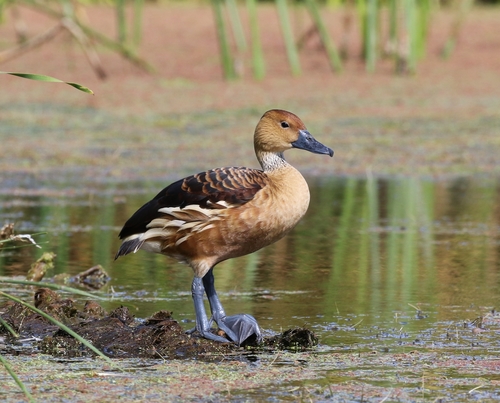
The fulvous whistling duck (Dendrocygna bicolor) is a brown long-legged duck with a large range across four continents, found in open lowland wetlands.
The fulvous whistling duck (Dendrocygna bicolor (Vieillot, 1816)) measures 45–53 cm (18–21 in) in length. Males weigh 748–1,050 g (26.4–37.0 oz), while females average slightly lighter, at 712–1,000 g (25.1–35.3 oz). Its wingspan ranges from 85 to 93 cm. This is a long-legged duck, primarily colored in different shades of brown. Its head, neck, and breast are a particularly rich buff (fulvous) ton...
View full details → 9
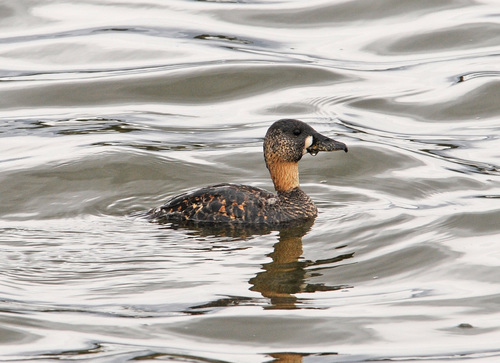
Thalassornis leuconotus, the white-backed duck, is a diving waterfowl native to Africa that inhabits still freshwater wetlands.
These birds are well adapted for diving, and have been observed staying underwater for up to 30 seconds. They feed especially on waterlily bulbs, but also eat waterlily seeds, waterlily leaves, and other aquatic plants; young ducks also feed on lake fly larvae. When escaping danger, they prefer to dive, which means their namesake white back is rarely visible in living individuals. White-backed duc...
View full details → 10
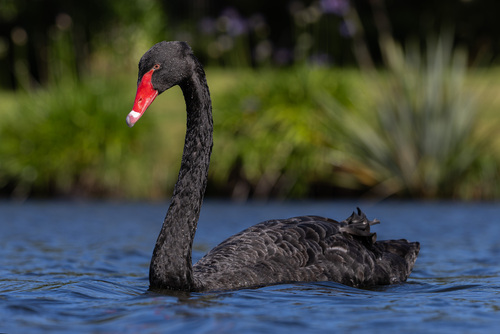
Cygnus atratus, the black swan, is a large nomadic water bird native to Australia, with distinct black plumage and monogamous breeding habits.
The black swan, scientifically named Cygnus atratus (Latham, 1790), is a water bird with distinctive physical traits. Adult black swans have entirely black body feathers and white flight feathers. Their bill is bright red with a pale bar and pale tip, and their legs and feet are greyish-black. Males, called cobs, are slightly larger than females, called pens, and have longer, straighter bills. Imm...
View full details → 11

This page describes the physical traits, range, and population history of the trumpeter swan, the largest extant waterfowl native to North America.
Trumpeter swan (Cygnus buccinator Richardson, 1831) is the largest living waterfowl species, and also the heaviest and longest native bird of North America. Adults typically measure 138–165 cm (4 ft 6 in – 5 ft 5 in) in total length, while large males can grow longer than 180 cm (5 ft 11 in). Adult weights usually range from 7–13.6 kg (15–30 lb). Reported average weights differ by age and seasonal...
View full details → 12
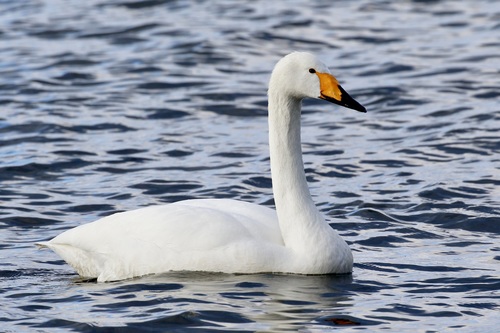
Cygnus cygnus, the whooper swan, is a large migratory waterfowl that uses signals to coordinate flock flight takeoffs.
The whooper swan (Cygnus cygnus (Linnaeus, 1758)) is similar in appearance to Bewick's swan, but is larger. It measures 140–165 centimetres (55–65 inches) in length, with a wingspan of 205–275 cm (81–108 in). Its typical weight range is 7.4–14.0 kilograms (16+1⁄4–30+3⁄4 pounds), with an average of 9.8–11.4 kg (21+1⁄2–25+1⁄4 lb) for males and 8.2–9.2 kg (18–20+1⁄4 lb) for females. The highest verif...
View full details → 13
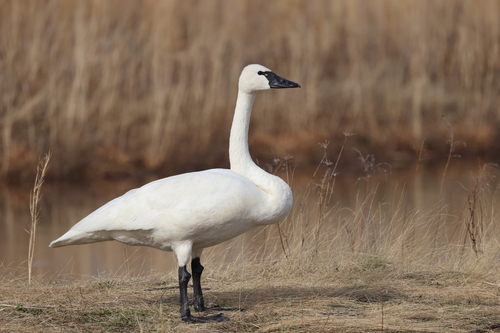
Cygnus columbianus, the tundra swan, is the smallest Holarctic swan, with two migratory subspecies breeding in Arctic tundra.
Cygnus columbianus, commonly called the tundra swan, is the smallest swan species found across the Holarctic. Adults measure 115–150 cm in total length, have a 168–211 cm wingspan, and weigh between 3.4–9.6 kg. Females (called pens) are slightly smaller than males (called cobs), but do not differ in appearance otherwise. The plumage of adult birds of both subspecies is entirely white, with black f...
View full details → 14
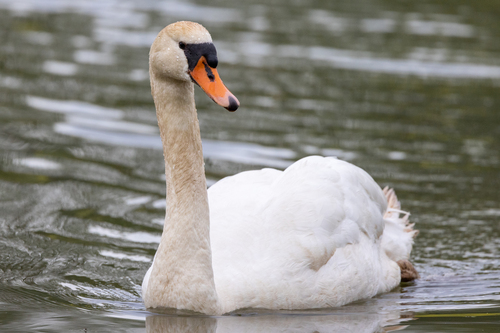
Cygnus olor, the mute swan, is a large heavy white waterfowl native to Eurasia, naturalized in North America.
This species is mute swan, with the scientific name Cygnus olor (J.F.Gmelin, 1789). Description Adult mute swans are large waterfowl. They typically measure 140 to 160 cm (55 to 63 in) in length, with extreme measurements ranging from 125 to 170 cm (49 to 67 in), and a wingspan of 200 to 240 cm (79 to 94 in). Males are larger than females, and also have a larger knob on the bill. On average, mute...
View full details → 15
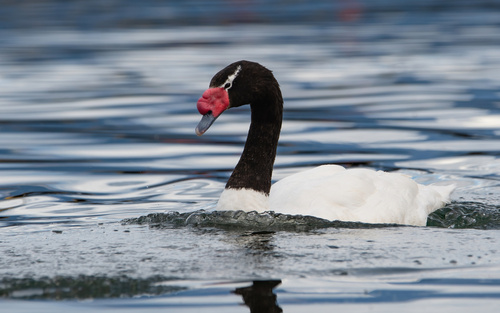
Black-necked swan is the largest native South American waterfowl, described here with measurements, appearance, distribution and habitat.
The black-necked swan (Cygnus melancoryphus (Molina, 1782)) is the only member of its genus that breeds in the Neotropics, and it is the largest waterfowl native to South America. Adult black-necked swans measure 102 to 124 cm (40 to 49 in) in total length, with a wingspan ranging from 135 to 177 cm (53 to 70 in). Males weigh between 4.6 to 8.7 kg (10 to 19 lb), while females weigh between 3.5 to ...
View full details → 16
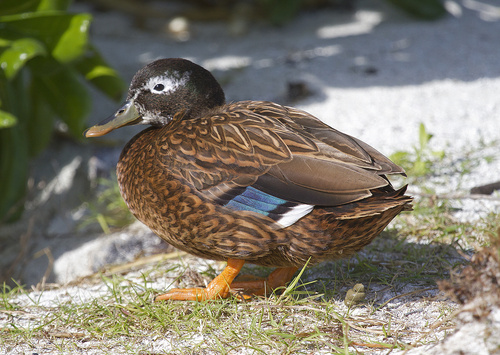
Anas laysanensis, the Laysan duck, is a flightless during molt duck with distinct plumage and nesting habits on Pacific islands.
The Laysan duck (Anas laysanensis Rothschild, 1892) is a duck species that reaches teal size, with an overall dark brown plumage and a distinct, prominent white eye-ring. Its bill is short and spatulate: males have dark green bills with variable black blotching, while females have dull orange bills with variable black blotching. Most Laysan ducks have a ring of fat around their neck. Some males di...
View full details → 17
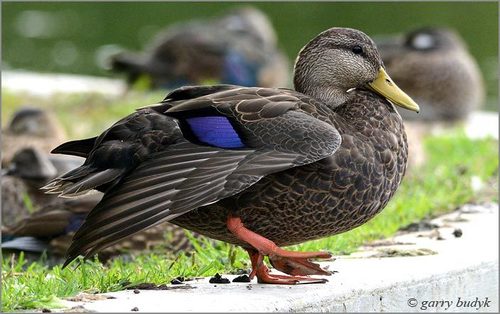
The American black duck is a North American dabbling duck that resembles darker female mallards and lives in a wide range of wetlands.
Description: The American black duck has a body mass of 720–1,640 g (1.59–3.62 lb), a total length of 54–59 cm (21–23 in), and a wingspan of 88–95 cm (35–37 in). This species has the highest average body mass among all members of the genus Anas. In a sample of 376 males, average body mass was 1.4 kg (3.1 lb), and 176 females had an average mass of 1.1 kg (2.4 lb). Even with this higher average mas...
View full details → 18
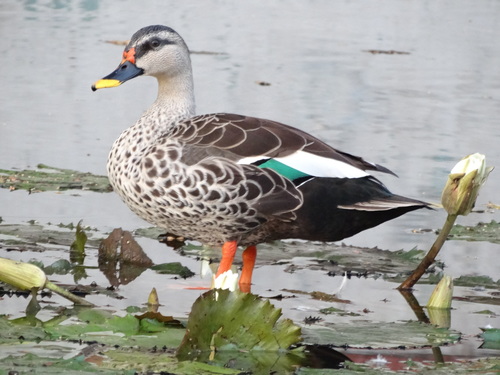
Anas poecilorhyncha J.R.Forster, 1781, the spot-billed duck, is a mallard-sized duck resident in South Asian freshwater wetlands.
This species of duck, Anas poecilorhyncha J.R.Forster, 1781, is roughly the same size as a mallard. It has a scaly patterned body and a green speculum bordered by white. When the bird is at rest, the white border stands out. For the nominate subspecies, the long neck, yellow-tipped bill, and orange-red spots at the base of the bill are distinctive. In flight, the species can be identified by the g...
View full details → 19
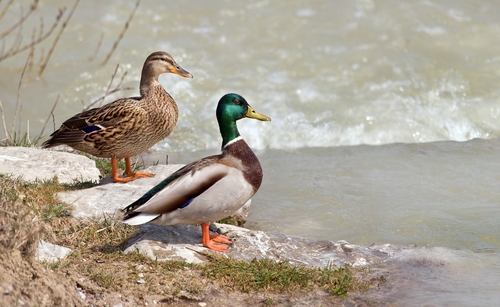
The mallard (Anas platyrhynchos) is a medium-sized dabbling duck with a broad global distribution, used by humans as food.
The mallard (Anas platyrhynchos Linnaeus, 1758) is a medium-sized waterfowl species, often slightly heavier than most other dabbling ducks. Adults measure 50–65 cm (20–26 in) in total length, with the body making up around two-thirds of this length; they have a wingspan of 81–98 cm (32–39 in), and weigh 0.7–1.6 kg (1.5–3.5 lb). Standard measurements are: wing chord 25.7 to 30.6 cm (10.1 to 12.0 in...
View full details → 20
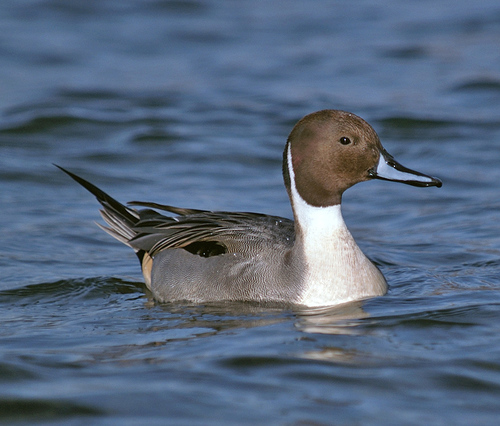
Anas acuta, the northern pintail, is a distinctively shaped dabbling duck with a wide Holarctic breeding range.
The northern pintail, scientific name Anas acuta Linnaeus, 1758, is a fairly large duck. Its wing chord measures 23.6–28.2 cm (9.3–11.1 in), and its total wingspan ranges from 80–95 cm (31–37 in). Males are 59–76 cm (23–30 in) long and weigh 450–1,360 g (0.99–3.00 lb), making them considerably larger than females. Females measure 51–64 cm (20–25 in) in length and weigh 454–1,135 g (1.001–2.502 lb)...
View full details → 21
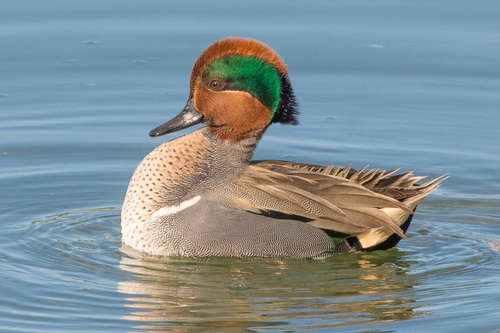
Anas crecca (Eurasian teal) is a small dabbling duck breeding across the Palearctic, classified as Least Concern.
Anas crecca Linnaeus, 1758, commonly called the Eurasian teal, is one of the smallest living dabbling ducks. Adults measure 34–43 cm (13–17 in) in total length; breeding males (drakes) average 360 g (13 oz) in weight, while females (hens) average 340 g (12 oz). Wing length ranges from 17.5–20.4 cm (6.9–8.0 in), for a total wingspan of 53–59 cm (21–23 in). The bill measures 3.2–4 cm (1.3–1.6 in) lo...
View full details → 22
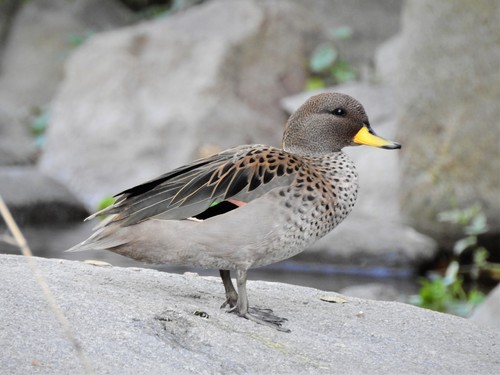
Anas flavirostris Vieillot, 1816 is a duck with a distinct yellow bill, similar to but smaller than the yellow-billed pintail.
Scientific name: Anas flavirostris Vieillot, 1816 Description The bill that gives this species its name is bright yellow, with a black tip and a black band running along the ridge of the culmen. Anas flavirostris is somewhat similar to the larger yellow-billed pintail, but differs in having a darker head, a shorter neck, and plain grayish sides.
View full details → 23
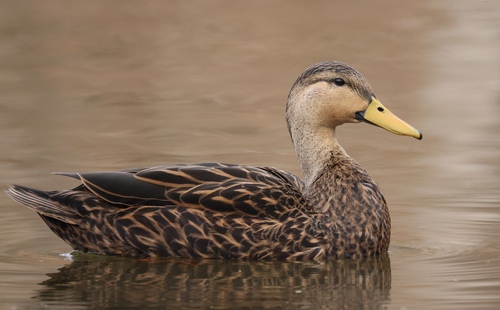
Anas fulvigula, the mottled duck, is a non-migratory North American dabbling duck with distinct plumage markings.
Adult mottled ducks (Anas fulvigula) measure 44 to 61 cm (17–24 in) in total length from head to tail. They have a dark body, lighter colored head and neck, orange legs, and dark eyes. Both sexes have a shiny green-blue speculum (wing patch) that does not have a white border, a trait that distinguishes it from the mallard's speculum. Males and females have similar overall appearance, but can be to...
View full details → 24
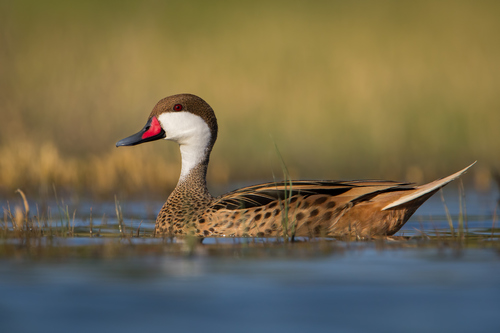
Anas bahamensis is a brown, white-cheeked pintail duck found across the Caribbean, South America, and the Galápagos Islands.
Like many species of southern ducks, male and female Anas bahamensis have similar appearances, though females are slightly smaller and have duller plumage. This species is primarily brown, with white cheeks and a grey bill that has a red base; juvenile individuals have a duller bill. The wing features an iridescent green speculum. Like other pintail ducks, it has a slender, sharply pointed tail, t...
View full details → 25
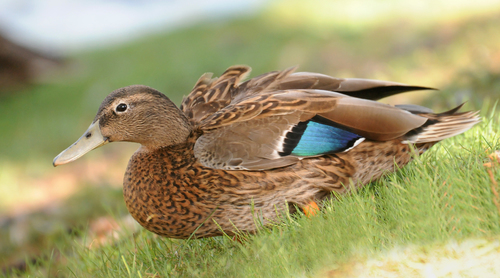
Anas wyvilliana, the Hawaiian duck or koloa, is a vulnerable endemic Anatidae species of Hawaii threatened by mallard hybridization.
The Hawaiian duck (scientific name Anas wyvilliana), also called koloa, is an Anatidae bird species endemic to the large islands of Hawaiʻi. Taxonomically, it is closely related to the mallard (Anas platyrhynchos). It differs from the mallard in being monomorphic (males and females have similar markings) and non-migratory. Like many Anas duck species, Hawaiian ducks can interbreed with mallards to...
View full details → 26
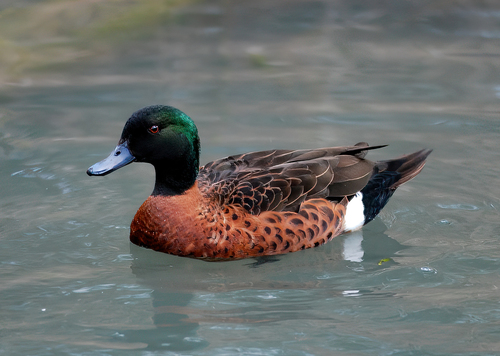
Anas castanea, the chestnut teal, is a duck native to Australia found in coastal wetlands.
The chestnut teal, scientifically named Anas castanea (Eyton, 1838), is darker and slightly larger than the grey teal. Males of the species have a distinct green head and a mottled brown body. Females have a brown head and a mottled brown body, and their appearance is almost identical to that of the female grey teal. Female chestnut teals produce a loud, penetrating "laughing" quack that is repeat...
View full details → 27
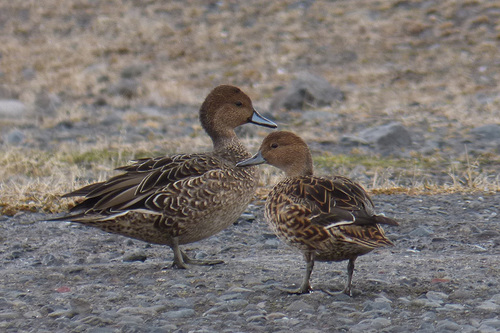
Anas eatoni, the Eaton's pintail, is a small duck that breeds and resides only on the southern Indian Ocean's Kerguelen and Crozet Islands.
The Eaton's pintail, scientifically named Anas eatoni (Sharpe, 1875), is a small duck. Adults measure 35-45 cm in length, with a wingspan of 65-70 cm. Males weigh 430-502 g, while females weigh 400-500 g. Adult males and females have similar overall brownish plumage with cinnamon underparts. The two sexes can be distinguished by two features: the speculum is green in males and brown in females, an...
View full details → 28
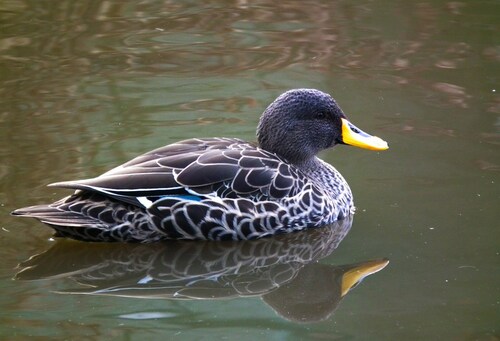
Anas undulata, the yellow-billed duck, is an African waterbird with two subspecies, the southern one declining from feral mallard interactions.
This species, commonly called the yellow-billed duck, is mallard-sized, mostly grey, with a darker head and a bright yellow bill. The undersides of its wings are whitish, and the upper surface of the wings features a green speculum bordered with white. Males and females have similar plumage, while juvenile individuals are slightly duller in color than adults. The north-eastern subspecies is darker...
View full details → 29
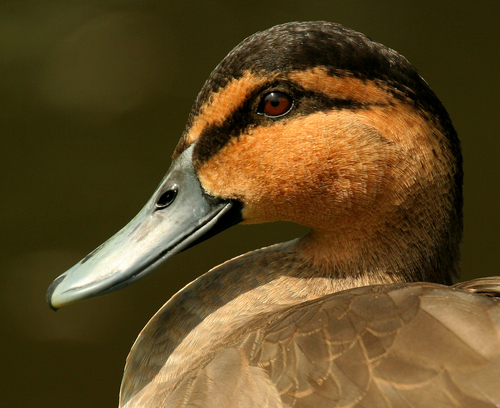
Anas luzonica, the Philippine duck, is a large wetland duck endemic to the Philippines with detailed known ecology and breeding patterns.
The Philippine duck (Anas luzonica Fraser, 1839) is a large, noticeable duck. It has a black crown, nape, and eye stripe, paired with a cinnamon-colored head and neck. The remainder of its body is greyish brown, with a bright green speculum. Its legs are greyish brown, and its bill is bluish-grey. Females are somewhat smaller than males, but are otherwise identical in appearance. This duck species...
View full details → 30
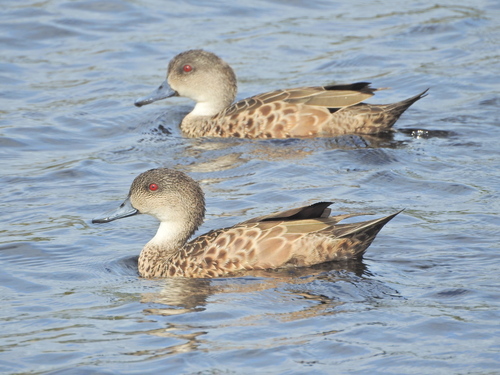
Anas gracilis (grey teal) is a small, gregarious nomadic duck found across Australasia, rated Least Concern on the IUCN Red List.
Anas gracilis (the grey teal, with Māori name tētē in New Zealand) can be identified by the crimson iris in its eyes, which is more prominent in adult males. It is a mottled brown duck with white and green flashes on its wings. Unlike the related chestnut teal—where males and females have strikingly different colouration—male and female grey teal share the same colouration. Grey teal have almost i...
View full details →Frequently Asked Questions
How many species are in the Anatidae family?
This guide features 30 representative species from the Anatidae family. The full family contains many more species worldwide — explore them all on iNature.
How to identify Anatidae species?
Anatidae species share common features in their flowers, leaves, and growth patterns. This guide provides photos and descriptions for 30 species. For instant field identification, use the iNature app.
Sources: GBIF, iNaturalist, Wikipedia · Disclaimer
Identify any species instantly — even offline
iNature uses on-device AI to identify plants, animals, fungi and more. No internet needed.
Download iNature — FreeStart Exploring Nature Today
Download iNature for free. 10 identifications on us. No account needed. No credit card required.
Download Free on App Store
