The Asteraceae (daisy family) is the largest family of flowering plants, with sunflowers, daisies, dandelions, and chrysanthemums among its members. Learn to identify its remarkable diversity.
🌼 Plant Families
Daisy Family (Asteraceae) — Species Identification Guide
1
Acamptopappus sphaerocephalus (Harv. & A.Gray) A.Gray
Acamptopappus sphaerocephalus (Harv. & A.Gray) A.Gray
🌿 Plantae Asteraceae
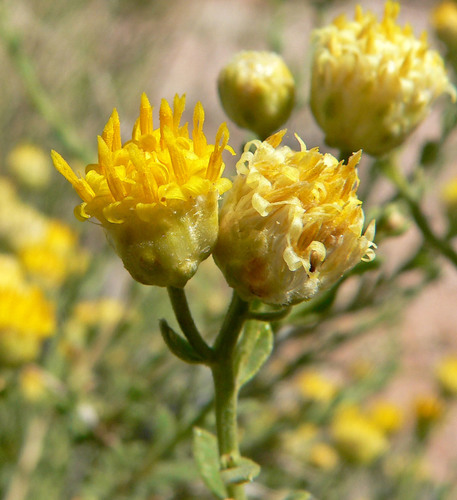
Rayless goldenhead (Acamptopappus sphaerocephalus) is an Asteraceae shrub native to southwestern United States deserts.
Acamptopappus sphaerocephalus, a species of flowering plant in the family Asteraceae, is commonly known by the common name rayless goldenhead. It is native to the southwestern United States, specifically found in southern California, southern Nevada, southern Utah, and Arizona. This species grows as a shrub or subshrub, producing an upright, branching stem covered in shreddy whitish or gray bark. ...
⚠️ Toxicity: Insufficient toxicity evidence; avoid direct contact and ingestion.
View full details →
2
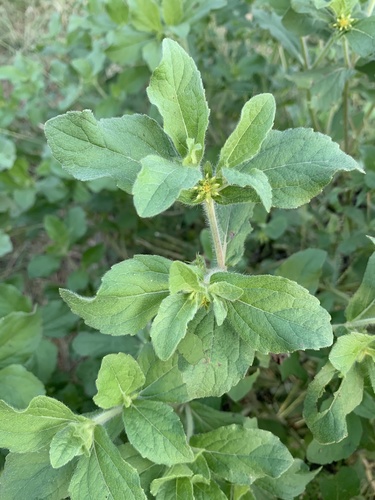
Acanthospermum hispidum is an annual Asteraceae native to Central and South America, a weed and used medicinally.
Scientific name: Acanthospermum hispidum DC. Introduction: Acanthospermum hispidum, commonly known as bristly starbur, goat's head, hispid starburr, or starbur, is an annual plant species belonging to the family Asteraceae. It is native to Central and South America. It has been naturalized in many scattered locations across Eurasia, Africa, North America, and Australia. This species is recorded a...
⚠️ Toxicity: Insufficient toxicity evidence; avoid direct contact and ingestion.
View full details →
3
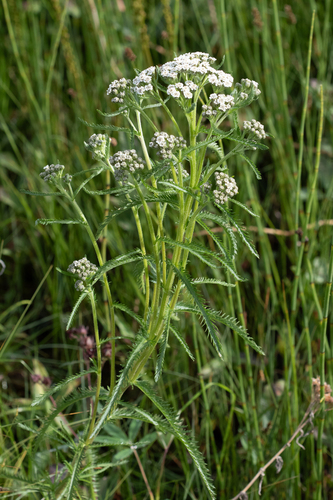
Achillea alpina L. is a perennial herb with a range that includes northwestern North America, listed as threatened in Minnesota since 1996.
Achillea alpina L. is a perennial herb that can grow up to 80 cm (2 feet) tall. Its flowers range from white to pale violet, and include both ray florets and disc florets. Its foliage is simply pinnatifid, with narrow, closely arranged segments. The currently recognized infraspecific taxa of this species are: Achillea alpina subsp. camtschatica (Heimerl) Kitam., Achillea alpina var. discoidea (Reg...
⚠️ Toxicity: Insufficient toxicity evidence; avoid direct contact and ingestion.
View full details →
4
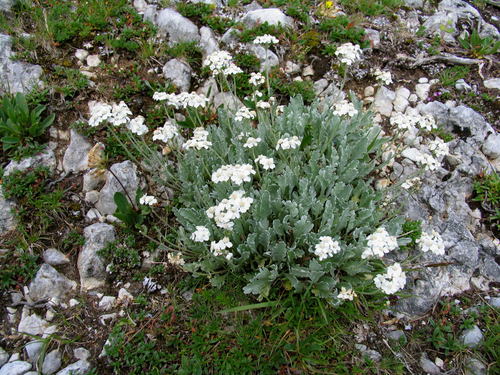
Achillea clavennae L. is a flowering plant native to mountain regions of Central and Southeastern Europe.
Achillea clavennae L. is an herbaceous plant that typically grows to a height of approximately 25 centimeters (9.8 inches). Its alternate leaves are covered in silvery silky hairs, are pinnatifid (divided into several lobes), and measure around 4 to 8 centimeters (1.6 to 3.1 inches) long. The plant blooms between June and August, producing numerous loose flower clusters. It is native to Central Eu...
⚠️ Toxicity: Insufficient toxicity evidence; avoid direct contact and ingestion.
View full details →
5
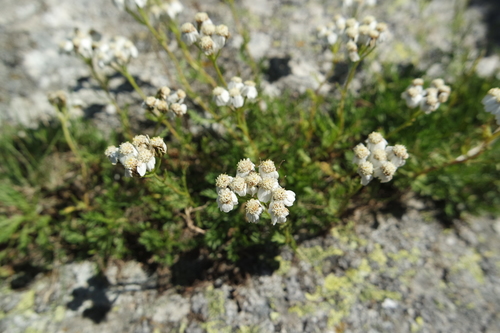
Achillea erba-rotta All. is a polymorphic alpine suffruticose chamaephyte found in mountain regions of Italy, France, Switzerland, and Austria.
Achillea erba-rotta All. is a polymorphic species, meaning its physical characteristics vary noticeably depending on the variety. It has a chamaephyte suffruticose biological form: its perennating buds grow close to the ground, the lower part of its stem is woody, and it produces annual herbaceous branches. Its primary root structure is a rhizome. Mature plants reach an average height of 12 to 18 ...
⚠️ Toxicity: Insufficient toxicity evidence; avoid direct contact and ingestion.
View full details →
6
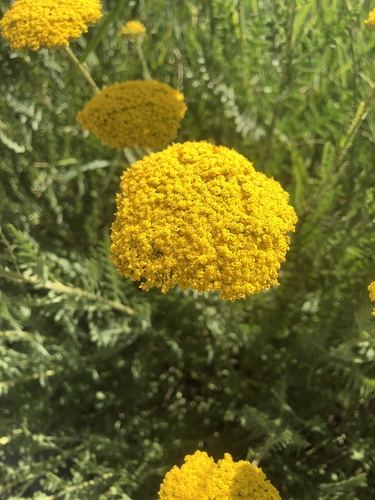
Achillea filipendulina Lam. is a herbaceous perennial flowering plant native to central and southwestern Asia, widely cultivated as an ornamental.
Achillea filipendulina Lam. is a herbaceous perennial plant. It grows to 120 centimetres (4 feet) in height, and produces fern-like foliage. Its leaves are linear, pinnate, lobed and serrated, with a hairy, rough texture. Flowers are arranged in large, complex corymbs or panicles, often reaching 13 cm (5 inches) across. The smaller component corymbs are arched or convex, which gives the entire com...
⚠️ Toxicity: Insufficient toxicity evidence; avoid direct contact and ingestion.
View full details →
7
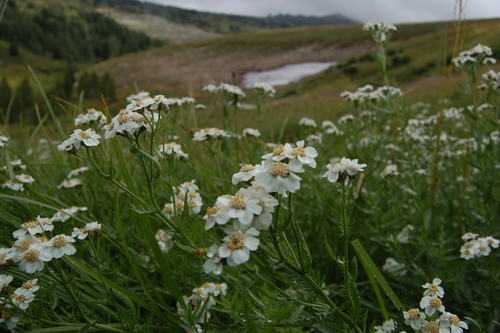
Achillea impatiens is a flowering plant in the Asteraceae family, native to parts of Eurasia.
Achillea impatiens L. is a flowering plant species that is part of the Asteraceae plant family. Its native range includes Central Russia, Mongolia, Kazakhstan, Northwestern China, and Romania.
⚠️ Toxicity: Insufficient toxicity evidence; avoid direct contact and ingestion.
View full details →
8
Achillea maritima (L.) Ehrend. & Y.P.Guo
Achillea maritima (L.) Ehrend. & Y.P.Guo
🌿 Plantae Asteraceae
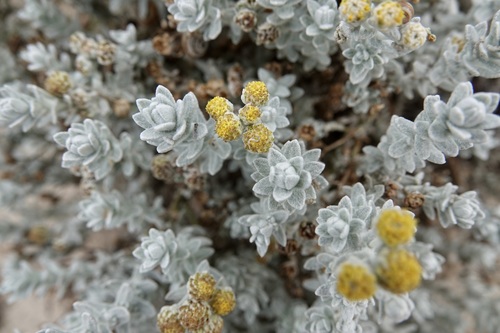
Otanthus maritimus (cotton weed) is the only species in the Otanthus genus, a Mediterranean dune-stabilizing perennial daisy.
Otanthus is a genus of flowering plants in the chamomile tribe (Anthemideae), which belongs to the daisy family (Asteraceae, also called Compositae). The only known species in this genus is Otanthus maritimus, commonly called the cotton weed plant (scientifically also classified as Achillea maritima (L.) Ehrend. & Y.P.Guo). Otanthus maritimus is a small, pioneering perennial plant. A thick white ...
⚠️ Toxicity: Insufficient toxicity evidence; avoid direct contact and ingestion.
View full details →
9
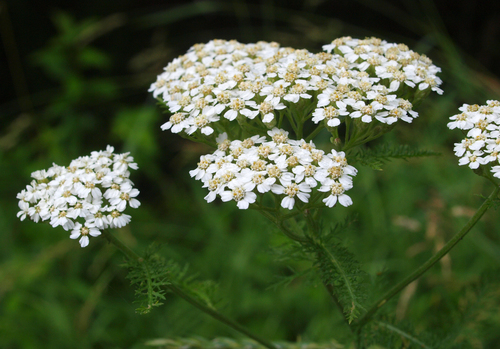
Achillea millefolium, common yarrow, is a widespread herbaceous perennial with cultivation, traditional, and ecological uses.
Achillea millefolium L. is an erect, herbaceous perennial plant that grows one to several stems between 0.2 and 1 metre (8 to 40 inches) tall, with a spreading, rhizomatous growth form. Its leaves are cauline and more or less clasping, arranged spirally and evenly along the stem, with the largest, most petiolate leaves located toward the base. Leaves are 5 to 20 centimetres (2 to 8 inches) long, f...
⚠️ Toxicity: Toxicity risk detected (mainly via contact and ingestion); avoid direct contact and ingestion.
View full details →
10
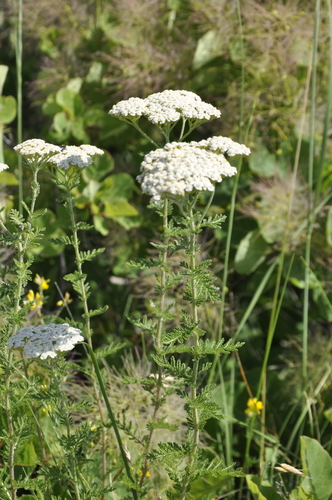
Achillea nobilis L. is a hairy, herbaceous flowering plant native to Eurasia, widely cultivated and naturalized beyond its native range.
This species, Achillea nobilis L., has medium green foliage that forms a low-growing clump in early spring. In late spring, it produces flowering stems that can grow up to 75 cm (30 in) tall. Each stem ends in flat, umbel-shaped flower clusters. Both the foliage and stems are covered in soft hairs, and its flowers are creamy-whitish or yellow. It is native to Eurasia, and is widespread across most...
⚠️ Toxicity: Insufficient toxicity evidence; avoid direct contact and ingestion.
View full details →
11
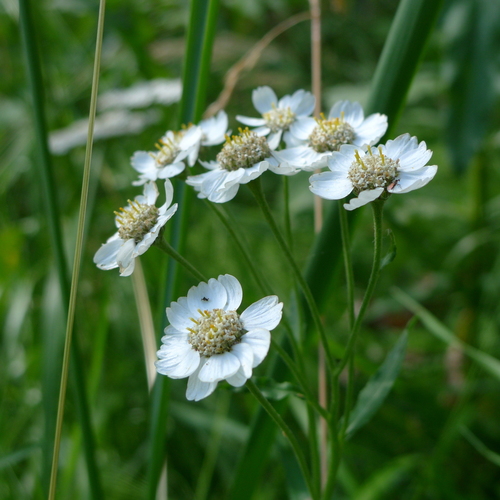
Achillea ptarmica, or sneezewort, is a flowering plant native to Europe and western Asia with edible leaves and herbal uses.
Achillea ptarmica L., commonly called sneezewort, produces loose clusters of showy white composite flower heads that bloom between June and August. Its dark green leaves have finely toothed margins. Like many other plants, sneezewort follows the Fibonacci sequence in its growth pattern. This species is native to Europe and western Asia, and is widespread across most of Europe. It has also become n...
⚠️ Toxicity: Insufficient toxicity evidence; avoid direct contact and ingestion.
View full details →
12
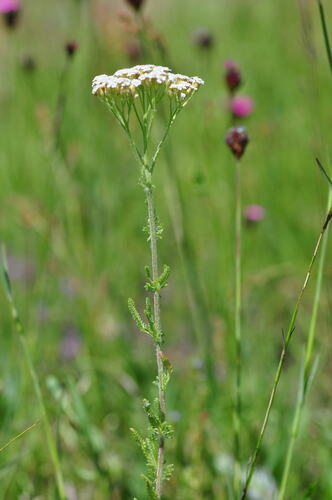
Achillea setacea Waldst. & Kit. is a species in the Achillea genus of popular garden flowering plants native to Eurasia and North America.
Achillea setacea Waldst. & Kit. is a species of the Achillea genus. Plants in this genus typically have frilly, hairy, aromatic leaves. They produce large, flat clusters of small flowers at the top of the stem. Flowers can be white, yellow, orange, pink or red. These flowers are generally visited by many insects, giving the genus a generalised pollination system. The genus Achillea is primarily na...
⚠️ Toxicity: Insufficient toxicity evidence; avoid direct contact and ingestion.
View full details →
13
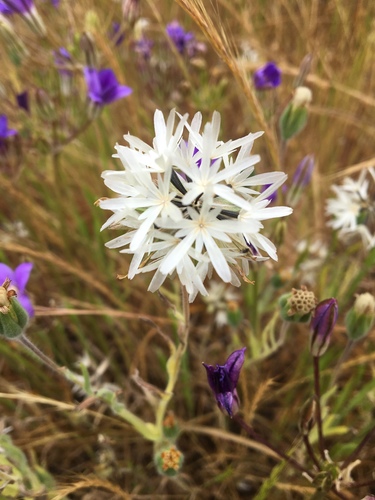
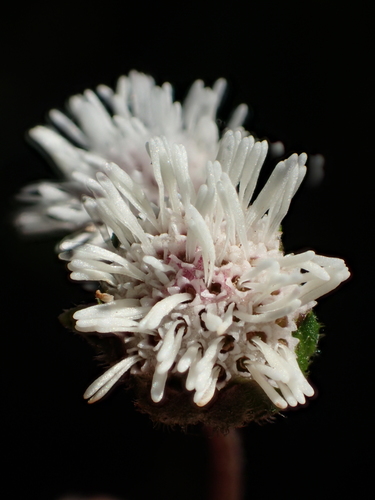
Achyrachaena mollis is a small flowering plant with wind-dispersed fruits featuring prominent showy white scales.
Achyrachaena mollis is a flowering plant that grows to roughly one foot tall on a strong, straight stem. A large, rounded bud forms at the top of the stem, which opens into a spherical cluster of flowers. Its actual flowers are small, yellow, and nearly hidden behind the plant's prominent fruits. These fruits extend shiny bright white scales that look like long rectangular flower petals. The silky...
⚠️ Toxicity: Insufficient toxicity evidence; avoid direct contact and ingestion.
View full details →
14
Achyranthemum paniculatum (L.) N.G.Bergh
Achyranthemum paniculatum (L.) N.G.Bergh
🌿 Plantae Asteraceae
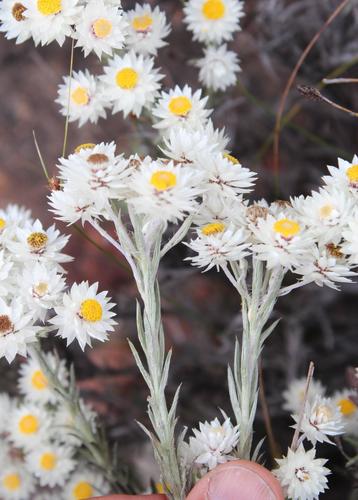
Achyranthemum paniculatum is a low subshrub 0.2 - 1.2 m high with alternate leaves, compact pseudo - corymbs of capitula, yellow florets, dark reddish - brown cypselae, and flowers mainly from September - December.
Achyranthemum paniculatum is a low, sparsely branched subshrub. It usually grows 0.2 – 0.7 m high, but can reach up to 1.2 m. The lower part of the plant is woody. Branching is mostly near the base. The stems are simple or sparsely branched above and are covered with grey felt. The leaves are alternate, ranging from laxly to densely imbricate, and are sessile. The basal part of the leaves is appre...
View full details → 15
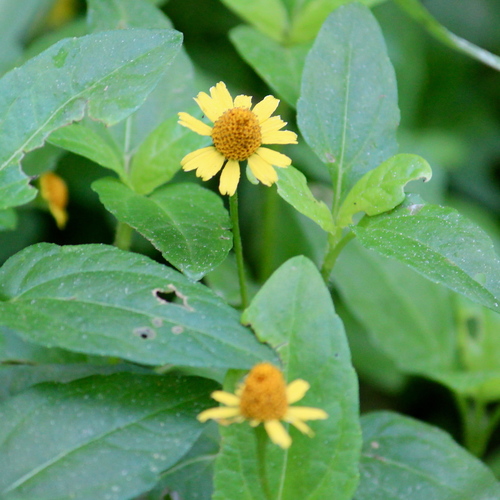
Acmella repens is a North American flowering Asteraceae species native to south-central and southeastern US, with extra populations in northeastern Mexico.
Acmella repens (Walter) Richard is a North American flowering plant species that belongs to the Asteraceae family. This species is native to the southeastern and south-central United States, where it grows mainly in the coastal plain stretching from Texas to North Carolina, and in the lower Mississippi Valley ranging from Missouri to Louisiana. Extra populations of Acmella repens can also be found...
⚠️ Toxicity: Insufficient toxicity evidence; avoid direct contact and ingestion.
View full details →
16
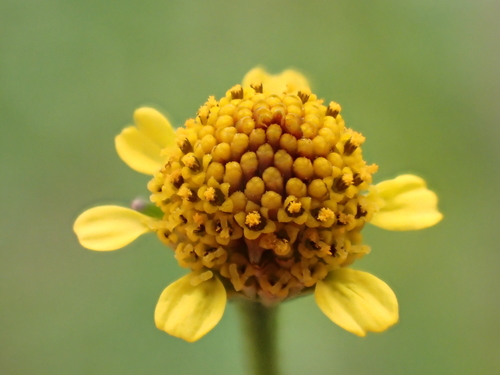
Acmella uliginosa (marsh para cress) is a flowering Asteraceae herb native to South America, naturalized in parts of Asia and Africa.
Acmella uliginosa, commonly known as marsh para cress, is a species of flowering herb that belongs to the plant family Asteraceae. This species is native to South America, where it occurs in regions including Brazil, Bolivia, and Venezuela, among others. It has also become naturalized in parts of Asia, such as China, the Philippines, and India, as well as in parts of Africa.
⚠️ Toxicity: Insufficient toxicity evidence; avoid direct contact and ingestion.
View full details →
17
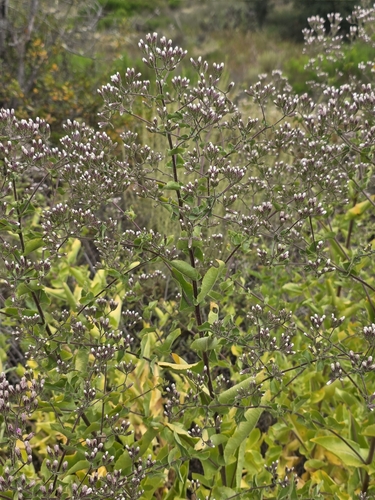
Acourtia microcephala, common name sacapellote, is a perennial flowering aster native to western North America, traditionally used as a laxative.
Acourtia microcephala DC. is a species of flowering plant in the Asteraceae family, commonly known as sacapellote. It is native to southern California and Baja California, where it grows in woodland and chaparral, particularly in the coastal mountain ranges. This plant is a bushy perennial herb that grows several erect stems from a woody caudex, reaching a maximum height of around 1.5 meters. Stem...
⚠️ Toxicity: Insufficient toxicity evidence; avoid direct contact and ingestion.
View full details →
18
Acourtia nana (A.Gray) Reveal & R.M.King
Acourtia nana (A.Gray) Reveal & R.M.King
🌿 Plantae Asteraceae
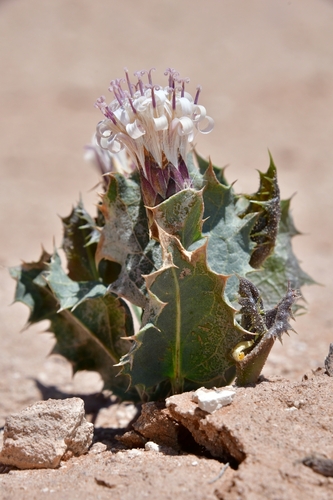
Acourtia nana, desert holly, is a rare-flowered North American Asteraceae perennial from southwestern US and northern Mexican deserts.
Acourtia nana, commonly known as desert holly or dwarf desertpeony, is a North American perennial plant species belonging to the family Asteraceae. It occurs in the Sonoran and Chihuahuan Desert regions, which span the southwestern United States including Arizona, New Mexico, and Texas, and northern Mexico including Chihuahua, Coahuila, Nuevo León, San Luis Potosí, Sonora, and Zacatecas. Its flowe...
⚠️ Toxicity: Insufficient toxicity evidence; avoid direct contact and ingestion.
View full details →
19
Acourtia runcinata (Lag. ex D.Don) B.L.Turner
Acourtia runcinata (Lag. ex D.Don) B.L.Turner
🌿 Plantae Asteraceae
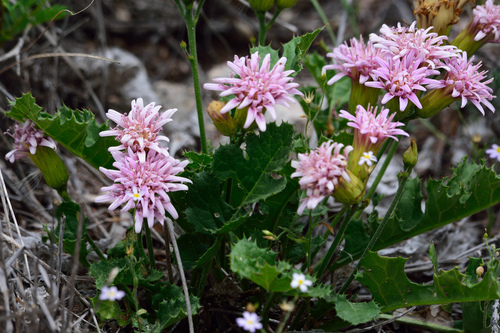
Acourtia runcinata is a North American Asteraceae species native to northern Mexico and Texas, U.S.
Acourtia runcinata, commonly known as featherleaf desertpeony or desert paeonia, is a plant species in the Asteraceae family, native to North America. Its native range includes northern Mexican states: Chihuahua, Coahuila, Hidalgo, Nuevo León, San Luis Potosí, and Tamaulipas, as well as the U.S. state of Texas.
⚠️ Toxicity: Insufficient toxicity evidence; avoid direct contact and ingestion.
View full details →
20
Acourtia wrightii (A.Gray) Reveal & R.M.King
Acourtia wrightii (A.Gray) Reveal & R.M.King
🌿 Plantae Asteraceae
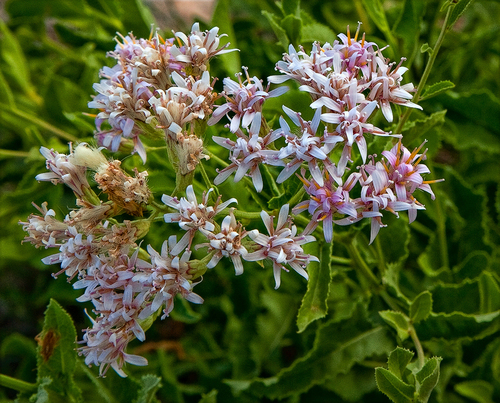
Acourtia wrightii (brownfoot) is a North American Asteraceae species with recorded Indigenous medicinal uses.
Acourtia wrightii, commonly known as brownfoot, is a North American plant species belonging to the family Asteraceae. It is native to the southwestern United States, specifically Texas, New Mexico, Arizona, southern Utah, and southern Nevada, as well as northern Mexico, including Chihuahua, Coahuila, Durango, Nuevo León, San Luis Potosí, Sonora, and Zacateca. This plant has documented traditional ...
⚠️ Toxicity: Insufficient toxicity evidence; avoid direct contact and ingestion.
View full details →
21
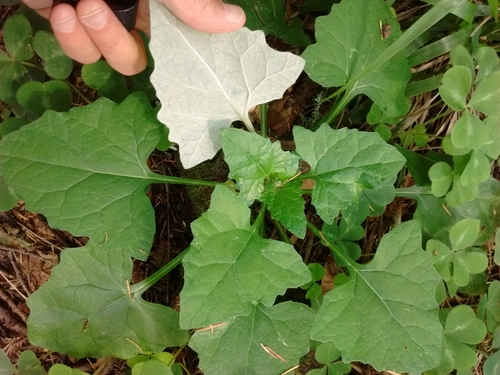
Adenocaulon bicolor, or American trailplant, is a bicolored-leaf woodland plant with sticky seeds dispersed by animals and people.
Adenocaulon bicolor Hook., commonly known as American trailplant, has a thin, glandular, erect, branching stem. Triangular leaves grow only at the plant's base; these basal leaves are green on the upper surface, while their lower surfaces are covered in dense white hairs, which gives the species its name 'bicolor'. Each leaf can grow up to 15 cm (5.9 in) wide. Leaf edges are coarsely toothed, and ...
⚠️ Toxicity: Insufficient toxicity evidence; avoid direct contact and ingestion.
View full details →
22
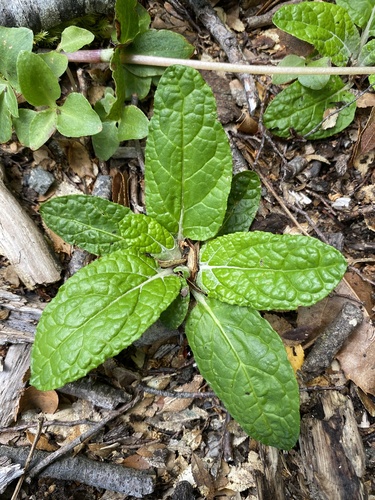
Adenocaulon chilense is a perennial herbaceous flowering plant in Asteraceae native to southern South America.
Adenocaulon chilense Less. is a species of flowering plant that belongs to the Asteraceae family. Its common English name is straightflowered trailplant. This plant is native to southern South America. It is a perennial herbaceous plant, and it produces achenes as its fruit.
⚠️ Toxicity: Insufficient toxicity evidence; avoid direct contact and ingestion.
View full details →
23
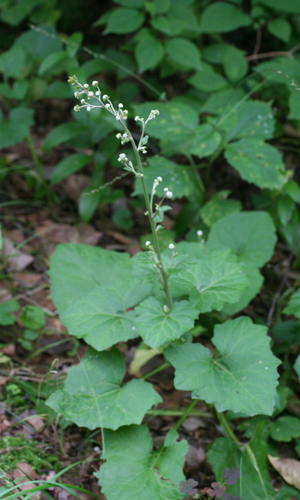
Adenocaulon himalaicum Edgew. is a monoecious herb native to East and South Asia that is invasive in Russia.
Adenocaulon himalaicum Edgew. has an erect stem that typically grows 30 to 100 centimeters tall. This species produces both basal leaves (growing at the base of the plant) and cauline leaves (growing along the stem); all basal leaves wither before the plant flowers. The leaves are broad, dark green, and have irregularly toothed margins, though margins are sometimes entirely smooth without teeth. I...
⚠️ Toxicity: Insufficient toxicity evidence; avoid direct contact and ingestion.
View full details →
24
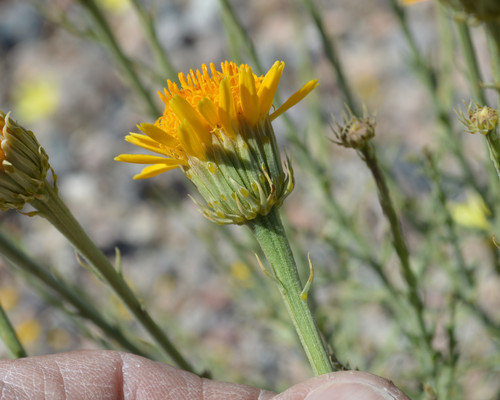
Adenophyllum cooperi is a flowering plant that grows 35–60 cm tall, with obovate leaves and yellow to orange-red flowers.
The scientific name of this plant is Adenophyllum cooperi (A.Gray) Strother. Adenophyllum cooperi grows to between 35 and 60 centimeters tall. Its leaves measure 6 to 20 centimeters long, are obovate in shape, and have a lobed or coarsely toothed margin. This plant produces flowers that range in color from yellow to orange-red.
⚠️ Toxicity: Insufficient toxicity evidence; avoid direct contact and ingestion.
View full details →
25
Adenophyllum porophylloides (A.Gray) Strother
Adenophyllum porophylloides (A.Gray) Strother
🌿 Plantae Asteraceae
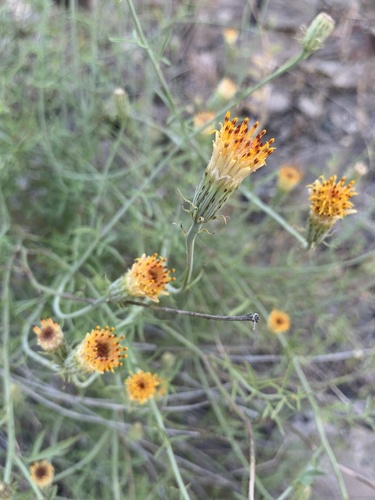
Adenophyllum porophylloides is a desert aromatic subshrub in the daisy family native to the southwestern US and northwestern Mexico.
Adenophyllum porophylloides (A.Gray) Strother is a species of flowering plant in the Asteraceae family. It goes by the common names San Felipe dogweed and San Felipe dyssodia. This plant is native to the Sonoran and Mojave Deserts. Its range covers the southwestern United States, including Arizona, California, and Nevada, as well as northwestern Mexico, including Sonora, Baja California, and Baja ...
⚠️ Toxicity: Insufficient toxicity evidence; avoid direct contact and ingestion.
View full details →
26
The lectotype of Adenostemma lavenia (L.) Kuntze, as designated by Panigrahi in 1976, is the icon "Eupatoriophalacron Scrophulariae aquaticae foliis oppositis" in Burman's work from 1737.
Lectotype (Panigrahi in Kew Bull. 30: 647. 1976): The icon titled "Eupatoriophalacron Scrophulariae aquaticae foliis oppositis" in Burman, Thes. Zeylan.: 95, t. 42. 1737 (refer to p. 113; above right).
View full details → 27
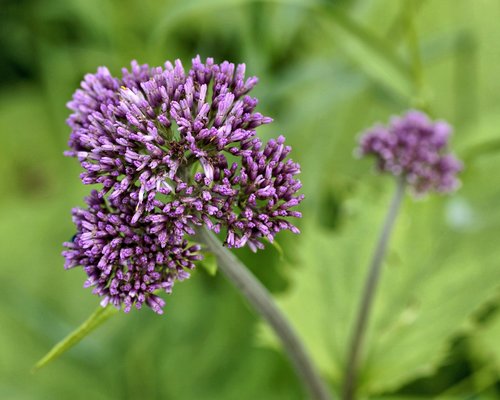
Adenostyles alliariae is a herbaceous flowering plant native to mountainous southern Europe.
Adenostyles alliariae (Gouan) A.Kern. can reach a height of 40–70 centimetres (16–28 in). Its inflorescence is made up of dense corymbs, which are carried on hairy peduncles. The small flower heads usually contain 3 to 4 flowers each. The receptacle, the structure that supports the individual flowers, is naked and hairless. The flowers are tubular and hermaphroditic, with a cylindrical pink-violet...
⚠️ Toxicity: Insufficient toxicity evidence; avoid direct contact and ingestion.
View full details →
28
Adenostyles alpina (L.) Bluff & Fingerh.
Adenostyles alpina (L.) Bluff & Fingerh.
🌿 Plantae Asteraceae
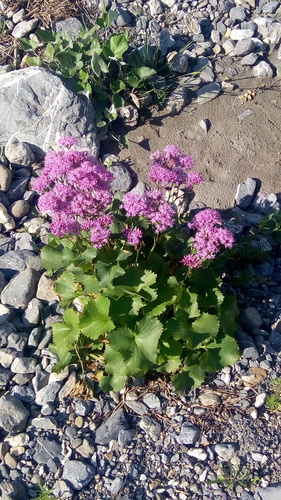
Adenostyles alpina is a 60 cm herb native to southern European mountains that flowers June to August.
Adenostyles alpina (L.) Bluff & Fingerh. typically reaches a height of around 60 centimeters (24 inches). Its inflorescence is made up of dense corymbs, which are carried on hairy peduncles. The small flower heads usually contain 3 to 4 individual flowers. The receptacle, the structure that holds the individual flowers, is naked and hairless. All flowers are tubular and hermaphroditic, with a cyli...
⚠️ Toxicity: Insufficient toxicity evidence; avoid direct contact and ingestion.
View full details →
29
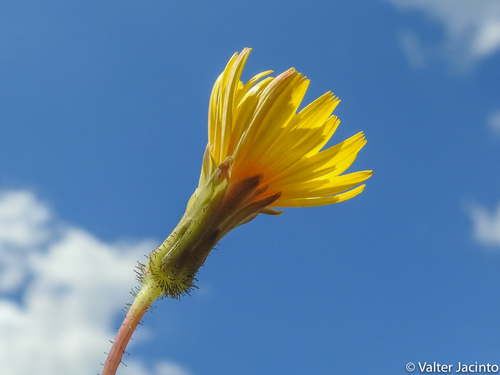
Sonchus bulbosus (tuberous hawk's-beard) is an accepted tuberous geophyte flowering plant in Asteraceae with three recognized subspecies native to Eurasia and North Africa.
Sonchus bulbosus, commonly known as the tuberous hawk's-beard, is a flowering plant species belonging to the family Asteraceae. It is a tuberous geophyte native to Mediterranean basin countries in southern Europe, Western Asia, and North Africa, as well as to Terceira Island in the Azores and Ireland. Three subspecies of Sonchus bulbosus are currently accepted. Sonchus bulbosus subsp. bulbosus, wi...
⚠️ Toxicity: Insufficient toxicity evidence; avoid direct contact and ingestion.
View full details →
30
Afroaster serrulatus (Harv.) J.C.Manning & Goldblatt
Afroaster serrulatus (Harv.) J.C.Manning & Goldblatt
🌿 Plantae Asteraceae
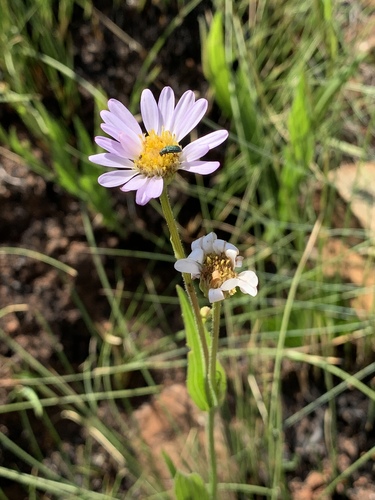
Afroaster serrulatus is an Asteraceae plant species native to multiple countries in southern Africa.
Afroaster serrulatus is a plant species belonging to the family Asteraceae. It is native to the southern African countries of South Africa, Mozambique, Zambia, Zimbabwe, Malawi, and Eswatini.
⚠️ Toxicity: Insufficient toxicity evidence; avoid direct contact and ingestion.
View full details →
Frequently Asked Questions
How many species are in the Asteraceae family?
This guide features 30 representative species from the Asteraceae family. The full family contains many more species worldwide — explore them all on iNature.
How to identify Asteraceae species?
Asteraceae species share common features in their flowers, leaves, and growth patterns. This guide provides photos and descriptions for 30 species. For instant field identification, use the iNature app.
Sources: GBIF, iNaturalist, Wikipedia · Disclaimer
Identify any species instantly — even offline
iNature uses on-device AI to identify plants, animals, fungi and more. No internet needed.
Download iNature — FreeStart Exploring Nature Today
Download iNature for free. 10 identifications on us. No account needed. No credit card required.
Download Free on App Store
