The Ranunculaceae (buttercup family) is a diverse group of mostly herbaceous plants that includes buttercups, anemones, clematis, delphiniums, and hellebores. Many species contain toxic alkaloids that protect them from herbivores. This guide covers the most commonly encountered members of this ecologically important family.
🌱 Plant Families
Buttercup Family (Ranunculaceae): Species & Photos
1
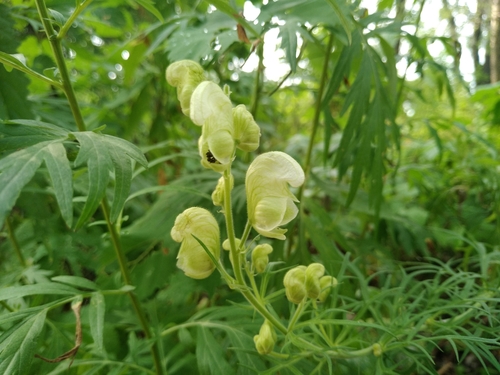
Aconitum anthora L. is a yellow-flowered Aconitum species native mainly to European mountains and northern Asia, with a history of medicinal use.
Aconitum anthora L., commonly called anthora, yellow monkshood, or healing wolfsbane, is a yellow-flowering plant species in the genus Aconitum of the family Ranunculaceae. Its native range is widespread, and is concentrated mostly in European mountain ranges including the Alps and the Carpathians, as well as in the northern parts of Asia. Like all species in the Aconitum genus, Aconitum anthora d...
⚠️ Toxicity: Toxicity risk detected (mainly via contact and ingestion); avoid direct contact and ingestion.
View full details →
2
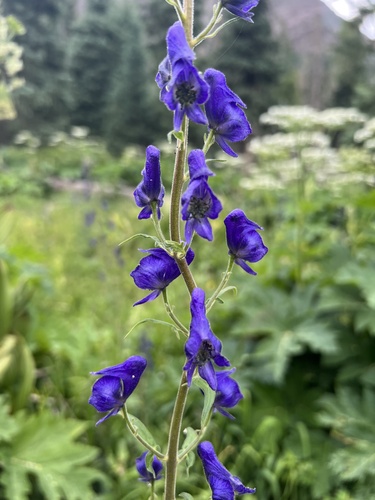
Aconitum columbianum Nutt. is a poisonous herbaceous perennial monkshood native to western North America, sometimes grown as a garden plant.
Aconitum columbianum Nutt. is a herbaceous perennial plant that grows from a large, spindle-shaped tuber-like root. Its stems reach 20 to 300 centimeters in height, and are either erect or trailing. Stem-attached leaves usually have 3–5 deep divisions extending almost to the leaf base, and can have as many as 7 divisions. Approximately 2 millimeters of leaf tissue remains between the point where t...
⚠️ Toxicity: Toxicity risk detected (mainly via ingestion); avoid direct contact and ingestion.
View full details →
3
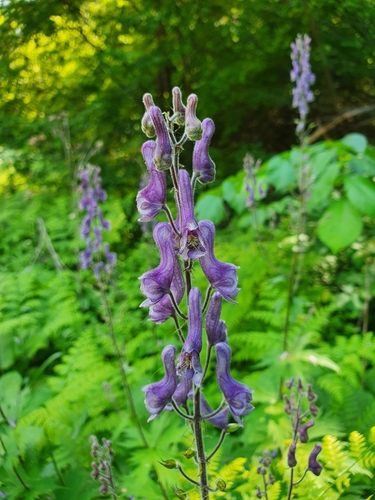
Aconitum lycoctonum (northern wolf's-bane) is a poisonous, ornamental herbaceous perennial flowering plant native to Europe and northern Asia.
Aconitum lycoctonum, commonly called wolf's-bane or northern wolf's-bane, is a species of flowering plant in the genus Aconitum of the family Ranunculaceae. It is native to most of Europe and northern Asia, growing from lowlands to the subalpine zone, primarily in forests and other shaded habitats. Alongside A. napellus, A. lycoctonum is one of the most common European species in the Aconitum genu...
⚠️ Toxicity: Toxicity risk detected (mainly via ingestion); avoid direct contact and ingestion.
View full details →
4
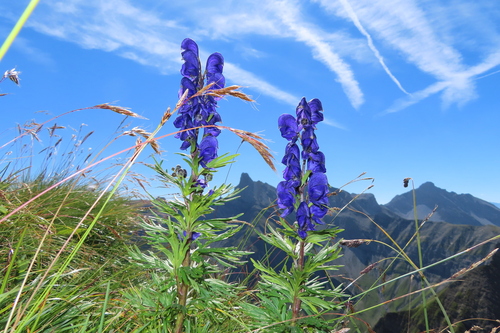
Aconitum napellus (monkshood/wolfsbane) is an extremely toxic European perennial flowering plant grown ornamentally.
Aconitum napellus L., commonly known as monkshood, aconite, Venus' chariot, or wolfsbane, is a highly toxic flowering plant species in the genus Aconitum of the family Ranunculaceae. It is native and endemic to western and central Europe. This herbaceous perennial grows to 1 m (3 ft 3 in) tall, with hairless stems and leaves. The leaves are rounded, with a diameter of 5–10 cm (2.0–3.9 in), and pal...
⚠️ Toxicity: Toxicity risk detected (mainly via contact and ingestion); avoid direct contact and ingestion.
View full details →
5
Aconitum septentrionale Koelle (Aconitum lycoctonum, wolf's-bane) is a poisonous herbaceous perennial flowering plant native to Europe and northern Asia, grown ornamentally.
Aconitum septentrionale Koelle, also widely known as Aconitum lycoctonum (common names wolf's-bane or northern wolf's-bane), is a species of flowering plant in the genus Aconitum, family Ranunculaceae. It is native to much of Europe and northern Asia, where it grows from lowlands to the subalpine zone, mainly in forests and other shaded habitats. Alongside A. napellus, A. lycoctonum is one of the ...
⚠️ Toxicity: Toxicity risk detected (mainly via ingestion); avoid direct contact and ingestion.
View full details →
6

Aconitum tauricum is a poisonous perennial European alpine wildflower that blooms from August to October.
Aconitum tauricum is a perennial forb that grows from non-globose rhizomes. It is a tall, spindly plant with a growth habit that ranges from erect to scandent (vine-like climbing). Its leaves are divided, and faintly visible net-like veins appear on the underside of stem leaves. Flowering occurs primarily from August to October. The inflorescence is paniculate, and it may be simple or branched wit...
⚠️ Toxicity: Toxicity risk detected (mainly via ingestion); avoid direct contact and ingestion.
View full details →
7
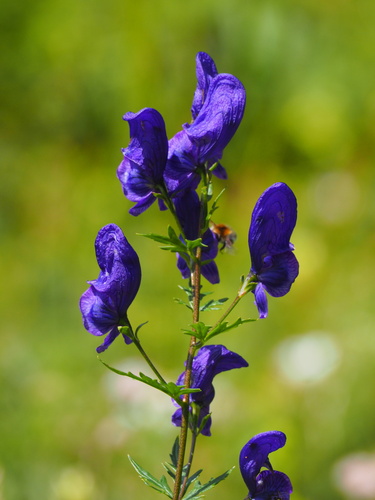
Aconitum variegatum L. is a flowering plant in the Ranunculaceae family native to parts of Europe.
Aconitum variegatum L. (commonly known as Aconitum variegatum) is a species of flowering plant. It is classified in the family Ranunculaceae. The native range of this species extends from Central and Southeastern Europe to Central Ukraine.
⚠️ Toxicity: Insufficient toxicity evidence; avoid direct contact and ingestion.
View full details →
8
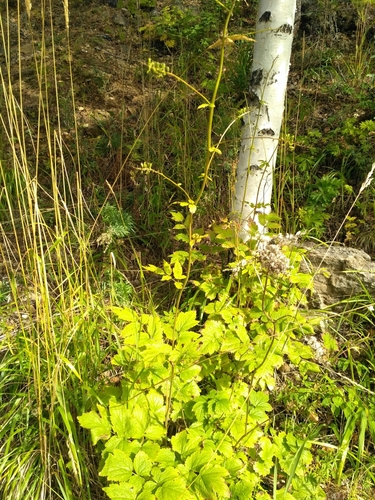
Actaea (Cimicifuga) has paniculate racemes and four - capsular fruits, and is also known as Thalictroides foetidissimum with Christophorianae appearance, as described in Amoen. acad. and Amm. ruth.
Actaea has paniculate racemes and four - capsular fruits. It is Cimicifuga, as described in Amoen. acad. 2, page 354. It is also referred to as Thalictroides foetidissimum, with the appearance of Christophorianae, as mentioned in Amm. ruth. 102.
View full details → 9
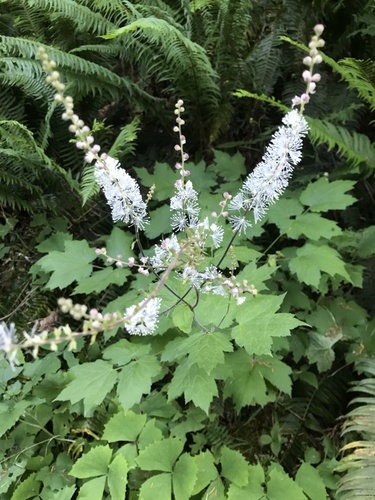
Actaea elata is a poisonous rhizomatous herbaceous perennial native to Pacific Northwest old-growth forests, listed as endangered in British Columbia.
Actaea elata (Nutt.) Prantl is a rhizomatous herbaceous perennial plant that grows to a maximum height of around 1.8 meters. Its entire structure is hairy, including some glandular hairs. Its leaves are composed of multiple lobed, toothed leaflets that are shaped like maple leaves. The plant’s inflorescence is a branching panicle that can reach up to 17 centimeters in length, holding many individu...
⚠️ Toxicity: Toxicity risk detected (mainly via ingestion); avoid direct contact and ingestion.
View full details →
10
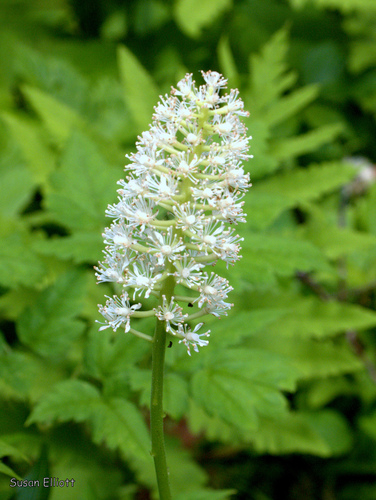
Actaea pachypoda, known as doll's eyes, is a herbaceous perennial plant grown as an ornamental for traditional and wildlife gardens.
Actaea pachypoda Elliott is a herbaceous perennial plant that reaches 46 to 76 centimeters (18 to 30 inches) or more in height. It bears toothed, bipinnate compound leaves that grow up to 40 centimeters (16 inches) long and 30 centimeters (12 inches) wide. In spring, it produces small white flowers arranged in a dense, roughly 10 centimeter (3.9 inch) long raceme. Its most notable feature is its f...
⚠️ Toxicity: Insufficient toxicity evidence; avoid direct contact and ingestion.
View full details →
11
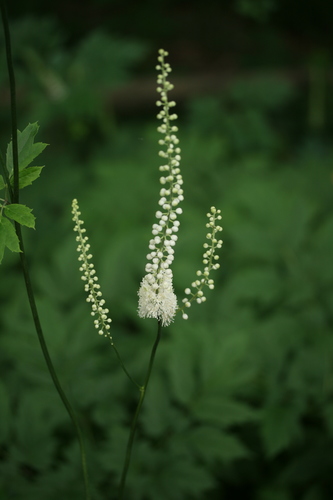
Actaea racemosa (black cohosh) is a herbaceous perennial, used herbal product with known safety concerns, and a popular garden ornamental.
Actaea racemosa L., commonly called black cohosh, is a glabrous herbaceous perennial plant. It grows large compound leaves from an underground rhizome, and reaches a height of 25–60 cm (9.8–23.6 in). Its basal leaves can grow up to 1 m (3 ft 3 in) long and broad, and are tripinnately compound, meaning they form repeated sets of three leaflets. The leaflets have coarsely serrated, or toothed, margi...
⚠️ Toxicity: Insufficient toxicity evidence; avoid direct contact and ingestion.
View full details →
12
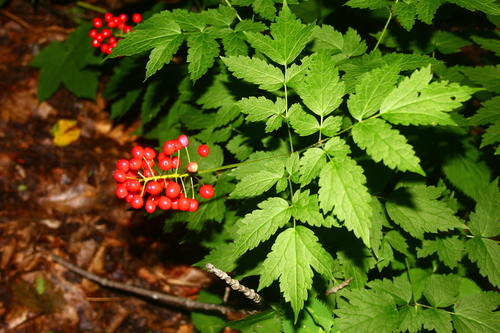
Actaea rubra (red baneberry) is a toxic North American perennial herb, sometimes grown in shade gardens.
Actaea rubra (Aiton) Willd. is a perennial herb that grows 40 to 80 cm (16 to 31 in) tall. Its leaves have coarsely toothed, deeply lobed margins, and the undersides of the foliage commonly have hairy veins. Each stem either bears three leaves that branch near the top, or holds three compound leaves and one upright flowering stalk that emerge from a single point on the main central stem. This plan...
⚠️ Toxicity: Toxicity risk detected (mainly via ingestion); avoid direct contact and ingestion.
View full details →
13
Actaea simplex (DC.) Wormsk. ex Fisch. & C.A.Mey.
Actaea simplex (DC.) Wormsk. ex Fisch. & C.A.Mey.
🌿 Plantae Ranunculaceae

Actaea simplex is a shade-tolerant flowering perennial, a popular garden plant with several Award of Garden Merit cultivars.
Actaea simplex (DC.) Wormsk. ex Fisch. & C.A.Mey. grows to 1.2 metres (3.9 ft) tall and 0.6 metres (2.0 ft) wide. It has trifoliate and pinnate basal leaves. In summer, it produces erect or arching stems that bear short terminal racemes of fragrant white blooms. This plant grows best in medium-moisture soils, and in conditions ranging from part shade to full shade. In the United States, it is suit...
⚠️ Toxicity: Insufficient toxicity evidence; avoid direct contact and ingestion.
View full details →
14
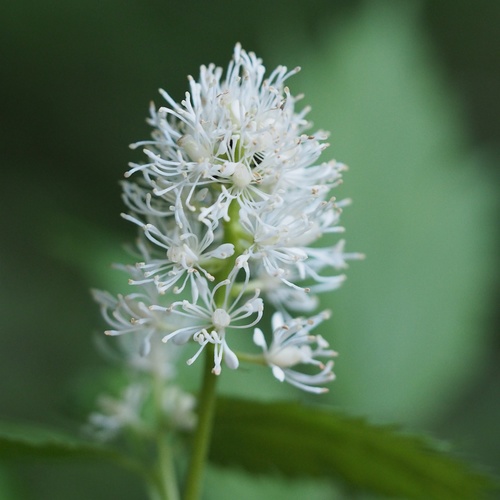
Actaea spicata L. is an herbaceous perennial ornamental plant that is toxic, irritant, and used in homeopathy for joint pain.
Actaea spicata L. is an herbaceous perennial plant that reaches up to 65 cm (2 ft 2 in) in height. Its basal leaves are large, and are either biternate or bipinnate. Its leaflets have more-or-less distinct toothed edges. This species produces white flowers with 3 to 6 petaloid sepals, arranged in an erect raceme. Its fruit is a berry that turns black when ripe, measuring 10–13 mm (0.4–0.5 in) acro...
⚠️ Toxicity: Toxicity risk detected (mainly via ingestion); avoid direct contact and ingestion.
View full details →
15
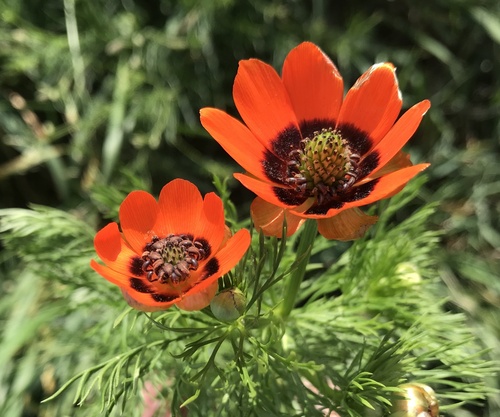
Adonis aestivalis L. is an annual herb that has been widely used for a variety of medicinal purposes, including cardiac treatments.
Adonis aestivalis L. is an annual herb that reaches heights of up to 0.1 meters, or roughly 3 feet. It has erect stems that bear simple, pinnately-dissected, alternate leaves, and a small flower grows at the end of each stem. Its flowers are radially symmetrical, ranging in color from orange to red, with a distinct black splotch at the base of each petal. The petals curl inward to create a cup-lik...
⚠️ Toxicity: Toxicity risk detected (mainly via ingestion); avoid direct contact and ingestion.
View full details →
16
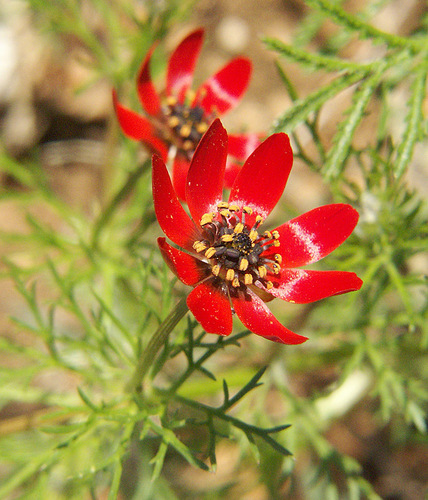
Adonis flammea Jacq. is a robust scarlet-flowered plant found in calcareous fields across parts of Europe and West Asia.
Adonis flammea Jacq. is a plant species that resembles Adonis annua, but is more robust and produces larger flowers. Its flowers measure 2–3 cm in diameter, and typically have narrow, oblong petals. The plant has dark scarlet sepals that are attached to its petals. It can be distinguished by its mottled black achenes, which have a rounded bulge just below the apex. It blooms during spring and summ...
⚠️ Toxicity: Insufficient toxicity evidence; avoid direct contact and ingestion.
View full details →
17
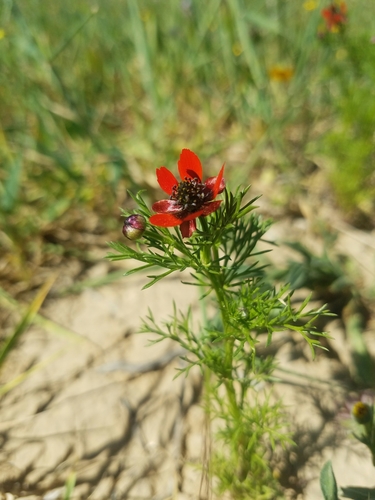
Adonis microcarpa DC. is an annual herb with red black-centered flowers, native to western Asia and southern Europe and naturalised in Australia.
Adonis microcarpa, whose scientific name is Adonis microcarpa DC., has two common names: small-fruit pheasant's-eye and red chamomile. It is an annual herbaceous plant. This species is native to western Asia and southern Europe, and it has become naturalised in Australia. It can grow up to 50 centimetres in height, bears finely divided foliage, and produces red flowers that have black centres.
⚠️ Toxicity: Insufficient toxicity evidence; avoid direct contact and ingestion.
View full details →
18
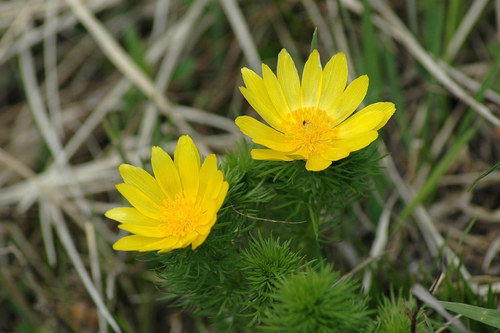
Adonis vernalis is a poisonous perennial flowering plant in the buttercup family with medicinal and ornamental uses native to Eurasia.
Adonis vernalis L., commonly called pheasant's eye, spring pheasant's eye, yellow pheasant's eye, and false hellebore, is a perennial flowering plant in the buttercup family Ranunculaceae. It grows in dry meadows and steppes across Eurasia, and more specifically can be found in open forests, forest clearings, dry meadows, and mesic steppe, mostly on calcareous soil. Isolated populations occur from...
⚠️ Toxicity: Toxicity risk detected (mainly via ingestion); avoid direct contact and ingestion.
View full details →
19
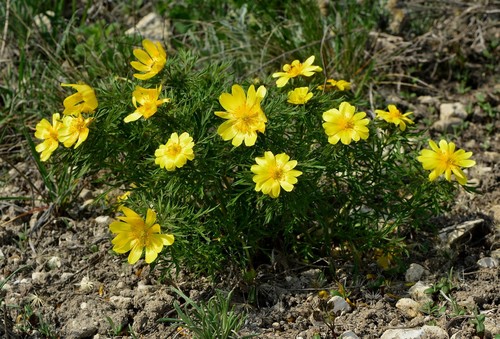
Adonis volgensis DC. is a yellow-flowered perennial plant distributed from southeastern Hungary to Central Asia.
Adonis volgensis DC. is a perennial flowering plant that produces yellow flowers. This species ranges from southeastern Hungary, through Romania, and eastward to the southern portion of the Western Siberian Plain and Central Asia.
⚠️ Toxicity: Insufficient toxicity evidence; avoid direct contact and ingestion.
View full details →
20
Anemonastrum canadense (L.) Mosyakin
Anemonastrum canadense (L.) Mosyakin
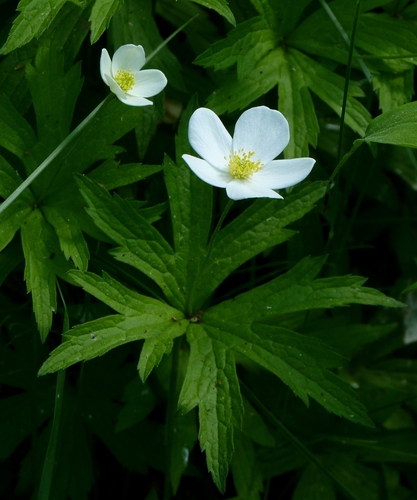
Anemonastrum canadense (Canada anemone) is a North American native flowering plant with medicinal uses and probable irritating toxins.
Anemonastrum canadense, commonly called Canada anemone, grows from ascending caudices attached to long, thin rhizomes. Its leafy shoots reach 20–80 cm (8–31 inches) in height. Basal leaves have deeply divided, toothed blades and sit on 8–22 cm (3+1⁄4–8+3⁄4 inch) petioles; leaf blades measure 4–10 cm (1+1⁄2–4 inches) by 5–15 cm (2–6 inches). Flowers bloom from late spring to summer on stems rising ...
⚠️ Toxicity: Toxicity risk detected (mainly via ingestion); avoid direct contact and ingestion.
View full details →
21
Anemonastrum deltoideum (Douglas) Mosyakin
Anemonastrum deltoideum (Douglas) Mosyakin
🌿 Plantae Ranunculaceae
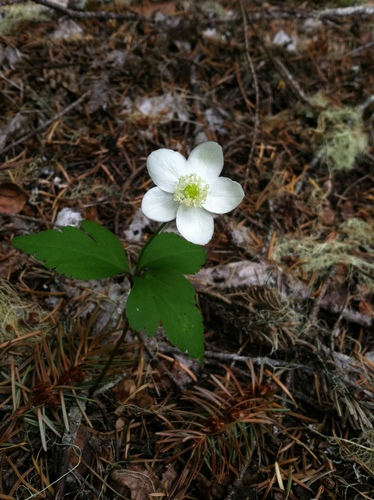
Anemonastrum deltoideum, the Columbian windflower, is a white-flowered perennial herb native to west US coastal forests.
Anemonastrum deltoideum (Douglas) Mosyakin, commonly called Columbian windflower and western white anemone, is a flowering plant species belonging to the buttercup family Ranunculaceae. It is native to forest habitats along the west coast of the United States. This species is a rhizomatous perennial herb that reaches 10 to 30 centimeters in height. It typically produces a single basal leaf, divide...
⚠️ Toxicity: Insufficient toxicity evidence; avoid direct contact and ingestion.
View full details →
22
Anemonastrum narcissiflorum (L.) Holub
Anemonastrum narcissiflorum (L.) Holub
🌿 Plantae Ranunculaceae
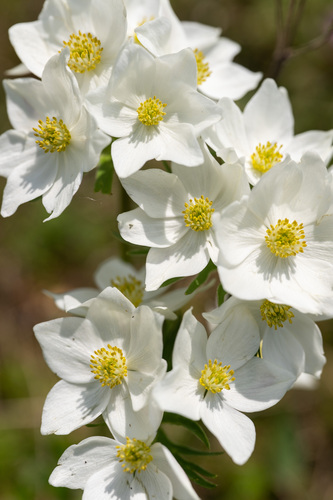
Anemonastrum narcissiflorum is a perennial flowering plant native to northwestern North America and Eurasia.
Anemonastrum narcissiflorum (L.) Holub is a perennial plant that grows between 7 and 60 cm (2+3⁄4 to 23+1⁄2 inches) tall from a woody-like perennial base called a caudex. Its flowering season runs from spring to mid summer, and often continues into late summer. This species produces 3 to 10 basal leaves that are ternate, meaning they are divided into three leaflets. The leaves range in shape from ...
⚠️ Toxicity: Insufficient toxicity evidence; avoid direct contact and ingestion.
View full details →
23
Anemonastrum richardsonii (Hook.) Mosyakin
Anemonastrum richardsonii (Hook.) Mosyakin
🌿 Plantae Ranunculaceae
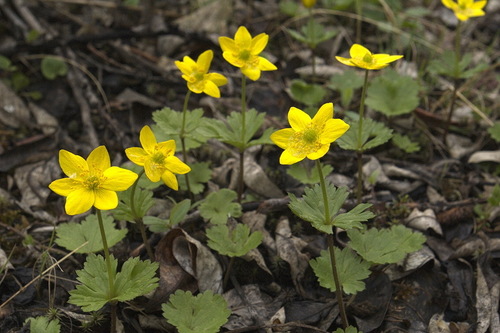
Anemonastrum richardsonii, or yellow thimbleweed, is a subarctic flowering plant with traditional herbal uses and studied bioactive compounds.
Anemonastrum richardsonii, commonly called yellow thimbleweed, can be identified by its small, single yellow flowers. Each flower is perfect, meaning it holds both male and female reproductive organs. It has no petals, but instead has yellow sepals that function like petals, and it has a superior ovary. The flower grows on a pubescent stem covered in tiny hairs that reaches around 20 centimetres (...
⚠️ Toxicity: Insufficient toxicity evidence; avoid direct contact and ingestion.
View full details →
24
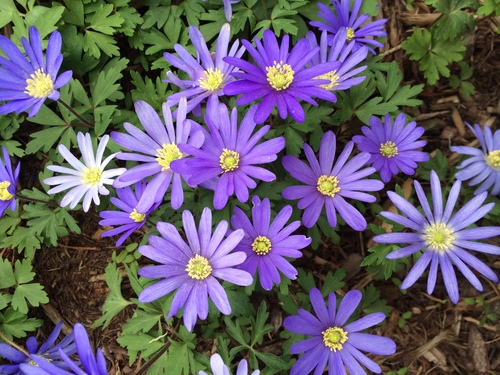
Anemonoides apennina (syn. Anemone apennina) is a blue-flowered perennial ranunculus native to south-central Europe, grown in gardens.
Anemonoides apennina, with the synonym Anemone apennina L., is commonly called the Apennine anemone or blue anemone. It is a rhizomatous perennial flowering plant belonging to the family Ranunculaceae. This species takes its name from the Apennine Mountains, and is native to southern central Europe. It has become widely naturalised in other parts of Europe, including the United Kingdom. It resembl...
⚠️ Toxicity: Insufficient toxicity evidence; avoid direct contact and ingestion.
View full details →
25
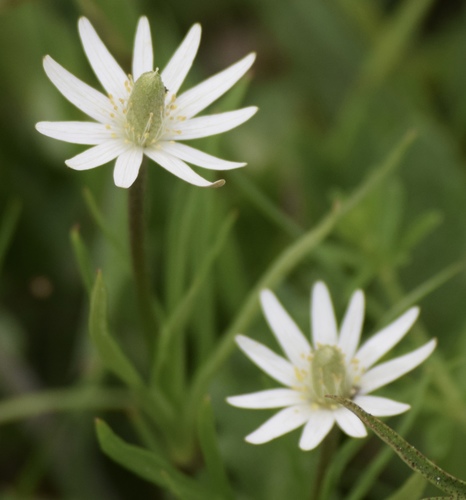
Anemone berlandieri is a rhizomatous perennial flowering plant native to the southern US and nearby Mexico.
Anemone berlandieri Pritz., commonly called tenpetal thimbleweed or tenpetal anemone, is a rhizomatous perennial flowering plant in the buttercup family Ranunculaceae. It is native to most of the Southern United States, where it blooms from late winter to spring, between February and April. Its specific epithet *berlandieri* commemorates Jean-Louis Berlandier (1803–1851), a 19th-century botanist w...
⚠️ Toxicity: Insufficient toxicity evidence; avoid direct contact and ingestion.
View full details →
26
Anemone blanda is an early-spring flowering herbaceous perennial, toxic if consumed or touched, popular in cultivation.
Anemone blanda Schott & Kotschy (also referred to as Anemonoides blanda) is an herbaceous tuberous perennial that grows 10–15 cm (4–6 in) tall. It is prized for its daisy-like flowers that bloom in early spring, when few other plants are in flower, growing over fernlike foliage. This species easily naturalizes, and its flowers typically come in an intense purple-blue shade, though pink and white v...
⚠️ Toxicity: Toxicity risk detected (mainly via contact and ingestion); avoid direct contact and ingestion.
View full details →
27
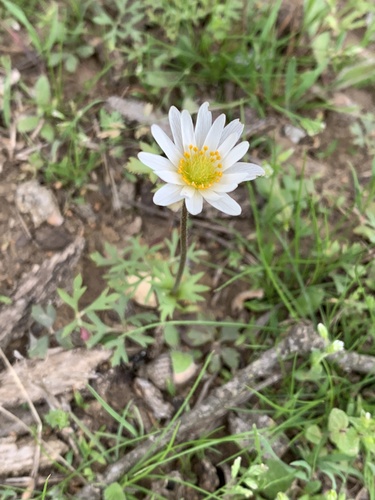
Anemone caroliniana is a herbaceous flowering plant native to central and southeastern US that grows in dry open habitats.
Anemone caroliniana, commonly known as the Carolina anemone, is a species of herbaceous flowering plant in the buttercup family Ranunculaceae. Individuals grow 10 (occasionally as short as 7) to 40 cm tall from short, tuber-like rhizomes that measure 10 to 30 mm long. The stem leaves of this plant lack petioles. It flowers from early to mid spring, producing one flower per stem. The flower is made...
⚠️ Toxicity: Insufficient toxicity evidence; avoid direct contact and ingestion.
View full details →
28
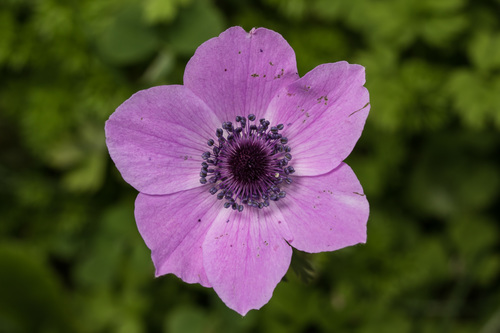
Anemone coronaria is a popular decorative tuberous perennial flowering plant native to the Mediterranean region.
Anemone coronaria L. is a herbaceous, perennial, tuberous plant. It typically grows 20 to 40 cm (7.9 to 15.7 in) tall, and rarely reaches 60 cm (24 in), spreading 15 to 23 cm (5.9 to 9.1 in) wide. It forms a basal rosette of a small number of leaves; each leaf has three leaflets, and each leaflet is deeply lobed. Single flowers bloom from April to June, borne on tall stems that have a whorl of sm...
⚠️ Toxicity: Insufficient toxicity evidence; avoid direct contact and ingestion.
View full details →
29
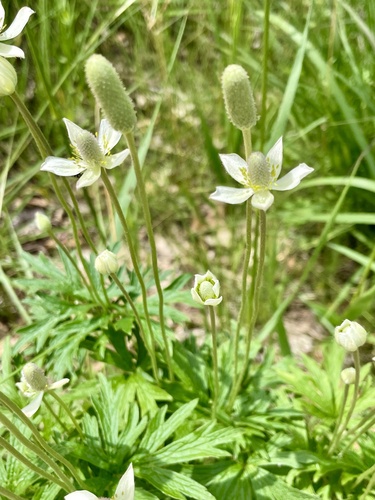
Anemone cylindrica, also called thimbleweed, is a self-pollinated herbaceous flowering plant native to north central North America.
Anemone cylindrica A.Gray, commonly called thimbleweed, is an upright, clump-forming herbaceous flowering plant that belongs to the buttercup family Ranunculaceae. Mature plants reach heights between 30 and 100 centimetres, which is 12 to 39 inches. They begin flowering in early summer, and often continue blooming into late summer. Their blooms are greenish-white. This species is primarily self-po...
⚠️ Toxicity: Insufficient toxicity evidence; avoid direct contact and ingestion.
View full details →
30
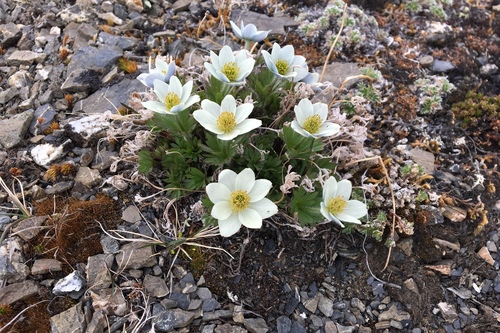
Anemone drummondii S.Watson is a clumping wildflower native to mountainous areas of western North America.
Anemone drummondii S.Watson is a squat perennial wildflower. When it is flowering, it produces short erect stems and small, soft, wrinkled leaves. At this early flowering stage, leaf color ranges from medium green to dark red, varying by growth stage and sun exposure. After flowering finishes, the leaves expand fully into a multiply ternate dissected shape. Their ultimate segments measure a few mi...
⚠️ Toxicity: Insufficient toxicity evidence; avoid direct contact and ingestion.
View full details →
Frequently Asked Questions
How many species are in the Ranunculaceae family?
This guide features 30 representative species from the Ranunculaceae family. The full family contains many more species worldwide — explore them all on iNature.
How to identify Ranunculaceae species?
Ranunculaceae species share common features in their flowers, leaves, and growth patterns. This guide provides photos and descriptions for 30 species. For instant field identification, use the iNature app.
Sources: GBIF, iNaturalist, Wikipedia · Disclaimer
Identify any species instantly — even offline
iNature uses on-device AI to identify plants, animals, fungi and more. No internet needed.
Download iNature — FreeStart Exploring Nature Today
Download iNature for free. 10 identifications on us. No account needed. No credit card required.
Download Free on App Store
