The Boraginaceae (borage family) includes the beloved forget-me-nots, the medicinal comfrey, and the fragrant heliotropes. Most species feature rough, hairy leaves and flowers that often change color as they age. This guide covers the most commonly encountered borage family species in gardens and wild habitats.
🌱 Plant Families
Borage Family (Boraginaceae): Species & Photos
1
Adelinia grande (Douglas ex Lehm.) J.I.Cohen
Adelinia grande (Douglas ex Lehm.) J.I.Cohen
🌿 Plantae Boraginaceae
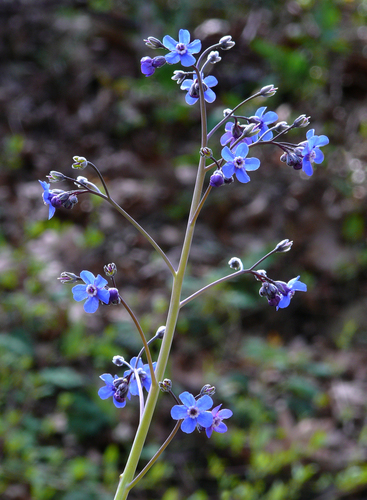
Adelinia grande is a blue-flowered perennial herb native to shady western North American woodland and chaparral habitats.
Adelinia grande is a perennial herb that grows an erect stem up to 80 centimetres (31 inches) tall from a taproot. Most of its leaves are clustered around the base of the plant. Each leaf has an oval blade that can reach 15 cm (6 in) in length, borne on a petiole; petioles near the base of the plant also grow up to 15 cm long. The inflorescence is a panicle, with each individual flower carried on ...
⚠️ Toxicity: Insufficient toxicity evidence; avoid direct contact and ingestion.
View full details →
2
Aegonychon purpurocaeruleum (L.) Holub
Aegonychon purpurocaeruleum (L.) Holub
🌿 Plantae Boraginaceae
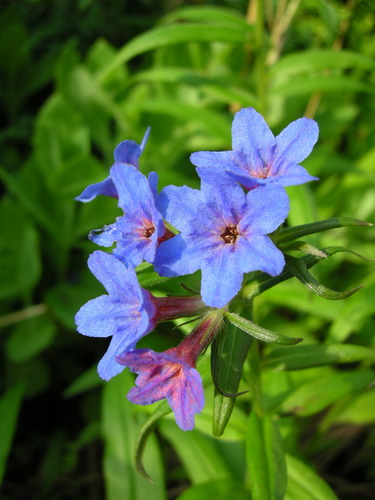
Aegonychon purpurocaeruleum is a bushy flowering herb with color-changing flowers, distributed across Europe and West Asia.
Aegonychon purpurocaeruleum (L.) Holub is a bushy plant that grows to an average height of 20 to 60 centimetres (7.9 to 23.6 inches), and can reach a maximum height of 70 centimetres (28 inches). Its stem is hairy, erect, and unbranched. The leaves are dark green, shaped lanceolate to narrow elliptic, and have a prominent midrib on the underside. Its flowers are hermaphroditic and funnel-shaped, m...
⚠️ Toxicity: Insufficient toxicity evidence; avoid direct contact and ingestion.
View full details →
3
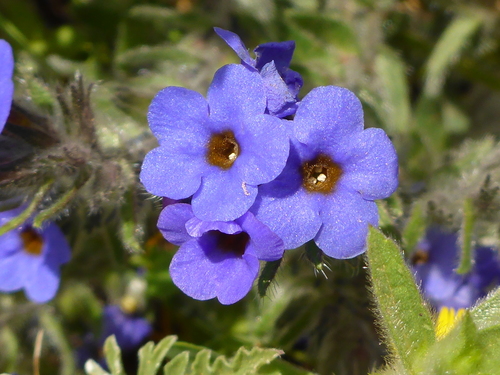
Alkanna tinctoria is a Mediterranean plant with bright blue flowers and distinctively colored roots. It has 30 dysploid tetraploid chromosomes.
Alkanna tinctoria (L.) Tausch produces bright blue flowers. Its root is blackish on the outside, blue-red on the inside, and has a whitish core. This species is native to the Mediterranean region. Alkanna tinctoria has 30 chromosomes, and is classified as a dysploid at the tetraploid level (4x + 2).
⚠️ Toxicity: Insufficient toxicity evidence; avoid direct contact and ingestion.
View full details →
4
Amsinckia calycina (Moris) Chater
Amsinckia calycina (Moris) Chater
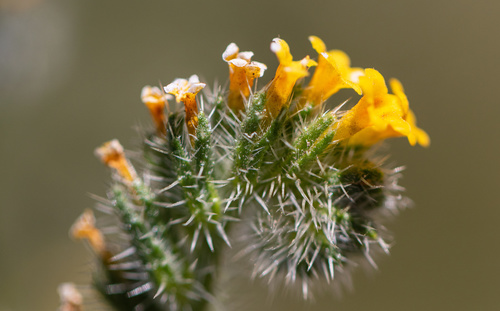
Amsinckia calycina is a poisonous annual flowering herb in the Boraginaceae family native to South America.
Amsinckia calycina, commonly called hairy fiddleneck or yellow burweed, is a flowering plant species that belongs to the Boraginaceae family. It is native to Argentina and Chile, and has become naturalised in Australia. This species is an annual herb that grows 15 to 50 cm tall, and produces pale yellow flowers. Amsinckia calycina is known to be poisonous to mammals.
⚠️ Toxicity: Toxicity risk detected (mainly via ingestion); avoid direct contact and ingestion.
View full details →
5
Amsinckia menziesii (Lehm.) A.Nelson & J.F.Macbr.
Amsinckia menziesii (Lehm.) A.Nelson & J.F.Macbr.
🌿 Plantae Boraginaceae
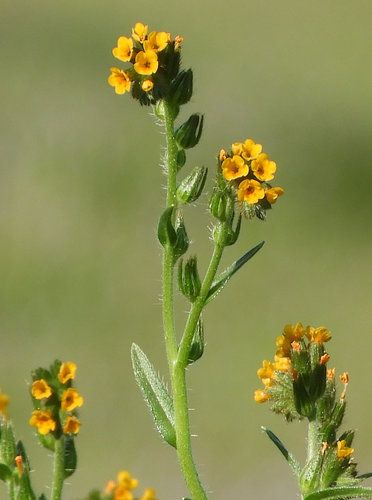
Amsinckia menziesii, commonly called fiddleneck, is a bristly annual that is native to western North America and introduced elsewhere.
Amsinckia menziesii (Lehm.) A.Nelson & J.F.Macbr. grows up to 90 centimetres (35 inches) tall, and its stems are covered in bristly hairs. Its leaves reach up to 15 cm (6 in) in length, and range from narrowly to broadly lanceolate in shape. Coiled clusters of yellow-orange flowers bloom at the ends of branches from April to May; these coiled clusters resemble the end of a fiddle, which gives the ...
⚠️ Toxicity: Insufficient toxicity evidence; avoid direct contact and ingestion.
View full details →
6
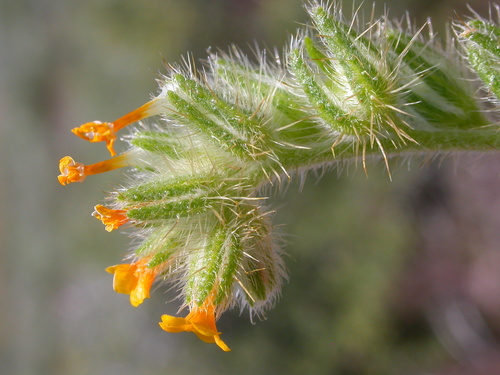
Amsinckia tessellata is a bristly annual herb similar to other fiddlenecks, blooming from March to June.
Amsinckia tessellata A.Gray is a bristly annual herb that grows between 8 and 24 inches tall, and it looks similar to other fiddleneck species. It bears coiled inflorescences that hold yellow to orange tubular flowers. These flowers can reach up to one centimeter wide across the corolla, and their corollas often have fewer than five lobes. The lobes of the flower calyx are not uniform in width, an...
⚠️ Toxicity: Insufficient toxicity evidence; avoid direct contact and ingestion.
View full details →
7
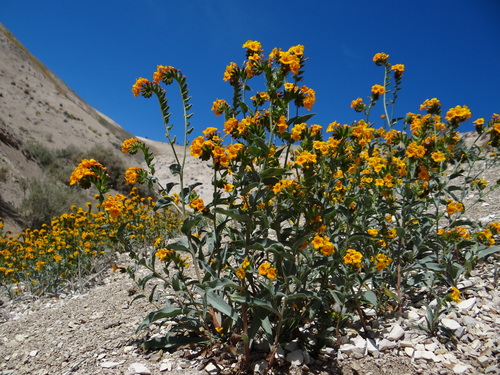
Amsinckia vernicosa is a waxy, hairy annual fiddleneck herb with coiled inflorescences of yellow or orange tubular flowers.
Amsinckia vernicosa Hook. & Arn. is a hairy annual herb. It is somewhat similar to other fiddlenecks, but it has a waxy texture and pinkish coloration along its lower stem. Its coiled inflorescence bears yellow or orange tubular flowers. These flowers can grow up to 2 centimeters long, and measure 1.5 units wide across the corolla.
⚠️ Toxicity: Insufficient toxicity evidence; avoid direct contact and ingestion.
View full details →
8
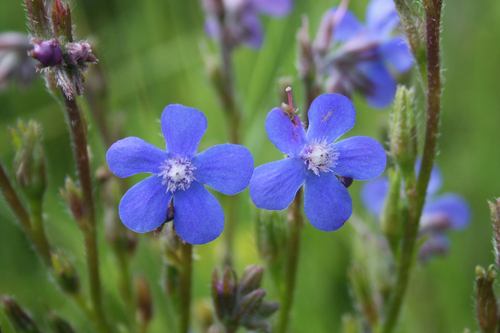
Anchusa azurea Mill., a bristly perennial in Boraginaceae, is cultivated as a garden ornamental with edible blue flowers.
Anchusa azurea Mill. is a species of flowering plant in the family Boraginaceae, commonly called garden anchusa and Italian bugloss, or simply bugloss. This bristly herbaceous perennial can grow up to 1.5 m (4.9 ft) tall and 60 cm (24 in) wide. It produces straight lance-shaped leaves and small tubular flowers around 15 millimeters across, each with five bright violet-blue petals. These flowers, w...
⚠️ Toxicity: Insufficient toxicity evidence; avoid direct contact and ingestion.
View full details →
9
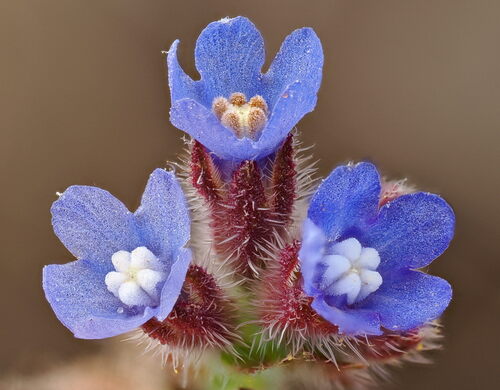
Anchusa officinalis (common bugloss/alkanet) is a Eurasian herb, a major nectar source for pollinators, with obsolete historical medicinal uses.
Anchusa officinalis L. is a herbaceous flowering plant that usually grows 40 to 70 centimeters tall, and can reach 100 centimeters tall under ideal conditions. It can grow as an annual, biennial, or perennial plant, and its entire surface is covered in short, coarse hairs. It has a strong taproot that may grow up to one meter long. Its leaves are lance-linear (narrow spearhead-shaped), widest at t...
⚠️ Toxicity: Insufficient toxicity evidence; avoid direct contact and ingestion.
View full details →
10
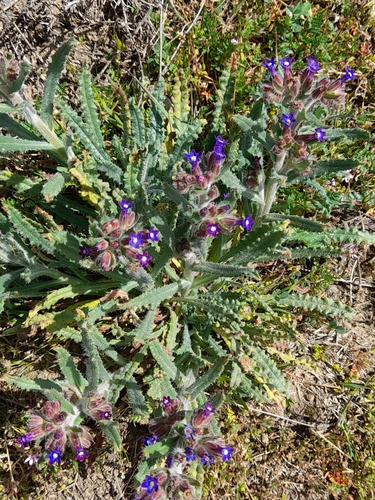
Anchusa strigosa has linear toothed leaves, smaller pedicels than bracts, and inflated fruiting calyces, and is also called Buglossum lusitanicum by Tournef.
Anchusa strigosa has linear, toothed leaves, pedicels smaller than the bracts, and inflated fruiting calyces. According to Loefl. It is also referred to as Buglossum lusitanicum with an undulating leaf like that of Echium by Tournef. in 'inst. 134'.
View full details → 11
Andersonglossum virginianum (L.) J.I.Cohen
Andersonglossum virginianum (L.) J.I.Cohen
🌿 Plantae Boraginaceae
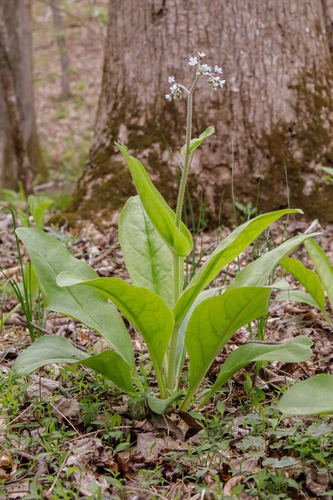
Andersonglossum virginianum is a hairy North American borage that contains liver-damaging pyrrolizidine alkaloids.
Andersonglossum virginianum (L.) J.I.Cohen is an erect, unbranched perennial plant covered in rough fine hairs on its stems and leaves. Its leaves are simple, entire, arranged in an alternate pattern, and grow denser at the lower portion of the stem, decreasing in size toward the top of the stem. It produces 2 to 6 racemes. Its flowers have five deep lobes, connected to a superior ovary that is at...
⚠️ Toxicity: Insufficient toxicity evidence; avoid direct contact and ingestion.
View full details →
12
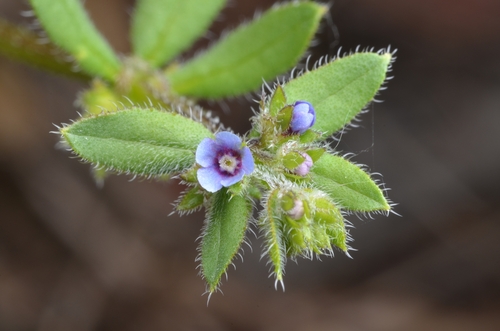
Asperugo procumbens (German madwort) is the only species in genus Asperugo, an annual trailing plant native to Eurasia.
Asperugo procumbens, commonly called German madwort, is the only species in the monotypic plant genus Asperugo. It is native to Europe and the temperate regions of Asia, and has been introduced to other areas by human activity. This species is an annual plant, with stems that reach 20 to 60 centimeters in length. Stems grow trailing along the ground, and do not produce roots at their nodes. Leaves...
⚠️ Toxicity: Insufficient toxicity evidence; avoid direct contact and ingestion.
View full details →
13
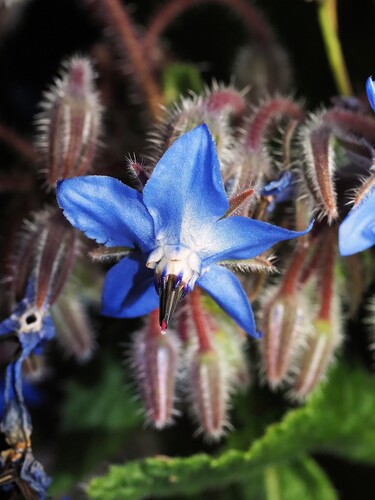
Borago officinalis (borage) is a Mediterranean herb grown for culinary, medicinal, and oilseed use, and contains toxic pyrrolizidine alkaloids.
Borago officinalis L., commonly known as borage, reaches a height of 60 cm (2 feet). The entire plant is covered in bristly or hairy growth across its stems and leaves; its leaves are alternate, simple, and measure 5–15 cm (2–6 inches) in length. Borage flowers are complete and perfect, with five narrow, triangular-pointed petals. Most blooms are blue, though pink flowers occasionally appear, and ...
⚠️ Toxicity: Toxicity risk detected (mainly via ingestion); avoid direct contact and ingestion.
View full details →
14
Brunnera macrophylla (Adams) I.M.Johnst.
Brunnera macrophylla (Adams) I.M.Johnst.
🌿 Plantae Boraginaceae
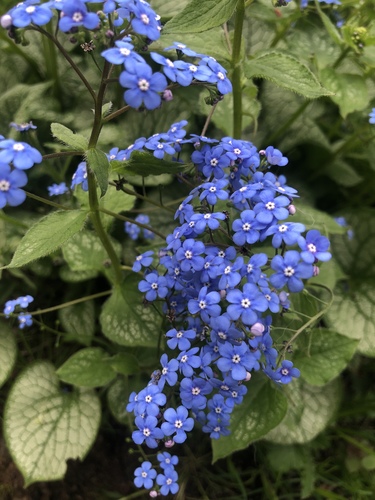
Brunnera macrophylla is a shade-tolerant herbaceous perennial native to the Caucasus, grown as ornamental groundcover with blue spring flowers.
Brunnera macrophylla, commonly known as Siberian bugloss, great forget-me-not, largeleaf brunnera, or heartleaf, is a flowering plant species in the family Boraginaceae. It is native to the Caucasus. This is a hardy, rhizomatous herbaceous perennial that grows 12 to 18 inches (30 to 45 cm) tall. It produces simple, heart-shaped basal leaves on slender stems. Starting in mid-spring, it bears sprays...
⚠️ Toxicity: Insufficient toxicity evidence; avoid direct contact and ingestion.
View full details →
15
Buglossoides arvensis (L.) I.M.Johnst.
Buglossoides arvensis (L.) I.M.Johnst.
🌿 Plantae Boraginaceae
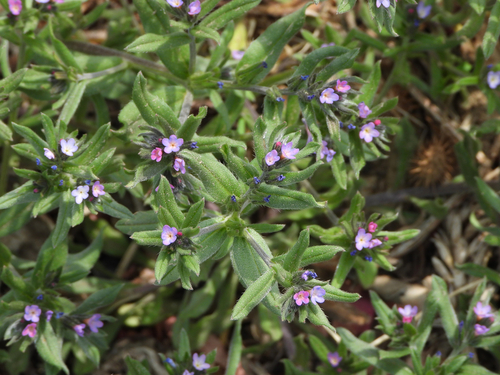
Buglossoides arvensis is a Boraginaceae flowering plant whose refined seed oil is developed for food and health uses.
Buglossoides arvensis (synonym Lithospermum arvense), which has the common names field gromwell, corn gromwell, bastard alkanet, and stone seed, is a flowering plant in the family Boraginaceae. It is native to Europe and Asia, ranging north to Korea, Japan and Russia, and south to Afghanistan and northern Pakistan. It is an introduced species in many other regions, including most of North America ...
⚠️ Toxicity: Insufficient toxicity evidence; avoid direct contact and ingestion.
View full details →
16
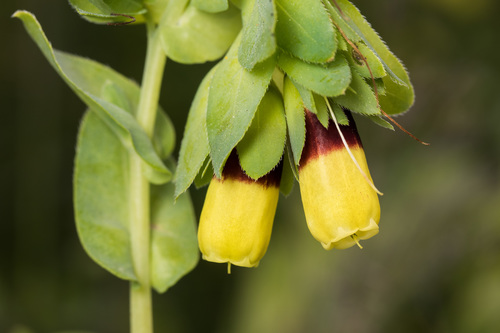
Cerinthe major L. is an annual honeywort native to the Mediterranean, introduced to New Zealand, with varied garden cultivars.
Cerinthe major L., commonly called honeywort along with other species in the genus Cerinthe, is an annual flowering plant. It is native to the Mediterranean region, which includes southern Europe, western Asia and northern Africa, and has been introduced to New Zealand. A range of cultivars are available to gardeners, spanning from Cerinthe major subsp. major, which has sea-green bracts and yellow...
⚠️ Toxicity: Insufficient toxicity evidence; avoid direct contact and ingestion.
View full details →
17
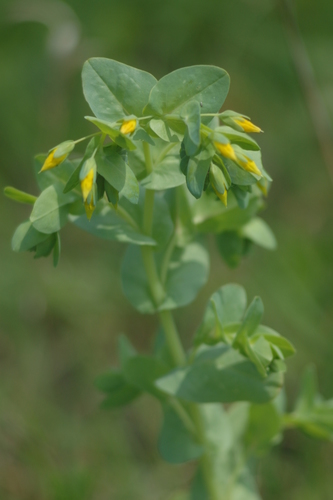
Cerinthe minor L. is characterized by stem - clasping, entire leaves, paired fruits, acute closed corollas, and deeply five - lobed flowers, and is cited in various botanical works.
Cerinthe has stem - clasping, entire leaves, paired fruits, and acute, closed corollas. It also has leaves that clasp the stem and deeply five - lobed flowers. As described in Hall. helv. 516. It is known as Cerinthe minor, as mentioned in Bauh. pin. 258, and also as Cerinthe minor s. quarta in Clus. hist. 2. p. 168.
View full details → 18
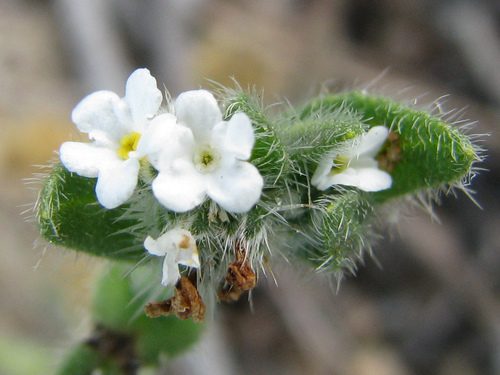
Cryptantha intermedia is an annual hairy herb reaching up to half a meter tall, bearing small bright white flowers.
Cryptantha intermedia is an annual plant species. It has a rough, hairy, branching stem that grows to a maximum height of half a meter. It develops from a mostly basal clump of hairy leaves, each one to several centimeters long. Its erect stems are topped with one or more small flowers. Each flower is about one centimeter wide, bright white, and sometimes has yellow coloration in the flower throat...
⚠️ Toxicity: Insufficient toxicity evidence; avoid direct contact and ingestion.
View full details →
19
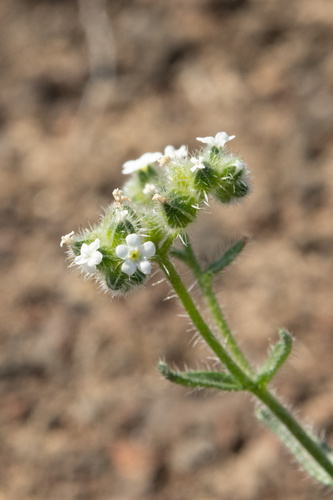
Wingnut cryptantha (Cryptantha pterocarya) is an annual hairy flowering borage native to the western United States.
Cryptantha pterocarya (Torr.) Greene is a species of flowering plant in the borage family, commonly known as wingnut cryptantha. It is native to the western United States, and grows in many different types of habitat. This annual herb produces a stem with a few branches, reaching a maximum height of around 40 centimeters. Its leaves range from linear to oblong in shape, and grow up to 5 centimeter...
⚠️ Toxicity: Insufficient toxicity evidence; avoid direct contact and ingestion.
View full details →
20
Cynoglossum amabile Stapf & J.R.Drumm.
Cynoglossum amabile Stapf & J.R.Drumm.
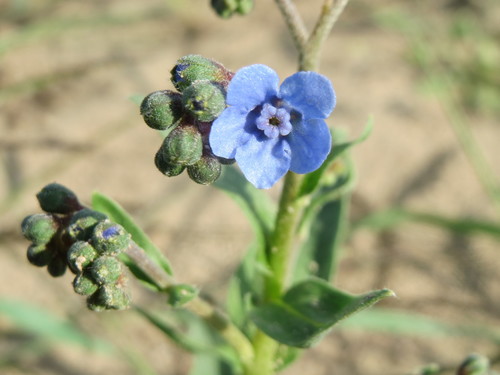
Cynoglossum amabile, Chinese forget-me-not, is an ornamental annual flowering plant native to Asia that contains toxic alkaloids.
Cynoglossum amabile, commonly called Chinese hound's tongue or Chinese forget-me-not, is a flowering plant species in the Boraginaceae family, native to Asia. It is a hardy annual that grows up to 50 cm (20 in) tall, with hairy leaves and clusters of sky-blue flowers that bloom in late summer. It is closely related to the common garden forget-me-not (Myosotis sylvatica), and is also grown as an or...
⚠️ Toxicity: Toxicity risk detected (mainly via ingestion); avoid direct contact and ingestion.
View full details →
21

Cynoglossum australe (Australian hound's tongue) is an upright herb widespread across multiple regions of Australia.
Cynoglossum australe, commonly called Australian hound's tongue, is an upright herb that grows 30–75 cm (12–30 in) high, and occasionally grows even taller. Its stems are covered in stiff hairs that spread backward or downward. Lower leaves are shaped like a lance or spoon, are flat, and measure 6–20 cm (2.4–7.9 in) long and 10–35 mm (0.39–1.38 in) wide. They grow on a petiole 2–10 cm (0.79–3.94 i...
⚠️ Toxicity: Insufficient toxicity evidence; avoid direct contact and ingestion.
View full details →
22
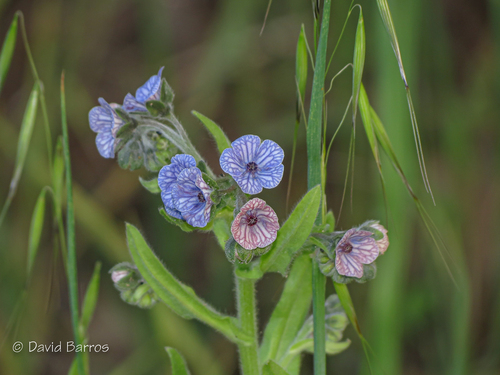
Cynoglossum creticum is a Mediterranean Boraginaceae plant invasive in parts of the US, commonly known as blue hound's tongue.
Cynoglossum creticum Mill. is a plant species belonging to the Boraginaceae family. This species is native to the Mediterranean Basin, which includes the island of Crete. It has also been documented as an invasive plant in the U.S. states of Texas and Missouri, where it is commonly called blue hound's tongue.
⚠️ Toxicity: Insufficient toxicity evidence; avoid direct contact and ingestion.
View full details →
23
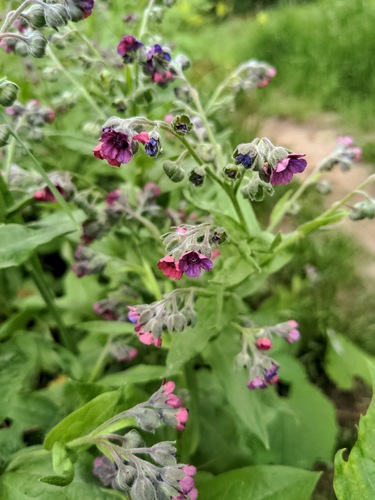
Cynoglossum officinale L. (houndstongue) is a toxic, sometimes weedy flowering plant found in Europe and introduced North America.
Cynoglossum officinale L. may grow as either an annual or biennial plant. Its leaves are greyish, covered in soft hair, and shaped from lanceolate to oblong. Reddish-purple, funnel-shaped flowers bloom between May and September. Both the common and scientific name of this plant come from its long greyish leaves, which resemble a dog’s tongue; the plant was historically used as a remedy for dog bit...
⚠️ Toxicity: Toxicity risk detected (mainly via ingestion); avoid direct contact and ingestion.
View full details →
24
Cynoglossum zeylanicum (Vahl) Thunb. ex Lehm.
Cynoglossum zeylanicum (Vahl) Thunb. ex Lehm.
🌿 Plantae Boraginaceae
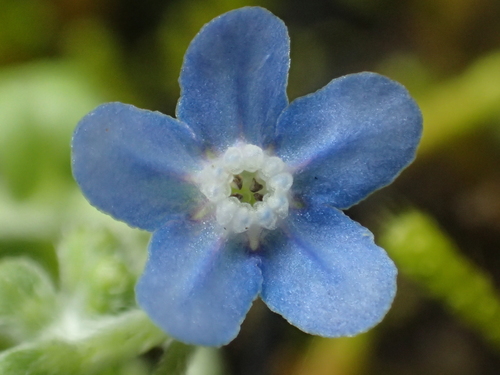
Cynoglossum zeylanicum, or Ceylon's hound's tongue, is a flowering plant native to wide areas of Asia and introduced to the Americas.
Cynoglossum zeylanicum, commonly called Ceylon's hound's tongue, is similar in appearance to Cynoglossum lanceolatum. It differs by having larger flowers that measure 4–5 mm across, and small fruits about 2 mm across. This species is native to Afghanistan, Pakistan, India, Nepal, Sri Lanka, Southeast Asia, China, Taiwan, Japan, and South Korea. It has been introduced to North America, the Caribbea...
⚠️ Toxicity: Insufficient toxicity evidence; avoid direct contact and ingestion.
View full details →
25
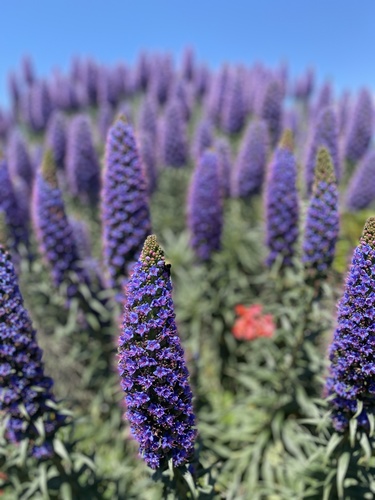
Echium candicans is a flowering shrub native to Madeira, widely grown as an ornamental and invasive in some regions.
Echium candicans L.fil. grows as a 1 to 2 meter tall shrub, typically with a candelabra-like growth form. Its inflorescences form terminally on side shoots, not on the main terminal shoot. The whitish bark peels off shoots like paper. Its short-stalked leaves are lanceolate to ovate-lanceolate with a long pointed tip, reaching a maximum length of 25 centimeters and a width of 2 to 4 centimeters. L...
⚠️ Toxicity: Insufficient toxicity evidence; avoid direct contact and ingestion.
View full details →
26
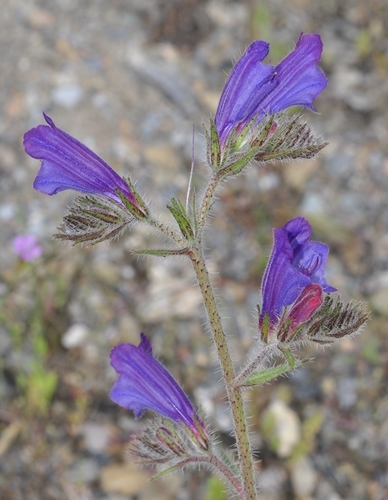
Echium creticum, or Cretan viper's bugloss, is a western Mediterranean native flowering plant grown as an ornamental.
Echium creticum L., commonly known as Cretan viper's bugloss, has several accepted synonyms: Echium calycinum Viv., Echium rubrum Moench, Echium sericeum Vahl, and Echium violaceum L. It is a flowering plant species that belongs to the Boraginaceae family. This species is native to the western Mediterranean Basin, and it is cultivated and used as an ornamental plant.
⚠️ Toxicity: Insufficient toxicity evidence; avoid direct contact and ingestion.
View full details →
27
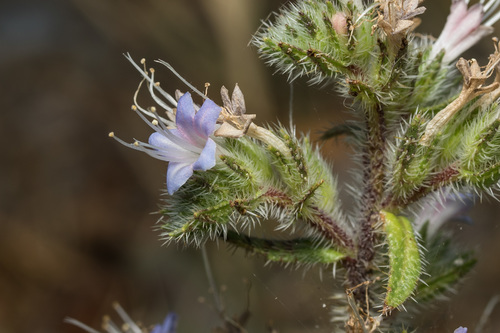
Echium italicum is a Boraginaceae plant native to regions including the Mediterranean, naturalized in the US and Australia.
Echium italicum L., commonly known as the Italian viper's bugloss, Lady Campbell weed, or pale bugloss, is a plant species belonging to the family Boraginaceae. It is native to the Mediterranean Basin, particularly Italy, which is the origin of its specific epithet 'italicum'. It also occurs naturally in North Africa, western Asia, the Caucasus, and Europe. It has been introduced to the United Sta...
⚠️ Toxicity: Insufficient toxicity evidence; avoid direct contact and ingestion.
View full details →
28
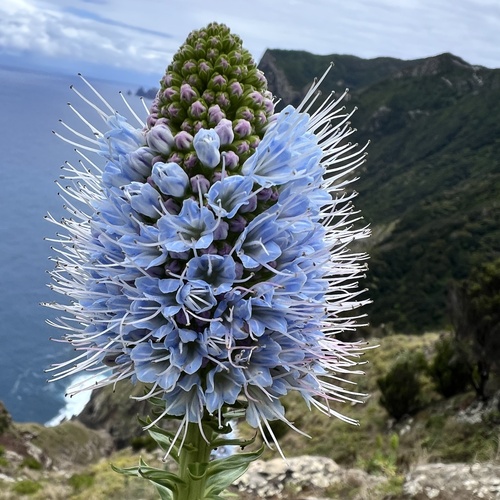
Echium nervosum Dryand. ex Aiton is a compact woody shrub with silver green leaves and pale blue to rose flowers.
Echium nervosum Dryand. ex Aiton is a compact woody shrub. It has an average height of 100 centimetres (39 in) and a maximum height of 150 centimetres (59 in). Its leaves are narrow, densely haired, and silver green. It produces pale blue to pale bluish rose flowers that grow in an egg-shaped inflorescence.
⚠️ Toxicity: Insufficient toxicity evidence; avoid direct contact and ingestion.
View full details →
29
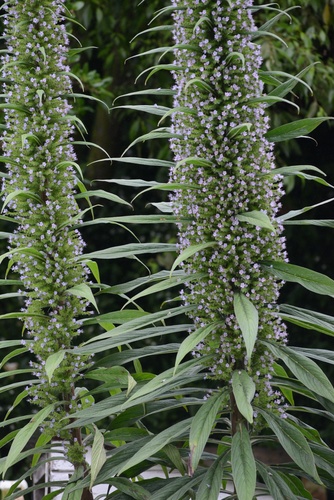
Echium pininana is a tall endangered endemic Canary Island flower cultivated as an ornamental garden plant.
Echium pininana Webb & Berthel. is a monocarpic flowering plant with a multi-year growth cycle. In its first year, it forms a basal rosette of lanceolate leaves roughly 7 cm (3 in) long covered in silver hairs, and also develops a 0.9–2.4 m (3–8 ft) tall trunk covered in many additional lanceolate leaves. In its second or third year, it grows a cone-like inflorescence that can reach up to 4 m (13 ...
⚠️ Toxicity: Insufficient toxicity evidence; avoid direct contact and ingestion.
View full details →
30
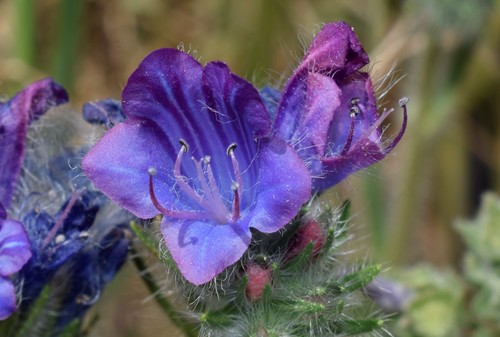
Echium plantagineum, or Paterson's curse, is a toxic winter annual that harms livestock, horses, and humans.
Echium plantagineum L. is a winter annual plant that grows 20 to 60 centimeters tall. It has rough, hairy, lanceolate leaves that can reach up to 14 centimeters in length. Its purple flowers measure 15 to 20 millimeters long, have all stamens protruding, and grow on a branched spike. This species is commonly known as Paterson's curse, and the condition it causes is referred to as pyrrolizidinosis ...
⚠️ Toxicity: Toxicity risk detected (mainly via contact and ingestion); avoid direct contact and ingestion.
View full details →
Frequently Asked Questions
How many species are in the Boraginaceae family?
This guide features 30 representative species from the Boraginaceae family. The full family contains many more species worldwide — explore them all on iNature.
How to identify Boraginaceae species?
Boraginaceae species share common features in their flowers, leaves, and growth patterns. This guide provides photos and descriptions for 30 species. For instant field identification, use the iNature app.
Sources: GBIF, iNaturalist, Wikipedia · Disclaimer
Identify any species instantly — even offline
iNature uses on-device AI to identify plants, animals, fungi and more. No internet needed.
Download iNature — FreeStart Exploring Nature Today
Download iNature for free. 10 identifications on us. No account needed. No credit card required.
Download Free on App Store
