Boletes are distinctive mushrooms with pores instead of gills under their caps. The Boletaceae family includes prized edibles like the king bolete (porcini) as well as toxic species. Learn to tell them apart.
🍄 Fungi Guide
Bolete Mushrooms — Boletaceae Identification Guide
1
Chalciporus piperatoides (A.H.Sm. & Thiers) T.J.Baroni & Both
Chalciporus piperatoides (A.H.Sm. & Thiers) T.J.Baroni & Both
🍄 Fungi Boletaceae
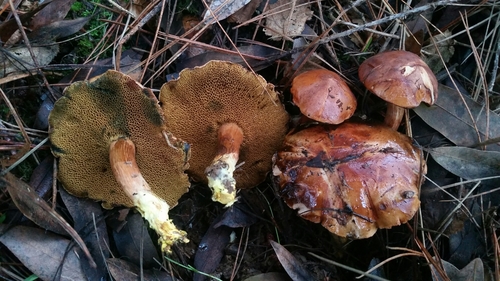
Chalciporus piperatoides is a small-pored North American bolete mushroom that stains blue and has a less peppery taste than C. piperatus.
Chalciporus piperatoides is a species of mushroom belonging to the Boletaceae family, characterized by small pores. This mushroom grows in woodlands across North America. It is very similar in appearance to the related species Chalciporus piperatus, but can be told apart by the blue staining that develops on its flesh and pores after cutting or bruising. It also has a milder, less peppery taste th...
View full details → 2
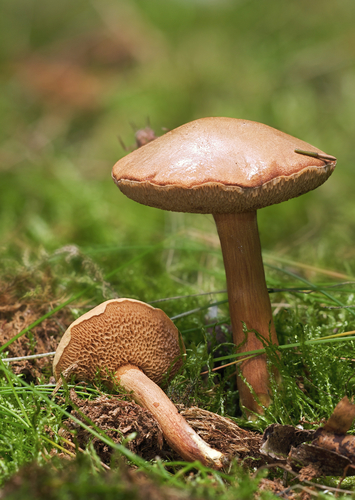
Chalciporus piperatus is a small toxic bolete found worldwide, sometimes used as a spicy condiment or for dyeing.
Chalciporus piperatus (Bull.) Bataille is one of the smaller bolete fungi. Its cap measures 1.6–9 cm across, is orange-fawn in colour, and starts convex before flattening as it ages. The cap surface may be furrowed, is shiny when dry and slightly sticky when wet, and can crack with age. The pore surface ranges in colour from yellowish to dark reddish brown when the mushroom reaches maturity, and s...
View full details → 3
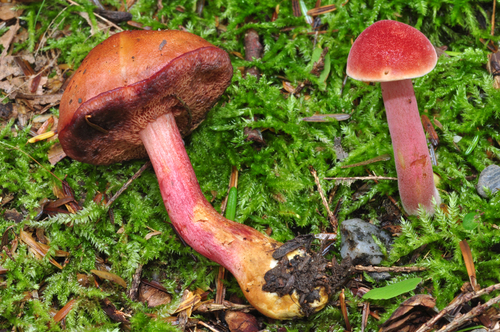
Chalciporus rubinellus is a mycorrhizal bolete mushroom associated with conifers, not recommended for eating, and can dye protein fabric brown.
Chalciporus rubinellus (Peck) Singer has a cap that ranges from 1.5 to 5 cm wide, with texture varying from smooth to tufted-hairy, and becomes slimy when wet. Young caps are conical and purple-red, while older caps develop a yellow tint or become reddish brown, turning convex and cracking with age. The flesh is bright yellow and does not change color when bruised. When tested with KOH, the cap st...
View full details → 4
Strobilomyces strobilaceus (Scop.) Berk.
Strobilomyces strobilaceus (Scop.) Berk.
🍄 Fungi Boletaceae
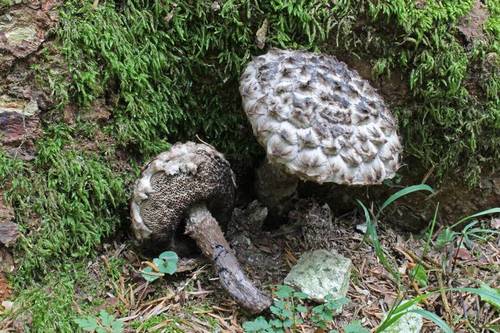
Strobilomyces strobilaceus is a mushroom found in Northern Hemisphere forests, with young edible specimens having a choice flavour.
The fruit bodies of Strobilomyces strobilaceus have caps between 4 and 11 cm (1+1⁄2 and 4+1⁄4 inches) wide, with a convex shape and a villous, involute margin. The cap surface is covered with tuft-like, dark grey to brown erect scales. The stipe grows up to 14 cm (5+1⁄2 inches) long and 2 cm (3⁄4 inch) thick. It shares the same colouring as the cap, has a woolly surface, and features either a thic...
View full details → 5
Pseudoboletus parasiticus (Bull.) Šutara
Pseudoboletus parasiticus (Bull.) Šutara
🍄 Fungi Boletaceae
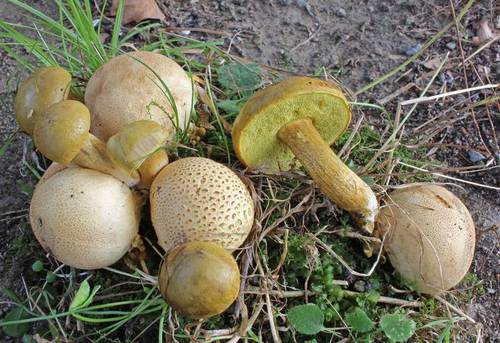
Pseudoboletus parasiticus is a bolete that grows on Scleroderma citrinum earthballs in eastern North America.
This species, Pseudoboletus parasiticus (Bull.) Šutara, has a cap that is hemispherical when young and becomes flat with age. The cap is yellowish brown or darker, and can grow up to 6 centimetres (2+1⁄4 inches) wide. Its yellow stem is 3–7 cm (1–3 in) tall and 6–15 millimetres (1⁄4–5⁄8 in) thick. The flesh is pale yellow, and its spore print is olive brown. This fungus can be found growing on Scl...
View full details → 6
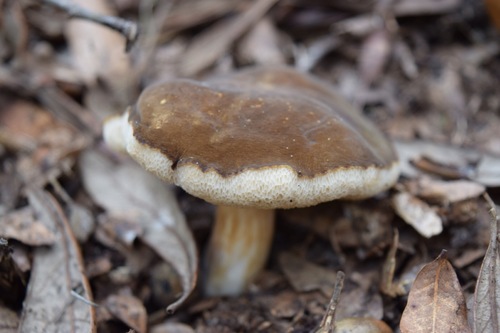
Xanthoconium affine is an edible bolete fungus found under oak and beech in eastern North America from June to September.
Xanthoconium affine is a bolete fungus species belonging to the genus Xanthoconium. It was first described as a species of Boletus by Charles Horton Peck in 1873, and Rolf Singer transferred it to its current genus Xanthoconium in 1944. Its convex cap ranges from 3.5 to 9 centimetres (1+1⁄2–3+1⁄2 inches) wide and has a brownish colour. The pores on the underside of the cap are whitish when young a...
View full details → 7
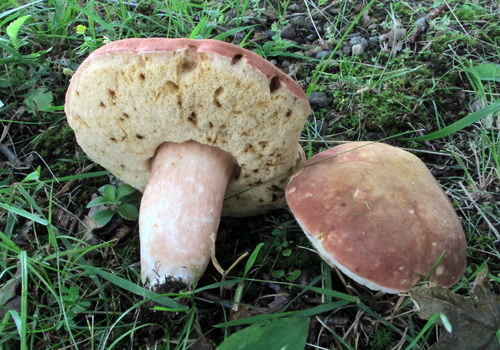
Xanthoconium purpureum is a bolete fungus species found in eastern North America, described as new to science in 1962.
Xanthoconium purpureum Snell & E.A.Dick is a species of bolete fungus that belongs to the genus Xanthoconium. It was formally described as new to science in 1962 by Wally Snell and Esther Dick. This fungus is found in eastern North America, where it produces fruit bodies growing under oak trees, and sometimes occurs in mixed oak-pine forests.
View full details → 8
Porphyrellus porphyrosporus (Fr.) E.-J.Gilbert
Porphyrellus porphyrosporus (Fr.) E.-J.Gilbert
🍄 Fungi Boletaceae
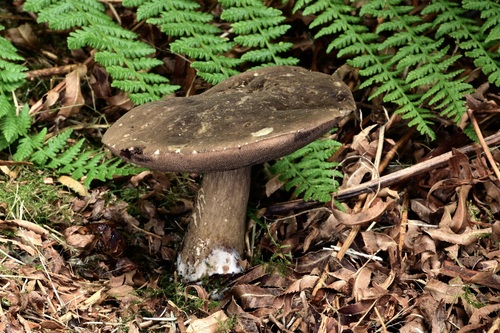
Porphyrellus porphyrosporus is an uncommon bolete mushroom found in Europe and northern North America, growing with broad-leaved trees.
The cap of Porphyrellus porphyrosporus is dark brown, usually with a paler margin. Caps start out convex, then expand as they mature and sometimes become irregularly lobed. When fully expanded, the cap measures 6 to 15 cm (2+1⁄4 to 6 inches) in diameter. The cap has soft buff-colored flesh with a vinaceous tinge. The tubes are a similar color to the cap, and turn blue-green when cut or bruised. Th...
View full details → 9
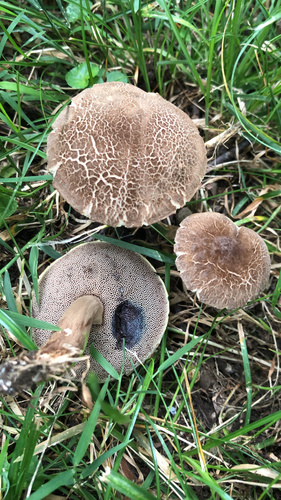
Porphyrellus sordidus is an inedible North American bolete fungus in the family Boletaceae that bruises dark blue-green when injured.
Porphyrellus sordidus (Frost) Snell is a bolete fungus that belongs to the family Boletaceae. It was first formally described in 1874 by Charles Christopher Frost, who originally classified it as a species of the genus Boletus. The fruit bodies of this fungus have caps that range from convex to flattened in shape, with a diameter between 4.5 and 13 cm (1.8 to 5.1 inches). The cap surface is browni...
View full details → 10
Buchwaldoboletus lignicola (Kallenb.) Pilát
Buchwaldoboletus lignicola (Kallenb.) Pilát
🍄 Fungi Boletaceae
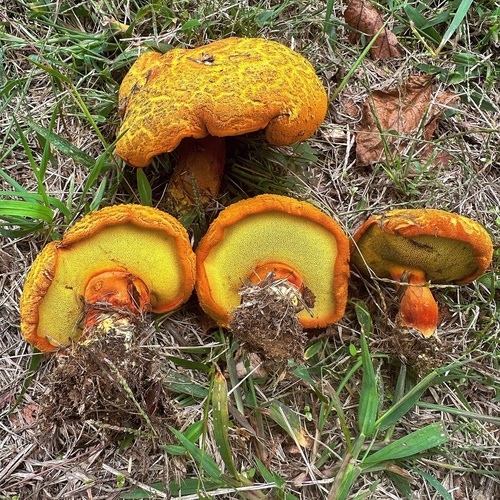
Buchwaldoboletus lignicola is a parasitic bolete fungus that grows on Phaeolus schweinitzii associated with trees across Europe and North America.
The cap of Buchwaldoboletus lignicola starts convex and becomes broadly convex as it ages, with a diameter of 2.5–10 cm (1.0–3.9 in). When young, the cap margin has an inward-rolled band of sterile tissue. The cap surface is finely velvety at first, but often develops fine cracks as it matures, and is colored rusty brown to yellow brown. The cap skin peels easily from the mushroom; it is separated...
View full details → 11
Bothia castanella (Peck) Halling, T.J.Baroni & Manfr.Binder
Bothia castanella (Peck) Halling, T.J.Baroni & Manfr.Binder
🍄 Fungi Boletaceae
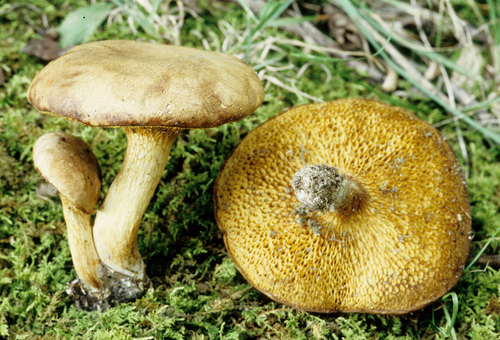
Bothia castanella is a bolete fungus with unknown edibility, found across North America, Central America, and East Asia.
Bothia castanella has a cap that starts convex and flattens with age, reaching 3–8 cm (1.2–3.1 in) in diameter. The center of the cap sometimes develops a shallow depression, and the margin ranges from even to wavy and irregular. The cap surface is dry, initially hairy, and becomes smooth when mature; its color ranges from reddish brown to burgundy-brown to dark yellowish brown. The white flesh do...
View full details → 12
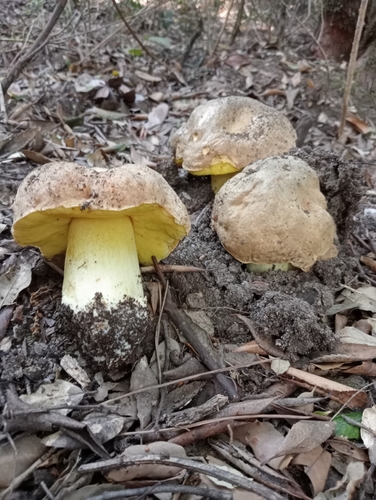
Hemileccinum impolitum is an ectomycorrhizal bolete associated with deciduous trees, confirmed present across parts of Europe.
Hemileccinum impolitum (Fr.) Šutara is a bolete fungus with the following physical characteristics. The cap typically measures 5 to 12 cm (2 to 4.5 in) in diameter, and can grow as large as 20 cm (8 in). Young caps start hemispherical, gradually becoming convex as the fungus grows, and flatten out completely in fully mature specimens, sometimes with a slightly uplifted margin. Cap color ranges fro...
View full details → 13
Hemileccinum subglabripes (Peck) Halling
Hemileccinum subglabripes (Peck) Halling
🍄 Fungi Boletaceae
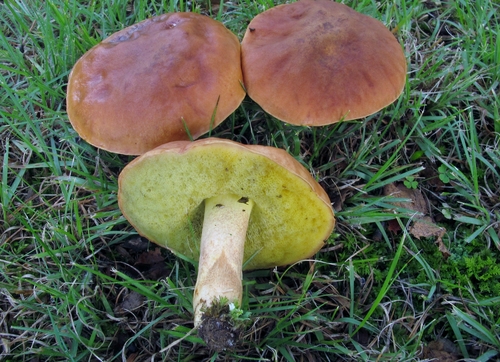
Hemileccinum subglabripes is an edible boletes fungus found in eastern North America associated with hardwood trees.
Hemileccinum subglabripes (Peck) Halling is a fungus belonging to the Boletaceae family. It was first formally described in 1887 by Charles Horton Peck under the name Boletus subglabripes, and was transferred to the genus Hemileccinum in 2015 on the basis of DNA evidence. This species has a brownish cap that measures 3–10 centimetres (1+1⁄4–4 inches) across. Its yellowish stem grows 4.5–10 cm (1+3...
View full details → 14
Hemileccinum hortonii (A.H.Sm. & Thiers) M.Kuo & B.Ortiz
Hemileccinum hortonii (A.H.Sm. & Thiers) M.Kuo & B.Ortiz
🍄 Fungi Boletaceae
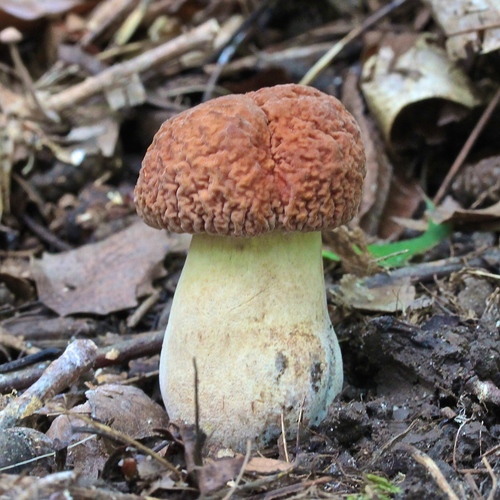
Hemileccinum hortonii is an edible bolete found under hardwoods in the eastern United States from June to August.
Hemileccinum hortonii has a brownish cap that measures 3–12 centimetres (1+1⁄4–4+3⁄4 inches) wide. Its stem is 4–10 centimetres (1+1⁄2–4 inches) tall and 1–2.5 centimetres (1⁄2–1 inch) thick. The mushroom’s flesh is whitish, and it can stain light blue when cut or damaged. It produces an olive brown spore print. This species is found in the eastern United States, where it occurs from June to Augus...
View full details → 15
Hortiboletus rubellus (Krombh.) Simonini, Vizzini & Gelardi
Hortiboletus rubellus (Krombh.) Simonini, Vizzini & Gelardi
🍄 Fungi Boletaceae
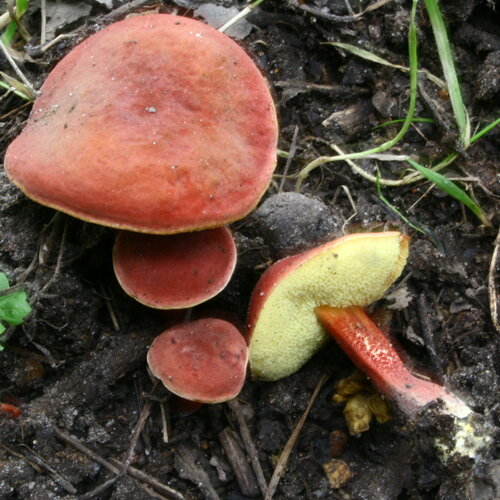
Hortiboletus rubellus is a small rare red-capped bolete found in Europe, eastern North America, and a related similar species occurs in Australia.
This species is a small bolete. Its cap rarely grows more than 6 centimetres (2+3⁄8 in) in diameter. When young, the cap is scarlet to raspberry red, with a dry, velvety texture, and it often cracks as it ages. A pale yellow or white band typically lines the extreme margin of the cap, and the whole cap darkens and becomes duller with age. The pores are small, pale yellow, and bruise slowly. The st...
View full details → 16
Hortiboletus bubalinus (Oolbekk. & Duin) L.Albert & Dima
Hortiboletus bubalinus (Oolbekk. & Duin) L.Albert & Dima
🍄 Fungi Boletaceae
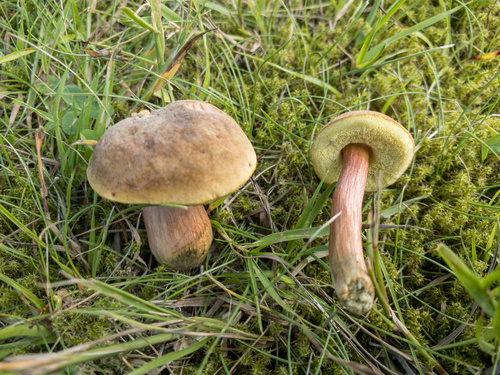
Hortiboletus bubalinus is a bolete fungus in Boletaceae, reclassified multiple times since its 1991 description.
Hortiboletus bubalinus is a species of bolete fungus that belongs to the family Boletaceae. This fungus was first formally described in 1991, when it was classified as a member of the genus Boletus. In 1993, it was reclassified and moved to the genus Xerocomus. Finally, it was transferred to the genus Hortiboletus by Bálint Dima in 2015.
View full details → 17
Baorangia bicolor (Kuntze) G.Wu, Halling & Zhu L.Yang
Baorangia bicolor (Kuntze) G.Wu, Halling & Zhu L.Yang
🍄 Fungi Boletaceae
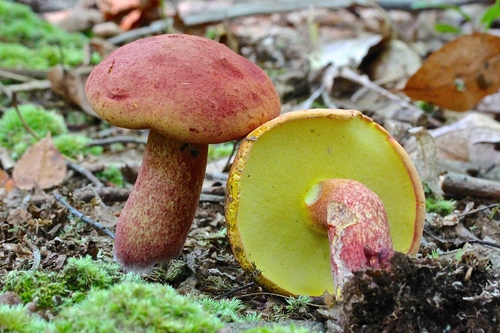
Baorangia bicolor, the two-colored bolete, is a bluing bolete with a disjunct distribution across North America, China, and Nepal.
Baorangia bicolor (Kuntze) G.Wu, Halling & Zhu L.Yang, commonly called the two-colored bolete, has caps that are light red when young and turn brick red when mature. Mature caps are 4–15 cm (1+1⁄2–6 in) wide, with yellow pores on the underside. This is one of several bolete species with an unusual trait: the pore surface darkens to dark blue or indigo when injured, though this color change happens...
View full details → 18
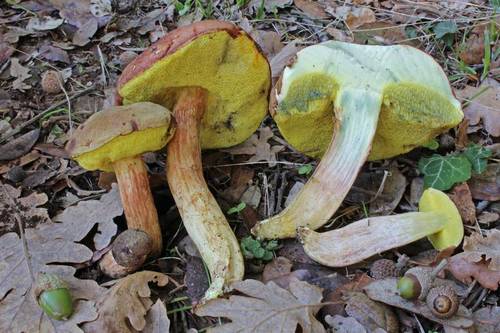
Xerocomus subtomentosus is a bolete fungus that grows in forests across multiple continents, forming mycorrhizae with various trees and shrubs.
Xerocomus subtomentosus (L.) Quél. has a pale olive or tan cap that starts convex before becoming flattened. The cap measures 4 to 10 cm (1+1⁄2 to 4 in) in diameter, and can exceptionally reach up to 20 cm (7+3⁄4 in) across. Its surface is velvety and tannish, and occasionally develops slits that reveal yellow flesh underneath. The cap skin is very difficult to remove. The pores located under the ...
View full details → 19
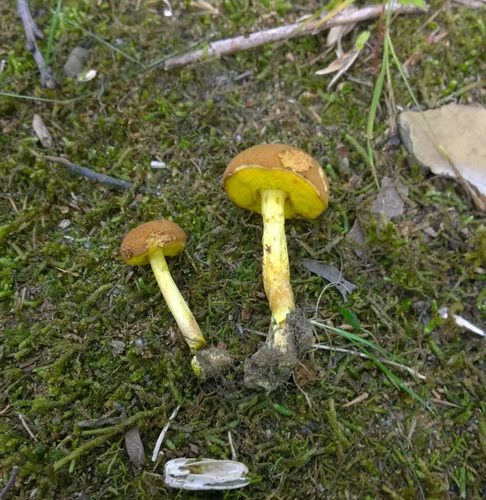
Xerocomus illudens is an edible mycorrhizal bolete that associates with oaks, found in North America and parts of India.
The fungus Xerocomus illudens has a cap that starts convex and becomes flattened when mature, reaching 3–9 cm (1.2–3.5 in) in diameter. The cap surface is dry, with a texture ranging from velvety to slightly hairy. Young specimens have a pale brownish-yellow cap that gradually changes to yellow-brown or pinkish as it matures. Its flesh is pale yellow, with no distinct taste or odor, and unlike man...
View full details → 20
Boletellus chrysenteroides (Snell) Snell
Boletellus chrysenteroides (Snell) Snell
🍄 Fungi Boletaceae
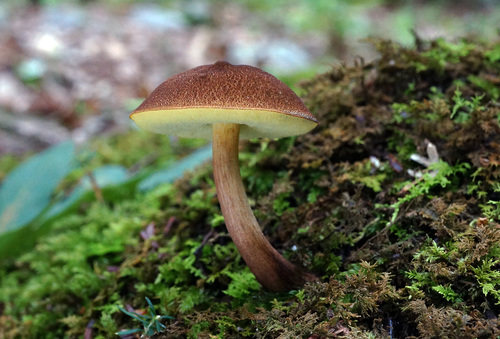
Boletellus chrysenteroides is a blue-staining bolete fungus found growing on rotting wood in eastern North America.
Boletellus chrysenteroides has a brown cap that ranges from 2 to 7 centimeters (3⁄4 to 2+3⁄4 inches) wide. Its yellow, sunken pores measure 1 millimeter wide, and turn blue when bruised or damaged. The stem grows 3.5–10 cm (1+1⁄2–4 in) long and 6–12 mm (1⁄4–1⁄2 in) wide. The flesh of this fungus is whitish, and also stains blue when cut or injured. It produces an olive-brown spore print. This spec...
View full details → 21
Boletellus obscurecoccineus (Höhn.) Singer
Boletellus obscurecoccineus (Höhn.) Singer
🍄 Fungi Boletaceae
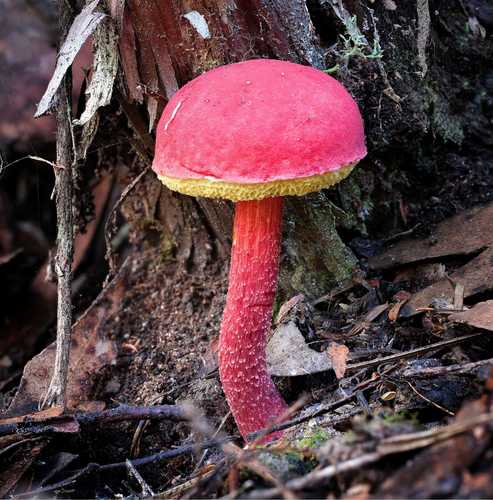
Boletellus obscurecoccineus, the rhubarb bolete, is a distinctive colored bolete found across Australia and East and Southeast Asia, with unknown edibility.
Boletellus obscurecoccineus (Höhn.) Singer is a brightly colored, distinctive bolete. It has a rose-red or rhubarb-colored cap that is hemispherical to convex in shape, reaching up to 7 cm (3 in) in diameter, with an overhanging margin when young. In older specimens, the cap may crack to reveal the yellow flesh underneath. Its adnexed pores are five- or six-sided, yellow in color, and bruise blue ...
View full details → 22
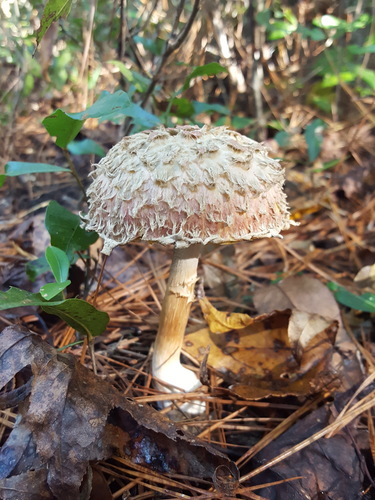
Boletellus ananas is a bolete fungus with variable growth habits and debated ectomycorrhizal status found across multiple continents.
Boletellus ananas (M.A.Curtis) Murrill has a cap measuring 3.3–10 cm (1+1⁄4–4 in) wide with a plano-convex shape. Its surface is covered in small scales called squamules, which may lie pressed against the cap or curve backward. Squamule colors range from reddish brown to red-tan, pink, or pinkish gray, and they are more concentrated and scalier at the cap center, growing out of a cream to light or...
View full details → 23
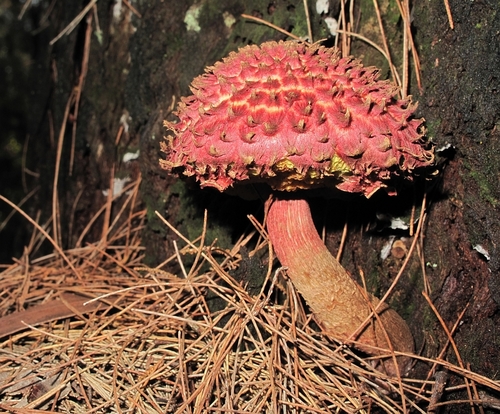
Boletellus emodensis, the shaggy cap, is a reddish shaggy-capped fungus species in the family Boletaceae that grows in eucalypt woodlands.
Boletellus emodensis, commonly called the shaggy cap, is a species of fungus in the family Boletaceae. English mycologist Miles Joseph Berkeley first formally described this species in 1851 under the name Boletus emodensis. Rolf Singer later transferred the species to the genus Boletellus in 1942. This fungus is marked by its distinctive reddish shaggy cap, and grows in eucalypt woodlands. It prod...
View full details → 24
Boletellus dissiliens (Corner) Pegler & T.W.K.Young
Boletellus dissiliens (Corner) Pegler & T.W.K.Young
🍄 Fungi Boletaceae
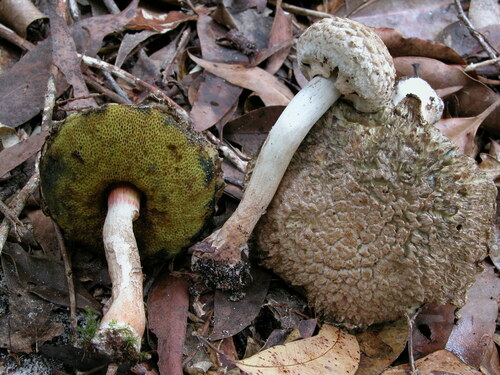
Boletellus dissiliens is a Boletaceae fungus found in Singapore, first described in 1972 and moved to Boletellus in 1981.
Boletellus dissiliens (Corner) Pegler & T.W.K.Young is a species of fungus belonging to the family Boletaceae. This species is found in Singapore. It was first formally described under the name Boletus dissiliens by E.J.H. Corner in 1972, and was later reclassified and moved to the genus Boletellus in 1981.
View full details → 25
Boletellus deceptivus Halling & N.A.Fechner
Boletellus deceptivus Halling & N.A.Fechner
🍄 Fungi Boletaceae
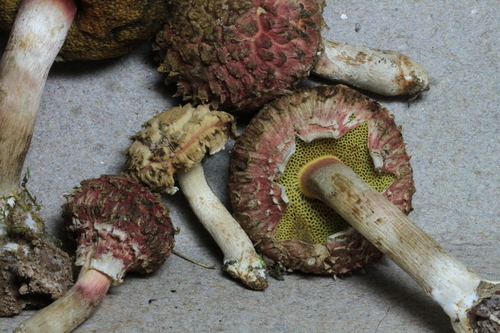
Boletellus deceptivus is a bolete fungus in the Boletaceae family found in eastern Australia and Papua New Guinea.
Boletellus deceptivus is a species of bolete fungus belonging to the family Boletaceae. This fungus is found in eastern Australia and Papua New Guinea.
View full details → 26
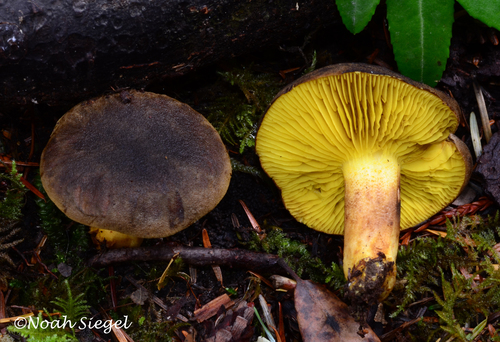
Phylloporus arenicola is a mycorrhizal bolete fungus that grows with pines in coastal sand dunes of western North America's Pacific Northwest.
The fruit bodies of Phylloporus arenicola have caps that start convex before flattening as they mature, and sometimes develop a central depression. Mature caps reach a diameter of 1.5–4.5 centimetres (1⁄2–2 inches). The cap surface is dry with a velvet-like texture, and its color changes from dull olive with a darker center when young, to olive-brown, and finally fades to pale brown. The whitish t...
View full details → 27
Phylloporus rhodoxanthus (Schwein.) Bres.
Phylloporus rhodoxanthus (Schwein.) Bres.
🍄 Fungi Boletaceae
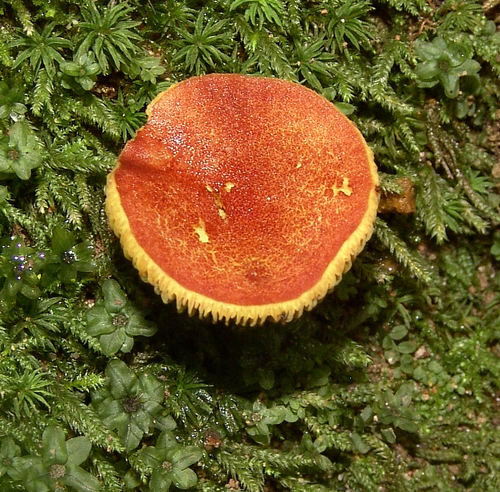
Phylloporus rhodoxanthus is an edible North American bolete mushroom with yellow gills, found in oak-beech forests.
Phylloporus rhodoxanthus (Schwein.) Bres. has a cap that starts convex and flattens with age, sometimes developing a central depression. The cap reaches 2–12 cm (3⁄4–4+3⁄4 in) in diameter, with an initially inward-curved margin. The cap surface is dry, has a somewhat velvet-like texture, and often cracks when mature, revealing the pale yellow flesh underneath. Cap color ranges from dull red to red...
View full details → 28
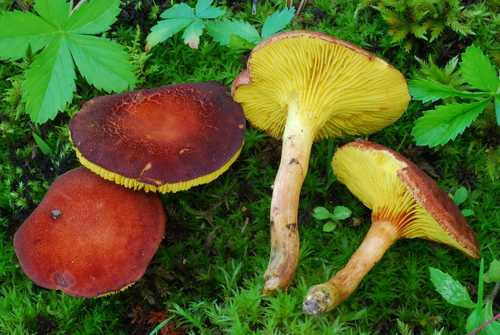
Phylloporus leucomycelinus is an edible bolete mushroom found in North America, Mexico, and the Philippines, used to produce dyes in various tones.
Phylloporus leucomycelinus Singer has a cap that starts out convex, then flattens as it matures, and sometimes develops a shallow depression. Mature caps reach 4 to 8 centimetres (1+1⁄2–3 inches) in diameter. The cap surface is dry, with a somewhat felt-like texture, and often cracks when mature. Cap color ranges from dark red to reddish chestnut, and mature individuals typically have a paler area...
View full details → 29
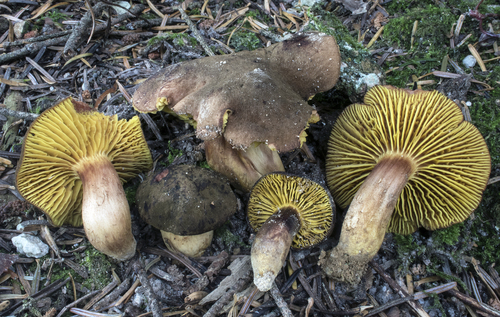
Phylloporus pelletieri, the golden-gilled bolete, is a rare European-Asian bolete that is currently the focus of multiple conservation efforts.
This species, commonly called the golden-gilled bolete, has the scientific name Phylloporus pelletieri (Lév.) Quél. The underside of its cap has lamellae, which are gill-like structures, instead of the pores that are common among species in the order Boletales. Its cap is reddish, domed, and has a smooth, velvety texture. The lamellae are bright yellow, and the stem that supports the cap is also y...
View full details → 30
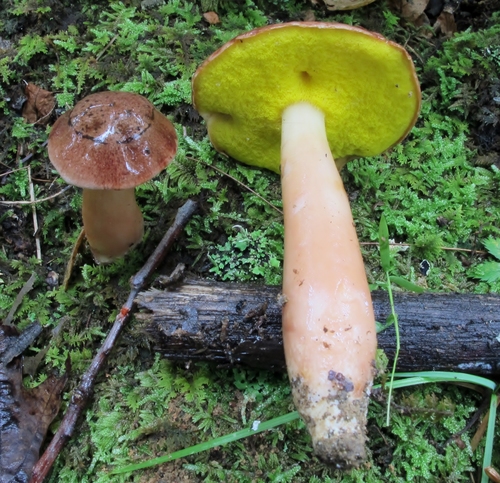
Aureoboletus auriporus is an edible bolete fungus found in Europe and North America.
Aureoboletus auriporus (Peck) Pouzar is a bolete fungus species belonging to the family Boletaceae. It occurs in Europe and North America. American mycologist Charles Horton Peck originally described this species in 1872, under the name Boletus auriporus. Zdenek Pouzar moved the species to the genus Aureoboletus in 1957. This fungus is edible, and it can be confused with Xerocomus illudens, which ...
View full details →Frequently Asked Questions
How many species are in the Boletaceae family?
This guide features 30 representative species from the Boletaceae family. The full family contains many more species worldwide — explore them all on iNature.
How to identify Boletaceae species?
Boletaceae species share common features in their flowers, leaves, and growth patterns. This guide provides photos and descriptions for 30 species. For instant field identification, use the iNature app.
Sources: GBIF, iNaturalist, Wikipedia · Disclaimer
Identify any species instantly — even offline
iNature uses on-device AI to identify plants, animals, fungi and more. No internet needed.
Download iNature — FreeStart Exploring Nature Today
Download iNature for free. 10 identifications on us. No account needed. No credit card required.
Download Free on App Store
