The Accipitridae family is the largest group of birds of prey, including eagles, hawks, kites, and harriers. These powerful raptors are found worldwide and are key indicators of ecosystem health.
🦅 Bird Families
Birds of Prey — Hawks, Eagles & Kites (Accipitridae)
1
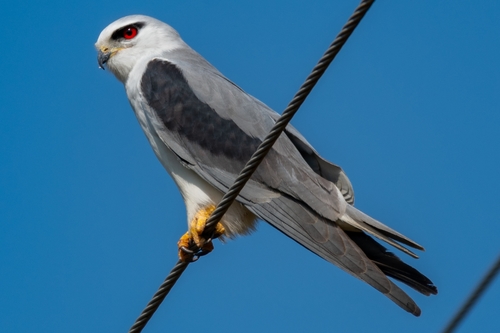
Elanus caeruleus, the black-winged kite, is a small raptor found across Africa, Asia, and expanding into southern Europe.
Elanus caeruleus, commonly called the black-winged kite, is a long-winged raptor. It is predominantly grey or white with distinct black shoulder patches, black wing tips and a black eye stripe. Its long falcon-like wings extend past the tail when the bird is perched. In flight, its short, square tail is visible and is not forked, unlike the tails of typical kites in the genus Milvus. When perched,...
View full details → 2
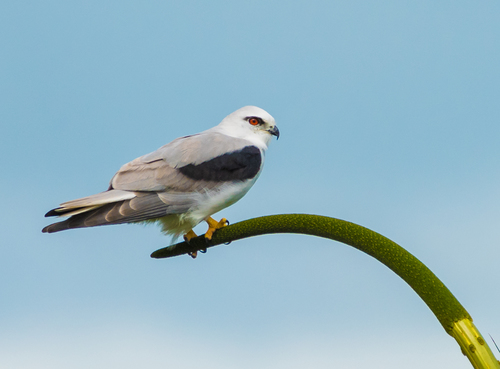
Elanus axillaris, the black-shouldered kite, is an Australian raptor specialized in hunting small mammals, most commonly introduced house mice.
Description: The adult black-shouldered kite (Elanus axillaris) reaches around 35 cm (14 in) in length, with a wingspan between 80 and 100 cm (31 and 39 in). Females are slightly heavier, averaging around 300 g (11 oz), while males average 260 g (9.2 oz). The sexes have identical plumage: the crown, neck, and upperparts are pale grey, and the head and underparts are white. A black comma-shaped mar...
View full details → 3
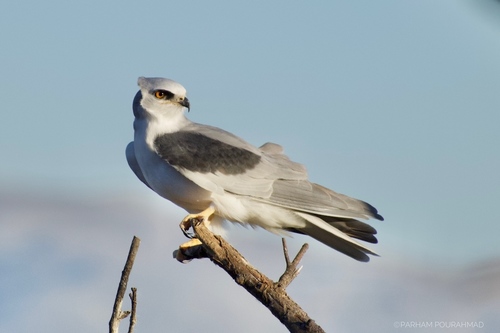
Elanus leucurus, the white-tailed kite, is a mid-sized raptor with a broad range across the Americas, that recovered from near-extinction in California.
The white-tailed kite (Elanus leucurus) has gull-like coloration, but falcon-like shape and flight, and a rounded tail. It has white faces and white underparts, with black wingtips, beaks, and shoulders. In contrast, its deep red eyes stand out especially at night. This is a mid-sized kite species: it measures 35–43 cm (14–17 in) in total length, has a wingspan of 88–102 cm (35–40 in), and weighs ...
View full details → 4
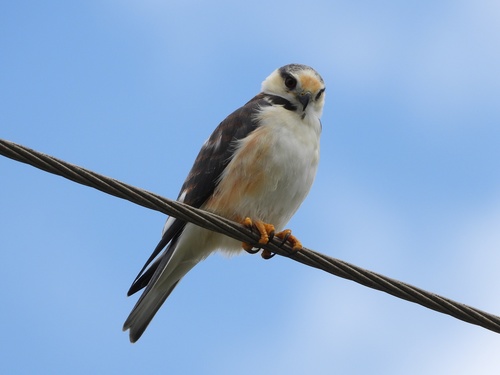
Gampsonyx swainsonii, the pearl kite, is a small American accipitrid raptor found from Nicaragua down to northern Argentina.
The pearl kite (scientific name Gampsonyx swainsonii Vigors, 1825) measures 20.3–23 cm (8.0–9.1 in) in length and weighs 80–95 g (2.8–3.4 oz). It is the smallest raptor found in the Americas, and one of the two smallest accipitrids in the world—only the little sparrowhawk shares this distinction. Another Neotropical species, the tiny hawk, reaches a slightly higher average weight than the pearl ki...
View full details → 5
Neophron percnopterus (Linnaeus, 1758)
Neophron percnopterus (Linnaeus, 1758)
🦋 Animalia Accipitridae
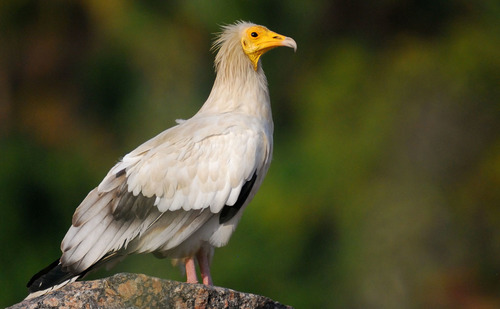
Neophron percnopterus, the Egyptian vulture, is a small Old World vulture with distinctive plumage and documented tool use.
This species, Neophron percnopterus (Linnaeus, 1758), commonly called the Egyptian vulture, has the following physical description. Adult plumage is primarily white, with black flight feathers on the wings. Wild individuals typically have a rusty or brown soiled tint to their white plumage, which comes from contact with mud or iron-rich soil; captive specimens without access to soil have clean whi...
View full details → 6
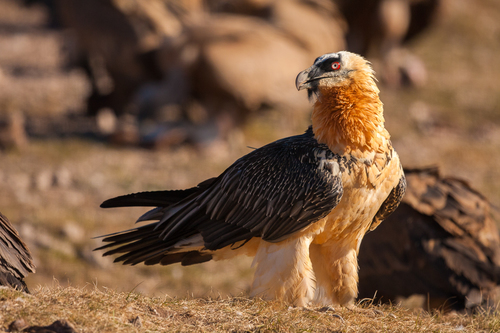
This is a detailed description of the bearded vulture (Gypaetus barbatus), covering its appearance, distribution, habitat, and reproduction.
Description: The bearded vulture (Gypaetus barbatus) measures 94–125 cm (37–49 in) in body length, with a wingspan of 2.31–2.83 m (7 ft 7 in – 9 ft 3 in). It weighs 4.5–7.8 kg (9.9–17.2 lb): the nominate race averages 6.21 kg (13.7 lb), while the African subspecies G. b. meridionalis averages 5.7 kg (13 lb). In Eurasia, bearded vultures living around the Himalayas tend to be slightly larger than t...
View full details → 7
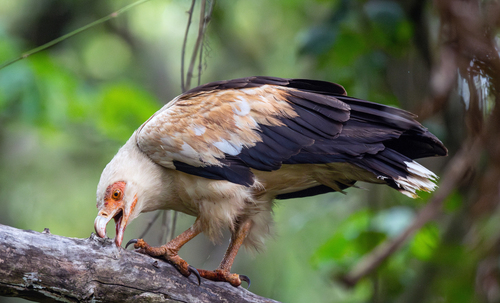
Gypohierax angolensis, the palm-nut vulture, is the smallest Old World vulture native to coastal Africa, feeding largely on palm fruit.
This bird, the palm-nut vulture Gypohierax angolensis (Gmelin, 1788), is easy to identify as an adult. It is the smallest Old World vulture, with a weight of 1.3–1.7 kg (2.9–3.7 lb), a length of 60 cm (2.0 ft), and a wingspan of 1.50 m (4.9 ft). Adult plumage is entirely white except for black areas on the wings and tail, and each eye is surrounded by a red patch. Males and females look identical ...
View full details → 8
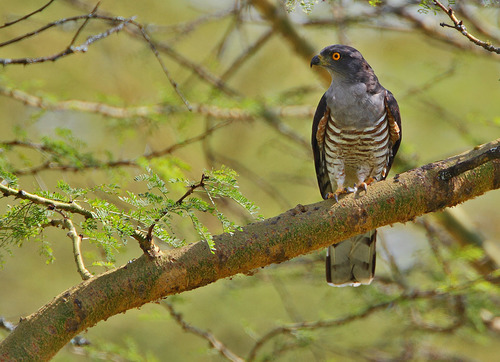
Aviceda cuculoides (African cuckoo-hawk) is a small raptor found across most of sub-Saharan Africa that lives in forests and woodlands.
Description: Male African cuckoo-hawks (Aviceda cuculoides Swainson, 1837) are blackish-brown on the upper body, with a grey mantle, grey chest, and a blackish crest. Their underparts are white and marked with broad chestnut bars. The tail is black, with three grey bars and a grey-and-white tip. Females are browner overall, and have paler chestnut bars on their underparts. In flight, this species ...
View full details → 9
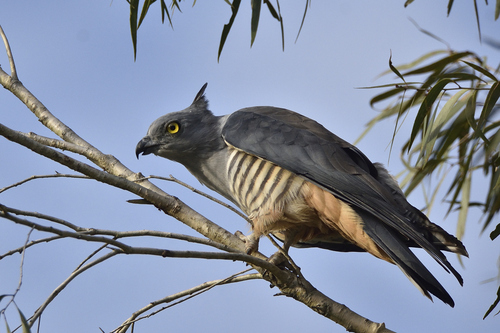
Aviceda subcristata, the Pacific baza, is a medium-sized Australasian raptor listed as Least Concern and traded internationally as a pet.
The Pacific baza (scientific name Aviceda subcristata (Gould, 1838)) is a slender, medium-sized raptor with a slim head and neck, and it shares a similar general appearance with other species in its genus. Adults reach a total length of 35–46 centimetres (14–18 in), with a wingspan of 80–105 centimetres (31–41 in), a tail length of 19–23 centimetres (7.5–9.1 in), and a body weight of 260–450 grams...
View full details → 10

The black baza (Aviceda leuphotes) is a small crepuscular raptor found in South and Southeast Asia.
The black baza (Aviceda leuphotes) is a small, distinctively colored raptor. It measures 30 to 35 cm in length, has a wingspan of 66 to 80 cm, and weighs 168 to 224 g. When perched, its upright crest and contrasting patterns make it easy to identify. Males have white markings on the scapulars, secondary coverts, and secondaries, while females only have white on the scapulars, and have more chestnu...
View full details → 11
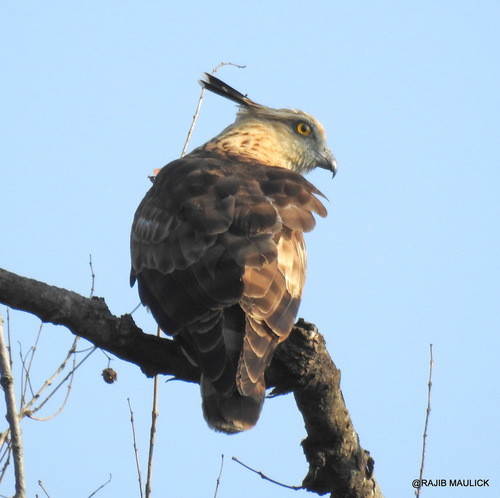
Aviceda jerdoni is a 46 cm long raptor with multiple recognized subspecies across South and Southeast Asia.
This species reaches approximately 46 centimeters in length. In flight, it can be easily confused with the crested goshawk or the changeable hawk-eagle, but it can be told apart by its longer upright crest, very broad and rounded paddle-shaped wings, and mostly plain, pale underparts. It has a white chin and a distinct bold black mesial stripe. Multiple subspecies are recognized across this specie...
View full details → 12
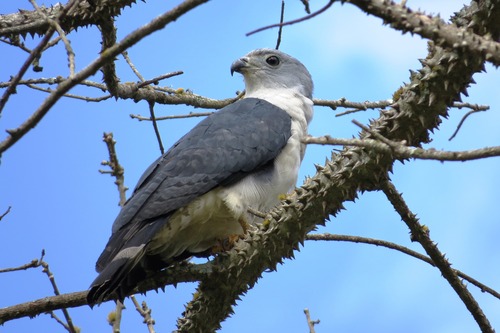
Leptodon cayanensis, the gray-headed kite, is a raptor with juvenile morphs that mimic other hawk-eagles, feeding on reptiles and other prey.
The gray-headed kite (Leptodon cayanensis) measures 46–53 cm in length and weighs 410–605 g. Adult individuals have a grey head, black upperparts, white underparts, and a black tail marked with two or three white bars. They have a blue bill and grey legs, and their flight pattern consists of deliberate two flaps followed by a glide. Immature gray-headed kites have three distinct colour morphs, eac...
View full details → 13
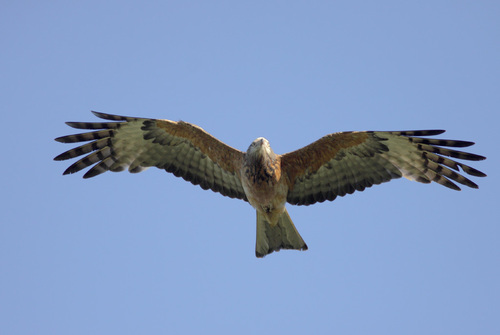
Lophoictinia isura, the square-tailed kite, is a medium-sized Australian raptor with specific breeding and territorial behaviors.
The square-tailed kite, scientifically named Lophoictinia isura (Gould, 1838), is a medium-sized raptor as an adult. Its body measures 50–56 cm in total length, with the tail accounting for about half of this length. It has a wingspan of 130–145 cm; males weigh an average of 501g, while females weigh an average of 650g. Square-tailed kites are specialized canopy-dwelling predators that occupy a ra...
View full details → 14
Hamirostra melanosternon (Gould, 1841)
Hamirostra melanosternon (Gould, 1841)
🦋 Animalia Accipitridae

Hamirostra melanosternon, the black-breasted buzzard, is a large Australian raptor with distinct plumage and specific habitat and breeding traits.
The scientific name of black-breasted buzzard is Hamirostra melanosternon (Gould, 1841). Description: In body size, the black-breasted buzzard is intermediate between the larger, well-known wedge-tailed eagle (Aquila audax) and the smaller little eagle (Hieraaetus morphnoides). It is one of Australia's largest birds of prey, and one of the world's largest kites, alongside the red kite — the red k...
View full details → 15
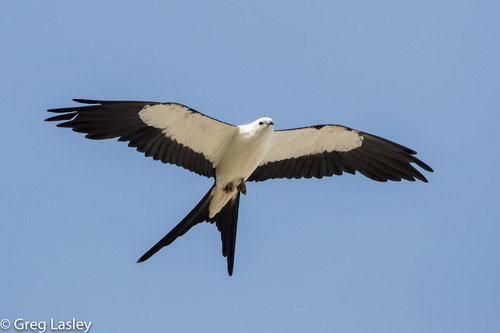
Elanoides forficatus, the swallow-tailed kite, is a black-and-white migratory raptor native to the Americas, associated with wetland forests.
Elanoides forficatus, the swallow-tailed kite, measures 50 to 68 cm (20 to 27 in) in body length, with a wingspan of approximately 1.12–1.36 m (3.7–4.5 ft). Body weight ranges from 310–600 g (11–21 oz), and male and female individuals appear similar in appearance. The bird’s body has a contrasting pattern of deep black and white. Flight feathers, tail, feet, and bill are all black; the upper side ...
View full details → 16
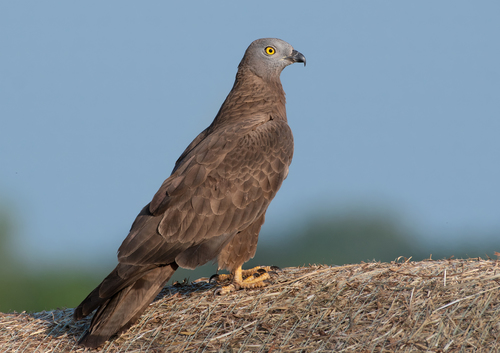
Pernis apivorus, the European honey buzzard, is a distinct large bird of prey that migrates between Eurasia and tropical Africa.
This species, Pernis apivorus, commonly known as the European honey buzzard, measures 52 to 60 centimetres (20 to 24 inches) in length, with a wingspan of 135 to 150 centimetres (53 to 59 inches). It is larger, longer-winged, longer-necked, and longer-tailed than the smaller common buzzard (Buteo buteo), and has a small head. It soars on flat wings. Its tail has fewer bars than the common buzzard'...
View full details → 17
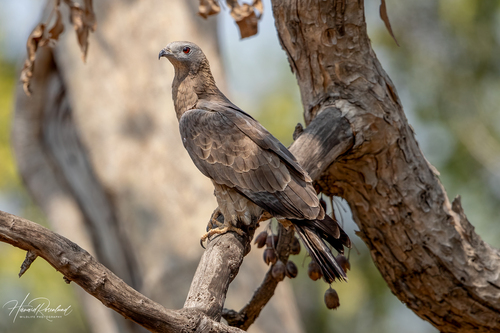
Pernis ptilorhynchus, the crested honey buzzard, is a variable, fairly large raptor that shows Batesian mimicry, breeding across northern Asia and wintering further south.
The crested honey buzzard, Pernis ptilorhynchus, measures about 57–60 cm (22–24 in) in length, making it a fairly large raptor. It lacks a prominent superciliary ridge on its head, giving it a facial appearance very different from most other raptors. It has a long neck and small head that resembles a pigeon's head, with a short head crest and a long tail. Its upperparts are brown, lighter in shade...
View full details → 18
Chondrohierax uncinatus (Temminck, 1822)
Chondrohierax uncinatus (Temminck, 1822)
🦋 Animalia Accipitridae
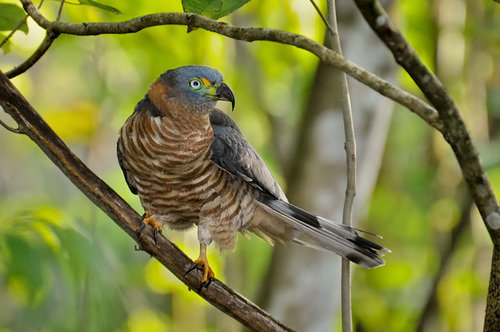
Chondrohierax uncinatus, the hook-billed kite, is a variably colored mid-sized raptor that feeds primarily on tree snails.
This is a mid-sized, slender raptor that always has a striped belly and banded tail. It likely has more individual variation in color and bill size than any other species of diurnal raptor. When viewed from below, individuals can look blackish or gray (especially males) and brown or brick-red (females), which can make species identification extremely difficult at times. The downcurved hook at the ...
View full details → 19
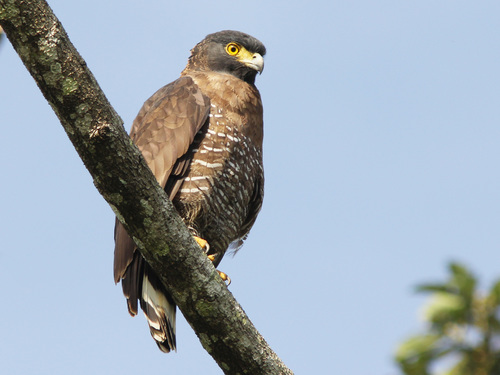
The Sulawesi serpent eagle (Spilornis rufipectus) is a large bird of prey endemic to Indonesia's Sulawesi, living in moist lowland forests.
The Sulawesi serpent eagle, scientifically named Spilornis rufipectus Gould, 1858, is a species of bird of prey that belongs to the family Accipitridae. This species is endemic to the island of Sulawesi, Indonesia. Its natural habitat is subtropical or tropical moist lowland forest. It is described as being very large.
View full details → 20
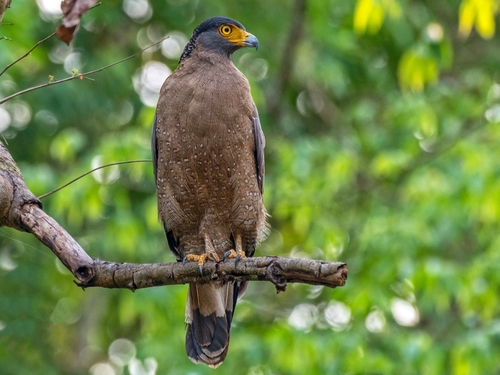
Spilornis cheela, the crested serpent eagle, is a medium-large forest eagle that primarily preys on reptiles, with known ecology, breeding behavior and parasites.
Spilornis cheela, the crested serpent eagle, is a medium-large, stocky dark brown eagle with rounded wings and a short tail. It has a short, black-and-white fan-shaped nuchal crest that creates a thick-necked appearance, and its bare facial skin and feet are yellow. The underside of the bird is spotted with white and yellowish-brown. When perched, the wing tips do not reach the tip of the tail. Wh...
View full details → 21
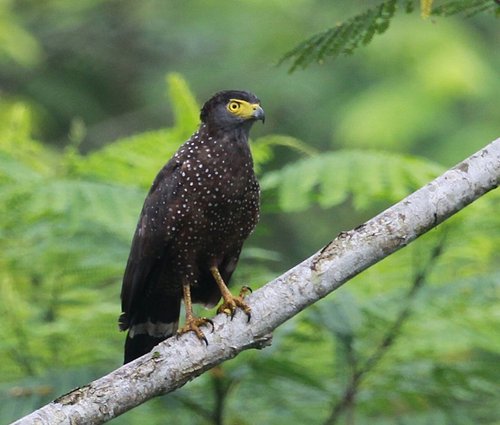
Spilornis holospilus is a fairly large common raptor endemic to the Philippines, currently classified as Least Concern with declining populations.
Scientific name: Spilornis holospilus (Vigors, 1831). Description and taxonomy: According to eBird, this is a fairly large, common raptor that occurs in forest and more open wooded areas from the lowlands to the lower mountains. It is dark brown with white speckles on the crown and upperparts, rufous-brown on the underparts with large white spots. It has a distinctive gray cheek and yellow eye. I...
View full details → 22
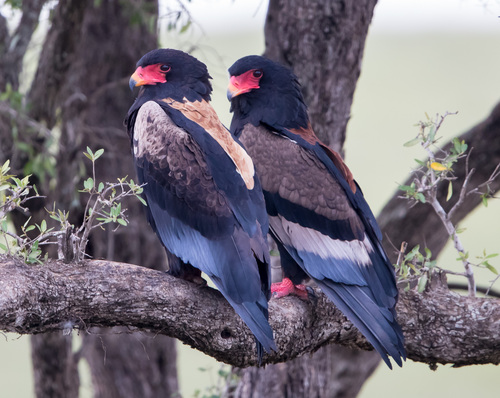
Terathopius ecaudatus, the bateleur, is a distinctive African raptor found across most of sub-Saharan Africa with unique morphology and plumage.
The bateleur (Terathopius ecaudatus, first described by Daudin in 1800) has unique morphology and plumage, sharing some anatomical traits with both snake eagles and vultures. It has a thick neck, a very large, noticeably cowled head, and a proportionately short bill covered by a very large cere. The cowl, which is also present but less pronounced in snake eagles, gives the head its distinct shape....
View full details → 23
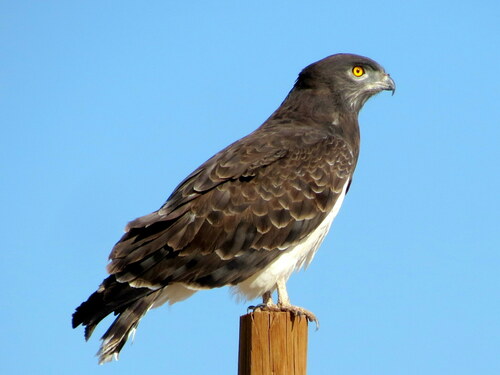
Black-chested snake eagle (Circaetus pectoralis) is an Afrotropical snake-eating raptor found across East and southern Africa.
Identification: The main identifying feature of this bird is its dark brown-black head and chest, which gives the species its common name. It can be told apart from the short-toed snake eagle and Beaudouin's snake eagle by its uniformly white lower underparts. By contrast, the short-toed snake eagle has a darkly blotched belly, and Beaudouin's snake eagle has narrowly barred lower underparts. When...
View full details → 24
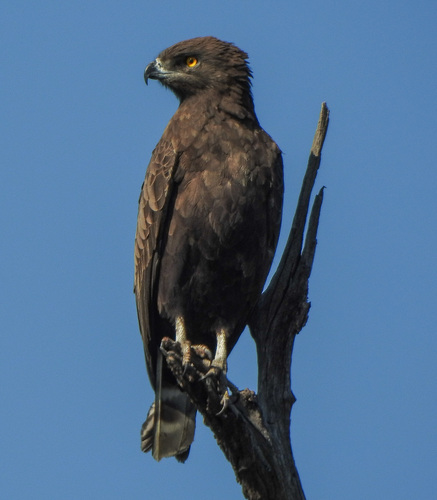
Circaetus cinereus, the brown snake eagle, is a large African eagle found in open woodlands and wooded savannas across much of sub-Saharan Africa.
The body plumage of Circaetus cinereus is uniformly fairly dark hazel brown, and some reports note it can show a purplish sheen in certain lighting. Body color extends across the wings, except for contrasting unmarked whitish-grey flight feathers. The relatively short tail, which is most easily visible in flight, has alternating brown and grayish-cream bars at all ages. Juveniles are similar in ov...
View full details → 25

Circaetus gallicus, the short-toed snake eagle, is a large Old World raptor that primarily hunts snakes over open habitats.
This species, known as the short-toed snake eagle, is a relatively large type of snake eagle. Adult individuals reach 59 to 70 cm (23 to 28 inches) in length, have a wingspan of 162 to 195 cm (5 feet 4 inches to 6 feet 5 inches), and weigh between 1.2 and 2.3 kg (2.6 to 5.1 lb); the average weight for the species is approximately 1.7 kg (3.7 lb). It can be identified in the wild by its mostly whit...
View full details → 26
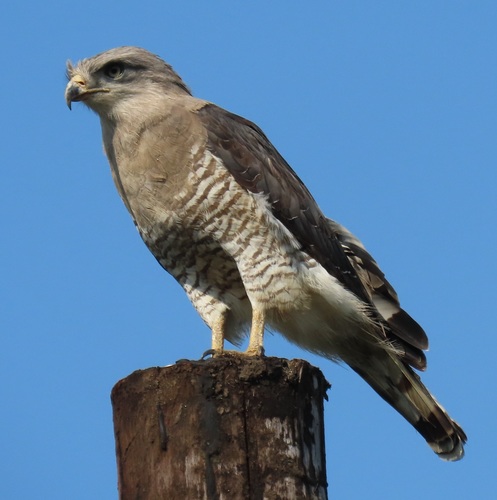
Circaetus fasciolatus, the southern banded snake eagle, is a small stocky eagle native to eastern African forests.
The southern banded snake eagle (scientific name Circaetus fasciolatus Kaup, 1847) is a rather small, stocky snake eagle with a large, rounded head and a hooded beak. It has a grey-brown head that contrasts slightly with its mainly blackish-brown upperparts and whitish underparts. The tail has a white tip, and three distinct dark bands are visible on its underside. The large eyes are pale yellow, ...
View full details → 27
Circaetus cinerascens J.W.Von Muller, 1851
Circaetus cinerascens J.W.Von Muller, 1851
🦋 Animalia Accipitridae
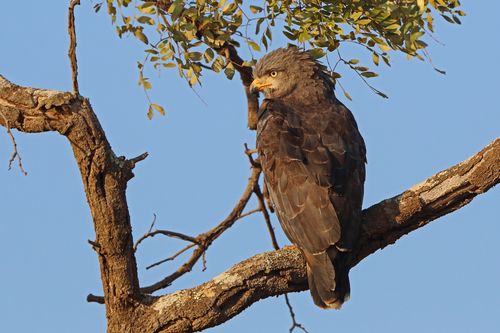
Circaetus cinerascens, the western banded snake eagle, is an uncommon patchily distributed African raptor that preys mostly on reptiles and amphibians.
The western banded snake eagle, scientifically named Circaetus cinerascens J.W.Von Muller, 1851, is a grey-brown African raptor with a short tail and a large head. Juveniles have paler, browner upperparts than adults, with feathers edged in white. This species' head, neck, and breast are marked with dark streaks. Its underparts are white with pale brown streaks, concentrated most on the belly and ...
View full details → 28
Circaetus beaudouini J.Verreaux & Des Murs, 1862
Circaetus beaudouini J.Verreaux & Des Murs, 1862
🦋 Animalia Accipitridae
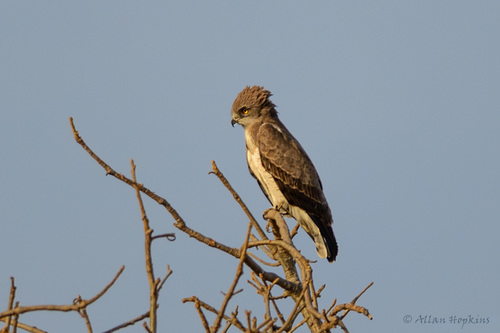
Circaetus beaudouini is a large snake eagle found across a narrow band of West and East Africa that makes seasonal nomadic movements.
This bird, Circaetus beaudouini, has a wingspan of 170 cm (67 in). It is a large snake eagle with grey-brown upperparts, including the head and chest, that contrast with white underparts barred brown, and a white vent. It has a black bill, large bright yellow eyes, and long pale grey unfeathered legs. Juvenile individuals are entirely dark. It inhabits open woodlands, wooded savanna, and cultivate...
View full details → 29
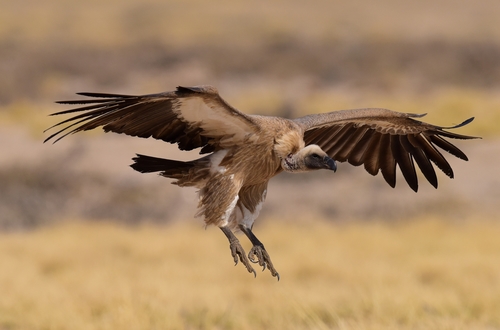
Gyps africanus, the white-backed vulture, is a common medium-sized African vulture that has recently undergone rapid population declines.
The white-backed vulture (Gyps africanus Salvadori, 1865) is a typical vulture species. Only down feathers cover its head and neck, it has very broad wings, short tail feathers, and a distinctive white neck ruff. Adult white-backed vultures have a whitish back that contrasts with their otherwise dark plumage, while juvenile vultures are mostly dark all over. This is a medium-sized vulture, with a ...
View full details → 30
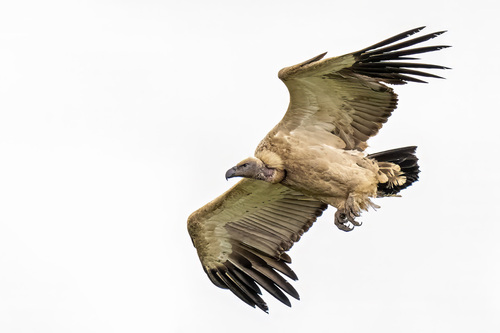
Gyps coprotheres, the Cape vulture, is a large African Old World vulture and obligate carrion scavenger.
This large vulture, Gyps coprotheres, also known as the Cape vulture, has a creamy-buff body plumage that contrasts sharply with its dark flight and tail feathers. Adults are paler than juveniles, and their underwing coverts can look almost white when viewed from a distance. The head and neck are nearly featherless, or near-naked; adult eyes are yellowish, and the bill is black. Juvenile and immat...
View full details →Frequently Asked Questions
How many species are in the Accipitridae family?
This guide features 30 representative species from the Accipitridae family. The full family contains many more species worldwide — explore them all on iNature.
How to identify Accipitridae species?
Accipitridae species share common features in their flowers, leaves, and growth patterns. This guide provides photos and descriptions for 30 species. For instant field identification, use the iNature app.
Sources: GBIF, iNaturalist, Wikipedia · Disclaimer
Identify any species instantly — even offline
iNature uses on-device AI to identify plants, animals, fungi and more. No internet needed.
Download iNature — FreeStart Exploring Nature Today
Download iNature for free. 10 identifications on us. No account needed. No credit card required.
Download Free on App Store
