The Campanulaceae (bellflower family) is named for its characteristic bell-shaped flowers, though the family also includes the lobelias with their distinctive lipped blooms. From the charming harebells of European meadows to the giant lobelias of African mountains, this is a diverse and beautiful family. This guide covers the most notable species.
🌱 Plant Families
Bellflower Family (Campanulaceae): Species & Identification
1
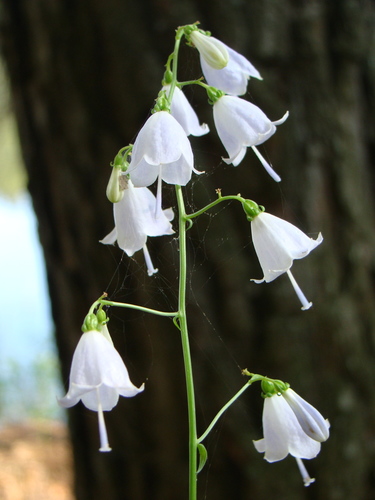
Adenophora liliifolia is a Campanulaceae plant species native to Europe and Northern America.
Adenophora liliifolia (L.) A.DC. is a plant species in the Campanulaceae family. It is native to Europe and Northern America. An accepted synonym for this species is Adenophora lilifolia (L.) Ledeb. ex A.DC.
⚠️ Toxicity: Insufficient toxicity evidence; avoid direct contact and ingestion.
View full details →
2
Campanula alaskana (A.Gray) W.Wight ex J.P.Anderson
Campanula alaskana (A.Gray) W.Wight ex J.P.Anderson
🌿 Plantae Campanulaceae
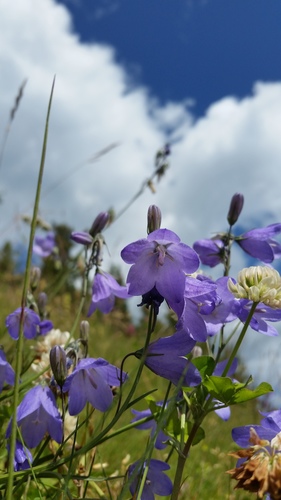
Campanula alaskana, the Alaska bellflower, is a Campanulaceae species native to northwestern North America.
Campanula alaskana, commonly called the Alaska bellflower, is a flowering plant species that belongs to the Campanulaceae family. It is native to northwestern North America, specifically the Aleutian Islands, Alaska, the Yukon, British Columbia, and Washington state. Asa Gray first described this taxon in 1886, publishing it as Campanula rotundifolia var. alaskana. In 1918, William Wright elevated...
⚠️ Toxicity: Insufficient toxicity evidence; avoid direct contact and ingestion.
View full details →
3
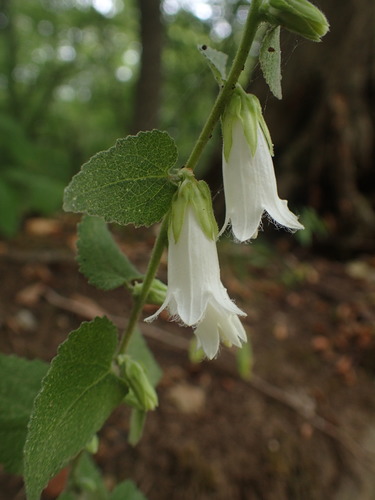
Campanula alliariifolia, the Cornish bellflower, is an ornamental perennial flowering bellflower native to the Caucasus and Turkey.
Campanula alliariifolia Willd. is a species of flowering plant that belongs to the bellflower family, Campanulaceae. It is native to the Caucasus and Turkey, and is commonly cultivated as an ornamental plant. One of its common names is Cornish bellflower. This is a vigorous, clump-forming perennial herb. Its basal leaves are heart-shaped, toothed, gray and hairy, and reach 3 inches in length. It p...
⚠️ Toxicity: Insufficient toxicity evidence; avoid direct contact and ingestion.
View full details →
4
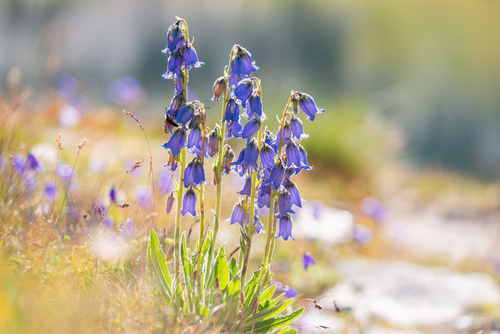
Campanula barbata L. is a bearded blue-flowered bellflower native to mountain regions of central and southern Europe.
Campanula barbata L., commonly called bearded bellflower, grows to a height of 20 to 30 centimetres, which equals 7.9 to 11.8 inches. This species forms a small basal rosette of grayish-green leaves. Its leaves are simple, lanceolate in shape, have toothed margins, and grow in an alternate arrangement. It produces racemes of nodding, bell-shaped flowers that range in color from pale blue to deep b...
⚠️ Toxicity: Insufficient toxicity evidence; avoid direct contact and ingestion.
View full details →
5
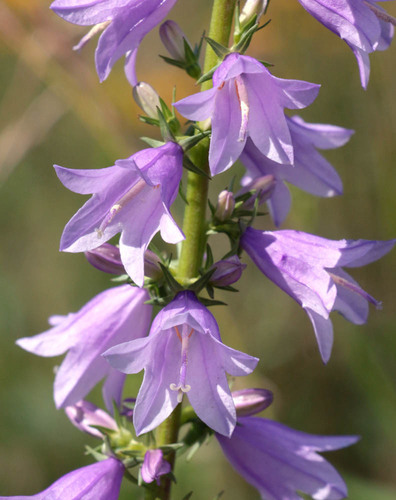
Campanula bononiensis is a flowering plant in Campanulaceae native from France to Kazakhstan.
Campanula bononiensis L. is a species of flowering plant in the Campanulaceae family. Its native distribution spans from France to Kazakhstan.
⚠️ Toxicity: Insufficient toxicity evidence; avoid direct contact and ingestion.
View full details →
6
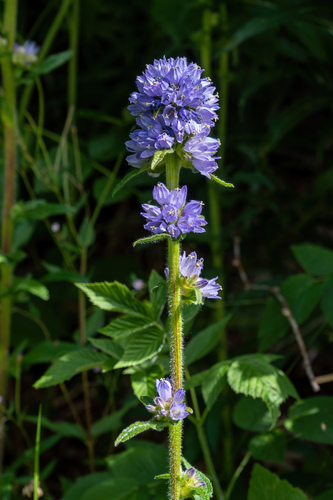
Campanula cervicaria, the bristly bellflower, is a Eurasian bellflower naturalized in Minnesota, growing in open and disturbed habitats.
The bristly bellflower, scientifically named Campanula cervicaria L., is a biennial or short-lived perennial herbaceous plant that reaches 30 to 100 centimetres (12 to 39 inches) in height. In its first year of growth, it produces a rosette of lanceolate, spatulate leaves with winged stalks. In its second year, it grows one or more erect flowering stems with squarish edges. The leaves on these flo...
⚠️ Toxicity: Insufficient toxicity evidence; avoid direct contact and ingestion.
View full details →
7
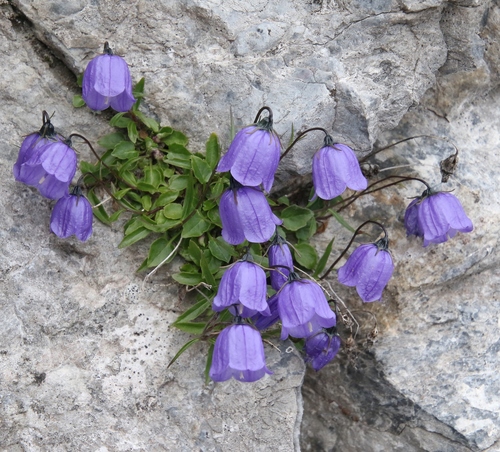
Campanula cochleariifolia is a small perennial bellflower native to Central European mountains that holds the RHS Award of Garden Merit.
Campanula cochleariifolia Lam. (also spelled Campanula cochlearifolia), commonly known as earleaf bellflower or fairy's-thimble, is a species of flowering plant in the Campanulaceae family. It is native to the Pyrenees, the Alps, the French Massif Central, and the Carpathian Mountains of Central Europe. This is a rhizomatous herbaceous perennial that grows up to 10 cm (4 inches) tall. Clumps of b...
⚠️ Toxicity: Insufficient toxicity evidence; avoid direct contact and ingestion.
View full details →
8
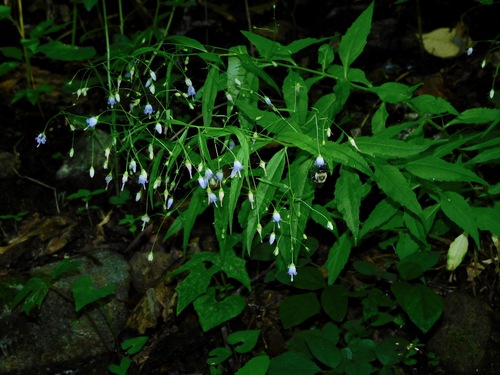
Appalachian bellflower (Campanula divaricata) is a perennial blue-flowered plant native to the eastern United States, primarily the Appalachians.
Campanula divaricata, commonly called Appalachian bellflower, is a species of flowering plant that belongs to the bellflower family, Campanulaceae. This plant is native to the eastern United States, and it is primarily found in the Appalachian Mountains. It grows in habitats with rock outcrops, including cliffs and summits, and most often occurs on dry, acidic soil. It is a perennial plant that pr...
⚠️ Toxicity: Insufficient toxicity evidence; avoid direct contact and ingestion.
View full details →
9
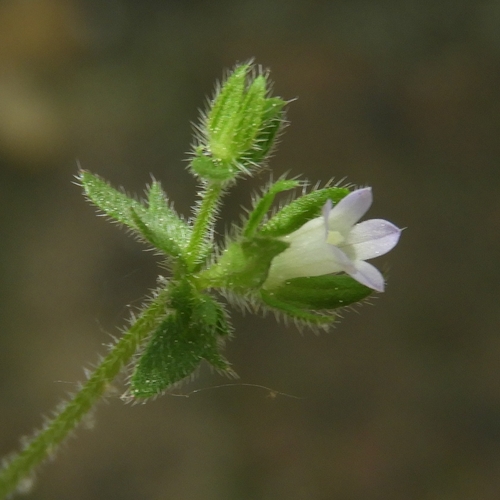
Campanula erinus L. is a small annual self-supporting bellflower herb that grows up to 11 cm tall.
Campanula erinus L. is an annual herb species that belongs to the bellflower genus Campanula. It has a self-supporting growth form, and individual plants can reach up to 11 centimeters in height.
⚠️ Toxicity: Insufficient toxicity evidence; avoid direct contact and ingestion.
View full details →
10
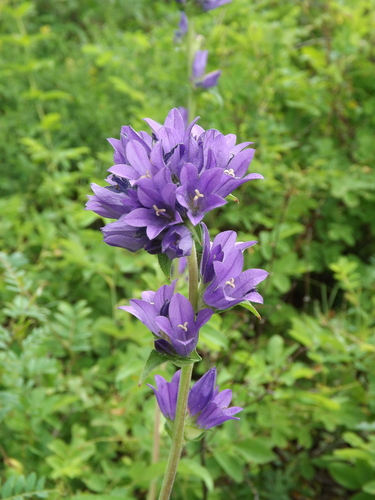
Campanula glomerata is a perennial Eurasian bellflower widely cultivated for garden use.
Campanula glomerata L. is a perennial herbaceous plant. It typically grows 20–60 centimeters (7.9–23.6 inches) tall, and can reach a maximum height of 90 centimeters (35 inches). Its stem is simple, erect, and covered in short hairs. Basal leaves have petioles, are oval-lanceolate in shape, and have a slight heart-shaped (cordate) base. Cauline (stem) leaves are lanceolate, stalkless, and clasp th...
⚠️ Toxicity: Insufficient toxicity evidence; avoid direct contact and ingestion.
View full details →
11
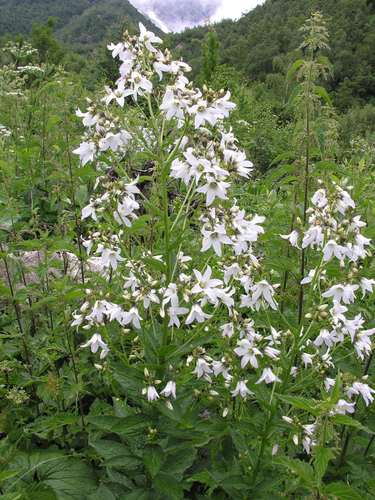
Campanula lactiflora (milky bellflower) is a gardenable herbaceous perennial flowering plant native to Turkey and the Caucasus.
Campanula lactiflora, commonly known as the milky bellflower, is a flowering plant species in the genus Campanula, family Campanulaceae. It is native to Turkey and the Caucasus. This medium-sized herbaceous perennial reaches 1.2 m (3 ft 11 in) in height, and bears narrow, toothed leaves that are 5–12 cm (2–5 in) long. In summer, large conical clusters of open, star-shaped flowers grow on branching...
⚠️ Toxicity: Insufficient toxicity evidence; avoid direct contact and ingestion.
View full details →
12
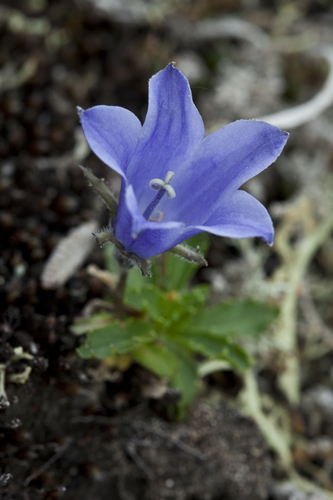
Campanula lasiocarpa Cham. is an edible bellflower species found in Yukon Territory, where most other local purple flowers are toxic.
Campanula lasiocarpa Cham. is a species that belongs to the genus Campanula, which is commonly referred to as bellflowers. The blossoms of this flower have a taste similar to a mix of dandelion stems and the scent of honeysuckle. People should not consume any other purple flowers that grow in Yukon Territory, since most of these other flowers are toxic, ranging from somewhat poisonous to extremely...
⚠️ Toxicity: Toxicity risk detected (mainly via ingestion); avoid direct contact and ingestion.
View full details →
13
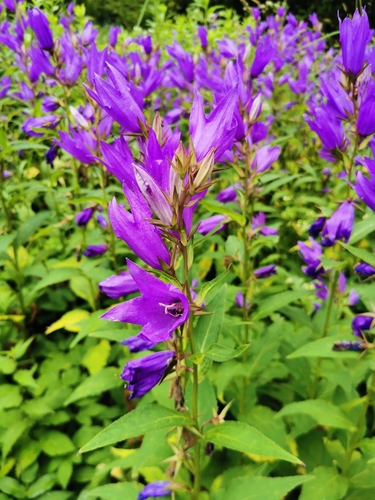
Campanula latifolia is a clump-forming perennial bellflower native to Europe and western Asia, grown in cultivation.
Campanula latifolia L. is a clump-forming perennial herbaceous plant that reaches 60 to 120 centimeters (24 to 47 inches) in height. Its stem is unbranched, erect, and covered in short hairs. Basal leaves are stalked, broadly ovate with a heart-shaped (cordate) base, while upper leaves are ovate-lanceolate, stalkless, softly hairy, and have bluntly toothed margins. Inflorescences are many-flowered...
⚠️ Toxicity: Insufficient toxicity evidence; avoid direct contact and ingestion.
View full details →
14
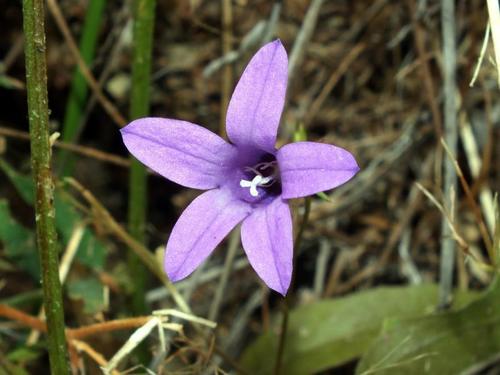
Campanula lusitanica (Lusitanian bellflower) is a Campanulaceae flowering plant native to Iberia, namesake of a species complex.
Campanula lusitanica, commonly called the Lusitanian bellflower, is a flowering plant species belonging to the Campanulaceae family. It is native to Portugal and Spain, and it is the namesake of a species complex.
⚠️ Toxicity: Insufficient toxicity evidence; avoid direct contact and ingestion.
View full details →
15
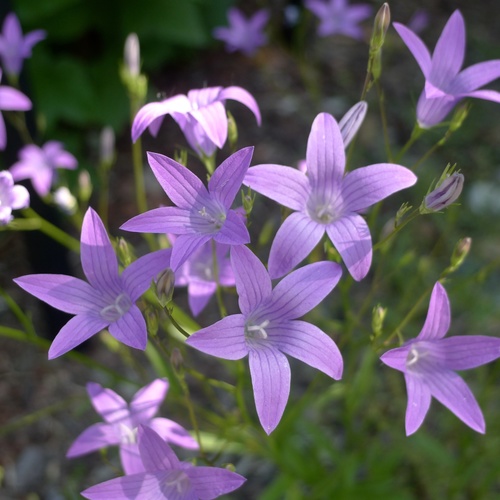
Campanula patula L. (spreading bellflower) is a biennial herb native to temperate Europe that grows in open, disturbed habitats.
Campanula patula L., commonly called spreading bellflower, is a biennial herbaceous plant that reaches 25 to 80 centimetres (9.8 to 31.5 in) in height. Its stem is branched, erect, and wiry, and often takes on a reddish color near the base. In its first year of growth, the plant produces a rosette of short-stalked, slender, spatulate leaves. In its second year, it grows one or more flowering stalk...
⚠️ Toxicity: Insufficient toxicity evidence; avoid direct contact and ingestion.
View full details →
16
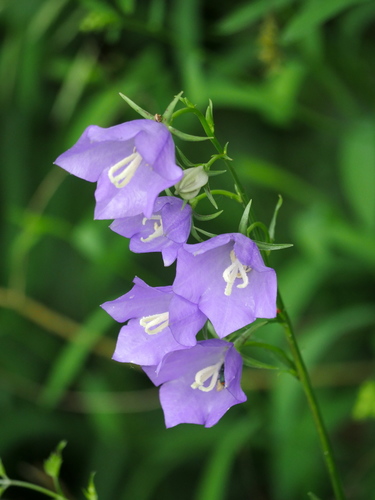
Campanula persicifolia is a European perennial flowering bellflower grown in cultivation in multiple colors.
Campanula persicifolia L. is a clump-forming perennial herbaceous plant that reaches 30 to 100 centimetres (12 to 39 inches) in height. Its stem is typically unbranched, erect, and slightly angular. Basal leaves are short-stalked, narrowly spatulate, and usually wither before the plant begins flowering. Upper leaves are unstalked, lanceolate, almost linear, and have rounded teeth along their margi...
⚠️ Toxicity: Insufficient toxicity evidence; avoid direct contact and ingestion.
View full details →
17
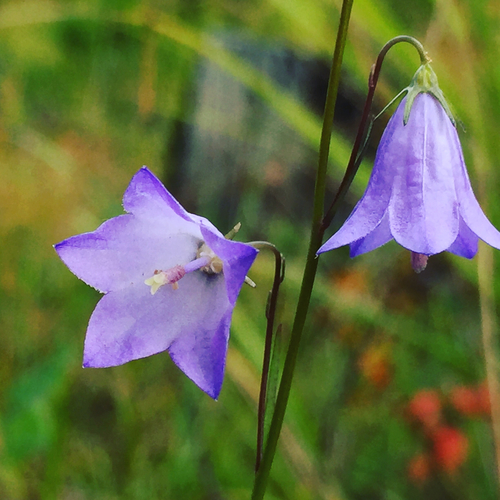
Campanula petiolata is a North American bellflower species with bell-shaped lavender to blue flowers, ranging from northern Canada to northern Mexico.
Campanula petiolata A.DC. is a slender, herbaceous perennial that grows prostrate to erect, reaching 10–50 centimeters tall when fully mature. The plant’s basal leaves are round to ovate (egg-shaped), mostly toothed, and typically disappear before flowering; basal leaves are more commonly ovate than round. Lower stem leaves are slightly widened at the middle, giving them a lanceolate (thin lance p...
⚠️ Toxicity: Insufficient toxicity evidence; avoid direct contact and ingestion.
View full details →
18
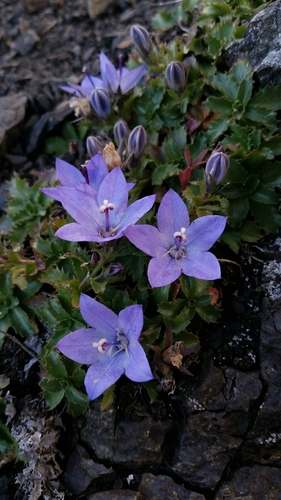
Campanula piperi Howell is a small perennial herb that grows in high rocky habitats, and is cultivated in alpine gardens.
Campanula piperi Howell is a perennial herb with stems reaching up to 10 centimeters in height. Its stems are either hairless, or covered in fine, rough hairs. The plant’s basal leaves have sharp teeth along their edges, are widely lance-shaped, and grow up to 3 centimeters long. Leaves positioned higher on the stem have a similar shape, and are arranged alternately along the stem. Flowers bloom a...
⚠️ Toxicity: Insufficient toxicity evidence; avoid direct contact and ingestion.
View full details →
19
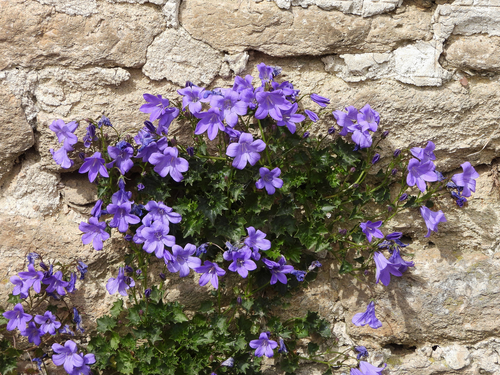
Campanula portenschlagiana is a low-growing alpine flowering plant popular for garden cultivation.
Campanula portenschlagiana Schult. forms a dense foliage mat that grows approximately 10 centimeters (4 inches) tall and at least 50 centimeters (20 inches) wide, producing many heart- or kidney-shaped leaves. It bears an abundance of deep purple or blue, funnel-shaped flowers that have 5 petals and measure 2 centimeters (0.8 inches) long, and these flowers completely cover the plant from mid- to ...
⚠️ Toxicity: Insufficient toxicity evidence; avoid direct contact and ingestion.
View full details →
20
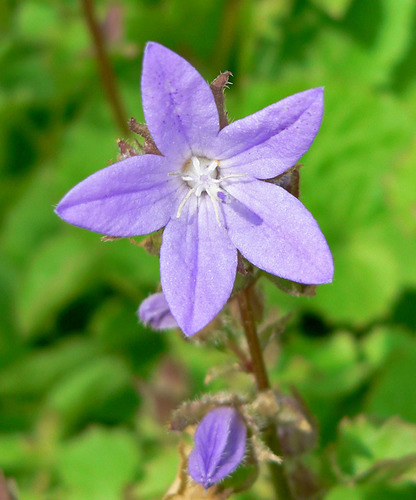
Campanula poscharskyana Degen is an edible garden bellflower grown as a hardy rockery plant with lavender-blue star flowers.
This plant, scientifically named Campanula poscharskyana Degen, has leaves that measure 2.5–4.0 cm (1–1+1⁄2 inches) long. Its trailing shoots grow along the ground to a length of around 20–25 cm (7+3⁄4–9+3⁄4 inches), before growing upward to hold flowers roughly 10 cm (3.9 inches) above ground. The lavender-blue flowers bloom from mid-spring to early autumn. Campanula poscharskyana Degen is a toug...
⚠️ Toxicity: Insufficient toxicity evidence; avoid direct contact and ingestion.
View full details →
21
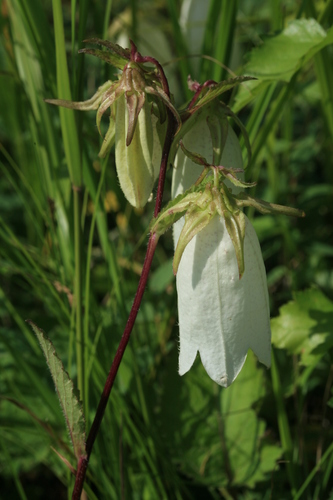
Campanula punctata Lam. is an East Asian bellflower widely cultivated as an ornamental in Northern Hemisphere temperate regions.
Campanula punctata Lam. typically reaches 30 to 100 centimeters (0.98 to 3.28 feet) in both height and width. It grows from stolons and produces upright stems. Its basal leaves are long, ovate, and heart-shaped. Leaves on flowering stems are arranged in rosettes, and are short and ovate; all leaves are alternate and toothed. The entire plant, including its flowers, stems, and leaves, is covered in...
⚠️ Toxicity: Insufficient toxicity evidence; avoid direct contact and ingestion.
View full details →
22
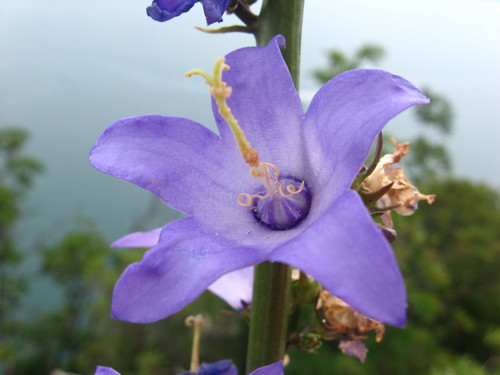
Campanula pyramidalis, the chimney bellflower, is a short-lived ornamental perennial native to southeastern Europe.
Campanula pyramidalis L., commonly known as the chimney bellflower, is a species in the Campanula genus native to southeastern Europe, specifically Italy and the western Balkans. Its scientific name refers to visible traits of the plant: Campanula translates to "bell-like", describing the bell shape of its flowers, while pyramidalis means pyramidal or conical, referring to the plant's overall coni...
⚠️ Toxicity: Insufficient toxicity evidence; avoid direct contact and ingestion.
View full details →
23
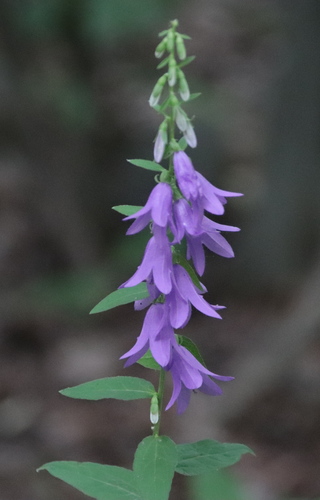
Campanula rapunculoides L. is an edible bellflower native to Eurasia, invasive in North America, hard to eradicate.
Campanula rapunculoides L. has an average height of 30–80 centimetres (12–31 in), and can reach a maximum height of 120 centimetres (47 in). Its stem is simple, erect, and lightly pubescent, and its leaves are usually shortly hairy. Basal leaves are triangular and narrow, with heart-shaped or rounded bases and jagged edges, growing up to 12 centimetres (4.7 in) long. Upper stem leaves are sessile,...
⚠️ Toxicity: Insufficient toxicity evidence; avoid direct contact and ingestion.
View full details →
24
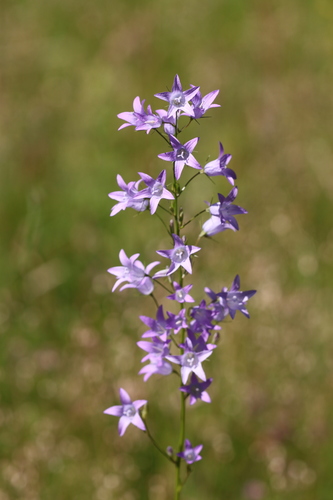
Campanula rapunculus L., or rampion, is an edible biennial herb formerly cultivated in Europe for leaves and roots.
This is a description of Campanula rapunculus L., commonly known as rampion. It is a biennial herbaceous plant that reaches an average height of 40–80 centimetres (16–31 in), with a maximum height of 100 centimetres (39 in). Its stem is erect, lightly hairy, and branched at the top. Basal leaves are petiolated, ovate, slightly toothed, and arranged in a rosette, while upper leaves are sessile and ...
⚠️ Toxicity: Insufficient toxicity evidence; avoid direct contact and ingestion.
View full details →
25
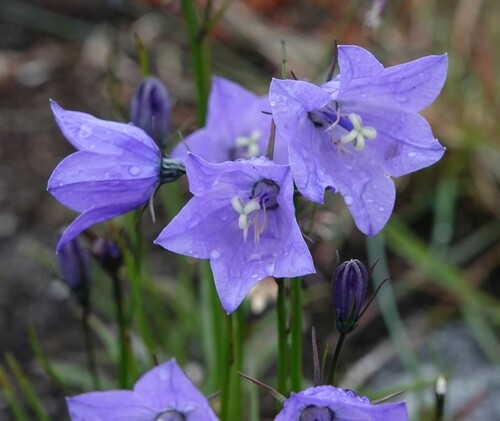
Campanula rotundifolia (harebell) is a herbaceous perennial flowering plant with bell-shaped violet-blue flowers.
Campanula rotundifolia L. is a slender herbaceous perennial that grows prostrate to erect, spreading via both seeds and rhizomes. Its basal leaves have long stalks, are shaped rounded to heart-shaped, and are usually slightly toothed with prominent hydathodes; these leaves often wither early. Leaves growing on the flowering stems are long and narrow, and the upper stem leaves lack stalks. The infl...
⚠️ Toxicity: Insufficient toxicity evidence; avoid direct contact and ingestion.
View full details →
26
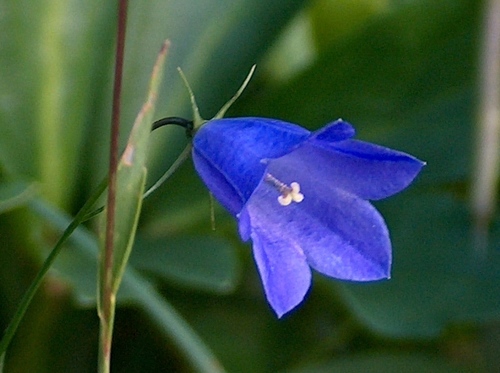
Campanula scheuchzeri is a small bellflower with solitary blue/purple flowers native to several European mountain regions.
Campanula scheuchzeri Vill. is a bellflower species that grows to a height of 10 to 30 centimetres (3.9 to 11.8 inches). It produces solitary blue or purple bell-shaped (campanulate) flowers, which bloom from July to August. This species is native to the Iberian Peninsula, France, the Apennine Peninsula, the Balkan Peninsula, Central Europe, and Romania. It grows in mountain regions at elevations ...
⚠️ Toxicity: Insufficient toxicity evidence; avoid direct contact and ingestion.
View full details →
27
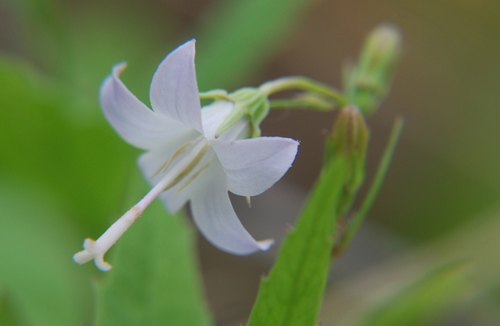
Campanula scouleri Hook. ex A.DC. is a rhizomatous perennial herb with pale blue reflexed bell-shaped flowers.
Campanula scouleri Hook. ex A.DC. is a rhizomatous perennial herb that grows an erect or leaning stem 20 to 30 centimeters long. Its leaves range from thin to leathery in texture, and from lance-shaped to round in outline, and they are generally toothed. The leaves measure 1 to 6 centimeters long, and are borne on short winged petioles. Its flowers are pale blue and bell-shaped, with a strongly re...
⚠️ Toxicity: Insufficient toxicity evidence; avoid direct contact and ingestion.
View full details →
28
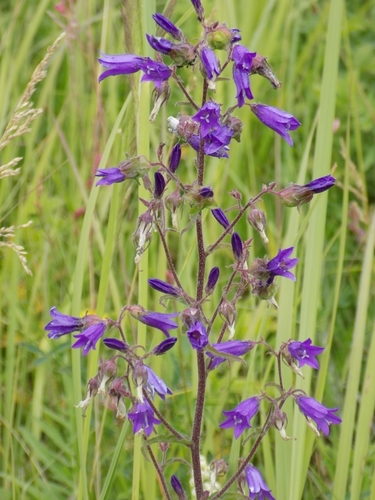
Campanula sibirica L. has a one - foot angled, slightly hispid stem, a sparse panicle, linear semi - clasping rough leaves, small oblong flowers, hispid calyces, and a variety with a subdivided stem and broader leaves.
The plant Campanula sibirica L. has a one - foot tall stem that is angled and slightly hispid. The panicle is sparse and loose. The leaves are linear and semi - clasping the stem; the stem - leaves are rough. The flowers are oblong and small. The calyces are hispid. There is a variety with a subdivided stem and broader leaves.
View full details → 29
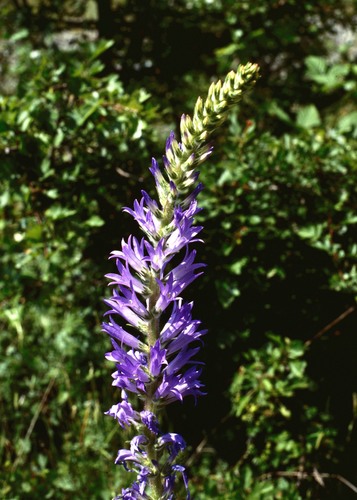
Campanula spicata L. is a scapose hemicryptophyte flowering bellflower endemic to mountain regions of Southern Europe.
Campanula spicata L. is a hemicryptophyte, meaning its overwintering buds are located just below the soil surface, and it is scapose, with a stalk that grows directly from the ground. On average, this plant reaches a height of 15 to 80 centimeters, which is 5.9 to 31.5 inches. Its stem is erect, striated, and hairy. The plant’s basal leaves are petiolated, narrowly lanceolate, with toothed and wav...
⚠️ Toxicity: Insufficient toxicity evidence; avoid direct contact and ingestion.
View full details →
30
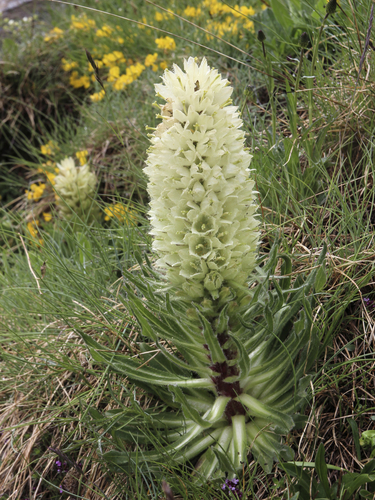
Campanula thyrsoides is a biennial flowering herb native to mountain regions of central and southeastern Europe.
Campanula thyrsoides L. is a herbaceous, erect, perennial flowering plant that grows to a height of approximately 70–100 cm (28–39 in). It produces a prominent, dense inflorescence holding up to 200 pale yellow, bell-shaped flowers. Its stem is densely covered in leaves: basal leaves are elongated and lanceolate, while stem leaves are tongue-shaped. While it is generally described as perennial, it...
⚠️ Toxicity: Insufficient toxicity evidence; avoid direct contact and ingestion.
View full details →
Frequently Asked Questions
How many species are in the Campanulaceae family?
This guide features 30 representative species from the Campanulaceae family. The full family contains many more species worldwide — explore them all on iNature.
How to identify Campanulaceae species?
Campanulaceae species share common features in their flowers, leaves, and growth patterns. This guide provides photos and descriptions for 30 species. For instant field identification, use the iNature app.
Sources: GBIF, iNaturalist, Wikipedia · Disclaimer
Identify any species instantly — even offline
iNature uses on-device AI to identify plants, animals, fungi and more. No internet needed.
Download iNature — FreeStart Exploring Nature Today
Download iNature for free. 10 identifications on us. No account needed. No credit card required.
Download Free on App Store
